TMJ Ear Pain: Causes, Symptoms, and Relief Options in 2026
TMJ ear pain occurs when dysfunction in the temporomandibular joint creates referred pain, pressure, or aching sensations that radiate into one or both ears. Because the joint sits directly in front of the ear canal, irritation in this area can easily mimic an ear infection or inner-ear problem, making it one of the most commonly misdiagnosed sources of ear discomfort.
If you have been living with persistent ear pain that your doctor keeps attributing to a clear ear canal and no signs of infection, the temporomandibular joint may be the source you have not yet addressed. Understanding how this joint works, what drives the pain, and which care options are available can help you make more informed decisions about your health.
 Why the Jaw and Ear Are So Closely Connected
The temporomandibular joint connects the lower jaw (mandible) to the temporal bone of the skull, and it sits only a few millimeters in front of the ear canal. Several nerves and muscles in this region are shared between the jaw and the ear, which is why tmj dysfunction so frequently produces ear symptoms. The auriculotemporal nerve, a branch of the trigeminal nerve, passes through this area and can transmit pain signals from the jaw joint directly into the ear.
When the jaw joint is inflamed, misaligned, or mechanically compromised, the surrounding tissues respond with muscle guarding, increased nerve sensitivity, and localized swelling. All of these reactions can produce sensations that feel exactly like ear pain, ear pressure, or muffled hearing, even though the ear itself is completely healthy. This overlap in anatomy is the primary reason so many patients cycle through ear, nose, and throat specialists before receiving a proper TMJ evaluation.
The muscles of mastication, which control chewing, also attach near the ear and can develop trigger points that radiate pain into the ear region. The masseter, temporalis, and medial pterygoid muscles are common sources of referred ear aching, particularly in patients who clench or grind their teeth at night.
Common Causes of TMJ Ear Pain
Several factors can drive dysfunction in the temporomandibular joint. Understanding the underlying cause matters because it shapes the most appropriate course of care.
Bruxism (teeth grinding and clenching): This is one of the most prevalent contributors to TMJ-related ear pain. Grinding places repetitive mechanical stress on the joint and surrounding muscles, often during sleep when the behavior goes unnoticed for months or years.
Jaw misalignment: When the upper and lower teeth do not meet symmetrically, the joint compensates with uneven loading. Over time, this asymmetry wears down cartilage and inflames surrounding tissue.
Postural imbalances: Forward head posture places the cervical spine and jaw in a strained relationship. The muscles connecting the neck and jaw can tighten and pull the joint out of its optimal position, contributing to both jaw discomfort and ear pain.
Disc displacement: The TMJ contains a small fibrocartilage disc that cushions the joint. If this disc shifts forward or backward out of position, clicking, locking, and pain can follow, including sensations that project into the ear.
Trauma: A direct blow to the jaw or a whiplash injury can strain the joint capsule and surrounding ligaments, setting off a cascade of inflammation.
Stress and muscle tension: Chronic psychological stress often manifests in jaw and neck muscle tightening. This tension can compress the joint and irritate nearby nerves, producing persistent ear aching.
 How Postural and Spinal Alignment Relates to TMJ Ear Pain
 How Postural and Spinal Alignment Relates to TMJ Ear Pain
One aspect of TMJ-related ear pain that often surprises patients is how significantly spinal alignment and posture contribute to jaw joint health. The cervical spine and the temporomandibular joint share a functional relationship through shared musculature and nerve pathways. When the vertebrae in the upper neck are misaligned or restricted, the resulting muscle imbalances can directly alter jaw mechanics.
Corrective chiropractic care addresses these upstream contributors. At Vital Connection Chiropractic, located at 12242 E 116th St Suite 100 in Fishers, Indiana, Dr. Jarred performs thorough evaluations that include posture analysis, spinal alignment assessment, and a review of how cervical dysfunction may be amplifying jaw and ear symptoms. The clinic serves patients throughout the Fishers area as well as surrounding communities like Noblesville, Carmel, and Geist.
Chiropractic adjustments to the cervical spine can reduce muscle tension, restore joint mobility in the neck, and decrease the mechanical load being transferred to the jaw. This does not replace dental or oral-maxillofacial care when that care is clearly indicated, but it can be a valuable part of a multidisciplinary approach to relief. Patients managing jaw pain who also experience headaches frequently find that addressing cervical restriction helps on both fronts simultaneously.
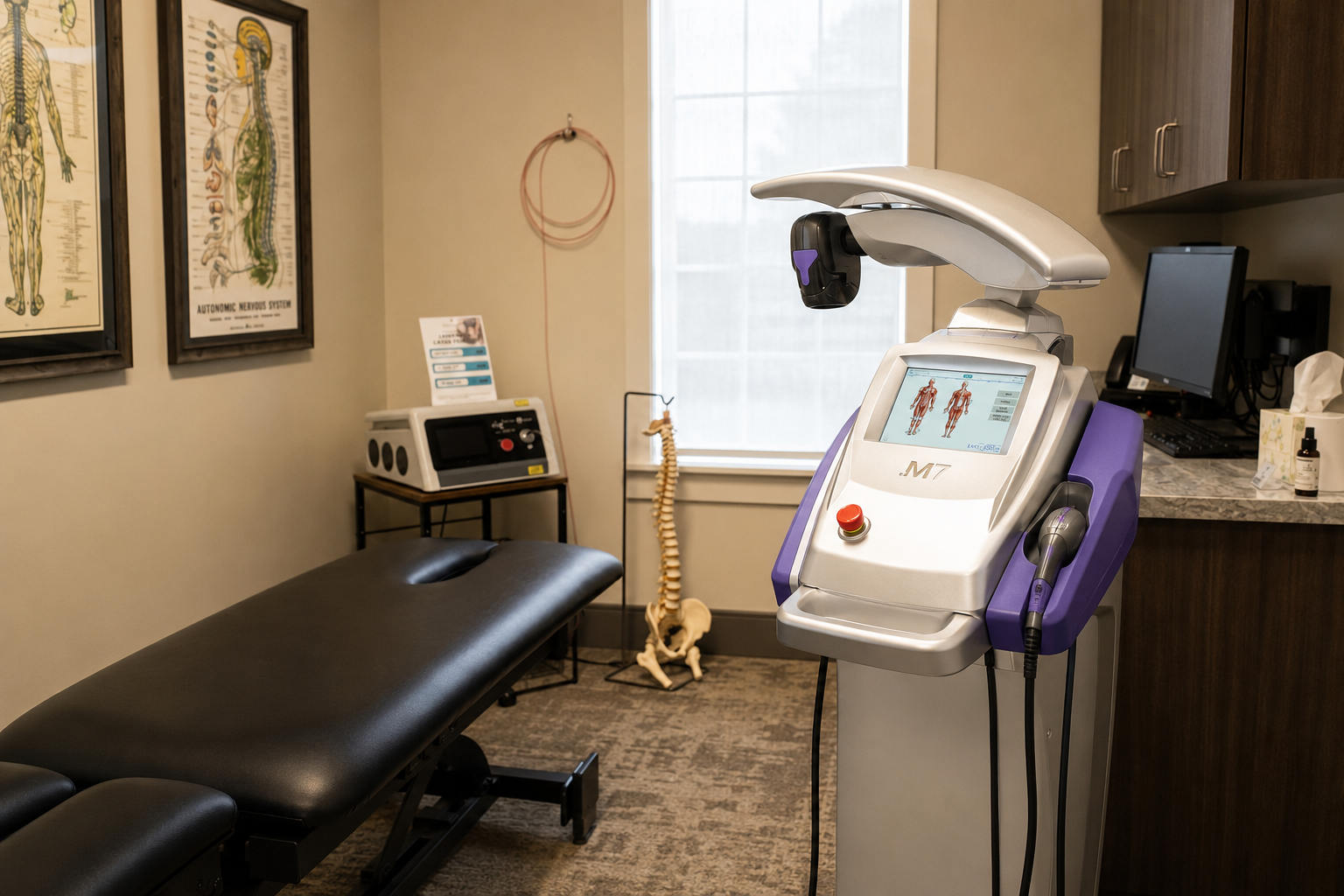
MLS laser therapy is another option available at Vital Connection Chiropractic. The clinic uses the Robotic M7 MLS Laser system, which delivers targeted wavelengths of light to reduce inflammation and support tissue healing. For patients with localized joint inflammation near the jaw and ear, this non-invasive therapy can complement other conservative care without the need for medications or injections.
Distinguishing TMJ Ear Pain from Other Conditions
 Distinguishing TMJ Ear Pain from Other Conditions
Because TMJ ear pain can mimic so many other conditions, it helps to understand the distinguishing features that point toward the jaw joint as the source.
| Feature | TMJ-Related Ear Pain | Ear Infection (Otitis Media) | Inner Ear Disorder |
|---|---|---|---|
| Location | In front of or around the ear | Deep inside the ear canal | Inside the ear, sometimes with dizziness |
| Jaw clicking or popping | Often present | Not typical | Not typical |
| Pain worsens with chewing | Common | Uncommon | Uncommon |
| Tenderness at the joint | Yes | No | No |
| Fever | No | Sometimes | No |
| Responds to ear drops | No | Often | Varies |
| Muscle tension in jaw/neck | Common | Not related | Not related |
If your ear pain intensifies when you chew, yawn, or open your mouth wide, and if you notice clicking or popping near the joint when you move your jaw, these are strong indicators that the temporomandibular joint deserves evaluation. Pain that shifts based on jaw position is particularly telling.
Conversely, if you have a fever, drainage from the ear, or sudden loss of hearing, these are red flags that require prompt medical attention from a physician. Chiropractic care is not a substitute for evaluation and treatment of active ear infection, cholesteatoma, or other structural ear conditions that require medical or surgical management.
A Closer Look at Conservative Care Options
When TMJ ear pain stems from mechanical dysfunction, muscle tension, or postural imbalance, conservative care tends to be the appropriate starting point. A well-organized care plan might include several complementary strategies.
Chiropractic adjustments: Restoring proper motion and alignment in the cervical spine takes mechanical stress off the muscles and joints that connect to the jaw. Specific adjustments to the upper cervical vertebrae are particularly relevant for patients whose jaw symptoms have a postural component.
Corrective exercises: Strengthening and stretching the muscles of the neck, jaw, and shoulder girdle helps patients maintain gains made during in-office care. Vital Connection Chiropractic incorporates corrective exercises as a core part of their patient care programs, helping patients build resilience between visits.
Ergonomic correction: Many patients who grind their teeth or clench their jaws also spend long hours at a desk with poor screen height, unsupportive seating, or a phone cradled between their ear and shoulder. Ergonomic correction addresses these daily habits that silently perpetuate joint stress.
Lifestyle management: Reducing caffeine, addressing chronic stress, and improving sleep hygiene can meaningfully reduce bruxism frequency. The clinic’s lifestyle management services support patients in making these sustainable changes.
Splint therapy (dental): For confirmed bruxism or disc displacement, a custom nightguard prescribed by a dentist or oral specialist can reduce nocturnal clenching forces. This is often used in coordination with chiropractic care rather than as a standalone solution.
MLS laser therapy: For acute inflammation in and around the joint, the Robotic M7 MLS Laser at Vital Connection Chiropractic can support the body’s natural healing processes without the side effects associated with anti-inflammatory medications.
What to Expect at Your First Evaluation
If you suspect your ear pain is connected to the temporomandibular joint, coming in for a professional evaluation is the logical next step. At Vital Connection Chiropractic, the first visit includes a comprehensive assessment of your posture, spinal alignment, and movement patterns. Dr. Jarred takes time to listen to your history, including when the ear pain started, what makes it better or worse, and what other symptoms accompany it.
This individualized approach matters because TMJ ear pain does not have a single cause or a single solution. Some patients need primarily cervical chiropractic care. Others benefit more from laser therapy, corrective exercises, or a combination of several approaches. Without a thorough evaluation, generic treatment plans tend to produce inconsistent results.
You can reach Vital Connection Chiropractic at +1 317-773-7820, or you can schedule appointment directly through the clinic’s website. If you have questions before committing to a visit, the team welcomes you to contact us to learn more about what the evaluation process involves and how the clinic may be able to help.
The clinic is located at 12242 E 116th St Suite 100 in Fishers, Indiana, conveniently accessible for residents throughout Hamilton County and the surrounding northeast Indianapolis corridor.
Addressing TMJ ear pain early tends to produce better outcomes than waiting until symptoms become more severe or begin to affect sleep, concentration, and daily comfort. If ear pain has been a persistent, unexplained presence in your life, having your jaw and cervical spine evaluated by a qualified provider is a reasonable, proactive step toward understanding what your body is telling you.
Things to Know
- TMJ ear pain is frequently misdiagnosed as an ear infection because the temporomandibular joint sits directly adjacent to the ear canal, and the two structures share nerve pathways that make symptoms feel nearly identical.
- Ear pain that worsens when you chew, yawn, or open your mouth wide is a key distinguishing sign that the jaw joint may be involved rather than the ear itself.
- Bruxism, or nighttime teeth grinding, is one of the most underrecognized drivers of chronic TMJ-related ear pain, largely because most people are unaware they grind their teeth until a dental or chiropractic provider points it out.
- Forward head posture, a condition where the head drifts forward of the shoulders, increases mechanical load on both the cervical spine and the temporomandibular joint, creating a postural feedback loop that can sustain ear and jaw symptoms for months.
- TMJ-related ear symptoms can include more than just aching pain. Muffled hearing, a sense of fullness in the ear, tinnitus (ringing), and dizziness are all documented ear-adjacent symptoms associated with temporomandibular joint dysfunction.
- Conservative care options, including chiropractic adjustments, corrective exercises, and MLS laser therapy, are typically recommended before invasive procedures such as injections or surgery, and many patients experience meaningful improvement with consistent conservative management.
Frequently Asked Questions
How to tell if ear pain is from TMJ?
The clearest indicator is whether the ear pain changes based on jaw movement, such as chewing, yawning, or opening your mouth wide.
If pressing gently on the joint in front of your ear canal reproduces the familiar aching sensation, that is another strong clinical sign. Additional clues include jaw clicking or popping, muscle tenderness along the jaw and temples, and the absence of fever, drainage, or hearing loss that would suggest an active ear infection. A provider who evaluates both the cervical spine and the jaw joint can help confirm whether the temporomandibular joint is the source.
What is the 3 finger test for TMJ?
The three-finger test is a simple self-assessment where you attempt to place three stacked fingers vertically between your upper and lower front teeth when your mouth is fully open.
Most adults without significant jaw restriction can open wide enough to fit three fingers comfortably. If you cannot fit all three fingers without pain or resistance, this suggests limited jaw range of motion, which is a common finding in temporomandibular joint dysfunction. While this test is a useful screening tool, it is not a diagnostic standard on its own and should be followed by a formal clinical evaluation.
What autoimmune disease is associated with TMJ?
Rheumatoid arthritis is the autoimmune condition most commonly associated with temporomandibular joint disease, as the same inflammatory process that attacks other synovial joints in the body can also affect the jaw joint.
Other autoimmune and systemic conditions, including lupus, psoriatic arthritis, and Sjogren’s syndrome, have also been linked to TMJ involvement in research and clinical settings. When an autoimmune condition is suspected as an underlying driver of jaw joint symptoms, a rheumatologist should be part of the care team alongside any conservative providers. Bloodwork analysis, which is available at Vital Connection Chiropractic, can sometimes provide early insight into systemic inflammatory patterns worth discussing with your physician.
What is stage 4 TMJ disorder?
Stage 4 temporomandibular joint disorder represents the most advanced level of structural deterioration, typically involving significant damage to the joint’s cartilage and bone, severe disc displacement, and in some cases ankylosis, which is the partial or complete fusion of the joint.
At this stage, jaw movement is often severely restricted, pain can be constant, and simple daily functions like eating and speaking become difficult. Stage 4 cases generally require evaluation by an oral and maxillofacial surgeon, and surgical intervention may be necessary. Conservative care options such as chiropractic adjustments and laser therapy are better suited for earlier-stage dysfunction, where the structural integrity of the joint is still reasonably preserved.
What is the longest TMJ can last?
Without appropriate care, temporomandibular joint dysfunction can persist for years or even become a chronic, lifelong condition in some individuals.
The duration depends heavily on the underlying cause, the severity of structural involvement, and whether the contributing factors, such as bruxism, postural imbalances, or stress, are being actively addressed. Some patients experience acute episodes that resolve within weeks when the trigger is identified and managed. Others with disc displacement, arthritis, or long-standing habits like clenching may deal with recurring or persistent symptoms for much longer. Early evaluation and consistent, targeted care generally produce better long-term outcomes than waiting for symptoms to resolve on their own.
The Bottom Line on TMJ Ear Pain
TMJ ear pain is a real, often overlooked condition that deserves a thorough and individualized evaluation rather than repeated courses of treatment aimed at the ear alone. The jaw joint’s physical proximity to the ear, combined with shared nerve and muscle pathways, means that dysfunction in one area reliably creates symptoms in the other. Identifying whether the temporomandibular joint is the true source of your discomfort is the necessary first step toward addressing it effectively.
At Vital Connection Chiropractic in Fishers, Indiana, Dr. Jarred and the team take a structured, patient-centered approach to evaluating jaw and cervical spine function together. Whether your symptoms are recent or have been building for years, the clinic’s combination of corrective chiropractic care, MLS laser therapy, corrective exercises, and lifestyle support offers a comprehensive path forward. Call the clinic at +1 317-773-7820 or visit the website to request your evaluation and take the first concrete step toward understanding what is driving your ear and jaw discomfort.