How Do You Treat TMJ Dysfunction?
How do you treat TMJ dysfunction? In most cases, TMJ dysfunction is treated with a combination of reducing jaw irritation, eating softer foods, using heat or ice, improving posture, doing gentle jaw exercises, and getting the right professional evaluation to find what is actually driving the pain. In Fishers, IN, the best treatment plan often depends on whether your symptoms are coming more from muscle tension, jaw joint irritation, clenching, grinding, stress, or limited jaw movement.
TMJ dysfunction can feel surprisingly disruptive. A simple meal hurts. Talking too much makes your jaw tired. You may feel pain in jaw and ear areas, hear clicking, or notice your jaw is in pain on one side, especially with chewing, yawning, or waking up in the morning. For some people, it starts as mild tension. For others, jaw pain left side symptoms, headaches, facial soreness, or difficulty opening the mouth become harder to ignore.
The good news is that many TMJ cases respond well to conservative care, especially when the problem is identified early and treatment is matched to the cause. That is why the goal is not just to mask pain. It is to calm the irritated tissues, reduce overload on the jaw, and help the muscles and joint move more comfortably again.
What TMJ Dysfunction Means
A simple tmj definition is this: TMJ stands for temporomandibular joint, the joint on each side of your face just in front of your ear. These joints help you open and close your mouth, chew, speak, yawn, and move your jaw side to side.
TMJ dysfunction, often called TMD, happens when the jaw joint, the surrounding muscles, or both are irritated or not working as smoothly as they should. That can create pain, stiffness, popping, fatigue, or limited movement.
TMJ dysfunction is not always one single issue. Some people mainly have tight, overworked jaw muscles. Others have joint irritation, disc problems, clenching habits, or related neck tension. That is one reason treatment should be individualized instead of guessing based only on a click or pop.
It is also important to know that clicking by itself does not always mean something serious. If there is no pain, no locking, and normal movement, a sound alone may not need aggressive treatment. But if your jaw is in pain, the clicking is painful, or it is getting harder to open or close normally, a proper evaluation matters.
Common TMJ Signs and Symptoms
TMJ signs can vary from person to person. Some symptoms stay local to the jaw. Others spread into the face, ear, temple, neck, or even the upper shoulders.
Common symptoms include:
-
Jaw pain or facial pain
-
Pain in jaw and ear areas
-
Jaw stiffness or tiredness
-
Clicking, popping, or grinding sensations
-
Trouble chewing certain foods
-
Pain with yawning or opening wide
-
Headaches or temple tension
-
Neck tightness
-
A jaw that feels off, uneven, or limited
-
Locking or catching when opening or closing
Pain may affect one side more than the other. Many patients describe jaw pain left side discomfort or right side pain that comes and goes depending on stress, sleeping posture, chewing habits, or clenching.
Common TMJ Symptoms and What They May Suggest
| Symptom | What it may suggest |
|---|---|
| Pain in front of the ear | Jaw joint irritation or surrounding muscle tension |
| Jaw pain with chewing | Overworked chewing muscles, joint irritation, or both |
| Morning jaw soreness | Nighttime clenching or grinding may be contributing |
| Jaw clicks with pain | Joint irritation, disc movement issue, or mechanical strain |
| Limited opening | Muscle guarding, inflammation, or joint restriction |
| Headaches at the temples | Tension from jaw muscles or related neck strain |
| Jaw pain on one side | Uneven loading, one-sided chewing, postural strain, or local irritation |
| Ear fullness without infection | Referred pain from TMJ structures or nearby muscles |
 What Usually Causes TMJ Dysfunction
A lot of people want one single answer, but TMJ dysfunction is often caused by several things happening together.
Clenching and grinding
This is one of the most common contributors. Some people clench during the day when stressed. Others grind at night without realizing it. Over time, that repeated pressure can overload the jaw muscles and joints.
Stress and muscle guarding
Stress does not cause every TMJ case, but it often makes symptoms worse. Many patients tighten their face, jaw, shoulders, and neck without noticing. That constant tension can keep the area irritated.
Poor posture
Posture matters more than people think. Forward head posture, long hours at a computer, frequent phone use, and slumped shoulders can increase strain through the neck and jaw. In an area like Fishers, where many adults spend long workdays at desks or on devices, this can be a very real contributor.
Chewing overload
Chewing gum all day, eating tough or chewy foods, nail biting, chewing ice, biting pens, or taking very large bites can all flare TMJ symptoms.
Joint irritation or mechanical problems
Some cases involve irritation inside the joint itself. Others involve a disc that is not moving ideally. This is where a proper exam becomes especially helpful, because treatment may need to focus more on joint mechanics, muscle balance, or both.
Related neck and upper shoulder tension
The jaw does not work in isolation. Tight muscles in the neck, upper back, and shoulders can influence jaw comfort and motion. That is why TMJ treatment often works best when the surrounding areas are considered too.
How Do You Treat TMJ Dysfunction Step by Step?
The best treatment usually begins with the least invasive options first. Many people improve with a thoughtful combination of self-care, activity changes, manual care, and movement work.
1. Calm the irritated joint and muscles
When the jaw is flared up, the first priority is reducing aggravation.
This often includes:
-
Eating softer foods for a short period
-
Cutting food into smaller bites
-
Avoiding gum, jerky, crusty bread, tough meats, and chewy candy
-
Avoiding very wide opening when yawning
-
Not testing the jaw repeatedly to see if it still hurts
-
Using heat or ice depending on what feels better
This phase is about letting the area settle down. If you keep irritating it several times a day, healing can be slow.
2. Reduce the habits that keep it inflamed
A lot of TMJ care is not about a single treatment done once. It is about removing the repeated stress that keeps the area from calming down.
That may mean working on:
-
Daytime clenching awareness
-
Better resting jaw posture
-
Improving workstation ergonomics
-
Not leaning on your chin
-
Avoiding nail biting and chewing on objects
-
Sleeping in positions that do not compress the jaw and neck
For many patients, this is where long-term progress starts.
3. Improve jaw motion gently
If the jaw is stiff, guarded, or not opening well, gentle exercises may help restore movement and reduce tension. The right exercises depend on the person. Some need mobility work. Others need control and relaxation instead of more stretching.
Examples may include:
-
Gentle controlled opening and closing
-
Tongue-up jaw opening drills
-
Relaxed jaw resting position work
-
Neck mobility and posture exercises
-
Soft tissue release for the muscles around the jaw
A rushed or overly aggressive exercise plan can make symptoms worse, so this should be individualized.
 4. Address the surrounding muscles and neck
 4. Address the surrounding muscles and neck
Because jaw problems often overlap with neck tension, treatment may also include work on the surrounding soft tissues, upper cervical area, and postural muscles. In some cases, conservative chiropractic care, manual therapy, or a coordinated rehab approach may help improve how the jaw and neck function together.
Patients looking for more background on conservative options can review the TMJ condition page and related guidance on jaw manipulation for TMJ relief.
5. Use other supportive care when appropriate
Depending on the case, other options may include:
-
Short-term use of over-the-counter anti-inflammatory medication if medically appropriate
-
A night guard or splint prescribed by the appropriate dental provider when clenching or grinding is a major issue
-
Referral for imaging if symptoms suggest a more structural problem
-
Co-management with a dentist, oral facial pain specialist, or other provider when needed
Not every TMJ case needs advanced procedures. In fact, many improve with conservative care first.
Table 2: What to Try First Versus When to Seek Prompt Evaluation
| What you can try first | When to seek prompt evaluation |
|---|---|
| Soft foods for several days | Jaw locks open or closed |
| Heat or ice for short sessions | Sudden major bite change |
| Avoid gum and hard chewing | Severe swelling, fever, or signs of infection |
| Gentle posture correction | Pain after trauma or direct injury |
| Reduce clenching and nail biting | Significant trouble opening the mouth |
| Rest the jaw and avoid wide yawning | Worsening pain that does not improve |
| Light self-massage or guided exercises | Numbness, severe ear symptoms, or unexplained facial pain |
If you want more local guidance, the clinic’s article on treatment for TMJ can also help you understand what conservative care may look like in Fishers.
What Helps TMJ Immediately?
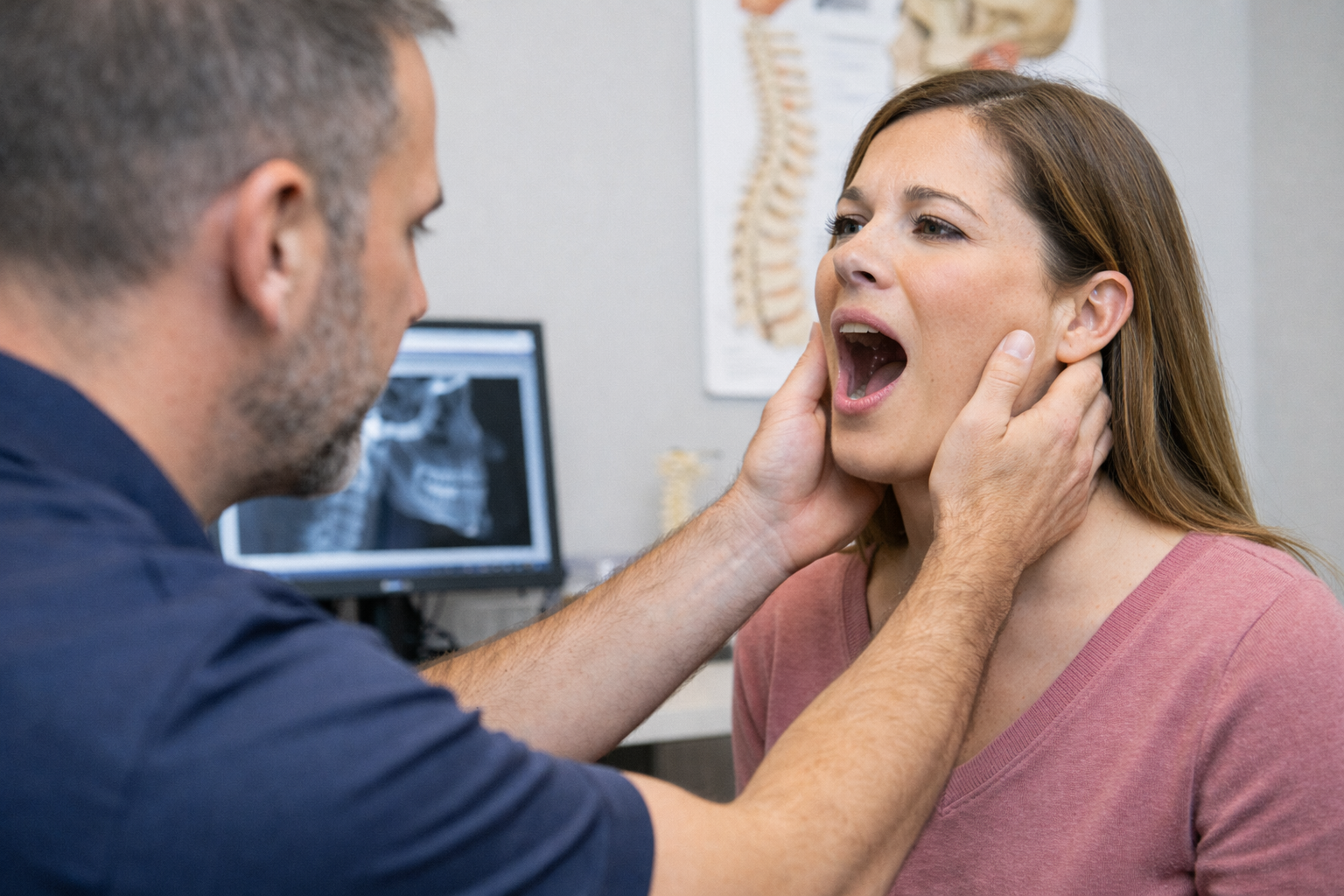 What Helps TMJ Immediately?
Immediate relief is not always the same as lasting relief, but several simple steps may help calm a flare.
Short-term relief options that may help
-
Rest the jaw from chewy or hard foods
-
Use an ice pack if the area feels acutely irritated
-
Use moist heat if the area feels more tight and achy
-
Keep your teeth slightly apart when not chewing
-
Let your tongue rest gently on the roof of the mouth
-
Avoid clenching during stress or concentration
-
Use smaller bites and chew slowly
-
Support your posture, especially at a desk or while using your phone
If your pain escalates quickly, your jaw starts locking, or you are having trouble eating or speaking comfortably, it is a good idea to seek evaluation rather than trying to manage it on your own for too long.
What Not to Do in TMJ Disorder
Patients often improve faster when they stop doing the things that keep poking the problem.
Try not to:
-
Chew gum frequently
-
Eat hard, crunchy, or very chewy foods during a flare
-
Open very wide just to test the joint
-
Bite nails, pens, ice, or lips
-
Lean your jaw into your hand
-
Clench your teeth while driving, lifting, or concentrating
-
Ignore neck posture all day
-
Assume every click means you need a major procedure
This matters because TMJ dysfunction is often an overload problem. If the tissues are already irritated, repeating the same stressors can keep the cycle going.
What to Do if TMJ Gets Worse
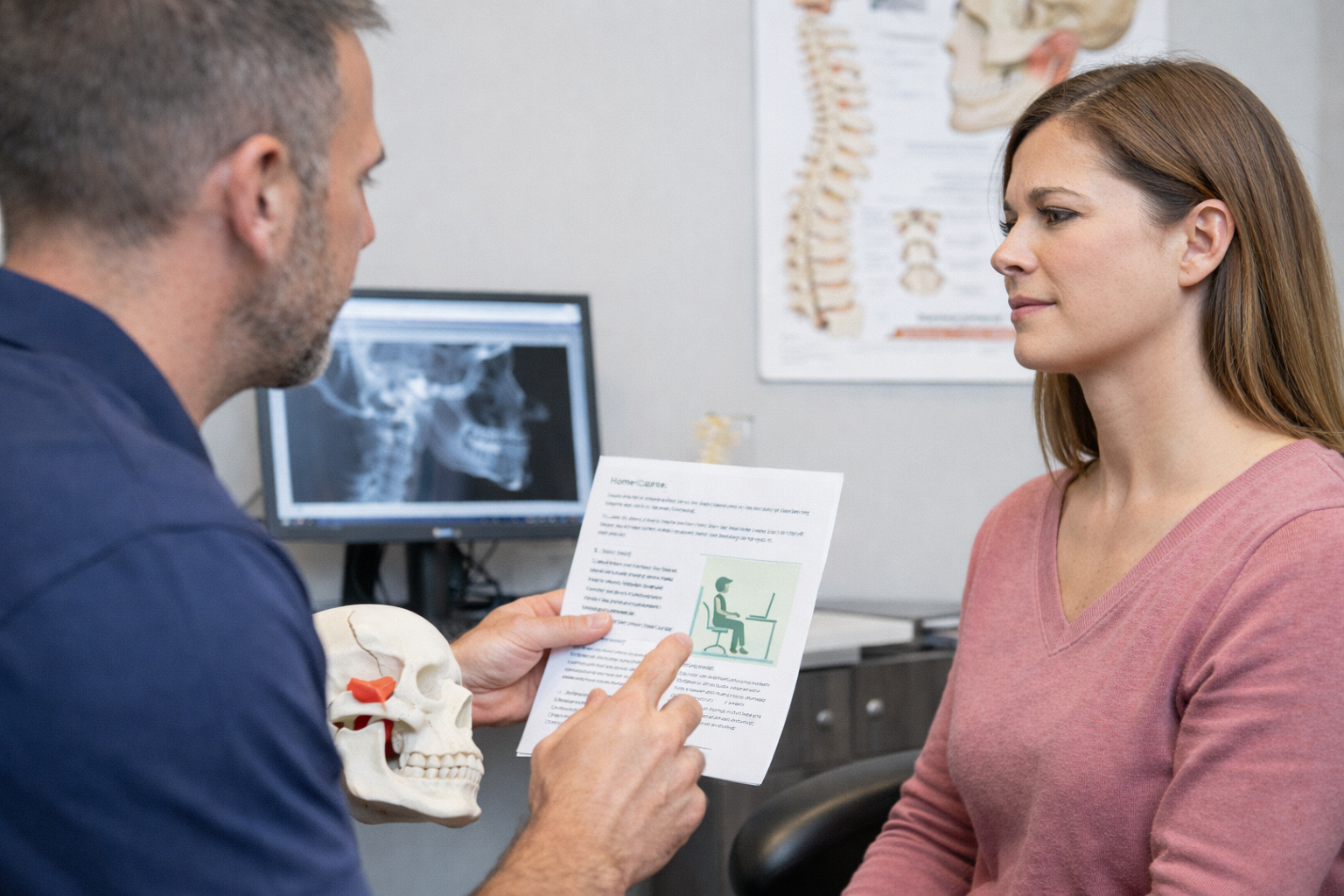 What to Do if TMJ Gets Worse
If symptoms are getting worse, do not panic, but do take it seriously.
A worsening flare may mean:
-
The jaw is being overloaded more than you realize
-
The exercises are not the right fit
-
Nighttime clenching is contributing more than expected
-
The pain is not only muscular
-
Another issue needs to be ruled out
You should consider professional evaluation if:
-
Pain is becoming more frequent or more intense
-
Your mouth opening is getting smaller
-
You feel catching or locking
-
It hurts to chew even soft foods
-
Symptoms keep returning after temporary relief
-
You also have headaches, neck pain, or ear-area pain that will not settle down
In Fishers, early assessment can help you avoid letting a temporary problem become a stubborn one. The longer muscle guarding and joint irritation continue, the harder it can be to break the pattern.
Can TMJ Disorder Be Cured?
Sometimes, yes. Many people improve significantly, and some become symptom-free, especially when the main drivers are identified early and addressed properly. But not every case is a simple one-time fix.
A better way to think about it is this: TMJ dysfunction is often very treatable, and many patients can get meaningful relief, better function, and fewer flare-ups. The outcome often depends on the cause, how long symptoms have been present, whether clenching or grinding continues, and whether there are underlying joint changes.
That is why individualized care matters. A person with mild muscle tension may recover much faster than someone dealing with longstanding joint irritation, disc involvement, or repeated nighttime grinding.
Why Local TMJ Care in Fishers, IN Can Be Helpful
TMJ symptoms are not just about the jaw. They can affect eating, sleep, focus, workouts, conversations, and even stress levels throughout the day. A local, conservative evaluation gives you a clearer plan instead of leaving you to guess between internet tips that may or may not match your situation.
At Vital Connection Chiropractic, a TMJ-focused evaluation may help determine whether your symptoms appear more related to muscle tension, movement restriction, postural strain, or a pattern that needs co-management with another provider. That kind of clarity is valuable because the right treatment is not always the most aggressive treatment. Often, it is the most appropriate one.
If you are dealing with persistent jaw pain, painful clicking, pain in jaw and ear areas, or recurring flare-ups around Fishers, the next step may be to schedule appointment for a personalized evaluation. If you still have questions first, you can also contact us to learn more about your options.
FAQ
Can TMJ disorder be cured?
TMJ disorder can sometimes fully resolve, especially when treated early and when the main triggers are identified and reduced. In other cases, it is better described as manageable rather than permanently cured. Many people still do very well with the right care plan.
What causes TMJ to flare up?
Common flare triggers include clenching, grinding, stress, poor posture, chewing gum, tough foods, nail biting, long periods of phone or computer use, and sleeping positions that strain the jaw or neck. Sometimes several factors are contributing at the same time.
What to do if TMJ gets worse?
Go back to the basics first: rest the jaw, switch to softer foods, avoid wide opening, use heat or ice, and stop aggravating habits like gum chewing or clenching. If symptoms keep worsening, the jaw locks, or mouth opening becomes more limited, get evaluated promptly.
What not to do in TMJ disorder?
Avoid chewing gum, hard or chewy foods, biting nails, leaning on your chin, testing the joint repeatedly, and pushing through pain with forceful stretching. Also avoid assuming every TMJ case needs the same treatment, because the cause can differ from person to person.
What helps TMJ immediately?
Short-term relief may come from resting the jaw, eating soft foods, using heat or ice, correcting posture, and relaxing the jaw muscles. Immediate help does not always solve the root problem, though, so persistent symptoms deserve a proper assessment.