Laser Therapy for Knee Pain: What It Does, Who It Helps, and What to Expect
Laser therapy for knee pain is a non-invasive treatment that uses specific wavelengths of light energy to reduce inflammation, decrease pain, and support tissue repair in the knee joint. It does not cut or burn tissue; instead, it penetrates the skin to stimulate cellular healing at the source of discomfort.
Key Takeaways
- MLS laser therapy uses dual synchronized wavelengths to target both pain and inflammation simultaneously in the knee joint.
- The treatment is non-invasive, painless, and requires no downtime for most patients.
- Results typically build across a series of sessions rather than after a single treatment.
- Laser therapy works best as part of a broader care plan that includes evaluation, corrective exercises, and lifestyle adjustments.
- It is not appropriate for everyone; your provider should review your full health history before starting treatment.
- Vital Connection Chiropractic in Fishers, Indiana offers mls laser therapy fishers in alongside corrective chiropractic care for a coordinated approach to knee pain.
Why Knee Pain Is More Complicated Than It Looks
Knee pain is one of the most common musculoskeletal complaints among American adults. It can stem from a wide range of causes, including osteoarthritis, patellar tendinopathy, ligament sprains, bursitis, meniscus irritation, or post-surgical inflammation. Each of these conditions involves a different tissue type, a different stage of tissue damage, and a different healing timeline. That complexity is exactly why a one-size approach to treatment rarely produces lasting results.
Conventional management often starts with rest, ice, anti-inflammatory medications, and physical therapy. While these strategies are useful, they may not address the underlying cellular environment that is keeping the tissue inflamed or poorly healed. This is where photobiomodulation, the clinical process behind laser therapy, enters the conversation.
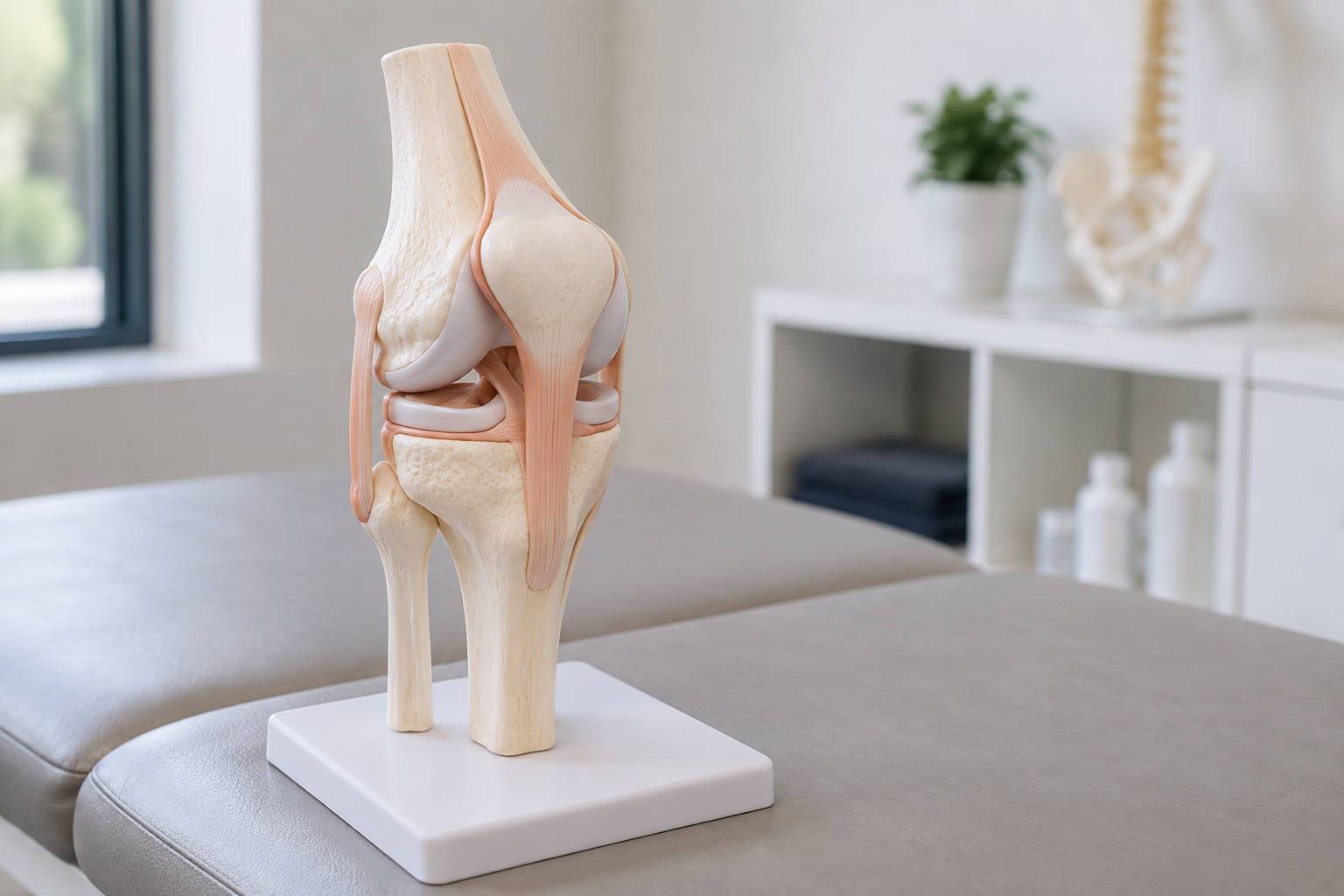 How MLS Laser Therapy Works on the Knee
MLS stands for Multiwave Locked System. It is a specific technology that uses two synchronized laser wavelengths, typically 808 nm and 905 nm, operating together in a controlled pattern. The 808 nm wavelength targets continuous tissue penetration and anti-inflammatory effects, while the 905 nm pulsed wavelength addresses pain by acting on nerve transmission. Used together, these wavelengths produce a synergistic effect that neither wavelength achieves alone.
When the laser energy reaches the target tissue, it is absorbed by mitochondria inside the cells. This triggers a cascade of biological responses: increased ATP production, improved circulation at the microvascular level, reduction of pro-inflammatory cytokines, and accelerated tissue repair. For a knee dealing with chronic inflammation or slow-healing soft tissue damage, this can be a meaningful addition to a recovery plan.
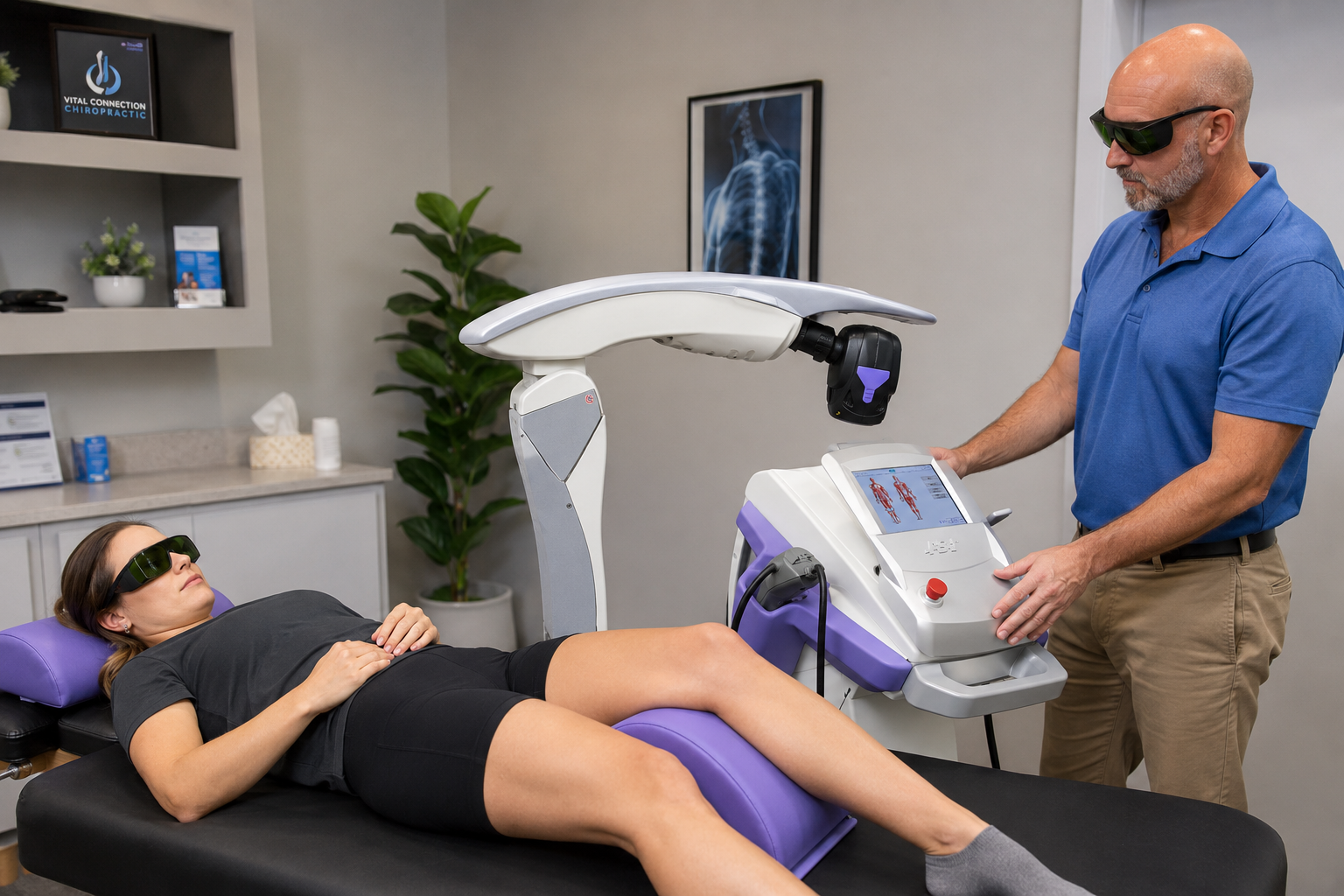
At Vital Connection Chiropractic in Fishers, Indiana, the clinic uses the robotic M7 MLS Laser system. This is not a handheld red-light device; it is a clinical-grade robotic system that delivers precise, consistent dosing to the target area during each session. For patients researching their options, that distinction matters. Equipment quality and treatment protocols directly affect what results are clinically plausible.
Conditions That MLS Laser Therapy May Help With
Not every knee condition responds equally to laser therapy. The strongest clinical rationale exists for conditions involving soft tissue inflammation and pain sensitization. Below is a general overview of where it tends to be most applicable.
| Condition | How Laser Therapy May Help |
|---|---|
| Osteoarthritis | Reduces joint inflammation; may support cartilage cell activity |
| Patellar tendinopathy | Promotes collagen remodeling; reduces localized pain |
| Bursitis | Decreases fluid-related inflammation around the bursa |
| Post-surgical recovery | Supports tissue healing and reduces swelling after procedures |
| Ligament sprains (mild to moderate) | Accelerates soft tissue repair and reduces pain sensitivity |
| IT band syndrome | Targets lateral knee inflammation common in runners |
It is important to understand that laser therapy is a supportive tool. It does not replace surgery when surgery is medically indicated. It does not repair severely torn ligaments or remove bone spurs. Your provider should give you an honest assessment of what is realistic for your specific situation before beginning treatment.
 What a Treatment Plan Typically Looks Like
 What a Treatment Plan Typically Looks Like
Laser therapy for knee pain is not a single-session fix. Most treatment protocols involve a series of sessions, typically scheduled over several weeks, with frequency tapering as the tissue responds. The exact number of sessions depends on the severity of the condition, how long the problem has been present, and how the individual patient responds.
Each session is painless. Patients often report feeling a mild warming sensation over the treatment area during the session, with no discomfort during or after. There is no incision, no numbing agent required, and no wound to manage afterward.
At Vital Connection Chiropractic, laser therapy is integrated within a broader, individualized care plan developed by Dr. Jarred. Rather than treating the knee in isolation, the clinic evaluates your posture, movement patterns, and overall musculoskeletal function. Corrective chiropractic adjustments, corrective exercises, and ergonomic guidance may all be incorporated depending on what is contributing to your knee symptoms. This approach reflects the clinic’s commitment to addressing the root of the problem rather than simply suppressing symptoms.
The NIH’s National Center for Complementary and Integrative Health provides general background on photobiomodulation research for those who want to schedule appointment to review the scientific literature independently.
Limitations and Honest Trade-Offs
Responsible decision-making requires a clear-eyed look at what laser therapy does not do and where evidence has limitations.
Drawbacks worth knowing:
- Evidence variability: While many clinical studies support the use of low-level and MLS laser therapy for musculoskeletal pain, study designs vary in quality, sample size, and dosing parameters. Results are not universal across all conditions or all individuals.
- Not a standalone cure: Laser therapy works best when combined with corrective movement, rehabilitation exercises, and, where appropriate, lifestyle changes. Patients who expect the laser alone to resolve a chronic problem stemming from poor mechanics or body weight loading may not experience lasting improvement.
- Contraindications exist: Laser therapy is generally not recommended over active cancer sites, during pregnancy over the abdomen or pelvis, directly over open wounds, or in patients with certain photosensitivity conditions. A thorough intake evaluation is essential.
- Cost and insurance: Coverage varies widely. Many patients pay out of pocket for laser therapy, and the cost of a full treatment series should be factored into your planning.
- Response time: Some patients notice improvement within the first few sessions; others require the full series before significant change becomes apparent. Immediate results are not guaranteed.
How Vital Connection Chiropractic Approaches Knee Pain
 How Vital Connection Chiropractic Approaches Knee Pain
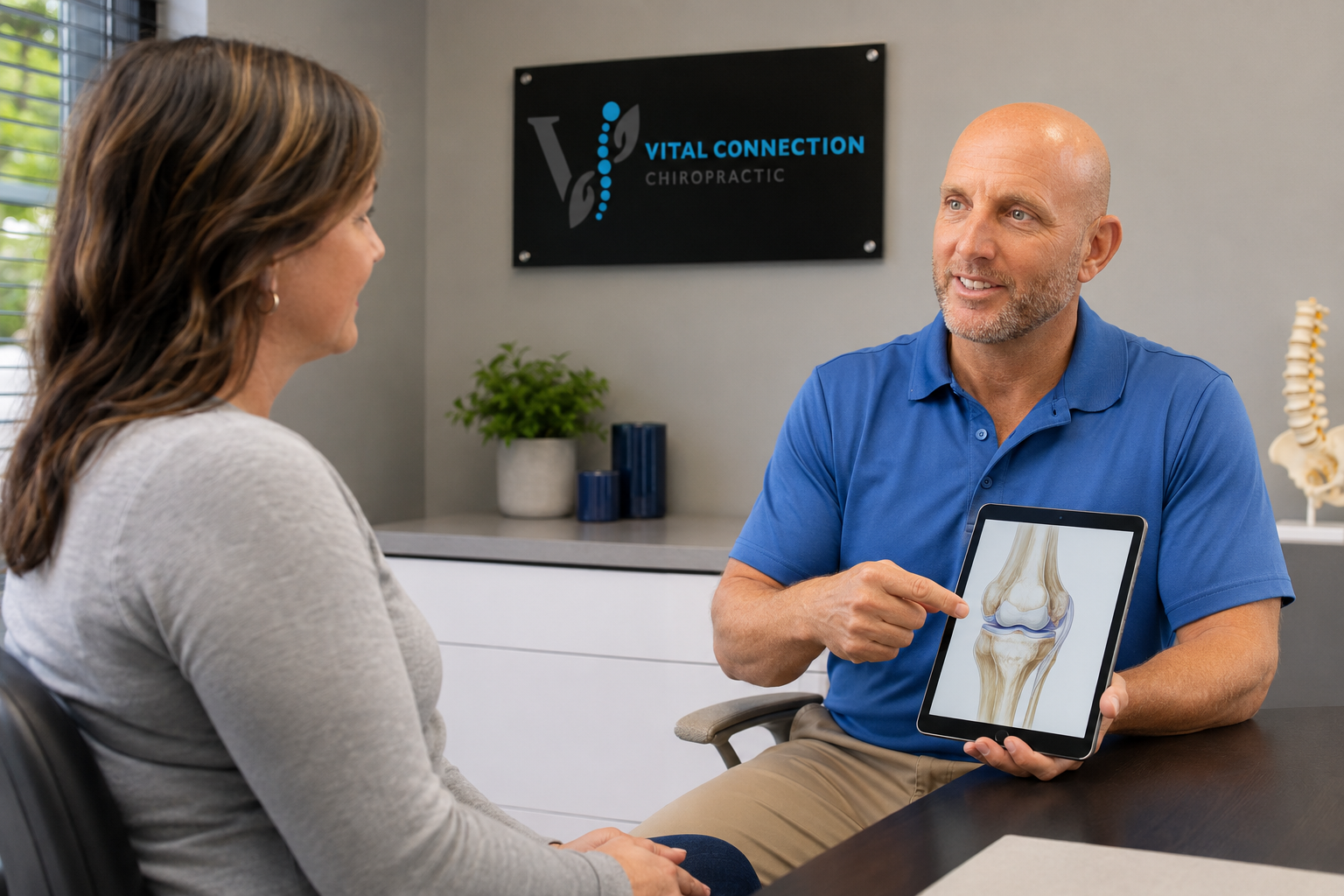
Vital Connection Chiropractic, located at 12242 E 116th St, Suite 100, Fishers, IN 46037, offers a patient-centered model that goes beyond a single treatment modality. Dr. Jarred and the team work to understand the full picture of what is driving a patient’s knee symptoms before recommending a care path.
Services available at the clinic include MLS laser therapy, corrective chiropractic care, corrective exercises, ergonomic correction, lifestyle management, and clinically inspired nutrition guidance. For knee pain specifically, this integrated approach means that the laser therapy is not happening in isolation. If your knee pain is being worsened by how you move, how you sit at work, or how excess body weight is loading the joint, those factors are part of the conversation from the start.
The clinic serves patients throughout Fishers, as well as those traveling from surrounding communities in Hamilton County. If you have been managing knee discomfort without a clear plan or without lasting relief, a formal evaluation is a practical starting point. You can reach the clinic directly by phone at +1 317-773-7820, or you can use the online contact us page to send a message.
According to the Mayo Clinic, knee pain that is accompanied by significant swelling, redness, fever, or the inability to bear weight warrants prompt medical evaluation rather than a wait-and-see approach. These are important red flags to keep in mind when deciding what level of care is appropriate for your situation.
Things to Know
- MLS laser therapy uses two synchronized wavelengths, not a single frequency, which is what distinguishes it from basic red-light therapy devices.
- The robotic M7 system delivers more consistent dosing than handheld units, which can vary in energy output depending on operator technique.
- Laser therapy does not produce heat sufficient to damage tissue; the warming sensation patients feel is mild and temporary.
- Positive changes in tissue can continue for days after each session as cellular repair processes run their course.
- Insurance coverage for laser therapy is inconsistent; verify your specific plan’s policy before beginning a course of treatment.
- Results depend significantly on the accuracy of the underlying diagnosis; laser therapy applied to a misidentified condition is unlikely to produce meaningful improvement.
Frequently Asked Questions
Is laser treatment good for knee pain?
MLS laser therapy can be an effective option for knee pain caused by soft tissue inflammation, tendinopathy, or joint irritation, particularly when integrated with a broader care plan.
It works by stimulating cellular repair and reducing inflammation at the tissue level using specific light wavelengths. It is most effective when the underlying condition is accurately identified and when treatment is not used as a substitute for necessary rehabilitation or movement correction.
What are two drawbacks of laser therapy?
The two primary drawbacks are the variability of clinical evidence across different conditions and the fact that it works best as part of a comprehensive treatment plan rather than as a standalone therapy.
Some patients also find cost to be a barrier, as insurance coverage is inconsistent. Understanding these limitations upfront allows for more realistic expectations and better decision-making.
How many days of rest are required after laser treatment?
Most patients require no formal rest period after an MLS laser therapy session, as the treatment is non-invasive and does not cause tissue trauma.
You may return to normal daily activities immediately following a session in most cases. Your provider will advise you if any temporary activity modification is appropriate given the nature of your specific condition.
What is the newest treatment for knee pain?
Among emerging non-surgical options, MLS laser therapy, regenerative approaches such as platelet-rich plasma (PRP), and biologics represent some of the more recent directions in knee pain management.
The right choice depends entirely on the diagnosis, the severity of the condition, the patient’s overall health, and what prior treatments have or have not achieved. A formal evaluation with a qualified provider is the only reliable way to determine which option fits your situation.
What is the one mistake that makes bad knees worse?
The single most common mistake is continuing to load the knee through aggravating activities without addressing the underlying mechanical or structural issue causing the problem.
Pushing through pain without a proper diagnosis often accelerates tissue breakdown rather than allowing repair. Equally problematic is complete inactivity, which weakens the surrounding musculature and reduces joint support. A supervised, structured approach that balances appropriate movement with targeted treatment produces far better outcomes than either extreme.
The Bottom Line on Laser Therapy for Knee Pain
Laser therapy for knee pain is a clinically supported, non-invasive option that can play a meaningful role in reducing inflammation and promoting tissue repair, particularly when it is part of an individualized, multi-modal care plan. It is not a universal solution, and its effectiveness depends heavily on accurate diagnosis, appropriate patient selection, and integration with corrective care that addresses the broader factors contributing to your knee symptoms.
If you are in the Fishers, Indiana area and want to explore whether this approach is appropriate for your knee condition, Vital Connection Chiropractic offers a thorough evaluation process to help you understand your options clearly. Take the first step by visiting the schedule appointment page or calling +1 317-773-7820 to speak with the team directly.