

Sciatic Nerve Pain Relief: What Works, What to Avoid, and When to Get Checked
If you want the fastest, safest path to sciatic nerve pain relief in Fishers, IN, start by calming irritation (not forcing stretches), then rebuild tolerance with a simple routine you can repeat. Most flare-ups respond best to gentle walking, symptom-led positions, and gradual hip and core endurance instead of aggressive bending, twisting, or “stretching harder.”
Leg symptoms can feel scary because they may travel into the glute, thigh, calf, or foot even when the main driver is in the low back. The goal here is to make your next step obvious: what works, what tends to backfire, and when it is smarter to get checked instead of guessing.
If you are in Fishers, Noblesville, Geist Indianapolis, Castleton, Carmel, or McCordsville, this page is built to help you follow a routine that fits real life, not perfection.
Answer Box: What to do today (and what to skip)
✅ Do today: Take 2–4 short walks (5–10 minutes each) and choose positions that reduce symptoms within 1–2 minutes.
✅ Do this week: Add gentle nerve-friendly motion, then light hip and core work once symptoms settle.
❌ Avoid for now: Long painful hamstring holds, deep bending/twisting, and “testing” your leg symptoms repeatedly.
🚩 Get checked sooner: New or worsening weakness, bowel/bladder changes, or numbness in the groin/saddle area.

Start here if you want local guidance (hub + location + schedule)
Hub page for local care: Sciatica Pain Relief in Fishers, IN guide
Main location: Chiropractor in Fishers, IN
Schedule an appointment
Related reads (helpful at-home detail):
Best Sciatica Stretches (and 3 to avoid)
Sciatica Exercises (gentle moves to calm irritation)
Why this pain travels (and why your leg can hurt more than your back)
Sciatica is a symptom pattern, not just a “tight muscle.” In plain English, it is nerve-related pain that can start from irritation near the low back and show up anywhere along the nerve pathway, often down one leg.
Here is the part most people miss: nerves dislike being “provoked” repeatedly. If you keep bending, stretching hard, or sitting in the exact position that lights up symptoms, your body does what it is designed to do, it protects. That protection can feel like burning, pulling, electric pain, pins and needles, or deep aching.
Common patterns that tell you you are dealing with nerve irritation
Many people notice one or more of these:
-
Symptoms worsen with long sitting or driving, then ease a bit with standing or walking
-
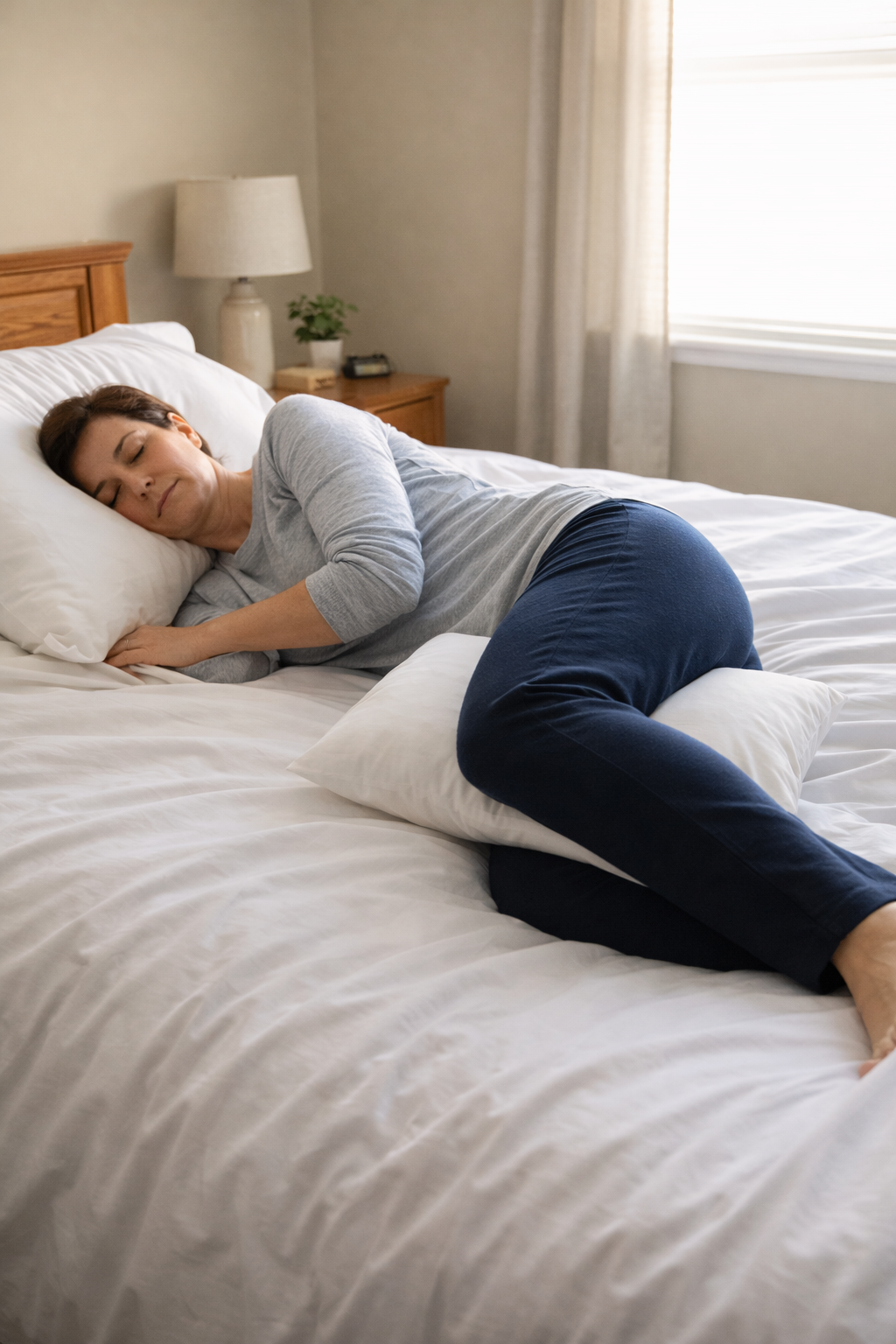
One position helps quickly (lying with knees supported or side-lying with a pillow)
-
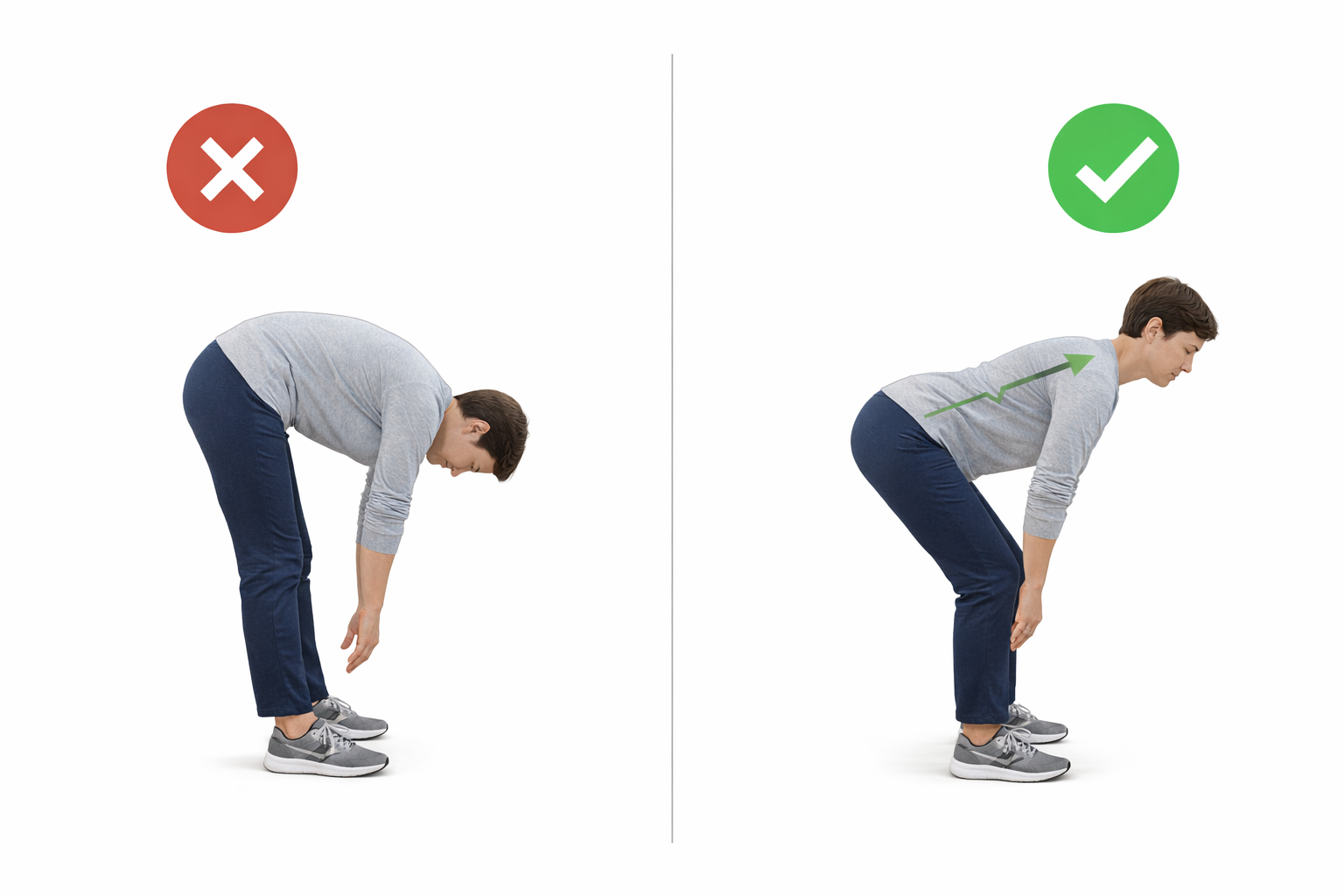
Bending forward, twisting, or prolonged hamstring stretching increases symptoms
-
Coughing or sneezing may spike symptoms during a flare (not always)
If any movement makes symptoms travel farther down the leg and linger, treat that as a “not yet” signal. The best routine is the one that calms symptoms first, then builds capacity so they stop returning.
Lifestyle causes: why flare-ups happen in real life (work, workouts, and weekends)
Most flare-ups are not random. They usually show up after a stack of small stressors, especially when your body is under-recovered.
The top lifestyle patterns that commonly feed flare-ups
-
The sitting + bending cycle
Desk work, commuting, and “collapsed” sitting can load the low back for hours. Then you bend to pick something up, tie shoes, load kids, or deadlift with stiffness already built in. -
Training spikes
A sudden jump in running hills, heavy lifting volume, or high-rep squats can irritate tissues that are not ready for that load yet. -
Sleep positions that keep the area irritated
If you wake up worse, you may be spending hours in a position that compresses or tensions the irritated pathway. -
Stress + bracing
High stress often changes breathing and causes more guarding through the back and hips. Guarding reduces motion, and reduced motion makes normal tasks feel “too much.”
Table 1: Common triggers and the smartest first adjustment
| Trigger | Why it flares symptoms | Best first adjustment (simple) |
|---|---|---|
| Long sitting / driving | Sustained spine load + hip stiffness | Stand up every 30–45 minutes and walk 2–3 minutes |
| Aggressive stretching | Pulls on an irritated nerve pathway | Switch to short, gentle motion (20–40 seconds) |
| Heavy bending / twisting | Compresses sensitive structures | Use a hip-hinge and reduce depth temporarily |
| Hard workouts during a flare | Adds load before irritation calms | Keep training, but lower intensity and choose tolerable ranges |
| Poor sleep setup | Hours of irritation compounds pain | Side-lying with pillow support, or knees supported on back |
What actually works: a calm-then-build routine (simple, repeatable, realistic)
If you take one idea from this page, take this: calm irritation first, restore tolerance second, then build support so it stays better.
This is the same logic used in many evidence-informed rehab plans: reduce irritation, improve movement options, and then strengthen what needs to carry your daily load.
Phase 1 (Days 1–3): Calm irritation without “testing” it all day
Your goal in the first 72 hours is not to stretch the pain away. It is to find what reduces symptoms and repeat it consistently.
What to do:
✅ Short walks: 2–4 times/day, 5–10 minutes each. Stop before symptoms spike.
✅ Symptom-reducing positions: choose one that helps within 1–2 minutes (for many people, knees supported on the back or side-lying with a pillow between knees).
✅ Gentle motion, not long holds: small ranges that feel calming.
A practical tip that helps a lot of people: set a timer for “movement snacks.” Every 30–45 minutes, stand up, take 30–60 steps, then sit again. This often reduces the end-of-day flare spiral.
 Phase 2 (Days 4–7): Restore tolerance with nerve-friendly motion + hips
 Phase 2 (Days 4–7): Restore tolerance with nerve-friendly motion + hips
Once the sharp edge settles, add gentle drills that improve motion without aggravation. Think: “a little better each day,” not “fix it in one session.”
Two categories usually help:
✅ Nerve sliders (gentle flossing): small, smooth motion that does not spike symptoms
✅ Hip motion: controlled movements that reduce compensations through the low back
If any drill makes symptoms travel farther down the leg and remain worse afterward, scale it back. The right intensity feels like: mild stretch or mild effort, then relief.
Phase 3 (Weeks 2–4): Build glute + core endurance so it stops coming back
This is where lasting change happens. Once irritation is down, you build the “support team” that keeps your low back from doing all the work.
The most useful focus is often endurance:
-
Glutes that stay active through walking, stairs, and lifting
-
Core stability that supports the spine during daily movement
-
Hips that move well so the back does not compensate

Table 2: A simple 4-week routine you can follow
| Timeframe | Goal | What you do most days | How you know it is working |
|---|---|---|---|
| Days 1–3 | Calm irritation | 2–4 short walks + symptom-reducing positions | Symptoms settle faster, less “electric” feeling |
| Days 4–7 | Restore tolerance | Gentle sliders + hip motion + walks | Less sensitivity to sitting/standing transitions |
| Weeks 2–3 | Build support | Light glute + core endurance (low flare) | Fewer flare-ups, more confidence moving |
| Week 4 | Return to normal | Gradual return to training/lifting ranges | You can do more without paying for it later |
What to avoid (because it often makes flare-ups worse)
A lot of people accidentally keep the cycle going by doing the wrong thing with great effort. If symptoms are shooting, burning, or electric, intensity matters.
The “three common mistakes” that often backfire
-
Long, painful hamstring stretching
When the nerve pathway is irritated, deep hamstring holds can feel like you are “getting a stretch,” but it may be provocation. -
Deep bending + twisting early in a flare
This includes repeated toe-touching, twisting to “pop it,” or aggressive yoga flows that push into symptoms. -
Resting all day
Complete rest often increases stiffness and sensitivity. Gentle movement usually wins.
A safer rule: if a movement makes symptoms travel farther down the leg, reduce it. If a movement makes symptoms centralize (move up/out of the leg) or calm, that is usually a better direction.
Which option is best for you (self-care vs getting checked)
Not everyone needs the same next step. The “best” option depends on your timeline, your function, and whether you have warning signs.
Self-care is often best when:
Symptoms are mild to moderate, improving week to week, and you can walk comfortably for short distances. You still take red flags seriously, but your trend is clearly improving.
Getting checked is usually best when:
-
Pain is not improving after about a week, or it is getting worse
-
You cannot sleep, walk normally, or do basic work tasks
-
Symptoms keep returning in the same pattern (you feel stuck in a loop)
-
You are unsure whether you are dealing with nerve irritation, a hip issue, or another condition
Urgent medical evaluation is best when you notice red flags
Get medical care right away if you have:
🚩 New or worsening leg weakness
🚩 Trouble controlling bowel or bladder function
🚩 Numbness in the groin/saddle area
What can be mistaken for sciatica (and why that matters)
Not all leg pain is nerve irritation from the low back. Some conditions can mimic it, which is why pattern-matching matters.
Common “look-alikes” include:
-
Hip joint irritation (groin pain, pinching with hip flexion)
-
SI joint pain (often localized near the dimples of the low back, worse with specific transitions)
-
Piriformis-related irritation (deep glute pain, sometimes worsened by prolonged sitting)
-
Hamstring tendon irritation (pain near the sit bone, worse with sprinting or hinge work)
-
Vascular claudication (leg symptoms linked to walking distance that ease with rest, needs medical evaluation)
If you are not sure which bucket you are in, do not just keep stretching. A good exam should screen strength, reflexes, sensation, and movement patterns, then point you toward the right plan.
Local next steps in Fishers (and nearby)
If you are in Fishers, Noblesville, Geist Indianapolis, Castleton, Carmel, or McCordsville and you want a clear plan instead of trial-and-error, start with the hub page, then book if you want an evaluation.
Helpful nearby pages:
Chiropractor Near Noblesville, IN
Chiropractor Near Castleton, IN
Chiropractor Carmel, IN
Chiropractor Near McCordsville, IN
If you are ready now: Schedule an appointment

Next Steps for Long-Term Relief
If sciatic nerve pain keeps returning, the win is not just finding a temporary position that feels better. The win is identifying what triggers your pattern, calming irritation early, and building enough hip and core endurance that normal life stops setting it off.
If you want help personalizing the routine to your body and your triggers, use the hub page for guidance, then schedule a visit when you are ready.
Frequently Asked Questions
How can I calm sciatica pain quickly?
To calm sciatica pain, aim to keep moving while reducing irritation. Short periods of rest can help, but staying inactive often makes symptoms worse, so try gentle walking and light exercises as tolerated. Cold packs (up to 20 minutes at a time, several times a day) can help early on, then switch to heat after a couple of days or alternate heat and cold. Avoid long sitting stretches and change positions often. If pain is significant, a pharmacist can advise on safe pain relief options for you.
What lifestyle habits commonly lead to sciatica flare-ups?
Sciatica usually comes from nerve root irritation (often from a disc or age-related spine changes), but lifestyle can raise your risk. Prolonged sitting (especially without good back support), low activity levels, and poor lifting mechanics can contribute by increasing low-back strain. Higher body weight and smoking are also associated with greater sciatica risk in population research, and jobs involving frequent bending, heavy lifting, or awkward positions can add stress to the lower spine. Building core strength, staying active, and avoiding tobacco are common prevention themes in clinical guidance.
What is the best over-the-counter pain reliever for sciatica?
There isn’t one universally “best” pain reliever for sciatica because the cause and pain type vary. Over-the-counter NSAIDs (like ibuprofen) may help some people, but the NHS notes it’s unclear how much NSAIDs help specifically for sciatica, and paracetamol (acetaminophen) on its own is unlikely to help. If pain is severe or persistent, clinicians sometimes consider short-term options tailored to you, including medicines aimed at nerve pain, but these require medical advice and aren’t right for everyone. If you have stomach, kidney, heart risks, or are pregnant, get professional guidance first.
Does sciatica go away on its own?
Often, yes. Many cases improve with time and conservative care, typically over a few weeks to a few months, though some people take longer and symptoms can recur. Staying as active as you can, using heat/ice, and gradually returning to normal movement can support recovery. You should seek urgent medical help if you develop red-flag symptoms like new or worsening leg weakness, numbness around the groin/saddle area, or changes in bladder or bowel control, as these can signal a serious problem needing emergency assessment.
What conditions can mimic sciatica?
Several problems can mimic sciatica because they also cause buttock, hip, or leg pain and tingling. Piriformis syndrome (buttock muscle irritation/entrapment) can send pain down the back of the leg in a similar pattern. Meralgia paresthetica causes burning/tingling pain but usually over the outer/front thigh because a different nerve is compressed. Hip conditions and other sources of “lumbosacral radiculopathy–like” symptoms can also overlap, so pattern of pain, neurologic findings, and exam maneuvers help sort it out. If symptoms don’t fit classic one-sided shooting leg pain from the back, a clinician can check for alternatives.
What commonly triggers a sciatica flare-up?
Common flare triggers are things that increase pressure or tension around irritated nerve roots. Many people notice worse pain after sitting a long time, or with movements like bending or twisting the low back. Coughing, sneezing, or straining can also spike symptoms because it briefly increases spinal pressure. Heavy lifting—especially with poor technique—or sudden jumps in activity can provoke a flare, as can prolonged awkward postures. If you’re prone to flares, frequent position changes, graded activity, and careful lifting mechanics can reduce repeat episodes.


