Slipped Disc Pain Medication: What Helps and When to Get Checked
Slipped disc pain medication can sometimes help reduce pain and inflammation, but it usually does not fix the disc itself. For many people in Fishers, IN, the best approach is short-term symptom relief combined with a proper evaluation, gentle movement, and a plan that addresses the actual cause of the pain. Many slipped discs improve with conservative care, but numbness, weakness, or bowel and bladder changes need prompt medical attention.
If your back pain is shooting into your leg, causing tingling, or making daily movement harder, it is reasonable to ask whether medication is enough or whether you should also be evaluated by a provider who looks at spinal mechanics. At Vital Connection Chiropractic, patients in Fishers, Noblesville, Carmel, Geist, and nearby communities often want the same thing: relief now and a smarter plan for what happens next.
What slipped disc pain medication can and cannot do
Medication for a slipped disc is usually meant to manage symptoms while the irritated area settles down. It may help you move more comfortably, sleep better, and tolerate daily activity, but it does not “push the disc back in” on its own.
Common medication approaches may include over-the-counter pain relievers, anti-inflammatory medication when appropriate, muscle relaxers prescribed by a medical provider, or in some cases spinal injections. These options can be helpful, but the right choice depends on your health history, your symptoms, and how severe the nerve irritation is.
Here is a simple comparison of common conservative relief options:
| Option | What It May Help With | Important Notes |
|---|---|---|
| Acetaminophen | General pain relief | Does not reduce inflammation; ask your provider what is appropriate for you |
| NSAIDs such as ibuprofen | Pain and inflammation | Not ideal for everyone, especially if you have stomach, kidney, bleeding, or certain heart-related concerns |
| Heat or ice | Temporary symptom relief | Ice may help early irritation; heat may help muscle tightness |
| Short rest plus gentle walking | Calming a flare-up without excessive stiffness | Long bed rest can make recovery harder |
| Provider-guided exercise and rehab | Mobility, stability, and long-term function | Often more useful than medication alone over time |
For many people, medication works best as one piece of a broader plan that also includes activity modification, posture changes, and a physical exam.
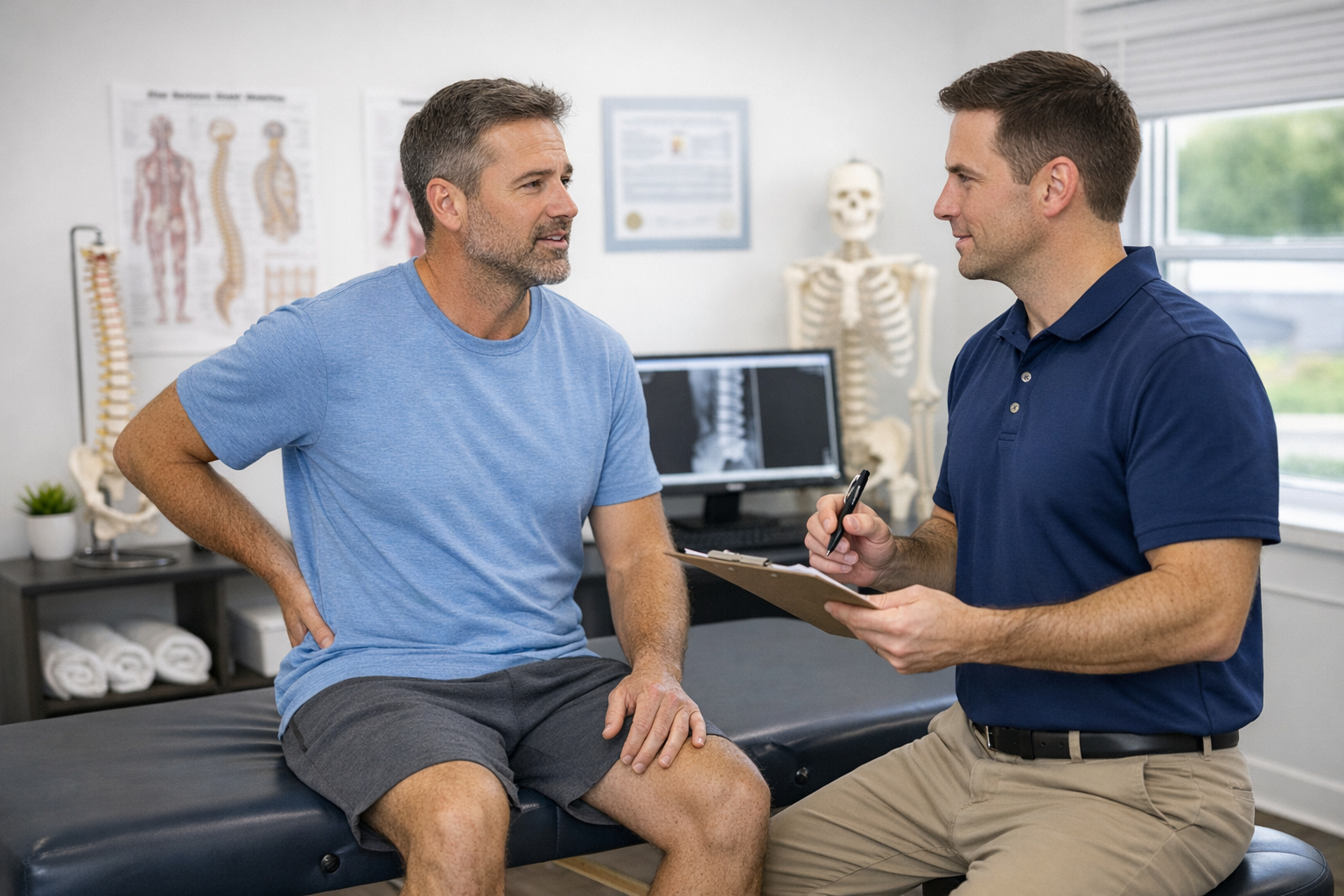 What a slipped disc actually is
A slipped disc, often called a herniated disc, happens when part of a spinal disc pushes outward and may irritate a nearby nerve. People also use terms like bulging disc or ruptured disc, although they are not always exactly the same thing. The lower back is one of the most common places for this problem, and that is why slipped disc symptoms often affect the low back, buttock, or leg.
That nerve irritation is what often creates the symptoms people notice most, such as:
- low back pain
- pain that travels into the buttock or leg
- tingling or numbness
- burning pain
- muscle weakness
- pain that worsens with certain movements, coughing, or sitting too long
A slipped disc does not always hurt in the exact spot of the disc. In some cases, the main complaint is leg pain rather than back pain.
This is also why some people start by searching for medication when the bigger question is whether the pain is actually coming from a disc, a strained muscle, joint irritation, or another condition.
If you want a broader overview of disc-related symptoms and conservative care, Vital Connection Chiropractic’s slipped disc page is a helpful starting point.
How to tell if you’ve slipped a disc
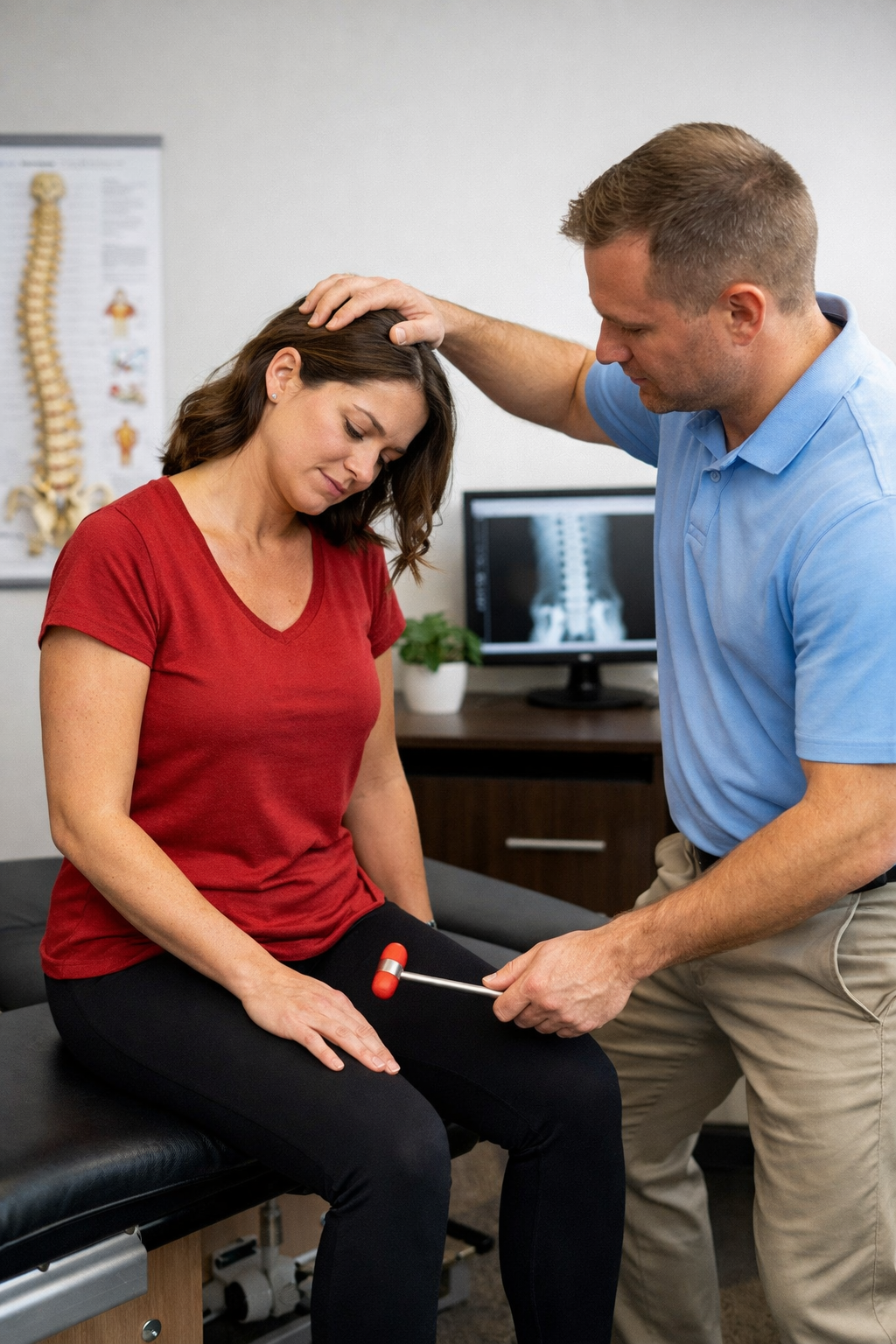
You cannot always tell from symptoms alone. A slipped disc may cause classic sciatica-like pain, but other conditions can feel surprisingly similar. A good evaluation usually looks at your symptom pattern, range of motion, reflexes, strength, sensation, and whether movement reproduces nerve-type pain. Imaging such as MRI may be appropriate in some cases, but not every patient needs it right away.
People often ask what can be mistaken for a slipped disc. Some common look-alikes include:
- muscle strain
- facet joint irritation
- sacroiliac joint dysfunction
- piriformis-related irritation
- spinal stenosis
- arthritis-related back pain
- hip problems
- other nerve irritation patterns
That is one reason self-diagnosis can be frustrating. The treatment for a disc issue is not always the same as the treatment for a muscle injury or joint restriction.
| Symptom Pattern | What It Could Mean | Next Step |
|---|---|---|
| Low back pain only after lifting | Muscle strain or disc irritation | Reduce aggravating activity and get evaluated if pain persists |
| Back pain with pain down one leg | Possible nerve irritation from a slipped disc | Seek a spinal evaluation |
| Tingling, numbness, or weakness | More significant nerve involvement | Prompt assessment is important |
| Pain worse with sitting and bending | Often seen with disc-related irritation | Modify posture and get examined |
| Loss of bladder or bowel control, saddle numbness, major weakness | Emergency warning signs | Seek urgent medical care immediately |
 Do you recover from a slipped disc?
 Do you recover from a slipped disc?
Many people do recover from a slipped disc, especially with conservative care. Symptoms often improve over several weeks, and many cases do not require surgery. Recovery time varies based on the severity of the disc injury, the amount of nerve irritation, your activity level, work demands, and whether you keep aggravating the problem.
That said, “recover” does not always mean symptoms vanish overnight. Some people improve steadily. Others feel better, overdo it, and flare up again. A proper plan usually focuses on calming the irritated area first, then improving movement and spinal support so the problem is less likely to keep returning.
How to heal a slipped disc
Healing a slipped disc usually involves reducing irritation, protecting the area without becoming inactive, and gradually improving how the spine moves and handles load.
1. Calm the flare-up
A brief period of reduced activity may help during the worst pain, but long periods of bed rest usually are not helpful. Light movement is often better than total inactivity.
2. Use symptom relief wisely
Medication may help you tolerate the early phase, but it should be used thoughtfully and based on your medical history. It is one tool, not the whole treatment plan.
3. Keep walking if you can
Short, tolerable walks often help more than staying still all day. The goal is gentle motion without pushing into sharp or worsening symptoms.
4. Avoid repeated aggravating positions
Deep bending, twisting under load, poor lifting mechanics, and prolonged sitting may keep a disc flare-up going.
5. Improve posture and spinal mechanics
How you sit, stand, lift, and work matters. This is especially relevant for desk workers, drivers, warehouse employees, and active parents around Fishers who keep asking their back to do more than it can currently handle.
6. Rebuild support with rehab
Targeted mobility and stability work can help reduce repeated stress on the same irritated structure.
7. Get a proper evaluation
If symptoms are traveling, recurring, or not improving, it is smart to seek an evaluation instead of relying on medication alone.
Many patients looking for non-surgical relief begin with chiropractic care to better understand whether spinal joint restriction, disc irritation, posture habits, or nerve tension is contributing to the pain.
When a slipped disc chiropractor may help
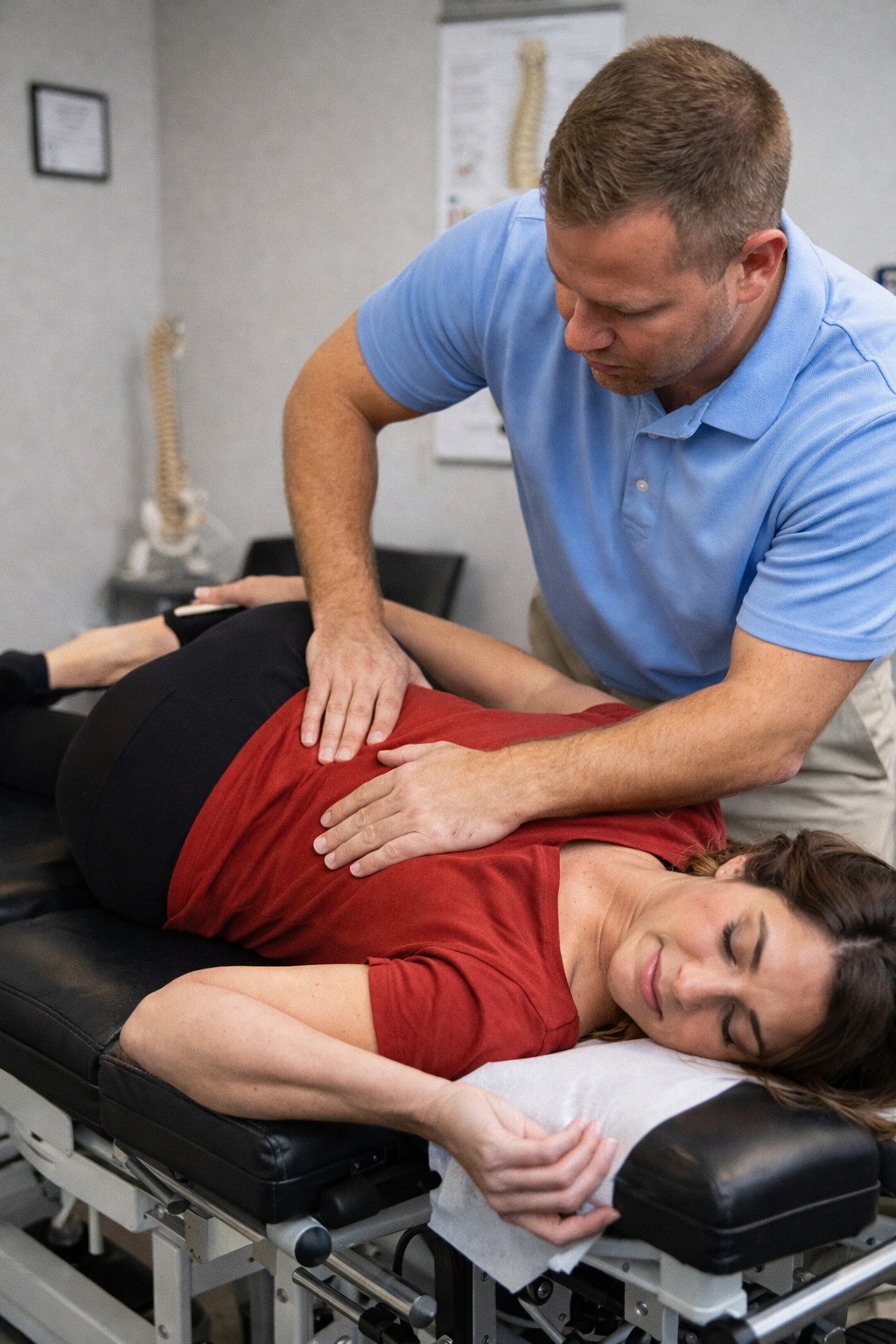
A slipped disc chiropractor may help by evaluating how your spine is moving, identifying patterns that aggravate nerve irritation, and using conservative care to improve mobility and reduce stress on the affected area. Depending on the case, care may include gentle chiropractic adjustments, flexion-distraction style techniques, soft tissue work, activity guidance, and exercises meant to improve support around the spine.
Chiropractic is not about masking symptoms. The goal is to improve function and reduce the mechanical stress that may keep pain going. It is also important to say that not every patient is a candidate for the same kind of care. If symptoms suggest a more urgent problem, referral for medical imaging or another specialist may be the safer next step.
This is especially important if you have:
- progressive weakness
- increasing numbness
- severe pain that is not responding
- difficulty standing or walking
- bowel or bladder changes
- a major recent trauma
If you are dealing with these types of symptoms and need direction, you can schedule appointment for an evaluation.
When slipped disc pain medication is not enough
 When slipped disc pain medication is not enough
Medication is not enough when the pain keeps returning, symptoms are spreading, or nerve-related changes are getting worse. That is when the focus should shift from temporary relief to finding out why the pain is happening and what type of care fits your case best.
Warning signs that need faster medical attention include worsening weakness, loss of bowel or bladder control, or numbness in the saddle area. These can point to a more serious nerve compression problem.
For many people, the real mistake is waiting too long while hoping medication alone will solve it. If you are in Fishers and your symptoms are affecting work, sleep, driving, workouts, or time with family, it may be time to speak with a slipped disc chiropractor or another appropriate provider for a clearer plan.
Why local evaluation matters in Fishers, IN
In a growing community like Fishers, many patients are balancing long commutes, desk time, active family schedules, lifting, workouts, or sports. Those daily demands can keep re-irritating an already sensitive low back.
A local evaluation matters because your care plan should match real life. Some patients need help returning to the gym. Some need help sitting through workdays. Others need strategies for parenting, driving, or sleeping more comfortably. Good care is individualized, and that matters more than chasing a one-size-fits-all answer online.
If you are struggling with slipped disc symptoms and want a conservative, patient-friendly next step, Vital Connection Chiropractic is here to help. You can contact us with questions or book your visit when you are ready.
FAQ
 FAQ
FAQHow to heal a slipped disc?
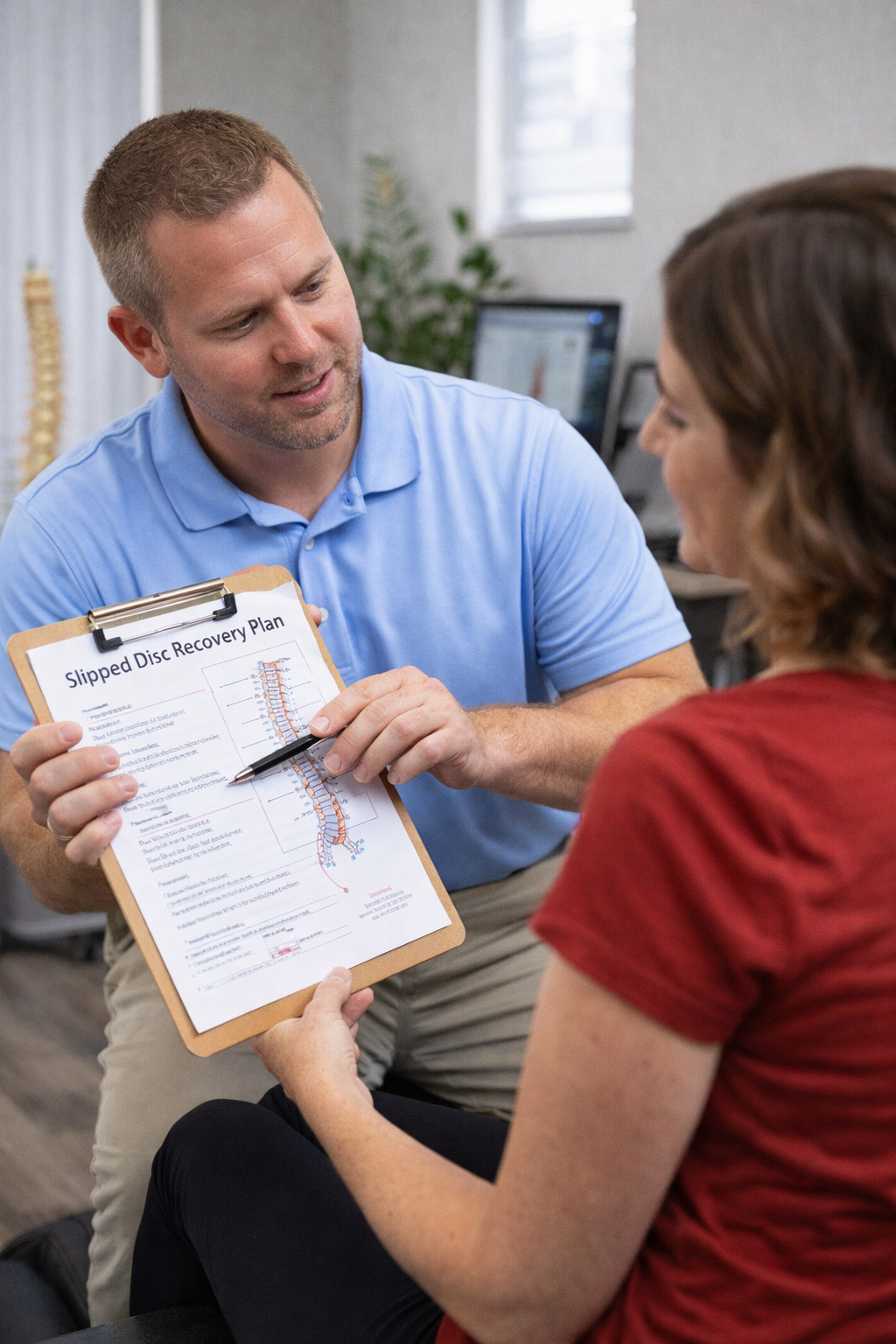
A slipped disc often heals with conservative care. That may include short-term pain relief strategies, staying gently active, avoiding repeated aggravating movements, improving posture, and following a rehab-based plan. A proper evaluation is important so the treatment matches the actual cause of your symptoms.
Do you recover from a slipped disc?
Yes, many people do recover from a slipped disc without surgery. Recovery often depends on symptom severity, nerve involvement, work demands, and whether the area keeps getting irritated. Some improve within weeks, while others need a more structured care plan.
How serious is a slipped disc?
A slipped disc can range from mild and self-limiting to more serious if it is compressing a nerve. Severe weakness, loss of bladder or bowel control, or numbness in the saddle region are urgent warning signs and need immediate medical attention.
How to tell if you’ve slipped a disc?
Common clues include low back pain with radiating leg pain, tingling, numbness, or weakness. Still, symptoms alone are not enough to confirm it. A physical exam, review of your history, and sometimes imaging are used when needed to clarify the diagnosis.
What can be mistaken for a slipped disc?
Muscle strain, joint irritation, piriformis-related pain, spinal stenosis, hip issues, and other causes of nerve irritation can sometimes feel similar. That is why a hands-on evaluation is often more useful than guessing based on internet symptoms.