Can a Chiropractor Help With TMJ? Fishers, IN FAQ
Yes, a chiropractor may help with TMJ symptoms when jaw pain is connected to neck tension, posture strain, muscle tightness, stress-related clenching, or poor jaw mechanics. Chiropractic care does not replace dental or medical care, but it can support better jaw, neck, and upper spine function through a careful evaluation, gentle care, posture guidance, and individualized recommendations.
Can a Chiropractor Help With TMJ?
A chiropractor may help with TMJ by evaluating how the jaw, neck, shoulders, posture, and nervous system are working together. The temporomandibular joints sit close to the ears and help the lower jaw move when you speak, chew, yawn, and swallow. When the joint or surrounding muscles become irritated, symptoms can show up in the jaw, face, head, ears, neck, and shoulders.
For many people in Fishers, IN, TMJ symptoms are not caused by one issue only. Jaw pain can be influenced by nighttime clenching, teeth grinding, neck stiffness, forward head posture, stress, old injuries, dental issues, arthritis, or habits like chewing gum and biting nails. That is why a proper evaluation matters.
At Vital Connection Chiropractic, the goal is not to force the jaw into place or promise a cure. The goal is to understand what may be contributing to your symptoms and create a plan that supports better function. For some patients, that may include gentle chiropractic adjustments, soft tissue work, posture coaching, home exercises, and referral guidance when dental or medical care is needed.
Patients looking for a local TMJ evaluation in Fishers may benefit from starting with a conservative, whole-body look at how the jaw and neck are moving together.
What TMJ Means and Why It Can Hurt
TMJ stands for temporomandibular joint. These joints are located on both sides of the face, just in front of the ears. They connect the lower jaw to the skull and allow the jaw to move up, down, forward, back, and side to side.
When people say they “have TMJ,” they usually mean they have TMJ dysfunction or TMD. This may involve irritation in the joint, tightness in the chewing muscles, inflammation, restricted motion, clicking, popping, locking, or pain with normal jaw movement.
TMJ discomfort can happen for several reasons, including:
- Clenching or grinding the teeth
- Jaw injury or whiplash
- Stress-related jaw tension
- Poor posture and tech neck
- Uneven chewing habits
- Arthritis in the jaw joint
- Dental bite issues
- Sleep position that strains the jaw
- Gum disease, tooth pain, or sinus pressure
This is why chiropractic for TMJ should be thoughtful and individualized. Jaw pain is not always a chiropractic issue. Sometimes a dentist, physician, oral surgeon, or other provider should be involved. A good first step is identifying whether the pain seems muscular, joint-related, dental, postural, injury-related, or connected to another health concern.
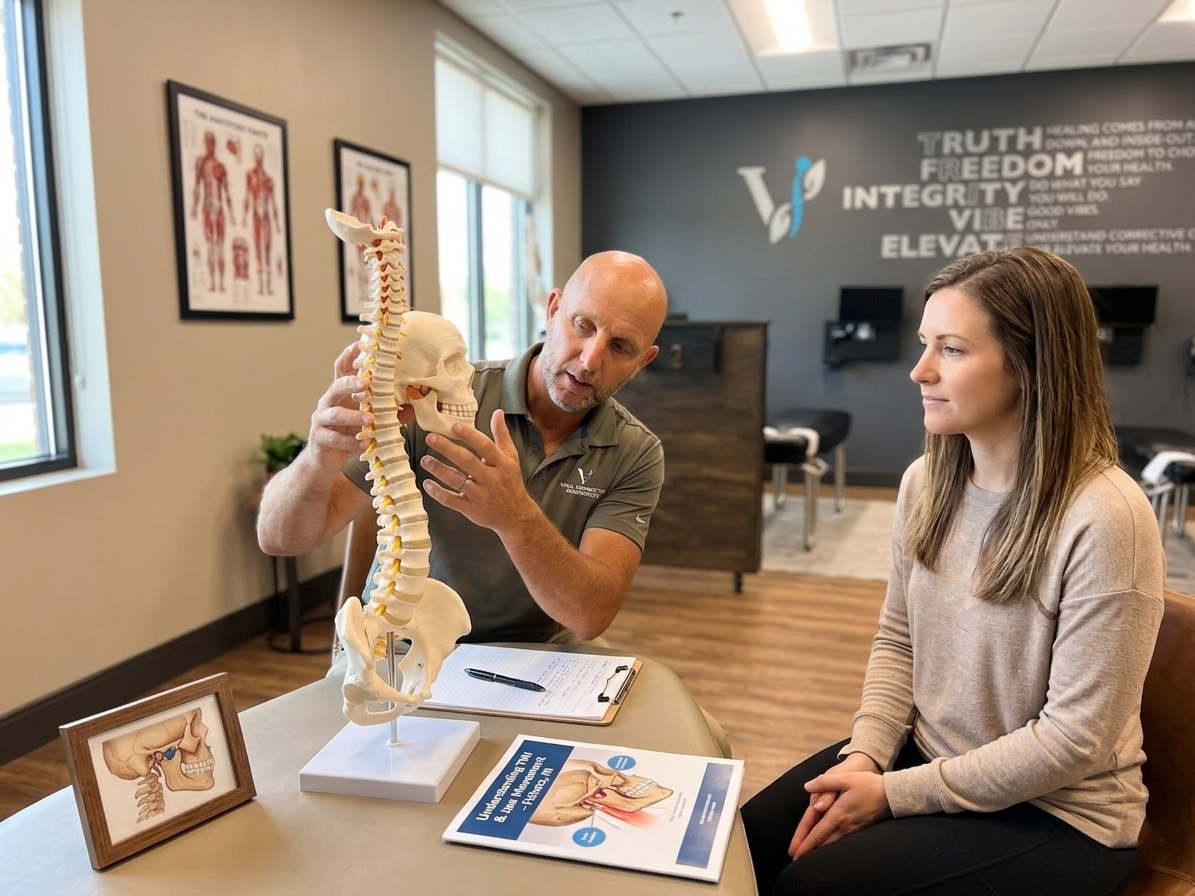 Common Signs That TMJ May Be Involved
TMJ symptoms can feel different from person to person. Some patients mainly notice jaw tightness in the morning. Others feel clicking, temple headaches, ear pressure, or discomfort when eating.
| Symptom or Concern | What It May Mean | Best Next Step |
|---|---|---|
| Jaw clicking with pain | Joint irritation or altered jaw mechanics | Schedule an evaluation |
| Morning jaw soreness | Possible clenching or grinding during sleep | Discuss dental and chiropractic options |
| Headaches near the temples | Chewing muscle tension may be involved | Track triggers and seek care |
| Neck tightness with jaw pain | Posture and upper spine tension may contribute | Consider a chiropractic assessment |
| Jaw locking or limited opening | Possible joint dysfunction or disc involvement | Seek professional evaluation |
| Tooth pain or gum swelling | Dental issue may be involved | Contact a dentist |
| Chest pain moving into the jaw | Possible emergency symptom | Call emergency services |
Jaw pain that comes and goes may still deserve attention if it affects eating, speaking, sleep, work, or daily life. People in Fishers, Noblesville, Carmel, Geist, McCordsville, Castleton, and nearby Hamilton County communities often deal with desk work, long commutes, phone use, and stress. These habits can feed into neck tension and jaw clenching over time.
How Neck Posture and Jaw Tension Connect
The jaw does not work alone. It is connected to the head, neck, shoulders, and upper spine through muscles, joints, nerves, and movement patterns. When the head shifts forward from screen time, the muscles under the jaw and around the neck may work harder than they should. Over time, this can increase tension around the jaw.
Forward head posture can also change how the jaw rests. When the neck and shoulders are tight, the jaw may become more guarded. This does not mean posture is always the main cause of TMJ pain, but it can be one contributing factor.
Common daily patterns that may irritate TMJ symptoms include:
- Looking down at a phone for long periods
- Holding tension in the jaw while working
- Clenching during stressful tasks
- Sleeping on the stomach or pressing the jaw into a pillow
- Chewing mostly on one side
- Taking large bites
- Chewing gum often
- Leaning on the chin while sitting
A chiropractor may look at these patterns because they can influence how the jaw feels throughout the day. For example, a patient may have jaw pain after sleeping, but the problem may be building from a combination of work posture, stress, and nighttime clenching.
What a TMJ Chiropractor May Evaluate
A TMJ chiropractor may evaluate more than the jaw joint itself. A careful assessment may include your health history, symptom triggers, jaw range of motion, neck motion, posture, muscle tenderness, headache patterns, and how symptoms affect daily activities.
At Vital Connection Chiropractic, a TMJ-focused evaluation may consider:
- Where the jaw hurts
- Whether the pain is one-sided or both-sided
- Whether the jaw clicks, pops, locks, or shifts
- Whether chewing, yawning, or talking makes it worse
- Whether symptoms are worse in the morning
- Whether headaches, neck pain, or ear pressure are present
- Whether there was a recent accident, fall, sports injury, or whiplash
- Whether dental pain, tooth sensitivity, or gum swelling may be involved
This helps determine whether chiropractic care may be appropriate, whether dental co-management is needed, or whether another provider should evaluate the symptoms first.
For patients ready to take the next step, Schedule Appointment can be used to request a visit with Vital Connection Chiropractic in Fishers, IN.
 Chiropractic for TMJ: Conservative Care Options
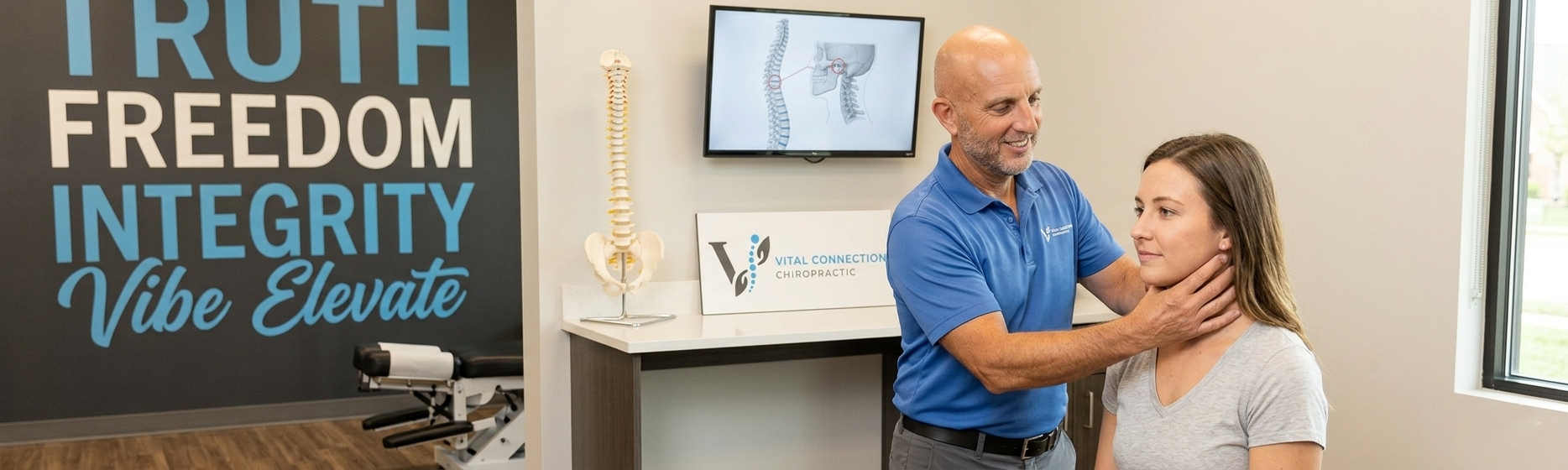 Chiropractic for TMJ: Conservative Care Options
Chiropractic for TMJ often focuses on reducing strain in the areas that influence jaw function. Care should be gentle, specific, and based on the patient’s exam findings.
Conservative care may include:
Gentle Chiropractic Adjustments
If the neck or upper spine is restricted, gentle adjustments may help improve movement and reduce stress on surrounding muscles. This may support better head and neck position, which can influence the jaw.
Soft Tissue Support
Tight muscles in the jaw, neck, shoulders, and upper back can contribute to discomfort. A chiropractor may use gentle soft tissue techniques or recommend safe home strategies to help the area relax.
Posture and Ergonomic Guidance
Many TMJ flare-ups are influenced by daily habits. Simple changes to screen height, desk setup, phone use, and sleeping posture may help reduce repetitive strain.
Jaw and Neck Mobility Exercises
A chiropractor may recommend gentle exercises to support better motion. These should be individualized. Forcing the jaw open, pushing the jaw into place, or aggressive stretching can make symptoms worse for some people.
Lifestyle and Trigger Coaching
TMJ symptoms may flare with gum chewing, nail biting, teeth clenching, large bites, chewy foods, or stress. Identifying these triggers can make care more effective.
Chiropractic care may be especially helpful when TMJ symptoms occur with neck pain, headaches, poor posture, shoulder tension, or a history of whiplash. It may be less appropriate as a standalone option when the main issue is a cavity, gum disease, tooth infection, broken jaw, dislocation, or severe joint damage.
Dentist or Chiropractor for TMJ?
Many patients ask whether they should see a dentist or a chiropractor for TMJ. The answer depends on the symptoms and likely cause.
A dentist is often the best first call when jaw pain comes with tooth pain, gum swelling, bite changes, worn teeth, tooth sensitivity, suspected grinding, or the need for a mouth guard. A dentist can evaluate teeth, bite, oral health, and dental appliances.
A chiropractor may be helpful when jaw pain is connected to neck stiffness, headaches, posture strain, muscle tension, or restricted movement in the upper spine. Chiropractic care may also complement dental care when clenching and posture both seem to be involved.
In many cases, the best approach is collaborative. TMJ problems can involve the jaw joint, teeth, muscles, neck, posture, sleep, and stress. Patients do not have to choose one provider forever. They need the right provider for the right part of the problem.
Vital Connection Chiropractic can help evaluate whether your symptoms may be appropriate for conservative chiropractic support. If your symptoms suggest dental, medical, or emergency care is needed, the next step should be a referral or urgent evaluation.
For questions about appointment options or whether your symptoms are a good fit, use Contact Us.
Home Steps That May Support TMJ Relief
Home care should be gentle. The goal is to reduce irritation, not force the jaw to “realign.”
| Home Step | Best For | Why It May Help |
| Resting jaw posture | Daytime clenching | Keeps teeth slightly apart and jaw relaxed |
| Soft foods during flare-ups | Pain with chewing | Reduces workload on irritated jaw muscles |
| Avoiding gum and chewy foods | Muscle overuse | Limits repeated strain on the joint |
| Warm compress | Dull muscle tension | May help tight muscles relax |
| Cold pack | Acute soreness | May help calm irritation after a flare-up |
| Back sleeping support | Morning jaw pain | Reduces pressure on one side of the jaw |
| Tracking symptoms | Recurring flare-ups | Helps identify patterns and triggers |
Try to keep the tongue resting gently on the roof of the mouth, lips closed, and teeth apart when you are not eating. This relaxed jaw position can help reduce unconscious clenching during the day.
If symptoms worsen with any home step, stop and ask a professional for guidance.
When TMJ Symptoms Need Medical or Dental Attention
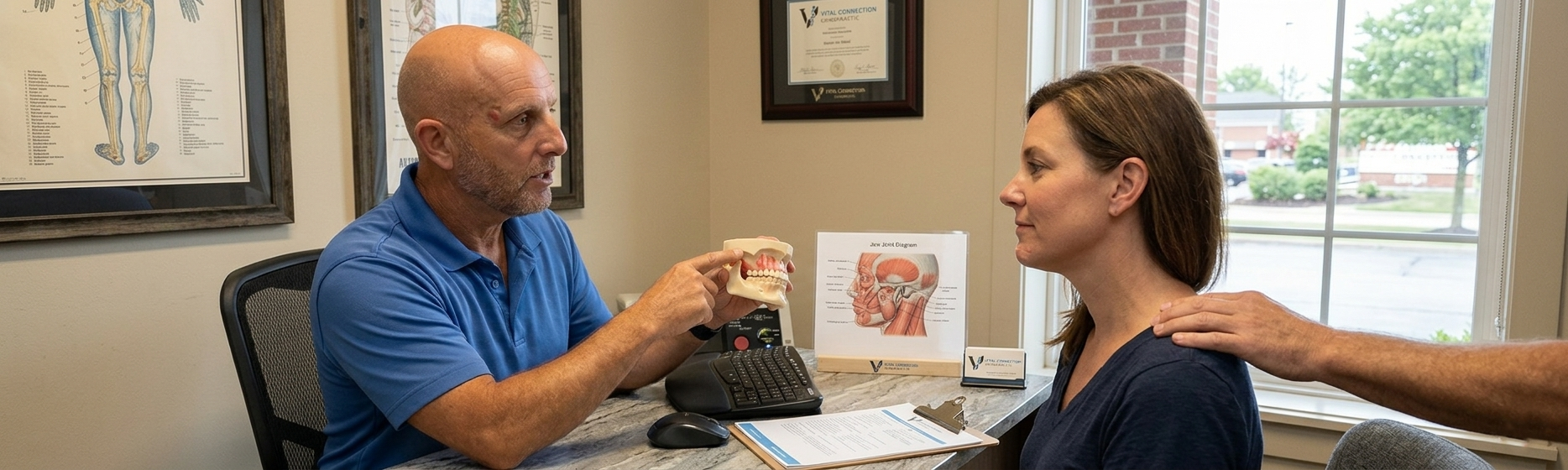 When TMJ Symptoms Need Medical or Dental Attention
Not all jaw pain should be managed with home care or chiropractic care. Some symptoms need dental, medical, or emergency evaluation.
Seek urgent help if jaw pain follows a major injury, you think the jaw may be broken or dislocated, you cannot open or close the mouth normally, or pain spreads from the chest or shoulder into the jaw. Chest pressure, shortness of breath, sweating, dizziness, or pain traveling into the jaw should be treated as a possible emergency.
Call a dentist or healthcare provider if you have tooth pain, gum swelling, fever, facial swelling, severe one-sided pain, new bite changes, or jaw pain lasting more than a week. These symptoms may point to dental infection, gum disease, sinus issues, or other conditions that need specific care.
Call a chiropractor when symptoms are paired with neck tension, headaches, posture strain, jaw tightness, or movement restrictions and you want a conservative evaluation. You can learn more about Vital Connection Chiropractic’s local approach to TMJ care.
Why Fishers, IN Patients Should Not Ignore TMJ Symptoms
TMJ symptoms can start small. A little morning tightness, a clicking sound, or a mild headache may not seem like much at first. But if the irritation keeps returning, it can affect eating, sleeping, speaking, concentration, exercise, and mood.
Fishers residents often balance desk work, family routines, school activities, sports, and commuting around Hamilton County. These daily demands can contribute to stress, posture fatigue, and clenching. When the jaw is already irritated, small habits can keep symptoms active.
A proper evaluation can help answer important questions:
- Is the pain coming from the jaw, teeth, neck, or another area?
- Are posture and muscle tension making it worse?
- Is grinding or clenching likely involved?
- Are there signs that dental care is needed?
- What home steps are safe for your situation?
- Is chiropractic care appropriate?
The earlier you understand the pattern, the easier it may be to avoid repeatedly irritating the joint.
A Gentle Next Step for TMJ Pain in Fishers, IN
If you are wondering, “can a chiropractor help with TMJ?” the safest answer is that chiropractic care may help when your symptoms are related to neck tension, posture strain, muscle tightness, and jaw movement patterns. It is not a guaranteed fix and it is not a replacement for dental or medical care when those are needed.
Vital Connection Chiropractic provides a conservative, patient-focused approach for people in Fishers, IN and nearby communities. The goal is to evaluate the whole picture, explain what may be contributing to your symptoms, and help you choose the next step with clarity.
To request a visit, use Schedule Appointment. To ask a question before scheduling, use Contact Us.
FAQ
How do I realign my TMJ jaw?
Do not try to force your TMJ jaw back into place on your own. The jaw is a sensitive joint system, and aggressive self-adjusting can make irritation worse, especially if there is locking, injury, swelling, or disc involvement. A safer approach is to seek an evaluation from a qualified provider who can determine whether the issue is muscular, dental, joint-related, or injury-related. Gentle jaw relaxation, soft foods, posture support, and avoiding clenching may help while you wait for care.
What is the 3 finger test for TMJ?
The 3 finger test is a simple way some people estimate jaw opening, but it is not a diagnosis. In general, a person may try to see whether three fingers stacked vertically can fit between the upper and lower front teeth during mouth opening. Difficulty doing this may suggest limited jaw motion, but it does not confirm TMJ disorder or explain the cause. Pain, locking, clicking, headaches, or chewing trouble should be evaluated professionally.
Should I go to a dentist or chiropractor for TMJ?
You may need a dentist, a chiropractor, or both depending on the cause of your TMJ symptoms. A dentist is important if you have tooth pain, gum swelling, bite changes, worn teeth, or suspected grinding that may require a mouth guard. A chiropractor may help when symptoms involve neck tension, headaches, posture strain, and jaw muscle tightness. Many TMJ cases benefit from a collaborative approach because the jaw, teeth, neck, posture, and stress habits can all contribute.
Does TMJ ever fully go away?
TMJ symptoms can improve, and some people experience long periods without pain, but it depends on the cause. If symptoms are mainly from temporary muscle tension, stress, or a short flare-up, they may calm with conservative care and habit changes. If the issue involves grinding, arthritis, injury, bite problems, or joint changes, ongoing management may be needed. A proper evaluation helps determine what is realistic and what steps may reduce future flare-ups.
What causes TMJ to flare-up?
TMJ flare-ups are often triggered by overuse, tension, stress, posture strain, or irritation around the jaw joint. Common triggers include clenching, grinding, chewing gum, eating tough foods, taking large bites, poor sleep posture, leaning on the chin, increased stress, and long hours looking down at screens. Dental problems, sinus pressure, arthritis, and injuries may also contribute. Tracking when symptoms appear can help identify the habits or conditions that keep the jaw irritated.
What is the best sleeping position for TMJ?
Sleeping on your back is often a better option for TMJ because it reduces direct pressure on one side of the jaw. Stomach sleeping or pressing the face into a pillow can push the jaw into an awkward position for hours. A supportive pillow that keeps the head and neck neutral may also help reduce strain. If you wake with jaw pain, clenching or grinding may be involved, so a dentist or healthcare provider may need to evaluate your symptoms.