TMJ Headache Relief in Fishers, IN: What Helps Jaw Tension and Head Pressure?
TMJ headache relief often starts by reducing jaw tension, improving neck and upper back mechanics, calming irritated muscles, and identifying daily habits that overload the jaw joint. For many people in Fishers, IN, TMJ headaches are connected to clenching, grinding, poor posture, stress, neck stiffness, or irritation around the temporomandibular joint. Chiropractic care may help by evaluating how the jaw, neck, shoulders, and posture work together, then creating a plan that supports better movement and less muscle strain.
What Are TMJ Headaches?
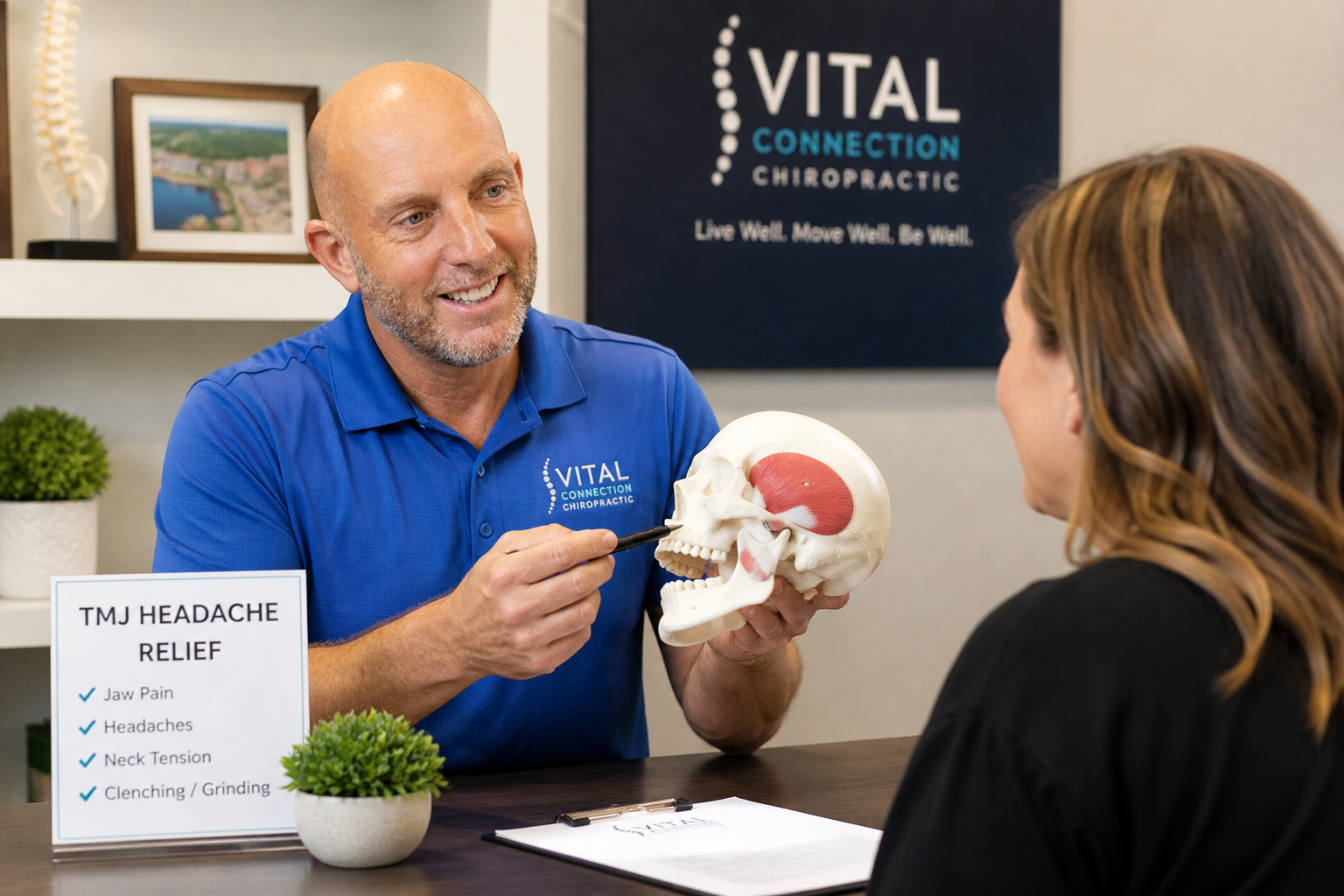
TMJ headaches are headaches linked to irritation, tension, or dysfunction around the temporomandibular joint. This joint connects your jawbone to your skull and helps you chew, speak, yawn, and move your mouth.
When the joint, surrounding muscles, or nearby nerves become irritated, pain may spread into the temples, forehead, ears, jaw, neck, or back of the head. Some people describe the pain as a tight band around the head. Others feel pressure near the temples or soreness around the jaw.
TMJ headaches can feel confusing because they may not always start in the jaw. A person may notice head pressure first, then later realize they also have jaw clicking, clenching, ear fullness, facial tension, or neck stiffness.
In a chiropractic setting, TMJ headaches are usually evaluated as part of a larger movement pattern. The jaw does not work alone. It is closely connected with the neck, upper back, posture, breathing patterns, and daily muscle tension.
For patients in Fishers, Noblesville, Carmel, Geist, McCordsville, Castleton, and nearby Hamilton County communities, a focused evaluation can help determine whether jaw mechanics may be contributing to recurring headaches.
Why TMJ Problems Can Cause Headaches
The jaw joint sits close to many important muscles, nerves, and connective tissues. When the TMJ is irritated, the surrounding muscles may tighten to protect the area. This can create tension in the temples, cheeks, neck, and scalp.
TMJ headaches may be connected to:
- Jaw clenching during the day
- Nighttime teeth grinding
- Stress-related muscle tension
- Forward head posture
- Neck stiffness
- Uneven bite stress
- Chewing on one side
- Gum chewing or hard foods
- Recent dental work
- Trauma to the jaw, head, or neck
- Long hours at a desk or computer
The jaw and neck often compensate for each other. When the head shifts forward, the muscles under the jaw and around the neck may work harder. Over time, this can increase tension around the TMJ and lead to headaches.
This is why jaw tension headache relief often needs more than one step. Resting the jaw can help, but long-term improvement may also require better posture, improved neck mobility, reduced clenching habits, and a care plan based on the cause of the problem.
 Common Signs Your Headache May Be TMJ Related
A TMJ headache may feel like a regular tension headache, but there are clues that the jaw may be involved. You may notice jaw symptoms, ear symptoms, neck symptoms, or headache patterns that change with chewing or clenching.
| Concern | What It May Mean | Best Next Step |
|---|---|---|
| Headache near the temples | Jaw muscles may be tight or overworked | Track when the headache appears and avoid clenching |
| Jaw clicking or popping | The TMJ may not be moving smoothly | Schedule a proper TMJ evaluation |
| Ear pressure without infection | TMJ irritation can refer discomfort near the ear | Rule out ear concerns with a medical provider if needed |
| Morning headaches | Nighttime grinding or clenching may be involved | Ask about dental and chiropractic evaluation options |
| Neck stiffness with jaw pain | Neck mechanics may be adding stress to the jaw | Consider an assessment of posture, jaw, and cervical movement |
| Pain with chewing | Jaw muscles or joint tissues may be irritated | Choose softer foods and avoid overloading the jaw |
Not every headache with jaw tension is caused by TMJ dysfunction. Headaches can also come from sinus issues, migraines, blood pressure concerns, medication side effects, vision strain, dental problems, or other medical conditions.
Seek medical care promptly if your headache is sudden and severe, follows trauma, includes weakness or numbness, comes with vision changes, causes confusion, or feels unlike your normal headache pattern.
TMJ Headache Relief: 7 Practical Steps
TMJ headache relief usually works best when it combines short-term calming steps with long-term correction of habits and movement patterns. The right plan depends on what is causing the jaw tension.
1. Rest the jaw without locking it still
During a TMJ flare-up, the jaw often needs a break from heavy chewing. That does not mean you should force your jaw shut or avoid normal speaking. Instead, reduce avoidable strain.
Helpful steps may include:
- Eating softer foods for a short period
- Avoiding gum
- Cutting food into smaller bites
- Avoiding chewy candy or tough meat
- Limiting wide yawning
- Resting the tongue gently on the roof of the mouth
A relaxed jaw position can help reduce muscle guarding. The teeth should not be touching unless you are chewing or swallowing.
2. Use gentle heat or cold
Some people feel better with gentle warmth over the jaw muscles. Others prefer cold during a painful flare-up. Heat may help relax tight muscles, while cold may help calm soreness.
Use a towel barrier and avoid extreme temperatures. If symptoms worsen with heat or cold, stop and choose a different approach.
3. Reduce clenching triggers
Many people clench without realizing it. Desk work, driving, lifting, stress, scrolling, and concentrating can all trigger jaw tension.
Try this reminder several times per day:
Lips together, teeth apart, tongue relaxed.
This simple habit can reduce constant pressure through the TMJ.
4. Support your neck posture
Forward head posture can increase strain through the jaw, neck, and upper shoulders. This is common for people who spend long hours on computers or phones.
A better desk setup may include:
- Screen at eye level
- Shoulders relaxed
- Feet supported
- Elbows close to the body
- Phone raised instead of looking down
- Short movement breaks every 30 to 60 minutes
If neck stiffness is part of your headache pattern, reviewing the connection between TMJ and Headaches can help you understand why jaw and neck symptoms often overlap.
5. Avoid aggressive jaw stretching
When the jaw feels tight, it can be tempting to stretch it hard or force it to pop. This may irritate the joint more.
Gentle movement is usually safer than aggressive stretching. If your jaw locks, catches, or causes sharp pain, get evaluated before trying jaw exercises on your own.
6. Address the jaw, neck, and upper back together
TMJ headaches often involve more than the jaw joint. The upper neck, shoulders, and posture may also contribute. This is one reason chiropractic care can be helpful for some patients.
At Vital Connection Chiropractic, care may include a detailed evaluation, gentle chiropractic adjustments when appropriate, soft tissue support, posture recommendations, and practical home care guidance. Patients looking for more information about jaw-related symptoms can start with the TMJ page.
7. Get evaluated if symptoms keep returning
If TMJ headaches happen often, keep coming back, or interfere with work, sleep, chewing, or daily life, it is time to look deeper. Relief should not depend only on temporary fixes.
A proper evaluation can help identify whether your symptoms are mostly coming from jaw tension, neck mechanics, posture, dental concerns, stress patterns, or a combination of factors.
How Chiropractic Care May Support TMJ Headache Relief
Chiropractic care for TMJ headaches does not treat every case the same way. A careful evaluation matters because jaw pain and headaches can have different causes.
A TMJ-focused chiropractic visit may include:
- Discussion of headache frequency and triggers
- Jaw movement evaluation
- Neck and posture assessment
- Muscle tension screening
- Review of clenching, grinding, and desk habits
- Range of motion checks
- Recommendations for home care
- Referral guidance if dental or medical evaluation is needed
The goal is to understand how your jaw, neck, and upper body are working together.
For some people, chiropractic care may support TMJ headache relief by helping improve neck mobility, reduce muscle tension, support posture, and decrease mechanical stress around the jaw and upper cervical area.
Chiropractic care does not replace dental care when bite issues, tooth pain, or grinding appliances are involved. It also does not replace medical care for severe, unusual, or neurological headaches. The best approach may involve collaboration between chiropractic, dental, and medical providers when needed.
 At-Home Tips for Jaw Tension Headache Relief
 At-Home Tips for Jaw Tension Headache Relief
At-home care can be useful, especially when symptoms are mild or related to muscle tension. These steps are meant to calm the area, not force the joint.
| TMJ Headache Trigger | Home Step | When to Call |
|---|---|---|
| Jaw clenching | Practice teeth-apart jaw relaxation several times daily | If clenching causes frequent headaches |
| Chewy foods | Choose softer foods during a flare-up | If chewing remains painful after a few days |
| Desk posture | Raise screen height and take movement breaks | If headaches worsen during work |
| Neck stiffness | Use gentle neck movement, not forceful stretching | If pain travels into the arm or causes numbness |
| Morning headache | Ask about grinding, sleep position, and pillow support | If you wake with headaches often |
| Jaw popping | Avoid forcing the jaw to pop | If the jaw locks, catches, or becomes painful |
Try a calm jaw reset
A gentle jaw reset may help reduce tension during the day.
- Sit tall with your shoulders relaxed.
- Let your tongue rest lightly on the roof of your mouth.
- Keep your teeth slightly apart.
- Breathe slowly through your nose.
- Let the jaw hang naturally without forcing it open.
- Hold for 30 to 60 seconds.
This should feel easy. Stop if it increases pain.
Try a posture reset
If you work at a computer, your jaw may tighten as your head drifts forward.
Try this:
- Sit tall without stiffening your back.
- Gently bring your head back over your shoulders.
- Relax your jaw.
- Drop your shoulders away from your ears.
- Take 3 slow breaths.
Small posture resets throughout the day can be more useful than one long stretching session at night.
Reduce nighttime strain
If you wake up with jaw soreness or headaches, nighttime clenching may be part of the problem. A dentist can evaluate whether a night guard or other dental support is appropriate. Chiropractic care may also help assess neck position, pillow support, and muscle tension patterns that contribute to morning discomfort.
When to Schedule a TMJ Evaluation in Fishers, IN
 When to Schedule a TMJ Evaluation in Fishers, IN
You should consider scheduling a TMJ evaluation if headaches and jaw tension are affecting your daily life. Early evaluation may help prevent the pattern from becoming more frustrating or harder to manage.
Schedule an appointment if you notice:
- Frequent headaches near the temples
- Jaw pain with chewing
- Jaw clicking with pain
- Ear pressure with jaw tension
- Morning headaches
- Neck stiffness with headaches
- Facial tightness
- Pain that worsens during stress
- Headaches that return after temporary relief
- Jaw symptoms after an injury or accident
Patients in Fishers and nearby areas often deal with long commutes, desk work, sports activities, screen time, and daily stress. These routines can create tension patterns that affect the neck, jaw, and head.
A personalized plan can help you understand what is happening and what steps may support lasting improvement. If you are ready to take the next step, use Schedule Appointment to request a visit with Vital Connection Chiropractic.
TMJ Headaches and the Neck Connection
The upper neck and jaw are closely related. When the neck becomes stiff, the jaw muscles may compensate. When the jaw is tight, the neck muscles may tighten in response.
This can create a cycle:
Jaw tension increases head pressure.
Head pressure increases neck guarding.
Neck guarding increases jaw stress.
Jaw stress brings the headache back.
This is why many TMJ headache cases need a combined approach. Looking only at the jaw may miss the postural or neck-related factors. Looking only at the neck may miss clenching and chewing habits.
A chiropractor may evaluate the cervical spine, jaw movement, shoulder tension, and posture to better understand your pattern. This is especially helpful when TMJ headaches are paired with neck pain, upper shoulder tightness, or headaches that start near the base of the skull.
If you are not sure whether your symptoms are jaw related or headache related, Contact Us to ask about the best next step.
What to Avoid During a TMJ Headache Flare-Up
During a flare-up, the goal is to calm the jaw and reduce irritation. Certain habits can make symptoms worse.
Try to avoid:
- Chewing gum
- Biting nails
- Chewing ice
- Taking large bites
- Resting your chin on your hand
- Sleeping with pressure on the jaw
- Forcing the jaw to pop
- Aggressive jaw stretching
- Clenching during workouts
- Ignoring worsening headache symptoms
Also be careful with online “quick fixes.” Some pressure points or massage tricks may feel good temporarily, but they may not address the reason your TMJ headaches keep returning. If a technique causes sharp pain, dizziness, numbness, or worsening symptoms, stop and get evaluated.
How Vital Connection Chiropractic Approaches TMJ Headache Relief
Vital Connection Chiropractic focuses on patient-friendly care that looks at the whole pattern, not just one painful area. For TMJ headache relief, that means looking at jaw motion, neck mechanics, posture, daily habits, and the way symptoms behave over time.
Your visit may include a conversation about:
- Where the headache starts
- How often it happens
- What makes it better or worse
- Whether you clench or grind
- Whether you have jaw clicking
- Whether chewing changes the pain
- Whether neck movement affects symptoms
- What your work setup looks like
- Whether symptoms started after an injury
From there, the care plan may include gentle chiropractic care, posture coaching, jaw relaxation strategies, soft tissue recommendations, movement guidance, and referral recommendations if another provider should be involved.
The goal is not to promise a cure. The goal is to help you understand the likely contributors, reduce avoidable stress on the jaw and neck, and support better function with an individualized plan.
For patients who need both jaw and headache support, the TMJ resource is a helpful place to learn more before scheduling.
 A Patient-Friendly Plan for Better TMJ Headache Relief
 A Patient-Friendly Plan for Better TMJ Headache Relief
TMJ headache relief is usually not about one magic trick. It is about finding the cause of the tension and reducing the strain that keeps feeding the headache pattern.
For many people, the best plan includes:
- Calming the jaw during flare-ups
- Improving daily jaw habits
- Addressing neck stiffness
- Reducing posture stress
- Reviewing sleep and clenching patterns
- Avoiding aggressive jaw movements
- Getting evaluated when symptoms persist
If your headaches are connected to jaw tension, you do not have to keep guessing. A focused TMJ and headache evaluation may help you understand what is contributing to your discomfort and what steps make sense for your body.
Vital Connection Chiropractic serves patients in Fishers, IN and nearby Hamilton County communities with a clear, practical, and personalized approach. To begin, visit Schedule Appointment and choose a time that works for you.
FAQ
How do I get rid of a TMJ headache?
Start by calming the jaw and reducing muscle tension. A TMJ headache may improve with jaw rest, softer foods, gentle heat or cold, relaxed breathing, and avoiding clenching. Keep your teeth slightly apart when you are not chewing. Because TMJ headaches can involve the neck, posture, and jaw muscles, a chiropractic evaluation may help identify contributing movement patterns. Seek medical care quickly if your headache is severe, sudden, unusual, or comes with neurological symptoms.
How do you calm a TMJ flare up?
Calm a TMJ flare-up by reducing jaw strain and avoiding forceful movement. Choose softer foods, avoid gum, limit wide yawning, and keep your jaw relaxed with your teeth apart. Gentle heat may relax tight muscles, while cold may help soreness for some people. Do not force the jaw to pop or stretch aggressively. If the flare-up keeps returning, includes locking, or causes frequent headaches, it is smart to schedule an evaluation.
What is the Chinese trick for headaches?
Some people use acupressure-style pressure points for temporary headache relief, but it should be done gently and safely. A common approach involves applying light pressure between the thumb and index finger or around the temples. However, pressure points do not fix every headache and should not replace proper evaluation. If your headaches are linked to TMJ, jaw clenching, neck stiffness, or posture, you may need a more complete plan. Avoid pressure techniques if they worsen pain or cause unusual symptoms.
Where to press to relieve TMJ?
Gentle pressure may be applied to the jaw muscles, temples, and cheek muscles, but it should never be painful. Some people find relief by lightly massaging the masseter muscle, which is the thick chewing muscle near the back of the jaw. Others feel tension around the temples. Use slow, gentle pressure and stop if symptoms increase. If your jaw clicks painfully, locks, or your headaches keep returning, get evaluated before relying on self-massage.
What is the Chinese remedy for TMJ?
Traditional approaches may include gentle acupressure, relaxation, herbal remedies, or acupuncture, but TMJ care should still be based on the cause of the symptoms. Some people feel temporary relief with calming techniques, but TMJ headaches often involve jaw mechanics, clenching, posture, and neck tension. Be careful with herbs or supplements because they may interact with medications or health conditions. For persistent TMJ pain or headaches, a chiropractic, dental, or medical evaluation may be needed.