Car Accident Chiropractor: What to Do After a Crash in Fishers, IN
A car accident chiropractor is a chiropractor who evaluates and treats musculoskeletal injuries after a crash, especially whiplash, neck pain, back pain, headaches, stiffness, reduced range of motion, and nerve-related symptoms. After a collision in Fishers, even a low-speed impact can leave you with soft tissue injuries that do not always show up right away, which is why early evaluation matters.
If your crash happened near I-69, 116th Street, Allisonville Road, or on a neighborhood street in Fishers, you may walk away thinking you are fine, only to feel worse later that day or in the next few days. Whiplash symptoms commonly begin within days and may include neck pain, stiffness, headaches, dizziness, tiredness, tingling, and trouble sleeping.
For many people, the goal of care is simple: find out what was injured, restore movement, reduce pain, and help the body recover before short-term symptoms turn into a longer problem. Chiropractors commonly assess accident history, posture, motion, tenderness, nerve-related symptoms, and functional limits, then build a care plan around the findings.
If you want to learn more about what this process looks like locally, start here: car accident chiropractor in Fishers.
Why People Look for a Car Accident Chiropractor After a Crash
Many accident injuries are not obvious at first because they involve muscles, ligaments, joints, and other soft tissues rather than a visible wound. Your neck may move forcefully backward and forward during impact, which is the classic mechanism of whiplash. That can lead to pain, stiffness, reduced motion, headaches, upper back discomfort, shoulder pain, and sleep disruption.
Your uploaded content model also highlights a pattern that is very common in practice: persistent neck or back pain, stiffness, headaches, dizziness, tingling, fatigue, and sleep trouble are often the signs that push someone to finally get checked. Early care can help identify the source of pain, improve movement, and reduce the risk of lingering problems.
Chiropractors often treat musculoskeletal problems and may use a combination of spinal manipulation, soft tissue work, stretching, mobility drills, and home exercises. National Center for Complementary and Integrative Health guidance describes chiropractic as a licensed health profession that typically involves manual therapy, including spinal manipulation, and notes that chiropractors commonly treat musculoskeletal issues.
Common Symptoms After a Car Accident
| Symptom | What it may suggest | Why it should not be ignored |
|---|---|---|
| Neck pain and stiffness | Whiplash or soft tissue strain | Symptoms often begin within days and may worsen with movement |
| Headaches | Cervicogenic irritation, muscle tension, or head injury concerns | Worsening headache after trauma needs prompt evaluation |
| Shoulder or upper back pain | Muscle strain, postural guarding, referred pain | Can interfere with sleep, work, and driving |
| Tingling or numbness | Nerve irritation or compression | May point to a more significant nerve-related issue |
| Dizziness or fatigue | Whiplash, stress response, or possible concussion-related symptoms | Should be assessed in context of the crash and other symptoms |
| Reduced range of motion | Joint restriction, muscle spasm, inflammation | Delayed motion loss can affect daily function |
These symptom patterns are consistent across your uploaded documents and trusted medical references on whiplash and post-injury assessment.
 What a Chiropractor Actually Does After a Crash
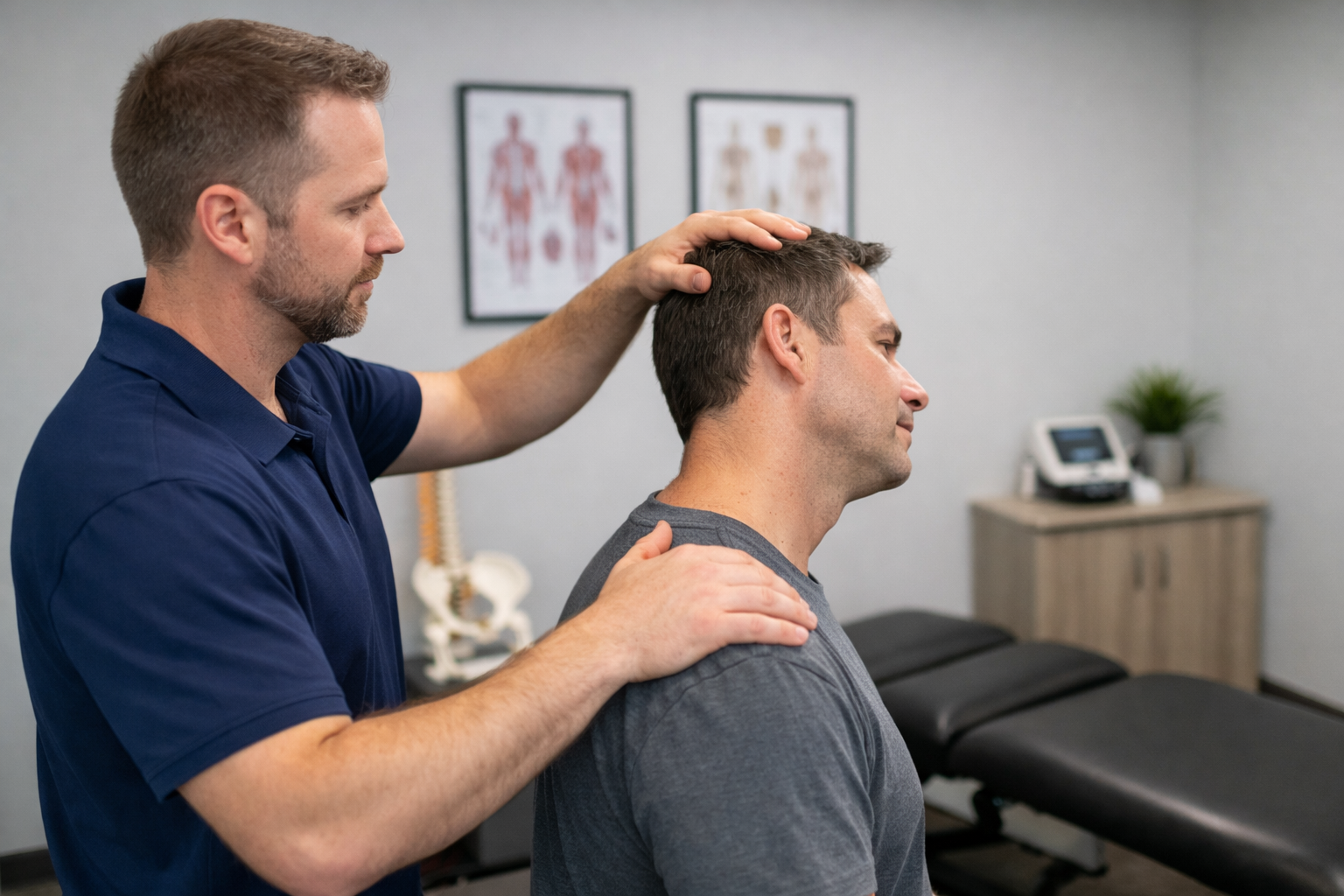
A good post-accident visit is not just an adjustment. It starts with history, examination, and clinical reasoning. Your chiropractor should ask how the accident happened, where you were seated, whether you were wearing a seatbelt, how your body moved during impact, what symptoms started immediately, and what appeared later. Your uploaded material specifically emphasizes that these details help connect symptoms to the collision and guide the treatment plan.
Examination may include posture, tenderness, range of motion, orthopedic testing, neurological checks, and when appropriate, imaging referral. Mayo Clinic notes that whiplash evaluation can include range of motion, pain with motion, tenderness, reflexes, strength, feeling, and imaging when needed to rule out other injuries or identify soft tissue problems.
Treatment is then built around the findings. That may include gentle spinal or joint work, soft tissue therapy, stretching, movement drills, and home care strategies aimed at restoring mobility and reducing pain. Your content model repeatedly frames this as root-cause care rather than simply masking symptoms.
If you are comparing options, this page on chiropractic care can fit naturally inside the article.
When to Go to the ER First Instead of Starting With Chiropractic
Chiropractic care can be helpful for many crash-related musculoskeletal problems, but it is not the first stop for every situation. After a car accident, seek emergency medical care right away if you have loss of consciousness, a worsening headache, repeated vomiting, seizures, increasing confusion, slurred speech, weakness or numbness, inability to awaken, loss of coordination, loss of movement, or loss of bladder or bowel control. Suspected spinal injury also means the person should not be moved unless necessary for safety.
This matters because some symptoms that seem like “just neck pain” can overlap with concussion or more serious head, spinal, or neurological injury. A patient-friendly rule is this: if there are emergency red flags, go to the ER first. If serious injury has been ruled out and your symptoms are primarily musculoskeletal, a chiropractor can become part of your recovery plan.
How Chiropractic Care May Help Recovery
For appropriate patients, chiropractic care may help by improving joint motion, decreasing muscle guarding, reducing pain, and helping people return to normal daily movement. NCCIH notes that spinal manipulation may be helpful for acute neck pain and may reduce pain and improve function for chronic neck pain, although the strength and consistency of the evidence vary. Mayo Clinic also notes that some studies suggest chiropractic care may ease pain when paired with exercise or physical therapy.
Your uploaded documents reinforce the same practical framework: treatment after a crash often includes targeted adjustments, soft tissue therapy, stretching, rehab exercises, and ongoing guidance for posture and daily activity. This is especially relevant when pain, stiffness, and reduced motion are interfering with work, driving, sleep, or caring for family.
No responsible clinic should promise a miracle or suggest that every crash victim needs the same number of visits. Care should be based on symptoms, exam findings, functional goals, and response to treatment.
What a First Visit Often Includes
| Step | What happens | Why it matters |
|---|---|---|
| History | Review of crash details, symptoms, prior injuries, and current limits | Builds a clinically useful timeline |
| Exam | Posture, tenderness, motion, neurological and orthopedic checks | Helps identify the source of pain |
| Imaging decision | Referral for X-ray, CT, or MRI if warranted | Rules out more serious structural injury |
| Early treatment | Gentle hands-on care, soft tissue work, and symptom relief strategies | Starts recovery while respecting irritability |
| Home plan | Ice or heat guidance, movement advice, exercise, sleep and posture tips | Supports progress between visits |
| Reassessment | Ongoing tracking of pain, motion, and function | Keeps care goal-oriented |
This stepwise process reflects both your uploaded documents and standard medical descriptions of whiplash assessment and management.
 Why Early Evaluation Matters
 Why Early Evaluation Matters
One of the most important themes in your content model is timing. Symptoms can show up later, and waiting too long may allow stiffness, protective muscle tension, altered movement, and nerve irritation to become harder to unwind. Your uploaded source specifically notes that even if you feel fine after the accident, soft tissue injuries may appear hours, days, or even weeks later, and that early evaluation helps with both recovery and documentation.
Mayo Clinic and MedlinePlus support that same caution. Whiplash symptoms often begin within days, and pain may take hours to weeks to fully appear. That is one reason people in Fishers often delay care, then realize the problem is not going away on its own.
If you are dealing with ongoing soreness, reduced motion, headaches, or difficulty driving comfortably, it is reasonable to schedule an appointment sooner rather than later.
Fishers, IN Considerations for Post-Accident Recovery
Local content matters because recovery is not happening in a vacuum. In Fishers, many people need to get back to commuting, school drop-offs, desk work, lifting, workouts, and family routines. Neck pain that seems mild in the exam room can become more obvious when you turn to check traffic, sit at a computer, carry groceries, or try to sleep. That functional view is one reason a patient-centered chiropractic evaluation can be useful.
A local blog should also speak in plain language. People are not just asking whether the spine is “misaligned.” They want to know why they get headaches after a crash, why their neck feels stuck, why they are dizzy when they turn, or why their upper back is tight three days later. Those are exactly the kinds of symptoms described in your uploaded materials.
FAQs About a Car Accident Chiropractor
 FAQs About a Car Accident Chiropractor
Should you see a chiropractor after a car accident?
Yes, if you have musculoskeletal symptoms after a crash and serious emergency conditions have been ruled out, a chiropractor may be a helpful part of your care team. This is especially true for neck pain, back pain, stiffness, headaches, reduced motion, and soft tissue symptoms that appear after the accident.
How long is a chiropractor after a car accident?
The length of care depends on the severity of injury, how quickly symptoms started, range of motion loss, whether pain radiates into the arms, and how you respond to treatment. Mayo Clinic notes that many people improve within a few weeks, but some have symptoms that last for months or longer. Your uploaded material also says healing times vary and that consistency matters.
Should I see a chiropractor after whiplash?
If you have been checked for more serious injury and your symptoms fit whiplash, chiropractic care may help with pain, mobility, muscle tension, and function. Whiplash commonly causes neck pain, stiffness, headaches, dizziness, fatigue, tingling, and sleep disruption, and evaluation should happen promptly after the crash.
Can a chiropractor release stored trauma?
A chiropractor primarily treats physical problems after a crash, such as pain, stiffness, restricted motion, headaches, and nerve irritation. Chiropractic care is not a stand-alone mental health treatment for trauma. That said, when physical pain and muscle guarding improve, some people may notice they are sleeping better, breathing easier, and feeling less physically tense. If the accident left you with nightmares, flashbacks, panic, avoidance of driving, hypervigilance, or ongoing distress, it is wise to involve your medical doctor or a mental health professional too.
What are physical signs your body is releasing trauma?
A safer and clearer way to frame this after a crash is to look for signs that your body is calming down and recovering. Those may include less muscle tension, easier neck movement, fewer headaches, improved sleep, lower pain with driving or desk work, less guarding, and a reduced sense of physical stress. On the other hand, if you are having panic episodes, intrusive memories, severe sleep trouble, worsening pain, or symptoms that keep disrupting daily life, you should seek further medical and mental health support.
Final Thoughts
A car accident chiropractor can play an important role in recovery after a crash in Fishers, IN, especially when the main issues are whiplash, neck pain, back pain, headaches, stiffness, and reduced range of motion. The key is getting the right evaluation at the right time, knowing when emergency care comes first, and following a treatment plan built around your actual findings and functional goals.
If you are still sore, stiff, or not moving normally after a crash, you do not have to guess your way through it. You can contact our office with questions, and when you are ready, book your visit to get checked.