How to Fix Forward Head Posture in Fishers, IN
How to fix forward head posture starts with understanding why your head is shifting forward, then improving your daily posture habits, strengthening weak support muscles, stretching tight areas, and getting a proper evaluation when pain, stiffness, or headaches are involved. Forward head posture is common in people who spend long hours on phones, computers, desks, cars, or schoolwork. At Vital Connection Chiropractic in Fishers, IN, care may include posture assessment, spinal mobility work, corrective exercises, ergonomic guidance, and an individualized plan to help your neck and upper back function better.
What Is Forward Head Posture?
Forward head posture happens when the head sits in front of the shoulders instead of stacking naturally above the spine. In a healthy neutral posture, the ears should sit closer to the shoulders, the shoulders should rest over the hips, and the neck should not have to constantly work to hold the head up.
This posture pattern is often connected to “tech neck,” which describes the strain that can come from repeatedly looking down at a phone, tablet, laptop, or desk setup. Cleveland Clinic explains that looking down at screens can stress the muscles in the neck, shoulders, and back, especially when the posture is repeated for long periods.
Forward head posture does not usually happen overnight. It often builds gradually through daily habits. A person may not notice the change until they begin feeling neck tightness, upper back fatigue, headaches, shoulder tension, or stiffness after work.
The good news is that many cases can improve with consistent correction. The goal is not to force your neck into a stiff military posture. The goal is to restore better movement, better muscle balance, and better awareness throughout the day.
 Why Forward Head Posture Happens
Forward head posture usually develops when the neck and upper back adapt to repeated positions. Modern routines make this very common.
People in Fishers, Noblesville, Carmel, Geist, McCordsville, and Hamilton County often spend long hours commuting, working at desks, helping kids with school activities, or scrolling on phones after a busy day. These small habits can slowly train the head to drift forward.
Common contributors include:
- Looking down at a phone for long periods
- Sitting at a laptop without raising the screen
- Driving with the head pushed forward
- Rounded shoulders while working at a desk
- Poor monitor height
- Weak upper back and deep neck support muscles
- Tight chest, upper trap, and front neck muscles
- Lack of movement breaks during the day
- Sleeping in positions that strain the neck
- Previous neck injuries or whiplash history
MedlinePlus notes that poor posture can affect the musculoskeletal system, contribute to neck, shoulder, and back pain, and reduce flexibility or joint movement. It also recommends staying active, strengthening core support, and being mindful of posture during everyday activities.
For many people, forward head posture is not just a neck issue. It is a whole upper body pattern. The head moves forward, the shoulders round, the upper back stiffens, and the muscles around the shoulder blades stop doing their job well.
Common Signs You May Have Forward Head Posture
Forward head posture can look obvious in photos, but symptoms may show up before the posture is noticeable. Some people feel it as a dull ache. Others feel tightness or pressure at the base of the skull.
| Concern | What It May Mean | Best Next Step |
|---|---|---|
| Neck stiffness after computer work | Neck muscles may be overloaded from sustained forward positioning | Adjust screen height and take movement breaks |
| Headaches near the base of the skull | Tight neck muscles and joint irritation may be contributing | Get evaluated if headaches are frequent or worsening |
| Rounded shoulders | Upper back and shoulder blade muscles may need strengthening | Add posture resets and corrective exercises |
| Upper back fatigue | Your spine may be staying in one position too long | Change positions every 20 to 30 minutes |
| Tingling, numbness, or arm weakness | Possible nerve irritation or another medical concern | Seek professional evaluation promptly |
Forward head posture may also create a feeling of heaviness in the neck. Some patients describe it as their head feeling “too heavy” by the end of the day. This can happen because the neck is working harder than it should.
MedlinePlus advises contacting a healthcare provider if neck symptoms do not improve with self-care, or if there is numbness, tingling, or weakness in the arm or hand.
How to Fix Forward Head Posture Step by Step
The best way to fix forward head posture is to work on the cause, not just the appearance. Pulling your head backward for a few seconds may make you look straighter, but lasting improvement usually requires a combination of mobility, strength, awareness, and better daily setup.
Step 1: Check your natural head position
Stand sideways in front of a mirror or take a side-view photo. Look at where your ear sits compared to your shoulder. If your ear sits noticeably in front of the shoulder, forward head posture may be present.
Do not overcorrect by forcing your chin backward aggressively. Instead, gently lengthen through the back of your neck and imagine your head stacking over your shoulders.
Step 2: Raise your screen
Your monitor should be close to eye level so you are not constantly dropping your chin. If you use a laptop, consider a laptop stand and separate keyboard.
This matters because repeated looking down can increase strain on the neck and shoulders. Cleveland Clinic recommends raising devices closer to eye level, changing positions often, and limiting long handheld device sessions when possible.
Step 3: Use chin tucks carefully
A chin tuck is a common forward head posture correction exercise. The movement is small. You gently draw your chin straight back, as if making a “double chin,” while keeping your eyes level.
You should feel gentle activation in the front of the neck and length through the back of the neck. You should not feel sharp pain, dizziness, or symptoms down the arm.
Step 4: Strengthen the upper back
Forward head posture often comes with rounded shoulders. Strengthening the muscles around the shoulder blades may help support a better head and neck position.
Helpful movements may include:
- Shoulder blade squeezes
- Wall angels
- Rows with a band
- Gentle thoracic extension
- Posture reset holds
The goal is to help the upper back support the neck instead of letting the head carry all the strain.
Step 5: Stretch tight areas
Tight chest muscles, upper traps, and front neck muscles may pull the posture forward. Gentle stretching can help, but stretching alone is usually not enough. Pair mobility work with strengthening for better support.
Step 6: Move more often
The best posture is not one perfect position held all day. Your body needs movement. A helpful goal is to reset every 20 to 30 minutes. Stand, walk, stretch, change positions, or look away from your screen.
Step 7: Get checked when symptoms continue
If you have ongoing neck pain, headaches, stiffness, reduced range of motion, or symptoms into the arm, a professional evaluation is important. Forward head posture may be part of the issue, but it may not be the whole story.
For Fishers residents dealing with posture related neck discomfort, Schedule Appointment can be the next step toward a more specific plan.
 Forward Head Posture Correction Exercises and Habits
 Forward Head Posture Correction Exercises and Habits
Forward head posture correction usually works best when simple exercises are done consistently. These movements should feel controlled, gentle, and pain free. If symptoms increase, stop and ask a qualified healthcare provider for guidance.
| Care Option | Best For | Why It Helps |
|---|---|---|
| Chin tucks | Deep neck support | Helps retrain the head to stack over the shoulders |
| Shoulder blade squeezes | Rounded shoulders | Supports upper back posture and shoulder control |
| Doorway chest stretch | Tight chest muscles | May reduce the pull that rounds the shoulders forward |
| Screen height adjustment | Desk and laptop users | Reduces repeated downward neck strain |
| Movement breaks | Office workers and students | Prevents the neck from staying locked in one position |
Chin tuck
Sit or stand tall. Keep your eyes level. Gently glide your chin straight back without looking down. Hold for 3 to 5 seconds, then relax.
Start with 5 to 10 repetitions. Keep it gentle. This is not a forceful stretch.
Shoulder blade squeeze
Sit tall and gently draw your shoulder blades back and down. Do not shrug. Hold for 5 seconds, then relax.
This helps wake up the muscles that support the upper back.
Doorway chest stretch
Stand in a doorway with your forearm on the frame. Step forward slightly until you feel a stretch across the chest. Hold gently for 20 to 30 seconds.
Avoid forcing the stretch or arching your low back.
Wall posture reset
Stand with your back near a wall. Let your hips, upper back, and head move toward a comfortable stacked position. If your head cannot touch the wall without strain, do not force it.
This can help your body recognize a more neutral posture.
Breathing reset
Forward head posture often comes with shallow chest breathing. Try slow breathing through the nose while gently expanding through the ribs. This can help reduce tension in the neck and shoulders.
When Forward Head Posture Needs Professional Evaluation
Not every posture issue requires intensive care. Many people improve by changing desk setup, moving more, and doing simple corrective exercises.
However, a proper evaluation is important when symptoms affect daily life or continue despite home changes.
You should consider professional care if you have:
- Neck pain that keeps returning
- Frequent tension headaches
- Pain between the shoulder blades
- Limited neck motion
- Tingling, numbness, or weakness in the arm or hand
- Symptoms after a car accident or fall
- Dizziness, balance changes, or vision changes
- Pain that wakes you up at night
- Trouble working, driving, sleeping, or exercising comfortably
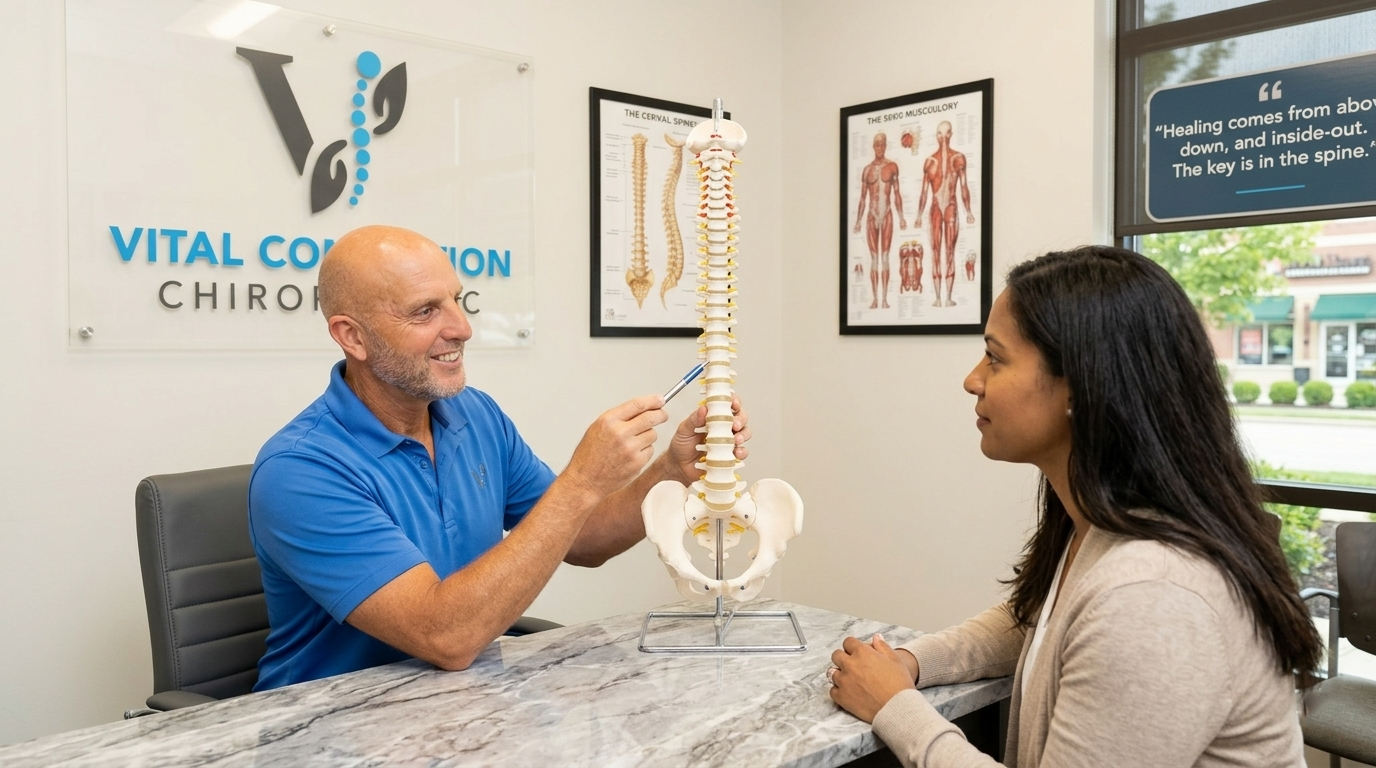
These symptoms do not automatically mean something serious is happening, but they should not be ignored. A chiropractor can assess posture, movement, spinal mobility, muscle tension, and daily habits to understand what may be contributing.
If your symptoms are new, severe, or connected with neurological changes, medical evaluation may also be needed.
Chiropractic Care for Forward Head Posture in Fishers, IN
Chiropractic care for forward head posture focuses on improving how the neck, upper back, shoulders, and spine move and function together. It is not just about “standing up straighter.” It is about helping the body handle daily demands with less strain.
At Vital Connection Chiropractic in Fishers, care may include:
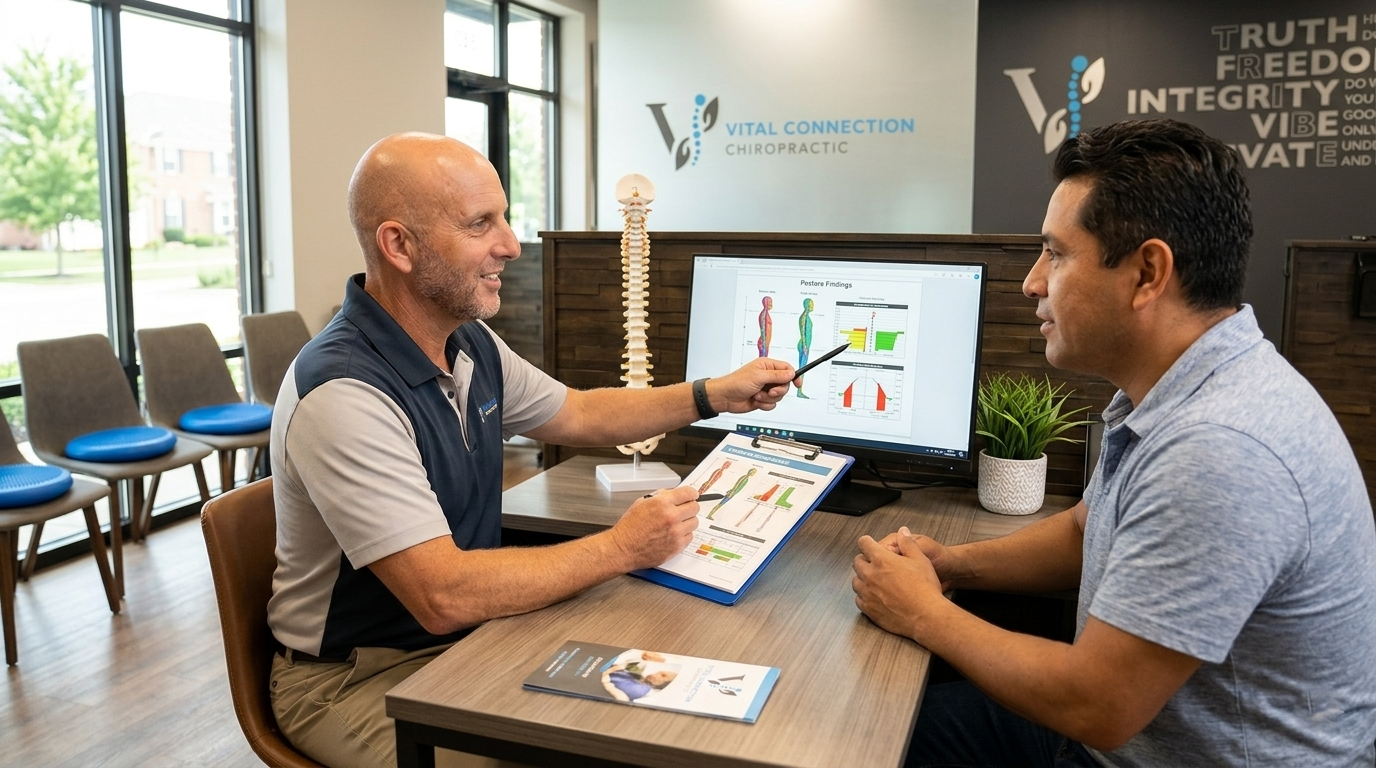
- Posture and movement assessment
- Neck and upper back mobility evaluation
- Gentle chiropractic adjustments when appropriate
- Soft tissue support
- Corrective exercise guidance
- Ergonomic recommendations
- Lifestyle and movement coaching
- A plan based on your symptoms, goals, and health history
Some patients also need help with sports related movement patterns. If posture problems affect training, running, lifting, or athletic performance, Sports Chiropractor may be a helpful related resource.
Chiropractic care may help reduce stress on irritated joints and muscles, improve mobility, and support better posture habits. Results vary by person, and the right plan depends on the cause of the posture change, how long it has been present, and whether pain or nerve symptoms are involved.
If neck pain is part of the issue, Neck Pain can help patients understand related causes and care options.
 Everyday Tech Neck Posture Tips
 Everyday Tech Neck Posture Tips
Fixing tech neck posture is usually less about one perfect exercise and more about daily consistency. Your body adapts to what you repeat most.
Keep your phone higher
Bring your phone closer to eye level instead of bending your neck down. This simple change can reduce repeated strain.
Use a laptop stand
A laptop on a table often sits too low. Raise the screen and use a separate keyboard and mouse when possible.
Sit with support
Your feet should rest on the floor. Your elbows should stay close to your body. Your shoulders should feel relaxed instead of rounded forward. MedlinePlus recommends switching sitting positions often, taking brief walks, stretching, keeping feet supported, and relaxing the shoulders while sitting.
Set a posture timer
Every 20 to 30 minutes, reset your posture. Stand up. Roll your shoulders. Do a gentle chin tuck. Walk for a minute.
Avoid “one pillow fixes all” thinking
Pillow choice matters, but sleeping without a pillow is not a guaranteed fix. Some people need neck support. Others need a lower pillow. The right setup depends on your sleeping position, body type, and symptoms.
Train your upper back
The neck should not do all the work. Strengthening the upper back and shoulder blade muscles may support better posture through the day.
Do not force aggressive stretching
Forward head posture often involves tight muscles, but pushing too hard may irritate the neck. Gentle, consistent movement is usually safer than force.
If you are unsure where to start, Chiropractic Care can help you understand how an individualized evaluation may guide the right next step.
How Long Does It Take to Improve Forward Head Posture?
The timeline depends on the person. Some people feel improvement in stiffness within a few weeks of better habits. Structural posture changes often take longer because the body needs time to relearn movement and build endurance.
Factors that influence progress include:
- How long the posture pattern has been present
- Daily screen time
- Workstation setup
- Strength of the neck and upper back
- Sleep position
- Previous injuries
- Consistency with exercises
- Whether pain or nerve symptoms are present
A realistic goal is steady progress, not overnight correction. For many patients, the first wins include less end of day neck fatigue, better awareness, easier sitting posture, and improved range of motion.
Local Support for Forward Head Posture in Fishers, IN
Forward head posture is especially common for people who work at desks, commute, study, lift, train, or spend hours on devices. In Fishers and nearby Hamilton County communities, many patients are balancing work, family, sports, and busy routines. That is exactly why a simple, practical plan matters.
The best plan is one you can actually follow.
A good forward head posture plan may include:
- A clear explanation of what is happening
- Simple daily exercises
- Ergonomic changes that fit your workday
- Gentle care when movement is restricted
- Progress checks
- Education so you know what to do at home
Vital Connection Chiropractic is located in Fishers, IN and serves patients from nearby areas includ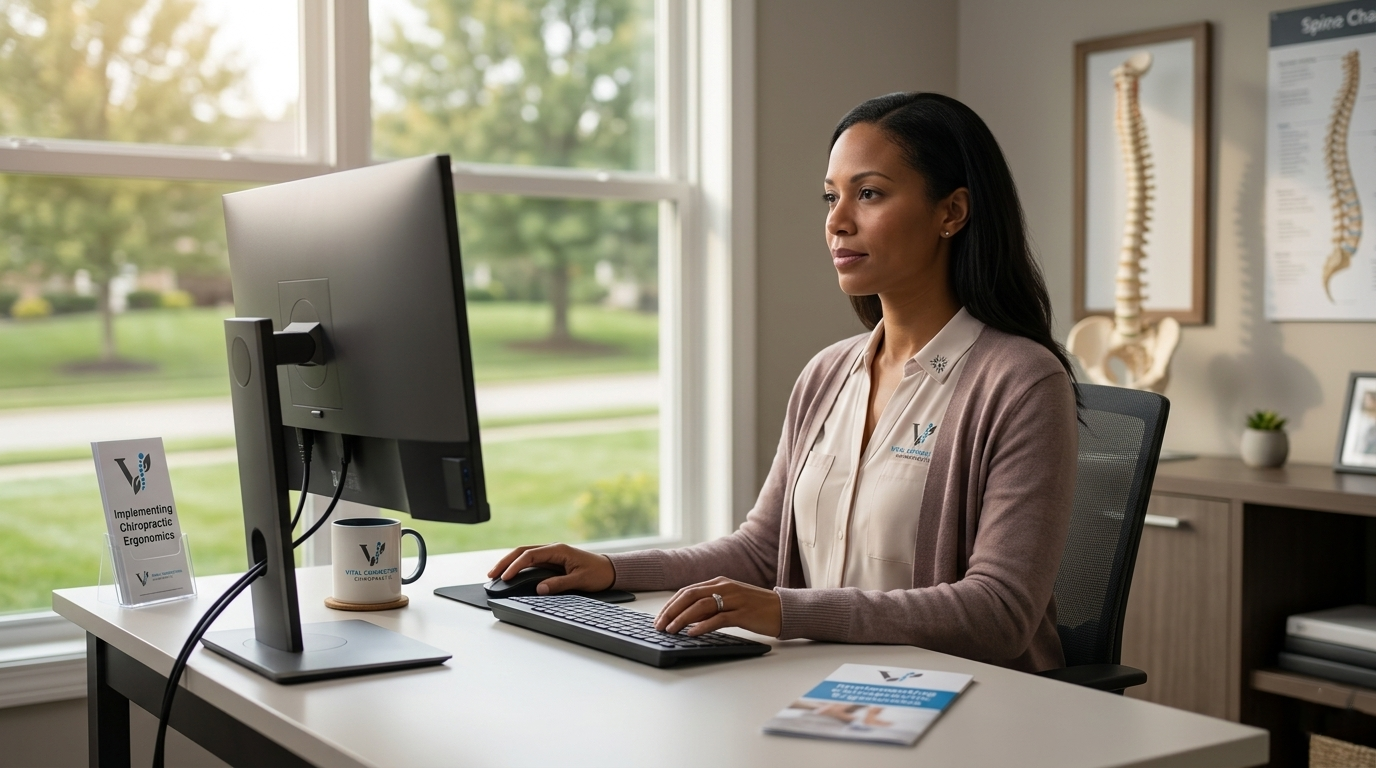 ing Noblesville, Carmel, Geist, McCordsville, Castleton, and surrounding Hamilton County communities.
To ask whether posture care is right for your situation, use Contact Us or schedule a visit through Schedule Appointment.
FAQs
Can head forward posture be corrected?
Yes, forward head posture can often be improved with consistent posture correction, strengthening, mobility work, and better daily habits. The amount of correction depends on the cause, how long the posture pattern has been present, and whether pain or other symptoms are involved. Many people benefit from improving screen height, using gentle chin tucks, strengthening the upper back, stretching tight chest muscles, and taking regular movement breaks. If pain, headaches, stiffness, or arm symptoms are present, a professional evaluation can help identify the safest and most effective plan.
How long does it take to cure forward head posture?
There is no exact timeline to cure forward head posture because improvement depends on the person and the cause. Some people notice less stiffness within a few weeks of changing habits and doing corrective exercises. More established posture patterns may take several months of consistent work. It is better to think in terms of gradual correction rather than a quick cure. If forward head posture is connected to pain, injury, or nerve symptoms, progress may require a more individualized care plan.
Can sleeping without a pillow fix forward head posture?
Sleeping without a pillow is not a guaranteed way to fix forward head posture. Pillow needs vary based on sleeping position, body size, neck shape, and symptoms. Some people may feel better with a lower pillow, while others need more neck support. Sleeping without support can irritate the neck for certain people, especially side sleepers. Forward head posture usually needs a daytime strategy too, including screen changes, strengthening, mobility work, and posture awareness. If sleep posture worsens neck pain, it is best to get guidance.
Is it too late to fix forward head posture?
It is usually not too late to improve forward head posture, but the plan should match your age, symptoms, and health history. Even long-standing posture habits can often improve with better movement, strengthening, ergonomic changes, and professional care when needed. The goal may not be perfect posture. The goal is better function, less strain, and improved comfort. If you have severe pain, numbness, tingling, weakness, balance issues, or symptoms after an injury, get evaluated before starting exercises on your own.
What muscles are weak in forward head?
Forward head posture often involves weakness or poor endurance in the deep neck flexors, upper back muscles, and shoulder blade stabilizers. These muscles help keep the head stacked over the spine and support the shoulders. At the same time, the chest, upper traps, levator scapulae, and muscles at the base of the skull may become tight or overworked. Correcting forward head posture usually requires both strengthening and mobility work. A personalized assessment can help determine which muscles need the most attention.
Final Thoughts
Learning how to fix forward head posture begins with small changes you repeat every day. Raise your screen. Move more often. Strengthen your upper back. Practice gentle chin tucks. Stretch tight areas without forcing your neck. Pay attention to how you sit, work, sleep, drive, and use your phone.
Forward head posture is common, but it should not be ignored when it leads to pain, headaches, stiffness, or symptoms into the arm. A proper evaluation can help you understand what is happening and what steps make sense for your body.
Vital Connection Chiropractic in Fishers, IN provides patient friendly chiropractic care for people dealing with posture stress, tech neck, neck discomfort, and movement limitations. With the right plan, many patients can build better awareness, better support, and better daily habits.