How to Fix TMJ
If you are wondering how to fix TMJ, the most effective approach is to identify the underlying cause of your jaw dysfunction and use a combination of targeted home care, stress reduction, and professional treatment such as chiropractic care that focuses on proper jaw, neck, and spinal alignment. TMJ pain often improves when joint pressure is reduced, muscles are relaxed, and movement is restored safely.
Many people in Fishers, IN live with jaw pain, clicking, headaches, or facial tension for months or even years before seeking help. The good news is that TMJ discomfort can often be managed with the right strategy and a personalized evaluation.
What Is TMJ and Why Does It Hurt?
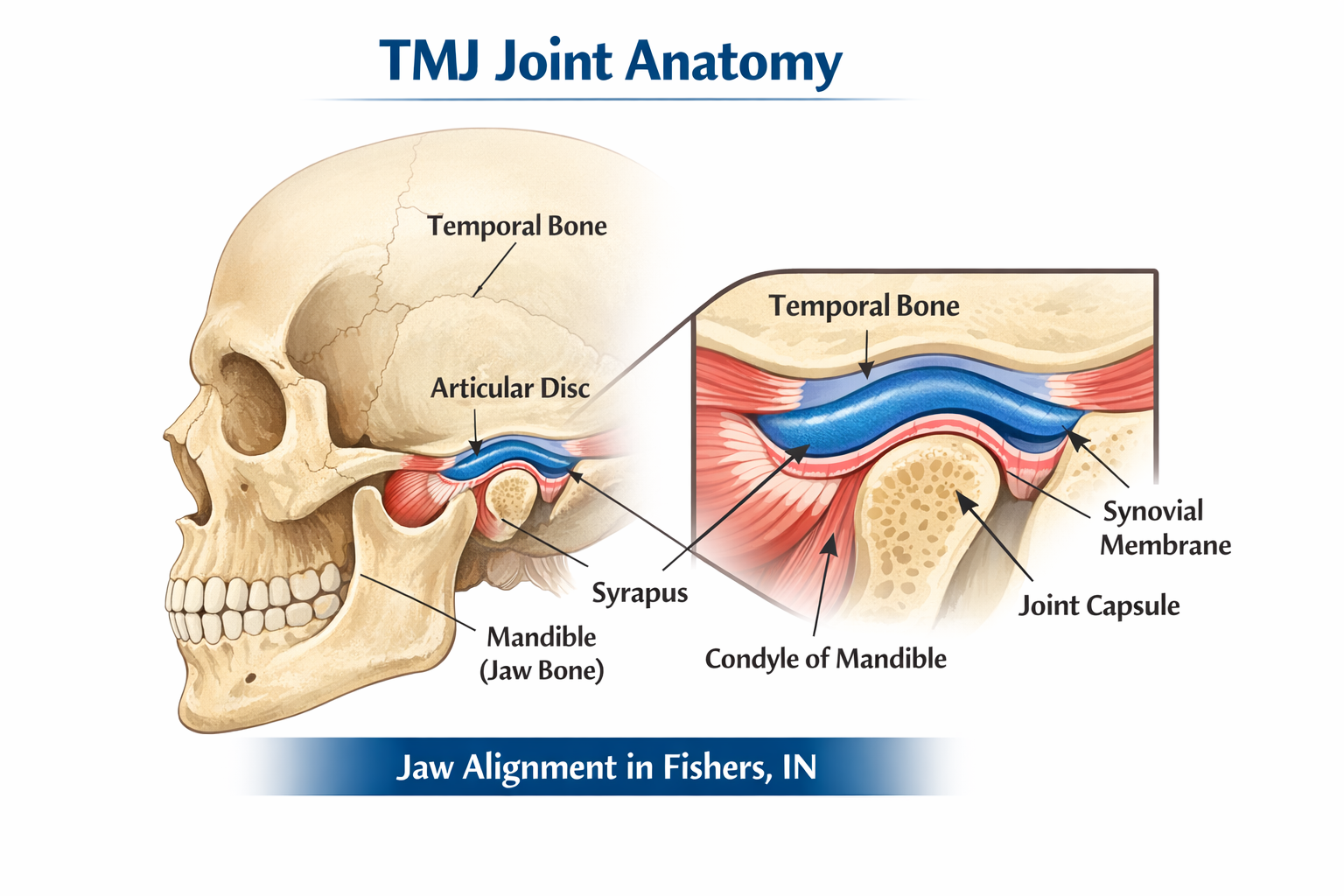
TMJ stands for temporomandibular joint. You have one on each side of your jaw. These joints connect your lower jaw to your skull and allow you to talk, chew, yawn, and swallow.
TMJ pain happens when:
-
The joint becomes inflamed
-
The disc inside the joint shifts
-
Surrounding muscles tighten or spasm
-
The bite or alignment places uneven stress on the jaw
-
Neck and upper spine tension affect jaw mechanics
Because the jaw is closely connected to the neck and nervous system, problems rarely stay isolated to just one area.
If you want a deeper explanation of symptoms and causes, visit our detailed guide on TMJ disorders.
Common Symptoms of TMJ Dysfunction
TMJ symptoms can vary widely. Some people feel mild tension while others experience sharp pain or difficulty opening their mouth.
Here are common signs:
-
Jaw pain or tenderness
-
Clicking or popping sounds
-
Locking when opening or closing the mouth
-
Headaches, especially near the temples
-
Ear pressure or ringing
-
Facial pain
-
Neck and shoulder tightness
-
Pain while chewing
TMJ Symptoms and What They May Indicate
| Symptom | What It May Suggest |
|---|---|
| Clicking without pain | Joint disc movement but minimal inflammation |
| Pain with chewing | Muscle tension or joint irritation |
| Jaw locking | Disc displacement or joint restriction |
| Temple headaches | Muscle strain or clenching |
| Ear fullness | Inflammation near joint capsule |
A proper evaluation is important because symptoms can overlap with other conditions.
 What Is the Cause of TMJ Disorder?
TMJ disorder often develops from a combination of factors rather than one single cause.
Common contributing factors include:
-
Teeth grinding or clenching
-
Stress related muscle tension
-
Poor posture, especially forward head posture
-
Previous jaw injury
-
Arthritis affecting the joint
-
Misalignment in the upper cervical spine
In many patients we see in Fishers and surrounding areas like Noblesville and Carmel, jaw issues are closely tied to neck tension and long hours at a desk.
When posture shifts forward, the jaw can compensate, increasing pressure on the temporomandibular joint.
How to Fix TMJ at Home
If you are searching for how to fix TMJ at home, there are several conservative steps that may help reduce discomfort.
These approaches are best for mild or early symptoms.
1. Avoid Overloading the Jaw
Temporarily reduce strain by:
-
Avoiding gum chewing
-
Limiting tough or chewy foods
-
Cutting food into smaller pieces
-
Avoiding extreme jaw opening
2. Apply Moist Heat
Warm compresses can relax tight jaw muscles and improve circulation.
Apply for 10 to 15 minutes at a time, a few times per day.
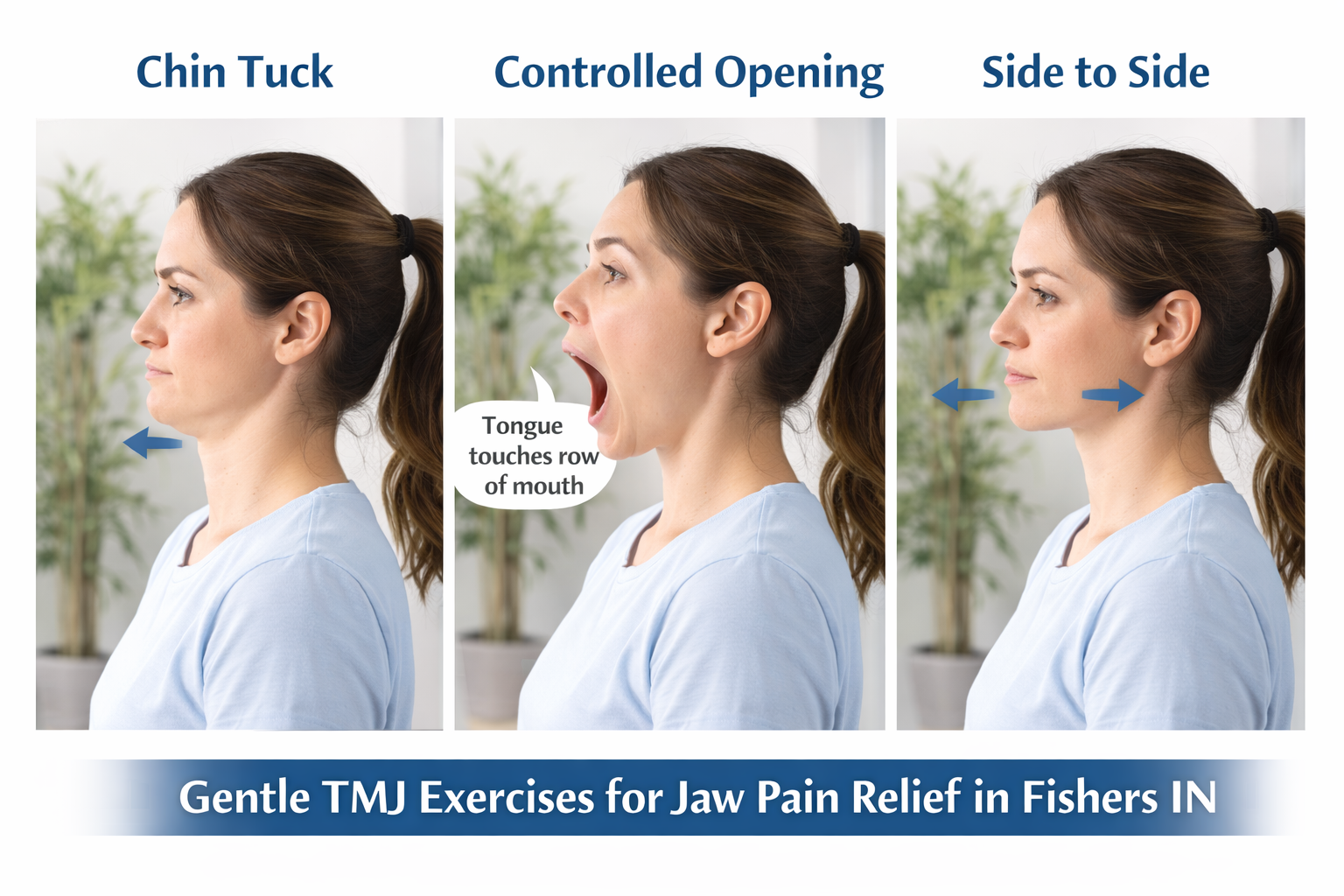
3. Gentle Jaw Exercises
Controlled movement can help improve mobility.
Examples include:
-
Slow opening and closing with tongue resting on roof of mouth
-
Side to side movements within a pain free range
-
Chin tuck exercises to improve posture
 4. Stress Management
 4. Stress Management
Stress often increases clenching and grinding.
Consider:
-
Deep breathing
-
Stretch breaks during work
-
Relaxation routines before bed
5. Improve Posture
Keep your ears aligned over your shoulders when sitting. Screen height should be at eye level.
If symptoms persist beyond a few weeks, professional evaluation is recommended.
How to Fix TMJ Pain with Chiropractic Care
For patients in Fishers, IN asking how to fix TMJ pain long term, chiropractic care can address structural and neurological contributors.
At Vital Connection Chiropractic, care focuses on:
-
Evaluating jaw movement
-
Assessing upper cervical alignment
-
Checking posture
-
Identifying muscle imbalance
-
Reducing joint restriction
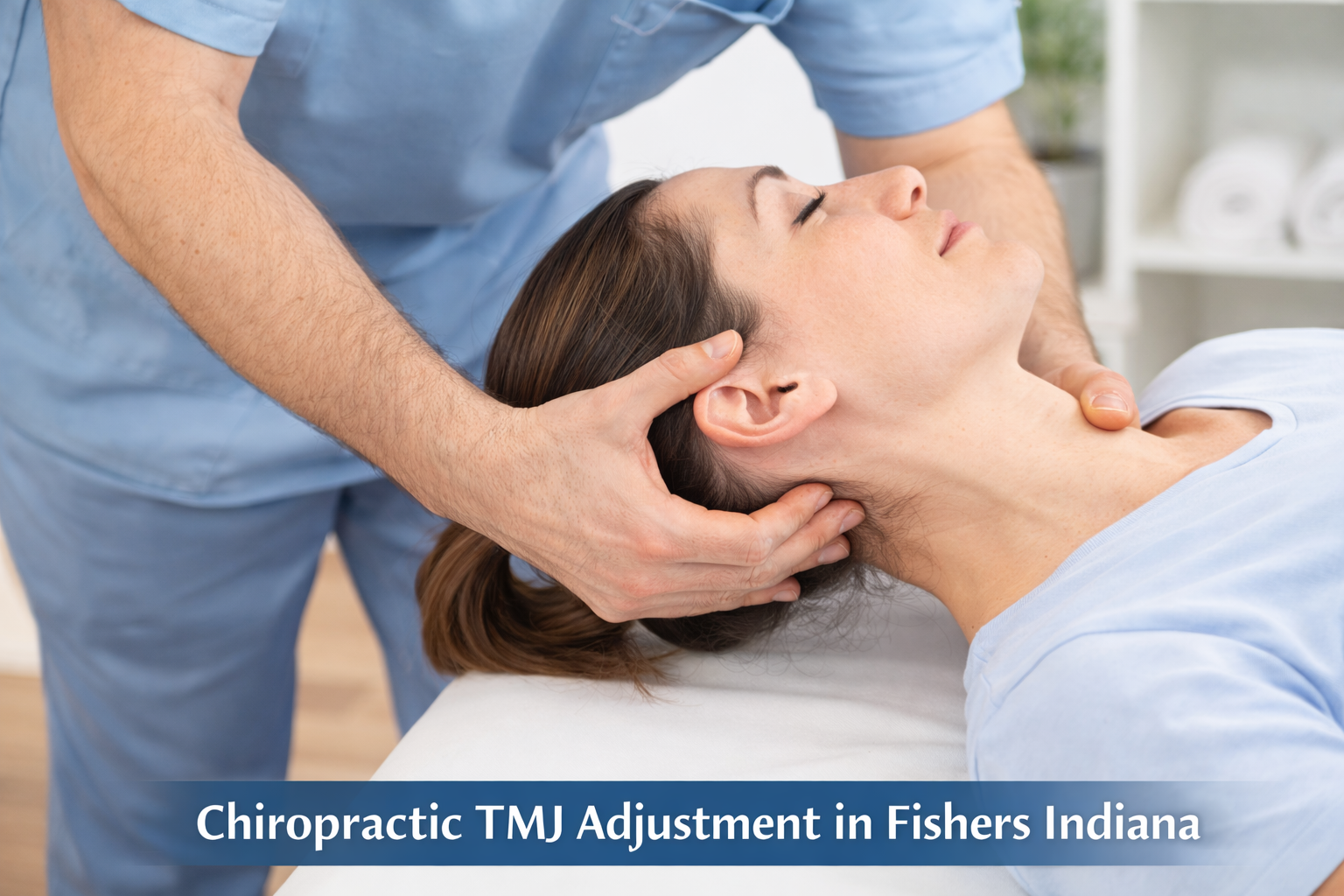
Chiropractic adjustments may help restore proper motion in the jaw and upper spine, which can reduce pressure on irritated tissues.
You can learn more about options in our guide on treatment for TMJ in Fishers IN.
Jaw Manipulation for TMJ Relief
 Jaw Manipulation for TMJ Relief
Some patients benefit from specific jaw mobilization techniques performed by trained professionals.
These techniques aim to:
-
Improve joint mechanics
-
Reduce muscle guarding
-
Restore smoother movement
-
Decrease inflammation
If you are curious about this approach, read more about jaw manipulation for TMJ relief in Fishers IN.
Not every patient requires manipulation. Treatment depends on the cause of your symptoms.
When Home Care Is Not Enough
If you notice any of the following, schedule an evaluation:
-
Jaw locking frequently
-
Severe pain when chewing
-
Symptoms lasting more than several weeks
-
Headaches interfering with daily life
-
Ear symptoms without infection
Chronic symptoms may indicate deeper joint dysfunction or cervical involvement.
Home Care vs Professional Evaluation
| Situation | Home Care May Be Enough | Professional Care Recommended |
|---|---|---|
| Mild clicking without pain | Yes | If worsens |
| Occasional jaw soreness | Yes | If persistent |
| Frequent locking | No | Yes |
| Ongoing headaches | No | Yes |
| Pain affecting eating | No | Yes |
A personalized assessment helps determine the best path forward.
Is It Normal to Have TMJ for Years?
It is not uncommon for people to experience TMJ symptoms for years, especially if the root cause is never addressed.
Chronic TMJ may be linked to:
-
Long term clenching
-
Postural strain
-
Stress patterns
-
Unresolved cervical misalignment
While some individuals adapt to low grade discomfort, ongoing inflammation can contribute to muscle tension and reduced joint mobility over time.
If you have been dealing with jaw pain for years in Fishers or nearby communities, an updated evaluation may provide clarity.
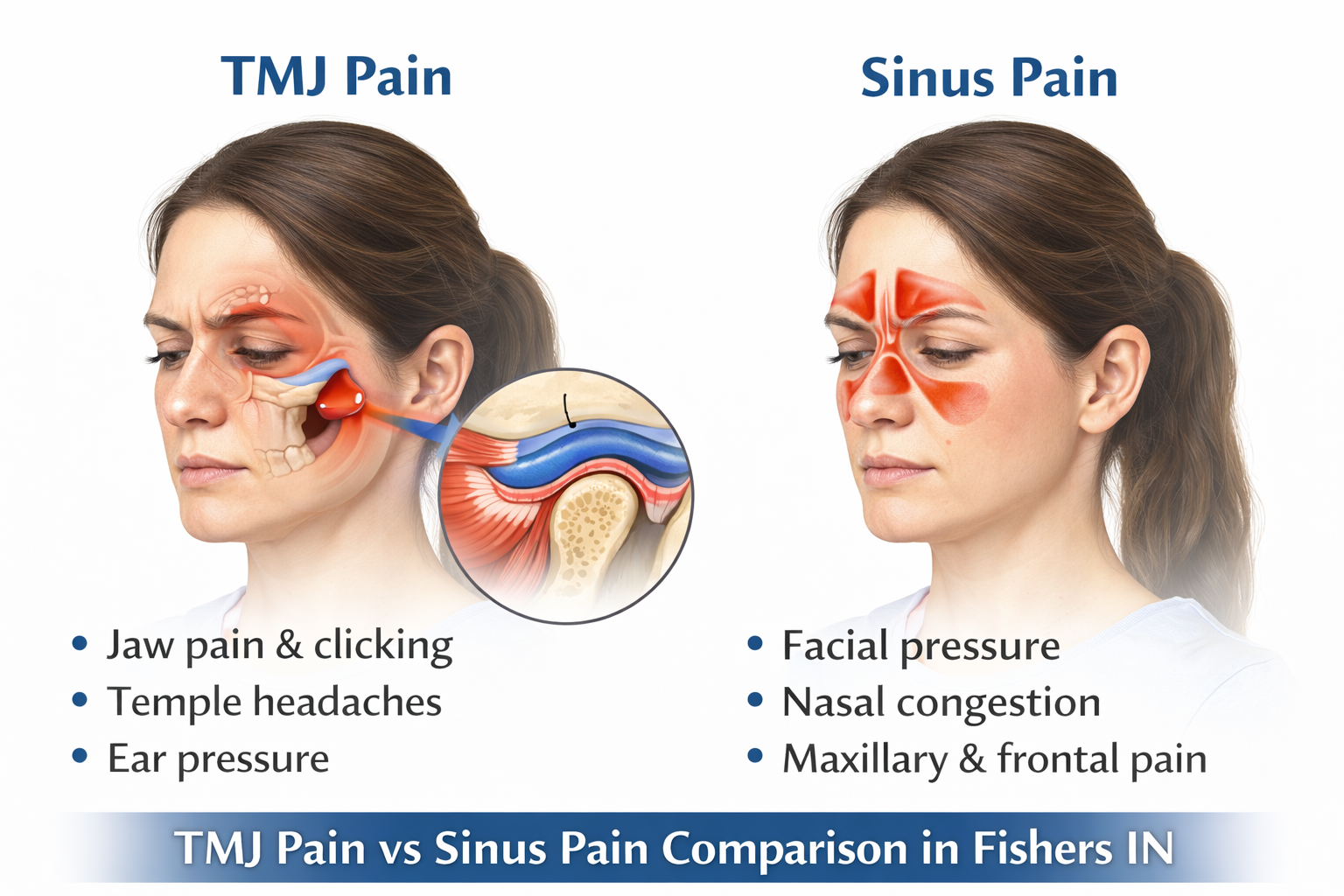
What Can Be Mistaken as TMJ?
Several conditions can mimic TMJ symptoms.
These include:
-
Sinus infections
-
Ear infections
-
Trigeminal neuralgia
-
Migraines
-
Dental issues
-
Cervical spine disorders
This is why an accurate assessment is important. Not all jaw pain is TMJ, and not all headaches originate from the head.
If you are unsure, read our guide on how do I know if I have TMJ in Fishers IN.
What Is the 3 Finger Test for TMJ?
 What Is the 3 Finger Test for TMJ?
The 3 finger test is a simple screening method used to evaluate jaw opening.
To perform it:
-
Stack your index, middle, and ring finger vertically.
-
Try placing them between your upper and lower front teeth.
If you cannot comfortably fit three fingers, it may indicate restricted jaw opening.
This test does not diagnose TMJ disorder, but it can suggest limited mobility that should be evaluated.
What Is the Best Way to Treat TMJ?
The best way to treat TMJ depends on the cause.
Effective treatment often includes:
-
Reducing inflammation
-
Improving joint alignment
-
Addressing muscle tension
-
Correcting posture
-
Managing stress
-
Supporting healthy movement patterns
For many patients, a combination approach works best.
If you are ready to take the next step, you can schedule appointment to have your jaw and spine evaluated.
How to Fix a TMJ Problem Safely
If you are researching how to fix a TMJ issue, avoid aggressive self adjustments or forceful movements.
Instead:
-
Use gentle techniques
-
Stay within a comfortable range of motion
-
Seek professional guidance if unsure
-
Address contributing factors such as posture and stress
Individualized care matters. What works for one person may not work for another.
Local TMJ Care in Fishers, IN
At Vital Connection Chiropractic, we work with individuals across:
-
Fishers
-
Noblesville
-
Carmel
-
Geist
-
McCordsville
-
Castleton
-
Hamilton County
Our goal is to identify mechanical and neurological factors contributing to jaw dysfunction.
If you have questions about your symptoms, feel free to contact us for more information.
Early evaluation may help prevent long term compensation patterns in the jaw and neck.
Final Thoughts on How to Fix TMJ
Learning how to fix TMJ starts with understanding the cause of your discomfort. Mild cases may improve with home care and posture changes. Persistent or worsening symptoms often require professional evaluation.
Jaw pain is not something you simply have to live with.
If you are in Fishers, IN or surrounding areas and struggling with TMJ pain, headaches, or jaw clicking, Vital Connection Chiropractic is here to help guide you toward a personalized plan.
You can schedule appointment today to take the first step toward relief.
Frequently Asked Questions
What is the best way to treat TMJ?
The best treatment depends on the underlying cause. Conservative approaches such as jaw exercises, posture correction, stress management, and chiropractic care may help reduce pressure on the joint. A professional evaluation is important for personalized recommendations.
What is the 3 finger test for TMJ?
The 3 finger test measures how wide you can open your mouth. If you cannot fit three stacked fingers between your upper and lower front teeth, it may suggest restricted jaw mobility and should be evaluated.
What is the cause of TMJ disorder?
TMJ disorder can be caused by clenching, grinding, stress, arthritis, jaw injury, poor posture, or cervical spine misalignment. Often, multiple factors contribute.
Is it normal to have TMJ for years?
Some people experience TMJ symptoms for years, especially if the root cause is not addressed. Chronic symptoms are not uncommon, but long term discomfort should be evaluated to prevent worsening dysfunction.
What can be mistaken as TMJ?
Conditions such as sinus infections, ear infections, migraines, dental problems, and certain nerve conditions can mimic TMJ symptoms. A proper assessment helps rule out other causes.