Jaw Pain After Sleeping: Fishers, IN Guide to Common Causes
Jaw pain after sleeping is commonly caused by nighttime clenching or grinding, TMJ irritation, sleep position, dental problems, sinus pressure, stress-related muscle tension, or neck and posture strain. If you keep waking up with jaw pain in the morning, the best next step is to identify the pattern, avoid overworking the jaw, and get evaluated if the pain continues, limits movement, causes headaches, or affects eating, talking, or sleep.
Why Jaw Pain After Sleeping Happens
Jaw pain after sleeping usually means the jaw muscles, joints, teeth, or nearby tissues were under stress during the night. You may not notice anything while sleeping, but your jaw can feel sore, tight, tired, or difficult to open when you wake up.
For many people in Fishers, IN, morning jaw pain is connected to a combination of stress, screen posture, poor sleep position, and clenching. The jaw does not work alone. It is closely connected to the neck, head, shoulders, and upper spine. That is why jaw discomfort can sometimes show up with neck stiffness, temple headaches, ear pressure, facial soreness, or shoulder tension.
The temporomandibular joints, often called TMJ, are the joints on each side of the face that help the jaw open, close, slide, and chew. Problems involving these joints are usually called TMD, or temporomandibular disorders. Cleveland Clinic notes that TMD symptoms can include jaw pain, headaches, jaw stiffness, clicking, locking, ear symptoms, tooth pain, and neck or shoulder pain. Cleveland Clinic temporomandibular joint disorders
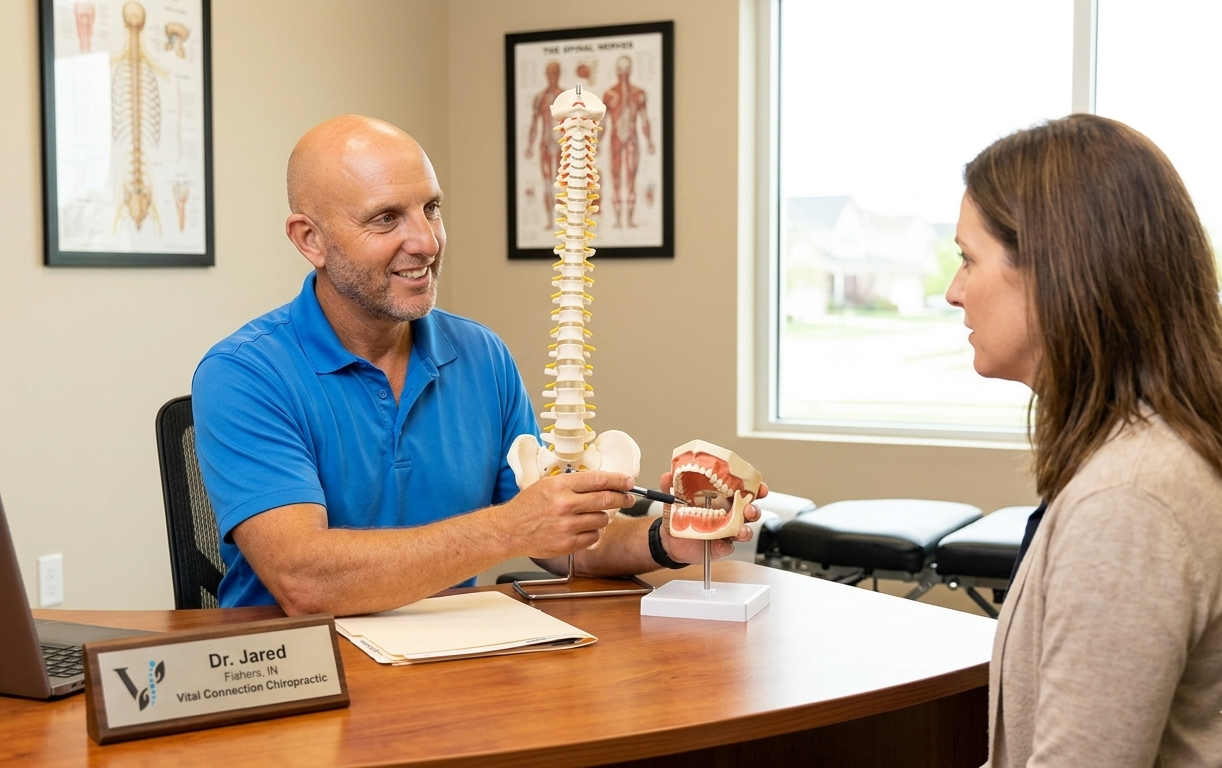
At Vital Connection Chiropractic, patients often ask whether morning jaw pain is “just stress” or something that needs care. The honest answer is that it depends. Occasional mild soreness may improve with simple habit changes. Repeated jaw pain, one-sided pain, locking, headaches, or pain that affects normal function deserves a closer look.
 Common Causes of Waking Up With Jaw Pain
Waking up with jaw pain does not always come from the same cause. Some causes start in the jaw joint. Others begin in the teeth, sinuses, neck, or daily habits.
1. Teeth Grinding or Clenching
Nighttime grinding or clenching, also called bruxism, is one of the most common reasons people wake up with jaw pain. Many people grind or clench without realizing it. The teeth are supposed to rest slightly apart when you are not chewing. When the jaw stays clenched for hours, the chewing muscles can become overworked.
Morning signs of clenching may include:
- Sore jaw muscles
- Tooth sensitivity
- Temple headaches
- Facial tightness
- Worn or flattened teeth
- Ear-area soreness
- Neck tension after waking
A dentist can check for tooth wear, bite issues, and whether a night guard may be appropriate. Chiropractic care may also support the surrounding neck, posture, and muscle tension patterns that can contribute to jaw strain.
2. TMJ Irritation or TMD
TMJ-related jaw pain may feel like a deep ache near the ear, a tight jaw, clicking, popping, or difficulty opening wide. Some people notice that the jaw feels stuck for a moment when they wake up.
TMJ irritation can be influenced by clenching, trauma, arthritis, posture, bite mechanics, stress, or repetitive jaw habits. If your jaw pain after sleeping comes with headaches, neck pain, or facial soreness, it may be worth learning more about TMJ.
3. Sleep Position
Sleeping on your stomach or pressing your face into a pillow can push the jaw into an awkward position for several hours. Side sleeping with heavy pressure on one side of the face may also irritate the jaw, especially if the neck is not well supported.
A pillow that is too high, too flat, or too firm can also affect the neck and jaw. In Fishers and Hamilton County, many patients who work at computers during the day already carry neck tension into bedtime. Poor sleep position can add another layer of stress.
4. Dental Problems
Jaw pain in the morning can also come from a dental issue. Cavities, gum disease, abscesses, wisdom teeth, cracked teeth, or bite changes can all refer pain into the jaw.
This is especially important if the pain feels sharp, throbbing, tooth-centered, or sensitive to hot and cold. A chiropractic visit does not replace dental care. If the pain seems tooth-related, a dental exam is important.
5. Sinus Pressure
Sinus congestion can create pressure in the upper jaw, cheekbones, and teeth. This may feel worse in the morning because mucus and pressure can build while lying down.
Sinus-related jaw discomfort may come with nasal congestion, facial pressure, postnasal drip, or pain that changes when bending forward. A medical provider can help if symptoms suggest infection, allergies, or ongoing sinus inflammation.
6. Neck and Posture Strain
The jaw, neck, and upper spine share many muscle and nerve connections. Forward head posture, rounded shoulders, long desk hours, and phone use can increase tension around the jaw and temples.
This is why jaw pain in morning hours may be connected to more than the jaw itself. If your jaw pain comes with neck stiffness or recurring Headaches, posture and spinal mechanics should be part of the conversation.
7. Stress and Daytime Habits
Stress can show up physically. Some people clench while driving on I-69, working at a desk, concentrating, lifting at the gym, or scrolling on the phone. These daytime habits may continue into sleep.
Common jaw-stressing habits include:
- Chewing gum often
- Biting nails
- Resting the chin on the hand
- Holding the phone between shoulder and ear
- Chewing mostly on one side
- Taking large bites
- Clenching during focused work
What Your Morning Jaw Pain Pattern May Mean
| Morning Jaw Concern | What It May Mean | Best Next Step |
|---|---|---|
| Sore jaw on both sides | Clenching, grinding, or muscle overuse | Track symptoms and ask a dentist about bruxism |
| One-sided jaw pain | TMJ irritation, dental issue, sleep pressure, or bite imbalance | Get evaluated if it repeats or worsens |
| Jaw clicking with pain | Possible TMJ tracking issue or joint irritation | Avoid wide opening and seek assessment |
| Jaw pain with temple headaches | Clenching, TMD, neck tension, or posture strain | Review jaw, neck, and sleep habits |
| Jaw pain with tooth sensitivity | Tooth wear, cavity, cracked tooth, or gum issue | Schedule a dental exam |
| Jaw pain with chest, shoulder, or arm pain | Possible emergency symptom | Call 911 or seek emergency care |
How TMJ Problems Can Affect Morning Jaw Pain
TMJ problems can make the jaw more sensitive to nighttime clenching, poor sleep posture, and daily muscle tension. The TMJ is a small but complex joint. It has to coordinate with the teeth, muscles, ligaments, neck, and nervous system every time you chew, talk, yawn, or swallow.
When the joint or surrounding muscles are irritated, sleeping can make symptoms more noticeable. You may not move the jaw much during sleep, but clenching, breathing patterns, and pillow pressure can keep the area tense for hours.
Mayo Clinic explains that TMJ disorder care may include self-care, avoiding clenching and gum chewing, oral splints or mouth guards, physical therapy, heat or ice, gentle stretching, and other medical options depending on the case. Mayo Clinic TMJ disorders diagnosis and treatment
Chiropractic care does not replace dental or medical care for TMJ disorders. However, it may support people whose jaw pain is linked with neck tension, posture stress, headaches, or movement limitations. A proper evaluation helps determine whether your symptoms fit chiropractic care, dental care, medical care, or a coordinated approach.
 Symptoms to Watch in the Morning
 Symptoms to Watch in the Morning
Jaw pain after sleeping can feel different from person to person. Some people feel a dull ache near the ears. Others feel tightness in the cheeks, pain while chewing breakfast, or a headache near the temples.
Common symptoms include:
- Jaw soreness when waking
- Jaw stiffness or limited opening
- Clicking or popping
- Pain when chewing
- Ear pressure or ear-area discomfort
- Neck stiffness
- Facial tenderness
- Tooth sensitivity
- Morning headaches
- Tired or heavy jaw muscles
Some symptoms need faster attention. Seek urgent care if jaw pain follows trauma, if the jaw appears dislocated, if you cannot open or close your mouth, or if jaw pain occurs with chest pain, shortness of breath, sweating, arm pain, or shoulder pain.
You should also reach out for professional guidance if jaw pain lasts more than a week, keeps returning, affects sleep, makes eating difficult, or is getting worse. For questions about whether your symptoms are appropriate for chiropractic evaluation, you can use Contact Us to reach the office.
What You Can Try at Home First
If your jaw pain is mild and not related to trauma, tooth infection, or emergency symptoms, a few conservative steps may help reduce strain.
Rest the Jaw
Choose softer foods for a few days. Avoid hard, chewy, crunchy, or sticky foods. Cut food into smaller pieces and avoid opening your mouth wide.
Use Heat or Cold Carefully
Some people feel better with moist heat for muscle tightness. Others prefer a cold pack for sharper soreness. Use a cloth barrier and avoid extreme temperatures. If pain increases, stop and seek guidance.
Practice Relaxed Jaw Posture
A helpful resting position is lips together, teeth apart, tongue gently resting on the roof of the mouth, and jaw relaxed. This can reduce unconscious clenching during the day.
Avoid Overuse Habits
Skip gum chewing, nail biting, pen chewing, and wide yawning. Try not to rest your chin on your hand while working.
Review Your Pillow and Sleep Position
Try to keep your head and neck supported in a neutral position. Avoid sleeping face-down if it pushes the jaw sideways. If you sleep on your side, make sure the pillow supports the neck without driving pressure into the jaw.
Track Your Symptoms
Write down when the pain occurs, which side hurts, whether there is clicking, whether headaches appear, and what makes symptoms better or worse. This helps a provider understand your pattern faster.
Home Steps for Jaw Pain After Sleeping
| Home Step | Best For | What to Know |
|---|---|---|
| Soft foods for a few days | Chewing-related soreness | Avoid tough meats, hard snacks, and gum |
| Moist heat | Dull tightness or muscle tension | Use gentle warmth, not intense heat |
| Cold pack | Sharp soreness or recent irritation | Keep a cloth barrier on the skin |
| Relaxed jaw posture | Daytime clenching habits | Teeth should rest slightly apart |
| Pillow adjustment | Sleep-position jaw pressure | Keep neck and jaw in a neutral position |
| Symptom tracking | Recurring morning jaw pain | Note side, severity, clicking, and headaches |
When Jaw Pain Needs Professional Evaluation
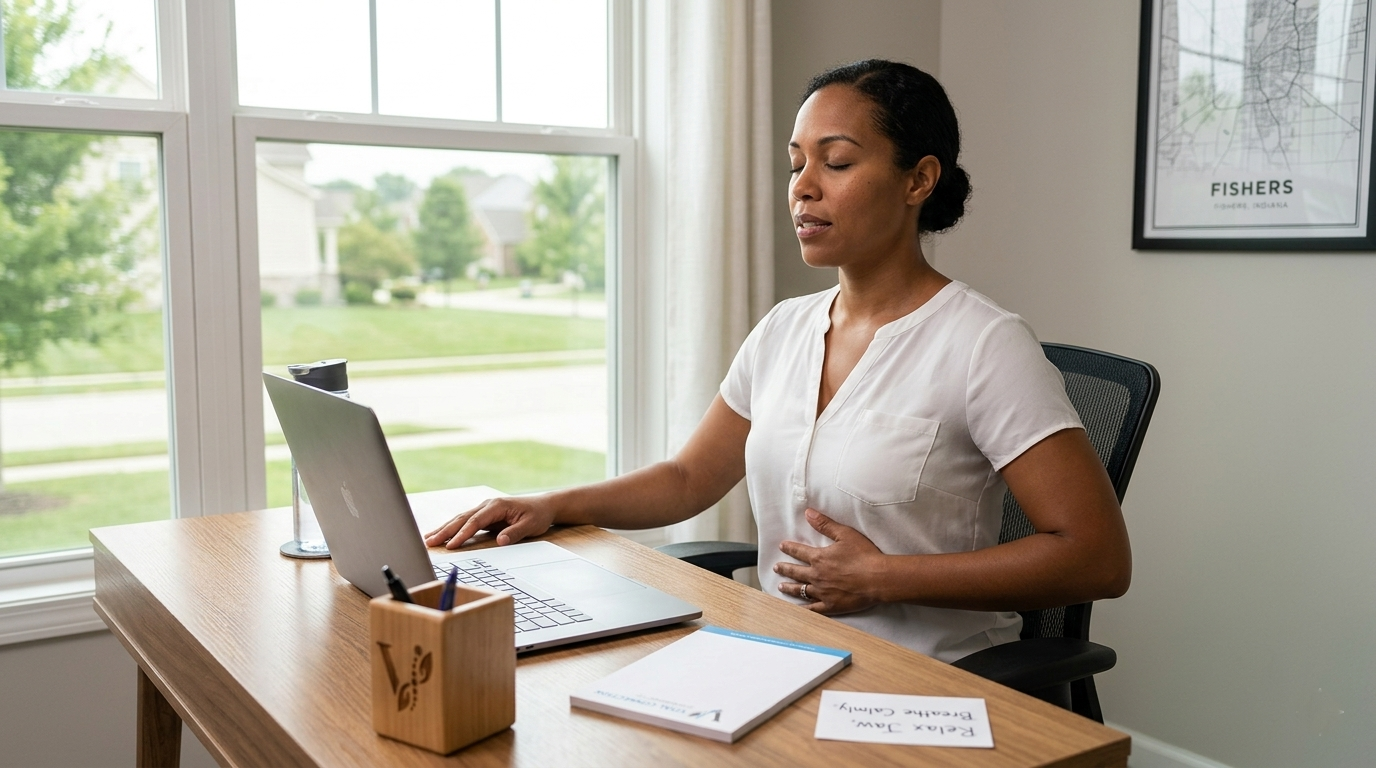 When Jaw Pain Needs Professional Evaluation
Jaw pain should not be ignored if it is persistent, worsening, or interfering with daily life. A professional evaluation is especially important when symptoms involve the jaw joint, teeth, neck, head, or facial pain.
Consider scheduling an evaluation if you notice:
- Jaw pain lasting more than several days
- Repeated waking up with jaw pain
- Pain on one side that does not improve
- Pain while chewing
- Jaw locking or limited opening
- Painful clicking or popping
- Frequent morning headaches
- Neck pain with jaw tightness
- Tooth sensitivity or visible tooth wear
- Pain after a car accident, fall, or sports injury
If the pain seems dental, call a dentist. If the pain seems sinus-related, call a medical provider. If the jaw pain is paired with neck stiffness, headaches, posture strain, or TMJ-related muscle tension, chiropractic evaluation may be a helpful part of the process.
For Fishers residents near Noblesville, Carmel, Geist, McCordsville, and Hamilton County, Vital Connection Chiropractic offers patient-friendly evaluation focused on how the jaw, neck, posture, and spine may be working together. You can use Schedule Appointment to request a visit.
How Chiropractic Care May Support Jaw, Neck, and TMJ Function
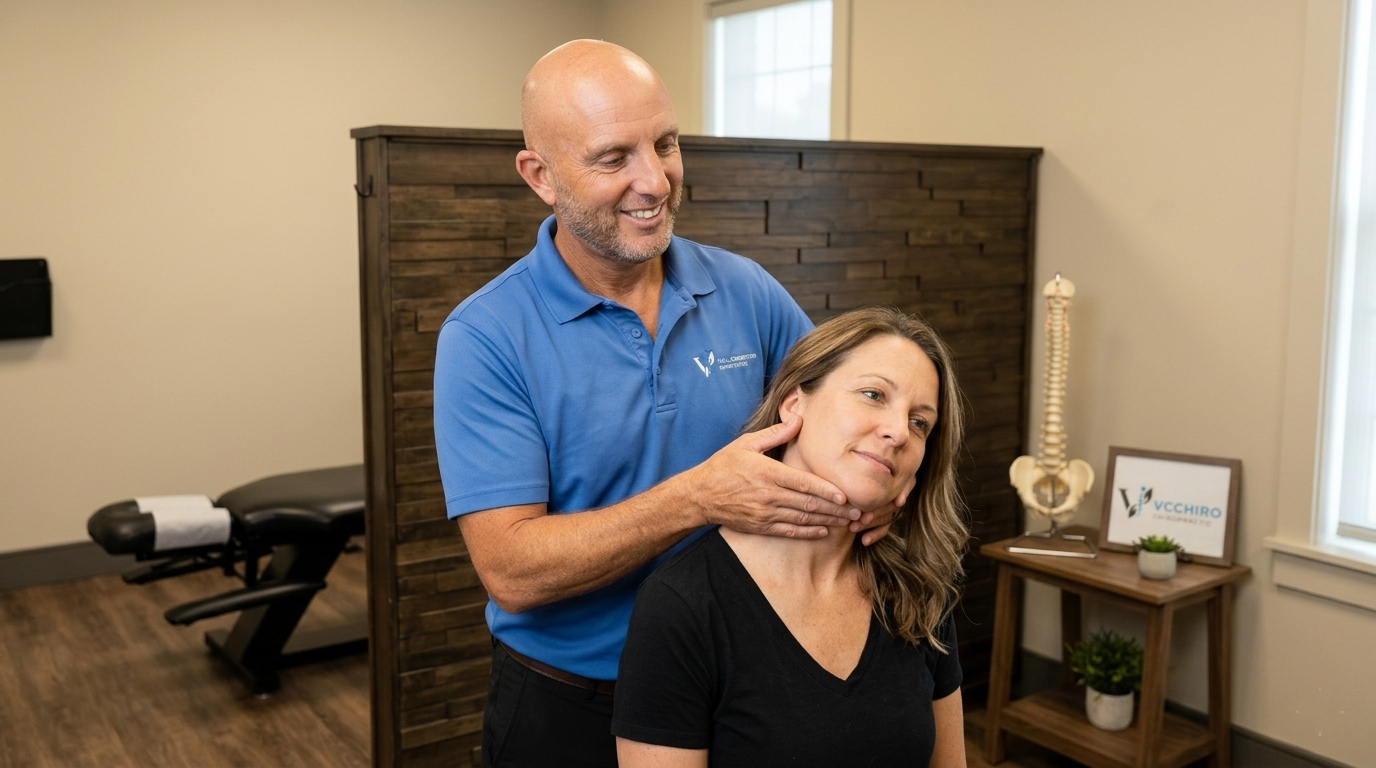
Chiropractic care for jaw pain after sleeping focuses on the body mechanics that may be contributing to tension. The goal is not to force the jaw or promise a cure. The goal is to evaluate movement, posture, muscle tension, and joint function so care can be personalized.
At Vital Connection Chiropractic, an evaluation may include discussion of:
- When the jaw pain started
- Whether it is one-sided or both sides
- Whether clicking, popping, or locking occurs
- Whether headaches or neck pain are present
- Your work posture and sleep position
- Stress and clenching habits
- Past injuries, dental issues, or accidents
Care may include gentle chiropractic adjustments, soft tissue support, posture guidance, mobility work, and home recommendations when appropriate. Some patients may also be referred to a dentist, oral specialist, or medical provider depending on the signs.
This coordinated approach matters because jaw pain can come from multiple sources. For example, a night guard may help protect the teeth from grinding, while posture changes and neck care may help reduce related muscle tension. If symptoms suggest TMJ involvement, an individualized evaluation can help determine a safe next step.
Fishers, IN Lifestyle Factors That Can Add to Jaw Tension
Many people in Fishers spend long hours commuting, working at screens, managing family schedules, or staying active in sports and fitness. These everyday demands can add up.
Jaw tension may increase when you:
- Work with your head forward for long periods
- Clench during focused computer tasks
- Sleep with poor neck support
- Carry stress in the neck and shoulders
- Drink caffeine late in the day
- Recover from a car accident or sports impact
- Grind your teeth during stressful seasons
The good news is that small changes can make a meaningful difference for some people. Adjusting workstation height, relaxing the jaw during the day, supporting the neck during sleep, and getting evaluated early may help prevent minor irritation from becoming a long-term pattern.
Patient-Friendly Next Steps
If jaw pain after sleeping happens once after a stressful week or awkward night of sleep, it may calm down with rest and better habits. If it keeps happening, your body may be signaling that the jaw, teeth, neck, or posture need attention.
Start with simple steps: avoid overusing the jaw, choose softer foods for a short time, reduce clenching habits, review your sleep position, and track symptoms. Then get the right professional involved. Dental, medical, and chiropractic care can each play a role depending on the cause.
Vital Connection Chiropractic in Fishers, IN can help assess whether your jaw pain may be connected to neck tension, posture, TMJ-related movement patterns, or headaches. If your symptoms are not a fit for chiropractic care, the office can help guide you toward the right type of provider.
Video Embed Idea:
A short educational video from Doctor Jared explaining why jaw pain after sleeping can be connected to clenching, TMJ irritation, neck posture, and sleep position, with simple safe steps patients can try before seeking care.
FAQ
How to alleviate jaw pain?
Start by reducing strain on the jaw and watching for warning signs. For mild jaw pain after sleeping, try soft foods, relaxed jaw posture, gentle heat or cold, and avoiding gum, nail biting, and wide yawning. Keep your teeth slightly apart when resting. If pain lasts more than a few days, keeps returning, affects chewing, or comes with clicking, locking, headaches, tooth pain, or swelling, schedule an evaluation with the right provider.
What is the 3 finger test for jaw pain?
The 3 finger test is a simple way people estimate jaw opening, but it is not a diagnosis. Many people can normally fit about three stacked fingers between the upper and lower front teeth when opening comfortably. If you cannot open that far, or if trying causes pain, locking, clicking, or facial tightness, it may suggest limited jaw movement. Do not force the test. A dentist, medical provider, or chiropractor can evaluate the pattern safely.
What causes jaw pain on one side?
One-sided jaw pain can come from TMJ irritation, dental problems, clenching, sleep pressure, sinus issues, or an injury. If you sleep with pressure on one side of your face, that side may feel sore in the morning. A tooth problem can also refer pain into one side of the jaw. TMJ-related pain may feel close to the ear and may include clicking, tightness, or trouble opening. Persistent one-sided pain should be checked.
How to fix TMJ naturally?
TMJ symptoms may improve with conservative steps, but the right approach depends on the cause. Helpful natural strategies may include avoiding gum, eating softer foods during flare-ups, practicing relaxed jaw posture, improving sleep position, managing stress, using gentle heat or cold, and addressing neck and posture strain. Some people need dental care, a night guard, physical therapy, chiropractic support, or medical treatment. Avoid forcing the jaw or doing aggressive exercises without guidance.
What vitamin deficiency causes jaw pain?
No single vitamin deficiency is the most common cause of jaw pain, and jaw pain should not be assumed to come from nutrition alone. Jaw pain after sleeping is more often related to clenching, grinding, TMJ irritation, dental issues, sleep position, or muscle tension. That said, nutrition can affect muscle and nerve health. If you suspect a deficiency, fatigue, numbness, cramps, or other symptoms, ask a healthcare provider about proper testing before taking high-dose supplements.