

Neck Pain Relief & Headaches in Fishers, IN: Causes, Stretches, and When to Get Help
If your neck and headaches flare up together, start by calming irritation (heat or ice, easy motion, and a short reset routine), then address posture and daily triggers so it stops repeating. This guide is built for Fishers, IN (and nearby Noblesville, Geist Indianapolis, Castleton, Carmel, and McCordsville) with clear “do this now” steps and a simple program.
What to do today (fast, safe, realistic)
Do today (10–12 minutes total):
-
Choose heat or ice based on your pattern (simple rule below).
-
Reset your neck and upper back with gentle range-of-motion and breathing (no forcing).
-
Add 2 posture-correcting drills that feel easier after you do them (not worse).
-
Take 2 short walks (5–10 minutes) to reduce stiffness and downshift tension.
❌ Avoid today: long painful stretches, aggressive “cracking,” and testing the exact position that triggers symptoms over and over.
⚠️ Get checked sooner if you have weakness, severe symptoms after trauma, fever with severe neck pain, or symptoms that spread into the arm with numbness/tingling.
 Start here if you want local guidance (hub + location + schedule)
Hub pages for local care:
Posture + ergonomics support (helpful if your pain is desk or screen-related):
Why neck pain and headaches show up together (and what that usually means)
A lot of people assume headaches are “just headaches,” and neck pain is a separate problem. In real life, they often behave like teammates.
Here’s the simple version: your head sits on your cervical spine. If your neck joints are stiff, your upper back is rounded, or your muscles are guarding from stress and screen posture, the tissues around the upper neck can refer pain upward. One common example is a cervicogenic headache, which is head pain that originates from the neck.
That does not mean every headache is neck-related. Sinus issues, hydration, sleep, hormones, medication effects, migraines, and other causes can play a role too. The practical takeaway is this: if your headaches often follow neck tightness, desk work, driving, or poor sleep position, treating your neck and posture patterns usually matters.
 Common causes we see in Fishers-area routines
 Common causes we see in Fishers-area routines
Neck pain is usually not one single structure. It’s often a blend of load + posture + tissue tolerance.
A few frequent “real life” contributors:
-
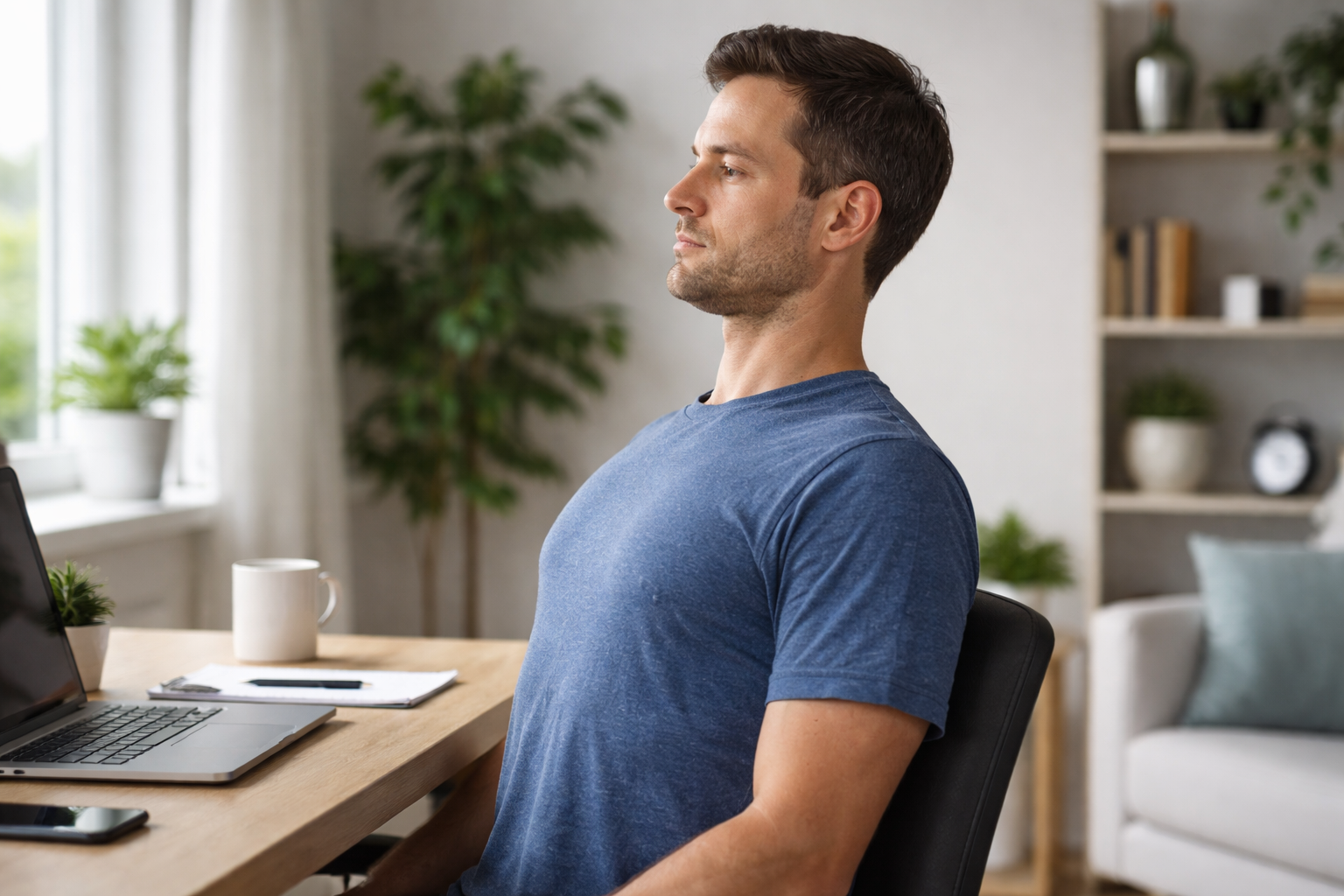
Screen posture and forward-head position (tech neck): the head drifts forward, shoulders round, upper back stiffens, and neck muscles overwork.
-
Stress and muscle guarding: stress can increase clenching through traps, jaw, and upper neck.
-
Sleep setup: pillow too high/flat, stomach sleeping, or side sleeping without neck support can trigger morning stiffness.
-
Driving and commuting: long periods in a slightly forward posture plus shoulder tension on the steering wheel.
-
Training mistakes: heavy shrugging, poor overhead form, or doing “neck stretches” aggressively when the neck is already irritated.
-
Underlying issues: arthritis changes, disc irritation, or pinched nerve patterns can refer symptoms into the shoulder/arm.
If you’re thinking, “Okay, but how do I know what’s driving mine?” Use the quick self-check below as a filter.
Quick self-check table (not a diagnosis, just a useful filter)
| What you notice | Often points toward | What to try first | When to get help |
|---|---|---|---|
| Stiff neck + headache after screens or desk work | Posture strain + upper neck irritation | Micro-breaks + posture drills + gentle ROM | If headaches escalate or keep returning weekly |
| Pain turns head left/right, feels “stuck” | Joint stiffness + muscle guarding | Heat + gentle movement + upper back mobility | If it lasts >7–10 days or worsens |
| Symptoms spread into arm with tingling/numbness | Nerve irritation pattern | Stop provoking positions, gentle symptom-led motion | If weakness, worsening numbness, or persistent radiating pain |
| Morning tightness that eases after shower/walking | Stiffness pattern + sleep setup | Heat + walking + pillow check | If severe, constant, or disrupting sleep |
 How to relieve neck pain at home (10-minute reset routine)
 How to relieve neck pain at home (10-minute reset routine)
This is the simplest “do not overthink it” routine. The goal is to calm guarding, restore comfortable motion, then add light support so it holds.
Step 1: Heat vs ice (which is best?)
Use this quick rule:
-
Ice is usually better for a fresh flare-up or if the area feels hot/inflamed.
-
Heat is usually better for stiff, cramped, tight muscles (especially if it’s not a brand-new injury).
Safe ranges matter: ice is often used in shorter bouts, and heat is typically limited to about 15–20 minutes.
Step 2: Breathing reset (1–2 minutes)
Sit tall with your back supported.
-
Inhale through the nose.
-
Exhale slowly (longer exhale than inhale).
-
Let your shoulders drop as you exhale.
Why it helps: many neck flare-ups come with “guarding,” and breathing is a quick way to downshift tension before you move.
Step 3: Gentle neck range-of-motion (2–3 minutes)
Move slowly, stay in a comfortable range, and stop before sharp pain:
-
Turn head right/left
-
Look up/down
-
Small side bends (ear toward shoulder) without shrugging
Aim for “looser after,” not “sore after.”
Step 4: Two posture correcting workouts (4–5 minutes)
Pick the two that feel most helpful:
-
Chin tuck (deep neck support)
Back of head glides straight back (like making a double chin), then relax.
Do 6–8 gentle reps. -
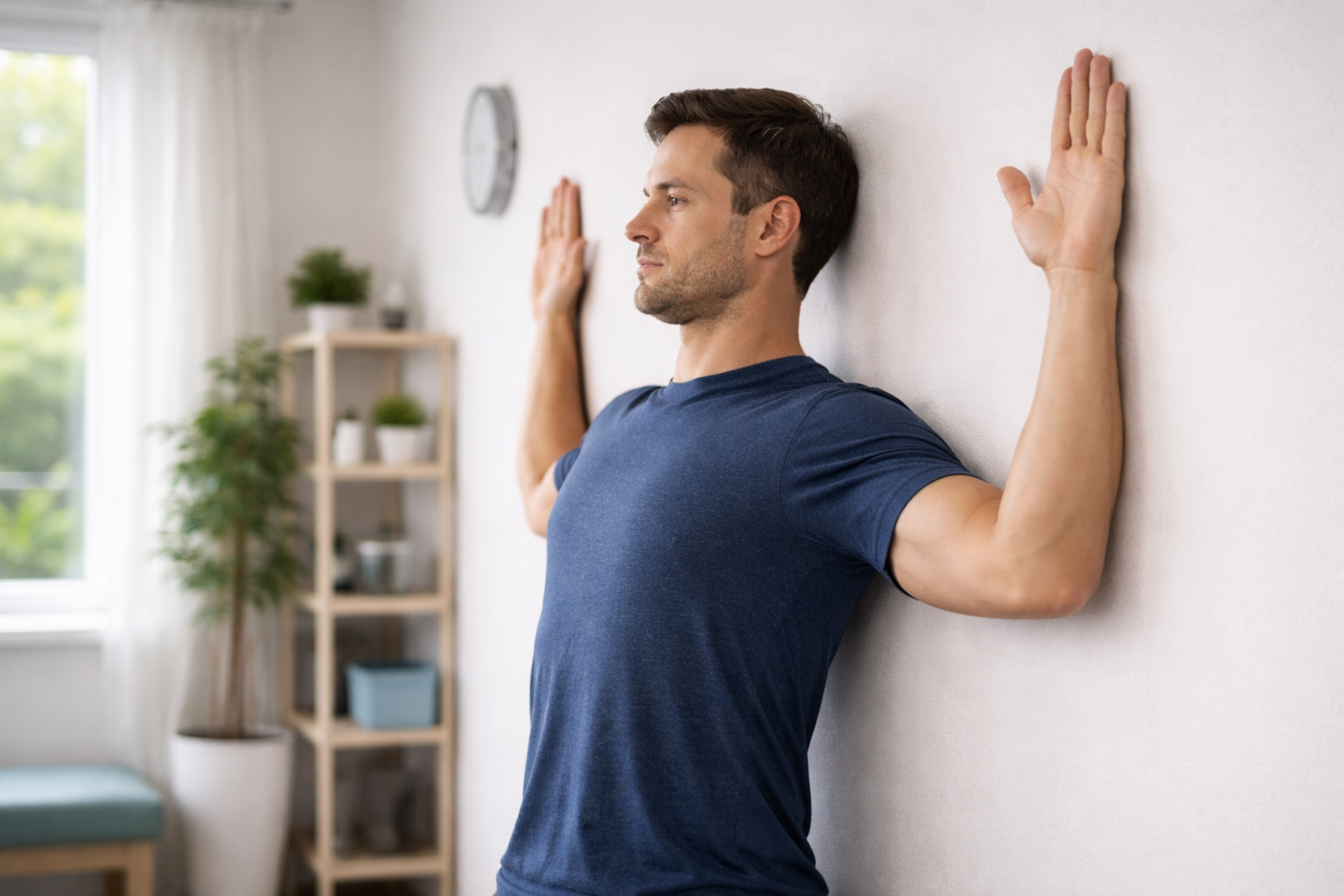
Wall angels or wall slides (upper back + shoulder control)
Back to wall, ribs down, slide arms up as far as you can without shrugging.
Do 6 slow reps. -
Band pull-aparts or scap squeezes (mid-back endurance)
Squeeze shoulder blades down and back, pause 1 second.
Do 10 easy reps.
These are posture correction staples because they help your upper back share the load instead of dumping everything into the neck.
Program table: a simple 14-day plan (easy to follow)
| Day range | Focus | What to do | Goal |
|---|---|---|---|
| Days 1–3 | Calm it down | Heat/ice + breathing + gentle ROM + 2 short walks/day | Reduce guarding and restore basic motion |
| Days 4–10 | Build tolerance | Add chin tucks + wall slides (3–4 days/week) | Better posture endurance with less flare-up risk |
| Days 11–14 | Make it stick | Add micro-breaks + lighten triggers (screen height, pillow) | Fewer repeats and better control |
 Posture correction that actually sticks (without perfection)
 Posture correction that actually sticks (without perfection)
Posture advice fails when it’s unrealistic. The win is not “perfect posture all day.” The win is fewer long, uninterrupted stretches in a neck-straining position.
The 30-minute micro-break rule (simple and effective)
If you do desk work, set a reminder: every 30 minutes, stand up for 30–60 seconds. Look far away, roll shoulders gently, and reset your head over your ribs. A workstation checklist approach often includes monitor position and regular postural breaks.
Quick desk tweaks that reduce neck load
-
Raise the screen so you’re not constantly looking down
-
Bring keyboard/mouse closer so shoulders do not creep up
-
Support the mid-back so your head is not forced forward
Sleep setup that helps more than people expect
Try this for one week:
-
Side sleeper: keep a pillow height that fills the gap between ear and shoulder (not tilted up or down).
-
Back sleeper: avoid a pillow that pushes the head forward.
-
Stomach sleeping is often the worst for stiff necks because it forces rotation for hours.
Which option is best: stretches, strength, posture work, or getting checked?
Most people do best with a combined plan, but the order matters.
-
If you feel locked up and guarded, start with calming + gentle motion first, then add drills.
-
If you feel weak, tired, and posture-collapsed, prioritize posture correcting workouts earlier (light, controlled, consistent).
-
If your symptoms spread into the arm, include weakness, or follow trauma, don’t guess. Get evaluated.
If you want a local stretch guide from the clinic, this is a good companion read: 4 neck stretches many people tolerate well
When to get help (and what “red flags” look like)
Most neck flare-ups are not emergencies, but some patterns should be taken seriously.
Seek urgent medical care if severe neck pain is tied to trauma (car accident/fall), muscle weakness/trouble walking, or severe neck pain with fever.
Also contact a healthcare provider if neck pain is severe, lasts several days without relief, spreads into arms/legs, or comes with numbness/weakness/tingling or significant headache changes.
For non-urgent cases, a smart “timeline rule” is: if you’ve been consistent with a simple plan for 7–14 days and progress is stalled, it’s time to stop trial-and-error and get a clear assessment.
What happens when you come in (Fishers, IN)
A good visit should feel clear, not confusing.
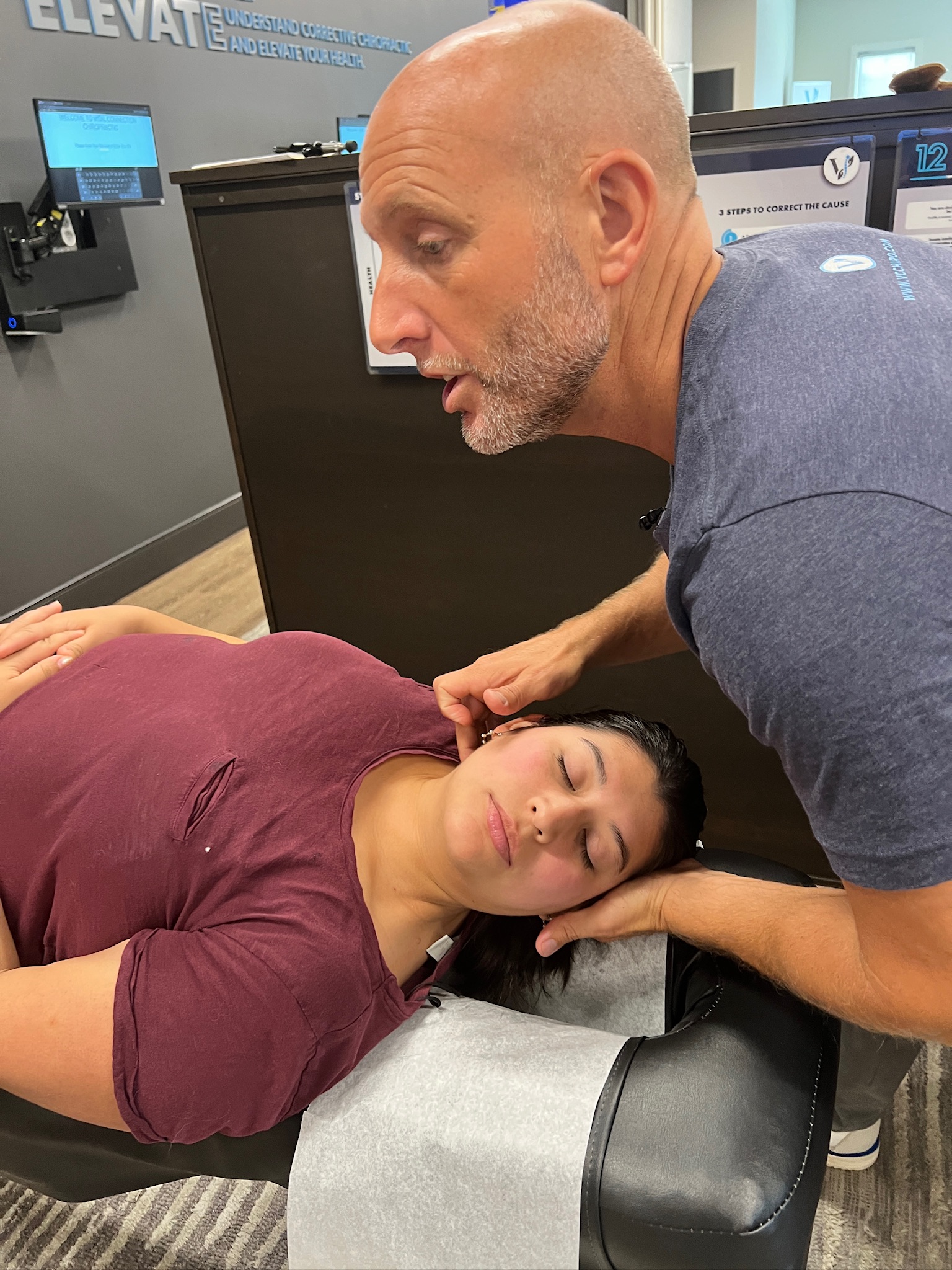
At Vital Connection Chiropractic, the goal is typically to:
-
understand your symptom pattern (what triggers, what reduces)
-
check posture, mobility, and how your upper back and shoulders are contributing
-
map a plan that may include chiropractic care plus home exercises and habit changes
If you want to explore care now: Schedule Your Appointment
Local next steps in Fishers (and nearby)
If you’re in Fishers, Noblesville, Geist Indianapolis, Castleton, Carmel, or McCordsville and you want a plan instead of guesswork, start with the hub pages and book if you want an evaluation:
Helpful nearby pages:
Your next move (and how to stop repeating the cycle)
 Your next move (and how to stop repeating the cycle)
If your flare-ups keep coming back, the win is not finding one magic stretch. The win is calming irritation early, improving posture and upper-back support, and getting an exam when symptoms stop responding. For many Fishers-area patients, neck pain relief becomes much more predictable once triggers are identified and a simple routine is followed consistently.
Frequently Asked Questions
How do you get rid of neck pain fast?
Fast relief usually comes from calming inflammation and relaxing tight muscles. If it just started, use an ice pack (wrapped) for up to 15 minutes a few times a day for the first 48 hours, then switch to heat (warm shower or heating pad on low). Keep your neck gently moving with slow turns and nods instead of holding it stiff, and consider an over-the-counter pain reliever if you can take one safely. If pain follows an accident, or you have numbness/weakness, fever, or a severe headache, get medical care promptly.
Why is my neck hurting?
Most neck pain is “mechanical,” meaning muscle strain from posture (laptop/phone use), stress-related tension, awkward sleep position, or overuse. It can also come from injury (like whiplash), arthritis/age-related wear (cervical spondylosis), or a disk/“pinched nerve,” especially if pain travels into your arm with tingling or weakness. Less commonly, infection can cause neck pain and stiffness, particularly when paired with fever and headache. If symptoms are severe, follow an injury, or include neurologic changes, it’s worth getting checked.
What is the best reliever for neck pain?
For many people, the “best” quick option is an over-the-counter pain reliever like ibuprofen/naproxen (NSAIDs) or acetaminophen, chosen based on your health history and medication interactions. NSAIDs can help when inflammation is a factor, but they’re not ideal for everyone (ulcers, kidney disease, blood thinners, some heart conditions). If muscle spasm is prominent, clinicians sometimes use short-term muscle relaxants, but these are prescription and can cause drowsiness. If pain is persistent, radiating, or keeps returning, treating the underlying cause usually works better than escalating meds.
How do you treat a stiff neck?
A stiff neck usually improves with gentle movement, heat/ice, and simple pain control. Avoid “locking” your neck still; slow, comfortable range-of-motion (turning side to side and nodding) often helps it loosen up. Heat after the first day or two can relax muscle tightness, while ice can help early inflammation, and over-the-counter pain relievers may make it easier to stay mobile. Seek urgent care if stiffness comes with fever and headache, or if it follows trauma, because those combinations can signal conditions that shouldn’t be treated at home.
What triggers a stiff neck?
Common triggers are sleeping in an awkward position, long periods of poor posture (especially looking down at screens), sudden increases in activity, stress-related muscle tension, or minor strains from lifting or repetitive neck motions. Underlying spine wear (like cervical spondylosis) can make stiffness more likely or longer-lasting. While most cases are harmless and temporary, a stiff neck can also be a warning sign when it appears with fever and headache, which can point to serious infection and needs urgent medical evaluation.
How to fix a stiff neck in 5 minutes?
You usually can’t “fix” a stiff neck completely in five minutes, but you can often reduce it fast. Use gentle heat briefly (a warm shower or heating pad on low) to relax the muscles, then do slow, pain-free movements like small neck turns and up-down nods, followed by a few shoulder rolls. The goal is to restore comfortable motion, not force a stretch. Stop immediately if you feel sharp pain, dizziness, or arm tingling/weakness, and get urgent help if stiffness comes with fever and headache.


