Posture Correction Chiropractor in Fishers, IN: What to Expect
A posture correction chiropractor evaluates how joint mobility, muscle balance, daily movement, and workspace habits may be affecting the way you sit, stand, and move. In Fishers, IN, chiropractic care may help reduce posture-related stiffness or discomfort and make healthier positioning easier to maintain. It cannot guarantee a permanent posture fix, so the most useful plan usually combines individualized care with exercise, ergonomics, and consistent habits.
 What Does a Posture Correction Chiropractor Do?
A posture chiropractor looks beyond whether someone appears to slouch. The goal is to understand why a position feels natural, uncomfortable, or difficult to change. Posture is influenced by many factors, including joint motion, muscle endurance, vision, breathing, previous injuries, pain, work setup, sleep habits, activity level, and the amount of time spent in one position.
An evaluation may include observing head and shoulder position, spinal curves, pelvic level, standing balance, walking, and how the body moves through simple tasks. The chiropractor may also examine joint mobility and muscle function. Imaging is not automatically needed for every posture concern. It should be considered only when the history, examination, or a possible underlying condition makes it clinically appropriate.
It is also important to separate appearance from health. There is no single perfect posture that everyone must hold all day. A relaxed body naturally changes position. The more practical goals are to move comfortably, tolerate work and daily activities, reduce unnecessary strain, and avoid staying in one position for too long.
People who want to understand whether another musculoskeletal concern may be involved can review the clinic’s Conditions information before their visit.
Common Posture Concerns Seen in Daily Life
Poor posture is often a repeated movement pattern rather than one isolated spinal problem. Long computer sessions, frequent phone use, driving, caregiving, lifting, fatigue, and limited physical activity can all influence how the body is held. Sometimes posture changes because a person is trying to avoid pain. In other cases, a medical condition, injury, or structural curve may contribute.
The table below describes common patterns, but it is not a diagnostic tool.
| Posture Pattern | What You May Notice | Possible Contributors | Helpful First Step |
|---|---|---|---|
| Forward head position | Chin projects forward, upper neck feels tired | Screen position, prolonged sitting, visual demands | Review desk setup and assess neck and upper-back movement |
| Rounded shoulders | Shoulders rest forward, chest feels tight | Reaching toward a keyboard, weak endurance, habit | Add movement breaks and guided upper-back strengthening |
| Increased upper-back rounding | Upper back appears more curved or stiff | Age-related change, prolonged flexion, osteoporosis, structural kyphosis | Get evaluated, especially if the change is new or painful |
| Pelvic or lower-back imbalance | Hips feel uneven, lower back tires while standing | Muscle imbalance, leg or hip issues, prior injury | Assess the hips, pelvis, gait, and lumbar movement together |
Forward head posture commonly occurs with neck and upper-back discomfort, but one does not always prove that the other caused the symptoms. A careful assessment matters because headaches, arm symptoms, arthritis, previous trauma, and other conditions can change the safest plan. Patients with recurring cervical discomfort can also learn more about Neck Pain.
 How Chiropractic Care May Support Better Posture
 How Chiropractic Care May Support Better Posture
Chiropractic care is most relevant when posture concerns occur with musculoskeletal stiffness, restricted movement, or pain. Depending on the findings and the patient’s health history, care may include joint mobilization or manipulation, soft-tissue techniques, mobility work, exercise guidance, and practical coaching for daily activities.
Improving Comfortable Joint Movement
When the neck, upper back, lower back, shoulders, or hips feel stiff, the body may compensate by moving around the restricted area. Appropriate manual care may improve short-term mobility and comfort for some patients. That can create a better opportunity to practice new movement patterns, but an adjustment alone does not retrain every habit or strengthen muscles.
Addressing Muscle Endurance and Coordination
Posture is active. The muscles around the neck, shoulder blades, trunk, and hips must tolerate repeated daily demands. A useful care plan may include exercises for strength, endurance, balance, or motor control based on the examination. Generic exercises are not right for everyone, especially when pain, dizziness, osteoporosis, recent injury, or nerve symptoms are present.
Making Work and Home Habits More Realistic
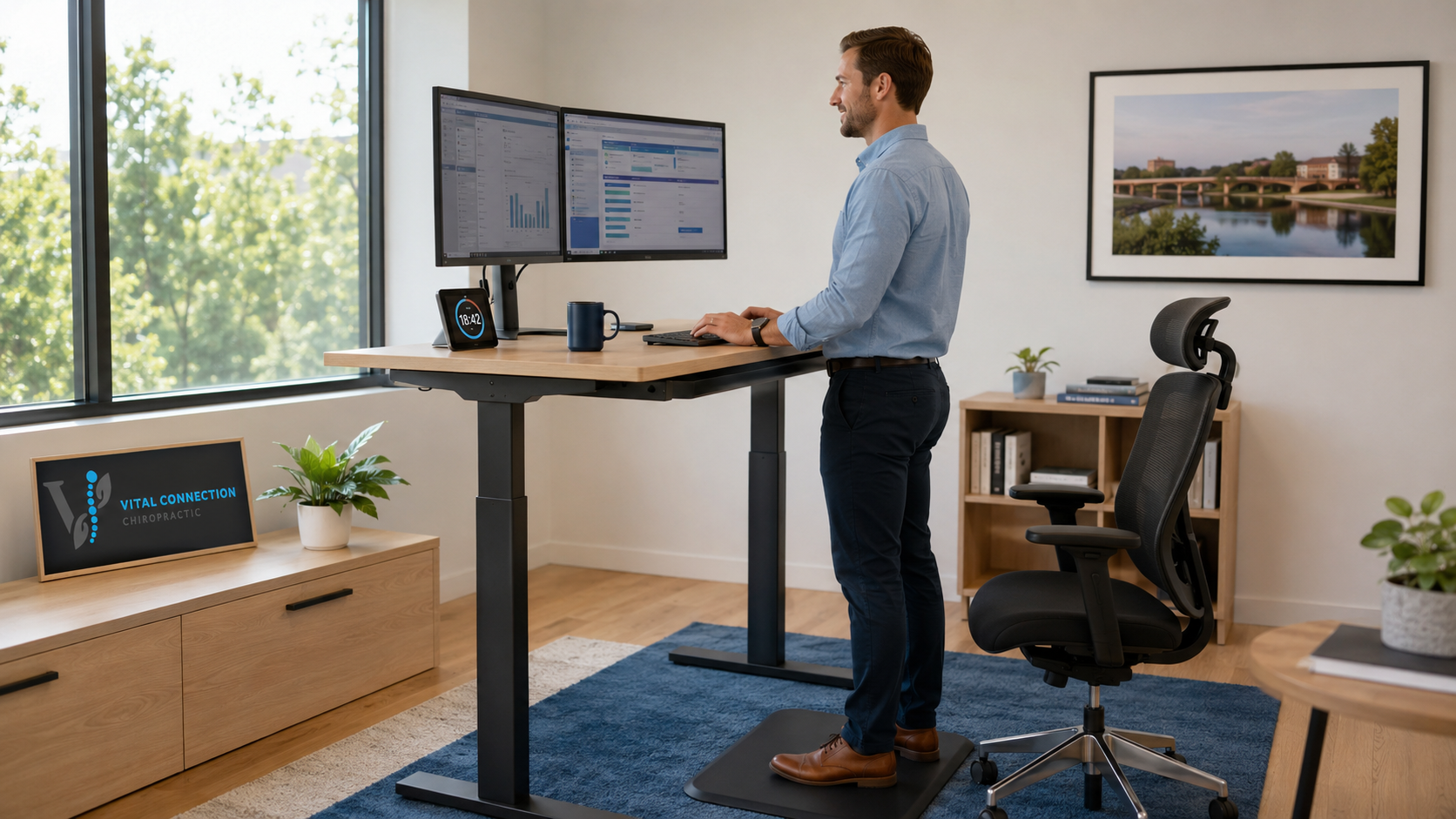
Ergonomics should fit the person and the task. A high-quality chair will not solve eight uninterrupted hours of sitting. A standing desk can also become uncomfortable if someone stands rigidly all day. A chiropractor for poor posture may help a patient adjust screen height, chair support, driving position, lifting technique, sleep setup, and movement-break frequency.
Setting Measurable Goals
“Stand straighter” is difficult to measure. Better goals might include working for 45 minutes with less neck fatigue, turning the head more comfortably while driving, walking without feeling pulled forward, or completing a home exercise routine consistently. Progress should be reviewed, and the plan should change if it is not helping.
The clinic’s Chiropractic Care page explains more about its patient-centered approach.
What to Expect During a Posture Evaluation
Your first visit should begin with a conversation, not an adjustment. Be ready to discuss when the concern began, what makes it better or worse, previous injuries, medical diagnoses, medications, bone health, work demands, exercise, sleep, and your goals. Tell the chiropractor about osteopenia, osteoporosis, fractures, surgery, cancer, inflammatory disease, numbness, dizziness, or recent trauma.
A physical evaluation may look at:
- Head, shoulder, ribcage, pelvic, knee, and foot position
- Neck, upper-back, lower-back, shoulder, and hip mobility
- Muscle strength, endurance, and side-to-side differences
- Balance, walking, breathing, and movement control
- The desk, driving, lifting, or activity positions that trigger symptoms
The chiropractor should explain what was found in plain language, identify anything that needs medical referral, and discuss reasonable options. You should understand the expected benefits, common temporary reactions, alternatives, visit frequency, home recommendations, and how progress will be measured before agreeing to care.
Building a Practical Posture Correction Plan
 Building a Practical Posture Correction Plan
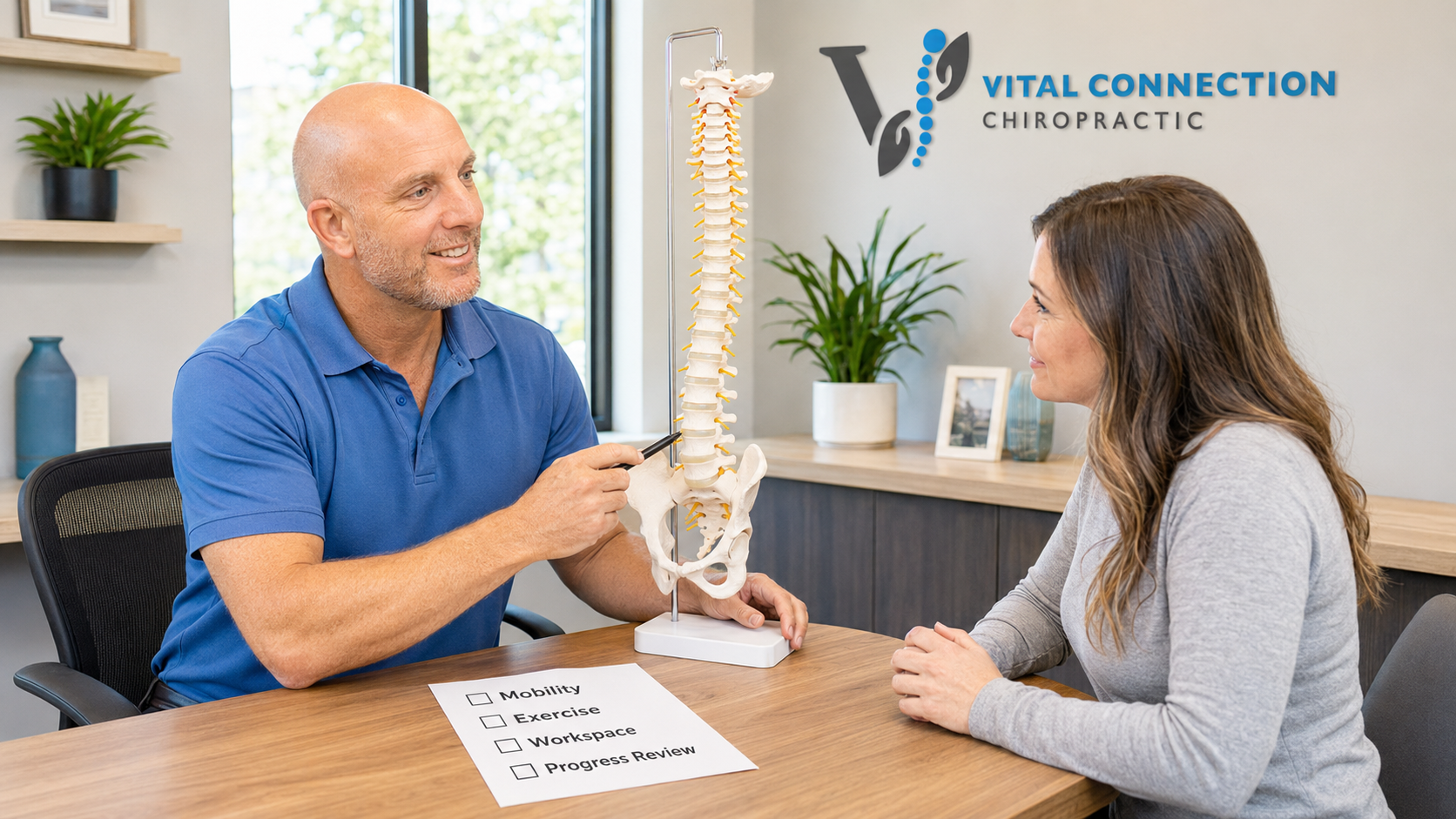
Posture improvement usually works best as a shared process. Office care may help manage mechanical barriers, while the patient builds capacity and changes repeated daily inputs. Not every plan needs every component.
| Plan Component | Purpose | What It May Include |
|---|---|---|
| Individual assessment | Identify likely contributors and safety concerns | Health history, movement testing, neurologic or orthopedic screening when indicated |
| Manual care | Support mobility and symptom management | Modified manipulation, mobilization, or soft-tissue care selected for the patient |
| Corrective exercise | Build strength, endurance, and movement control | Neck, shoulder-blade, trunk, hip, balance, or mobility exercises |
| Ergonomic changes | Reduce repeated strain without demanding rigid posture | Screen and chair adjustments, task variation, lifting changes, movement reminders |
| Progress review | Confirm whether the plan is useful | Symptom response, range of motion, function, exercise tolerance, and goal completion |
The safest technique and intensity depend on age, health history, bone density, symptoms, and examination findings. A plan for a healthy office worker may differ greatly from care for someone with osteopenia, a previous compression fracture, inflammatory arthritis, or recent surgery.
How Long Does Posture Improvement Take?
There is no dependable universal timeline. Some people notice improved comfort or movement within a few visits. Changing long-standing habits, building muscle endurance, and improving tolerance for work or exercise often takes weeks or months. A visible change is not the only sign of progress, and rapid before-and-after photos can be affected by coaching, camera angle, fatigue, or time of day.
Your timeline may depend on:
- How long the concern has been present
- Whether pain or injury is changing how you move
- The presence of arthritis, scoliosis, osteopenia, or another condition
- Work, driving, caregiving, and device-use demands
- Exercise consistency, sleep, stress, and general health
- Whether the plan addresses the actual contributing factors
If there is no meaningful functional improvement within the agreed review period, the diagnosis and plan should be reconsidered. More visits are not automatically the answer. Co-management with a primary care clinician, physical therapist, specialist, or mental health professional may be appropriate.
7 Essential Steps That Support Better Posture
1. Change Positions Regularly
The next posture is often more helpful than trying to hold one “perfect” position. Alternate sitting, standing, and walking as your work permits. Start with a reminder every 30 to 60 minutes, then adjust it to your comfort and responsibilities.
2. Bring the Screen Closer to Eye Level
Position the main monitor so you can read it without repeatedly leaning forward or looking down. Increase text size when needed. Keep frequently used items close enough that you do not spend the day reaching or twisting.
3. Support Your Feet and Forearms
Keep the feet supported on the floor or a stable footrest. Let the chair and desk support some arm weight so the shoulders do not remain lifted. Avoid forcing the chest up or pulling the shoulders back all day.
4. Use Brief Mobility Breaks
A short walk, gentle shoulder movement, or comfortable change of position can interrupt prolonged loading. Stop an exercise that causes sharp pain, dizziness, new tingling, weakness, or worsening symptoms.
5. Build Strength Gradually
Exercises for the deep neck muscles, shoulder blades, trunk, and hips may be useful, but technique and dosage matter. Begin at a level you can repeat consistently. If you have bone loss, a previous fracture, or significant pain, get individualized guidance before starting loaded or end-range movements.
6. Adjust the Task, Not Only Your Body
Use a headset for long calls, bring reading material up, divide heavy loads, alternate carrying sides, and move closer to the work instead of reaching. Small environmental changes often make a posture plan easier to sustain.
7. Track Function Instead of Chasing Perfection
Notice whether you can work, drive, sleep, walk, and exercise more comfortably. These outcomes are usually more meaningful than trying to match a rigid posture diagram.
When Medical Evaluation Should Come First
Posture changes are not always a routine mechanical issue. Seek prompt medical evaluation for a sudden posture change after trauma, severe or rapidly worsening pain, new weakness, loss of coordination, numbness in the groin or saddle area, loss of bladder or bowel control, fever, unexplained weight loss, chest pain, breathing difficulty, or a known or suspected fracture.
A new rounded upper back, height loss, or pain after a minor fall can be especially important in someone with osteopenia or osteoporosis. Hormonal symptoms, persistent anxiety, and concerns about cortisol or GLP-1 medication also belong with an appropriately licensed medical professional. Chiropractic care can be complementary when suitable, but it should not delay needed diagnosis or treatment.
Posture Care at Vital Connection Chiropractic in Fishers, IN
Vital Connection Chiropractic serves adults and families in Fishers and nearby Hamilton County communities, including Noblesville, Carmel, Geist, and McCordsville. The office is located at 12242 E 116th St, Suite 100, Fishers, IN 46037.
If posture-related stiffness, neck fatigue, or movement limitations are affecting your day, an individualized evaluation can help clarify possible contributors and the safest next step. You can Schedule Appointment online or Contact Us with questions. Results vary, and recommendations should be based on your examination, health history, and goals.
Frequently Asked Questions
 Frequently Asked Questions
Will a chiropractor fix my posture?
A chiropractor may help improve posture-related movement, comfort, and awareness, but cannot promise to permanently fix your posture. Posture is shaped by joint mobility, muscle endurance, pain, work habits, activity, vision, medical conditions, and many other factors. The best results commonly involve a tailored combination of manual care, exercise, ergonomic changes, and regular movement. Your progress should be judged by function and comfort as well as appearance.
Can I go to a chiropractor if I have osteopenia?
You may be able to receive chiropractic care with osteopenia, but the chiropractor must know about your bone health before treatment. Osteopenia means bone density is below normal, which may affect technique selection and fracture risk. Bring relevant bone-density results and disclose fractures, steroid use, cancer history, and medications. High-force techniques may be inappropriate for some patients. Gentle mobilization, soft-tissue work, exercise guidance, or medical clearance may be safer depending on the evaluation.
Can a chiropractor prescribe GLP-1?
No, a chiropractor practicing under an Indiana chiropractic license cannot prescribe GLP-1 medication. Indiana defines chiropractic practice as care provided without prescription drugs or surgery. GLP-1 medicines require evaluation by an appropriately licensed prescriber who can review indications, contraindications, dosing, side effects, interactions, and follow-up needs. If weight changes are also affecting movement or posture, chiropractic care may address suitable musculoskeletal concerns but does not replace medical obesity or diabetes care.
Can a chiropractor help with cortisol levels?
A chiropractor cannot diagnose or treat an abnormal cortisol level through posture care or spinal adjustment. Some small studies have measured short-term biochemical changes after manual interventions, but their clinical meaning is uncertain and they do not show that chiropractic care corrects a cortisol disorder. Persistently high or low cortisol can have medical causes and may require properly timed laboratory testing. Discuss concerning symptoms with a primary care clinician or endocrinology professional.
Why do doctors discourage chiropractors?
Many doctors do not discourage all chiropractic care, but some advise caution when the claimed benefit is unsupported, the technique is unsuitable, or necessary medical care could be delayed. Concerns may also involve fracture risk, certain neck-manipulation risks, repeated care without measurable progress, or claims to treat conditions outside a chiropractor’s scope. Communication helps. Tell every provider what care you receive, choose licensed professionals, disclose your full history, and favor a plan with clear goals and referral when needed.
Can a chiropractor heal anxiety?
No, chiropractic care has not been established as a treatment that heals an anxiety disorder. Some people may feel more relaxed when pain or muscle tension is better managed, but that is not the same as treating anxiety itself. Evidence-based anxiety care may include psychotherapy, medication, or both, depending on individual needs. If anxiety is persistent, distressing, or affecting sleep, work, relationships, or safety, speak with a qualified medical or mental health professional.
A Balanced Next Step for Better Posture
A posture correction chiropractor can be one part of a practical plan for posture-related pain, stiffness, mobility, and daily habits. The most trustworthy approach begins with an individualized assessment, respects medical conditions, uses measurable goals, and combines appropriate care with movement and self-management. Better posture is not about holding a rigid pose. It is about helping your body move through work, exercise, rest, and everyday life with less unnecessary strain.