Massage for Slipped Disc in Fishers, IN
Massage for slipped disc may help reduce muscle tension and temporary back discomfort for some people, but it does not “push” a disc back into place, and it is not the right fit for every case. A proper evaluation matters because a slipped disc can irritate nearby nerves, and the safest plan often combines symptom-guided movement, activity modification, and hands-on care that does not flare the area up. Evidence for massage in low back pain suggests possible short-term relief, while guidance for herniated or slipped discs emphasizes staying gently active, avoiding prolonged bed rest, and getting checked when symptoms are severe or worsening.
If you are searching for a slipped disc chiropractor near me in Fishers, IN, it helps to know what massage can do, what it cannot do, and when a more complete plan makes sense. At Vital Connection Chiropractic, the goal is not simply to chase pain. It is to understand what may be irritating the area, reduce stress on the low back, and help you move with more confidence.
Is massage for slipped disc actually helpful?
A slipped disc, also called a herniated disc, happens when part of a spinal disc pushes through a weaker area and may press on nearby nerves. That can lead to local low back pain, pain into the buttock or leg, tingling, numbness, or weakness depending on the level and severity.
Massage does not repair the disc itself. What it may do is calm down tight, protective muscles around the low back, hips, and glutes that often tighten when the area is irritated. For some people, that means less guarding, better comfort, and easier movement for a short period of time. But massage is only one piece of the picture, and the benefit tends to be more about surrounding soft tissue tension than the disc itself.
That is why the answer to “is massage good for slipped disc?” is: sometimes, but it depends. If touch calms the area and symptoms stay centered in the back, gentle work may be useful. If massage increases leg pain, tingling, numbness, or sharp nerve symptoms, it may not be the best next step.
When massage may help and when to pause
| Situation | What it may mean |
|---|---|
| Tight, achy muscles around the low back or hips without worsening leg symptoms | Gentle massage may help relax protective muscle tension |
| Stiffness after sitting too long | Soft tissue work plus movement breaks may help comfort |
| Symptoms improve with light movement and calm pressure | Massage may be a supportive part of care |
| Sharp pain shooting down the leg during or after pressure | Pause and get evaluated before more massage |
| Numbness, weakness, or pain getting worse | Massage alone is not enough and a proper exam is important |
| New bowel or bladder changes or saddle numbness | Seek urgent medical attention |
Why this matters clinically
A lot of slipped disc cases are not just about the disc. They also involve guarding in the low back, irritated nerve tissue, reduced tolerance to bending or sitting, and fear of movement after a painful flare. Massage may help one of those layers, but it rarely addresses all of them by itself. In many cases, the better question is not “Should I get massage?” but “What combination of care is least likely to aggravate me and most likely to help me move better?”
 How massage fits into a safer slipped disc recovery plan
When massage is appropriate, the approach should usually be gentle and symptom-aware. Aggressive pressure directly into an already irritated low back may not be helpful, especially when nerve symptoms are active. In many slipped disc cases, calmer work around the lumbar muscles, hips, glutes, and nearby soft tissues makes more sense than trying to “dig into” the painful spot.
A safer recovery plan often includes:
- reducing movements that clearly flare symptoms
- staying lightly active instead of stopping all movement
- using positions of comfort briefly rather than spending long periods in bed
- gradually reintroducing walking and simple disc-friendly movement
- getting evaluated if symptoms are not improving or if nerve signs are increasing
Guidance from Mayo Clinic and the NHS consistently emphasizes avoiding too much bed rest and staying active within tolerance. Short walks and activity modification are often preferred over complete inactivity because prolonged bed rest can contribute to stiffness and weakness.
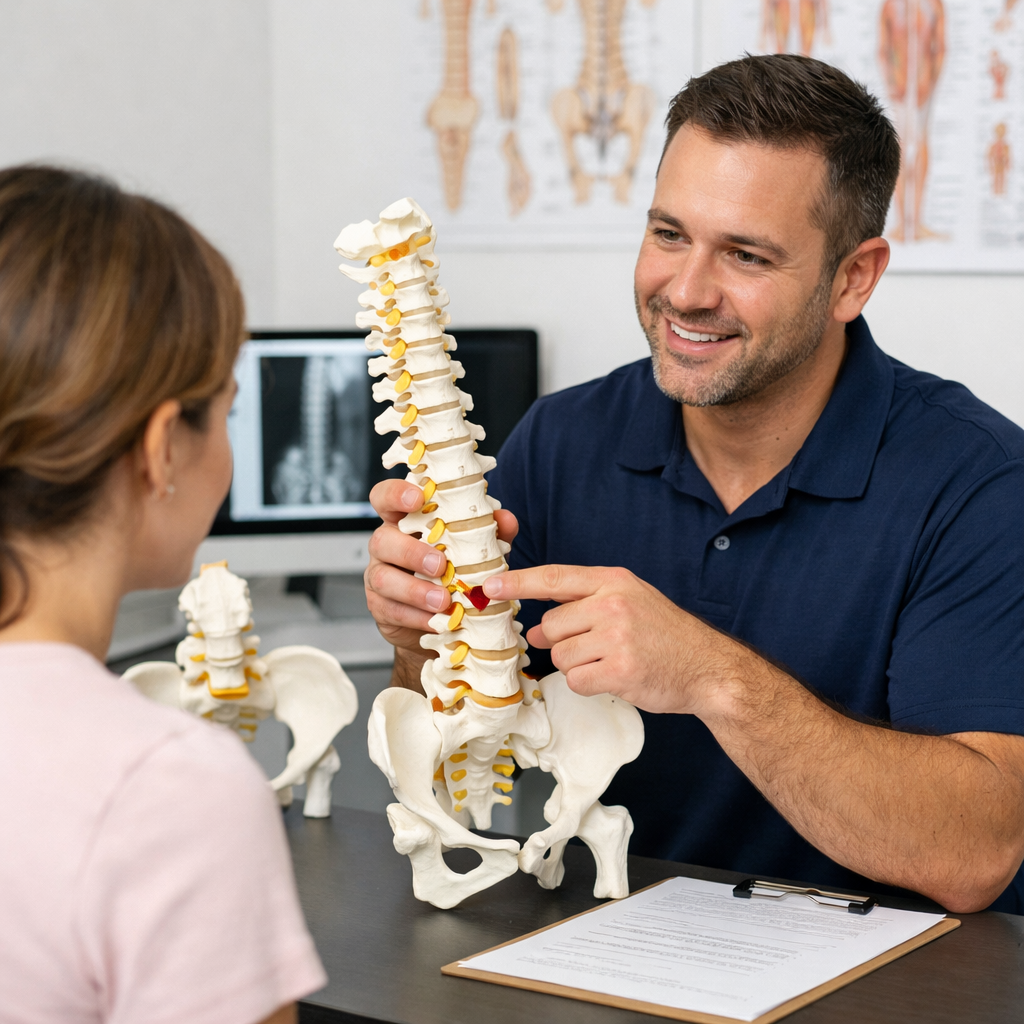
For patients in Fishers, this is often where a more complete chiropractic care plan can be helpful. Instead of relying on massage alone, care may include an exam, movement testing, symptom-guided recommendations, and a personalized strategy based on what actually aggravates and eases your symptoms.
A practical example
Someone with a slipped disc may feel worse after long sitting, bending to put on shoes, or lifting from the floor. Massage might temporarily loosen the low back, but unless the plan also addresses posture tolerance, hip movement, lifting mechanics, and simple recovery exercises, the same flare pattern may keep returning.
That is why individualized care matters. Good care should match the person in front of you, not just the diagnosis.
 What should you not do with a slipped disc?
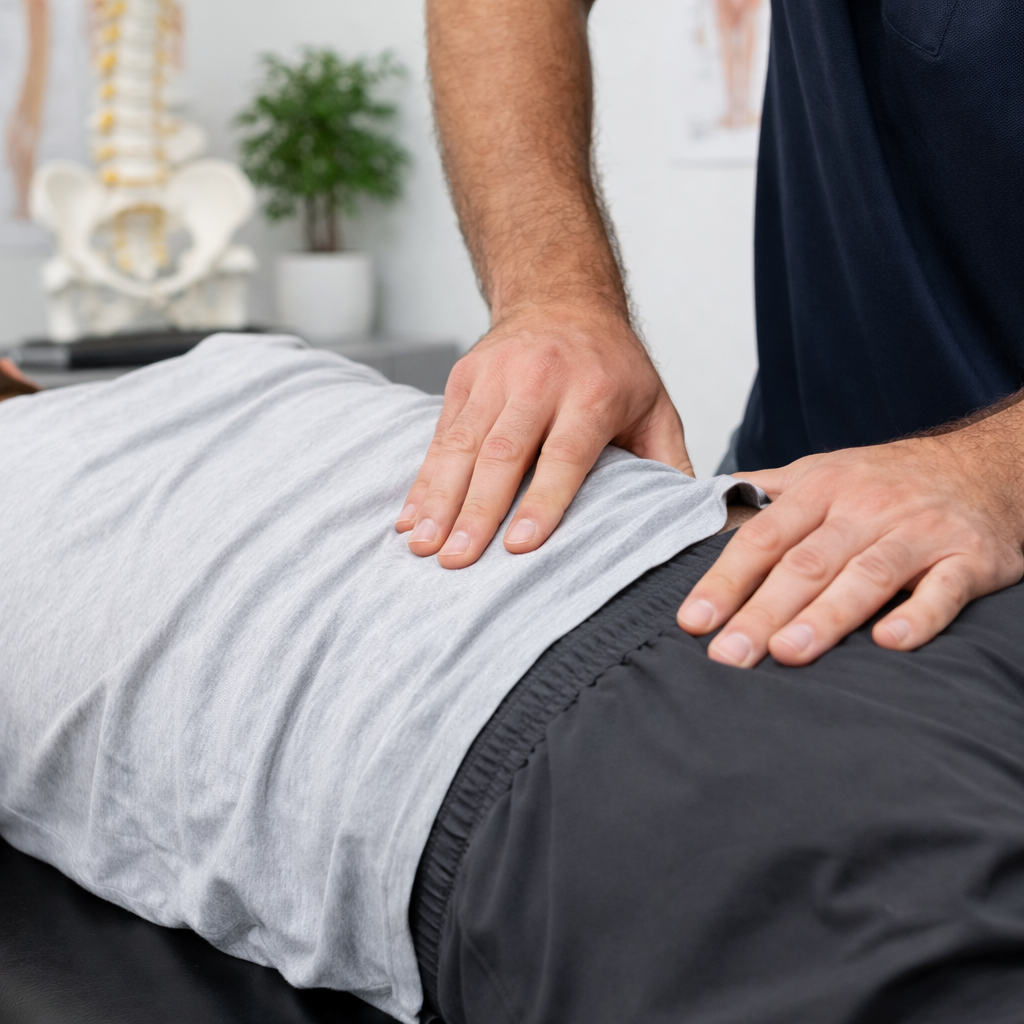 What should you not do with a slipped disc?
One of the most common mistakes is doing too much too soon because the back feels a little better for a day. Another is doing too little for too long because movement feels scary.
In general, avoid activities that clearly make symptoms travel farther down the leg, intensify numbness, or increase weakness. Common aggravators can include:
- repeated bending and twisting
- lifting with poor control
- forceful toe-touch stretching
- heavy gym movements during an active flare
- long periods of bed rest
- sitting too long without changing position
- deep, painful pressure that reproduces nerve symptoms
Mayo Clinic notes that bending, twisting, lifting, standing, or walking can make back pain worse, depending on the cause and the person. At the same time, for herniated discs, very short walks and activity within tolerance are usually preferred over prolonged rest.
That does not mean you should fear all motion. It means you should respect your current tolerance. A proper plan often involves finding movements that calm symptoms or at least do not make them spread.
Helpful habits vs common mistakes
| Helpful habits | Common mistakes |
|---|---|
| Short, frequent walks if tolerated | Staying in bed most of the day |
| Using gentle movement to reduce stiffness | Doing aggressive stretching into pain |
| Changing positions often | Sitting for long periods without breaks |
| Using a calm, progressive recovery plan | Returning to lifting too soon |
| Monitoring whether symptoms centralize or spread | Ignoring worsening numbness or weakness |
| Getting evaluated when symptoms are not improving | Assuming massage alone will fix everything |
What worsens a slipped disc?
A slipped disc may worsen when the irritated tissue keeps getting loaded in the same painful direction. For some people that is flexion, such as repeated bending forward. For others it is prolonged sitting, twisting, coughing, lifting, or trying to exercise through sharp leg pain.
This is also why symptom behavior matters more than guesswork. If pain is becoming more intense, spreading farther down the leg, or starting to include weakness, that is a sign to scale back and get checked.
If you are unsure whether your symptoms fit a disc issue, these signs of a slipped disc may help you understand what to watch for before deciding what kind of care to pursue.
What is the fastest way to heal a slipped disc?
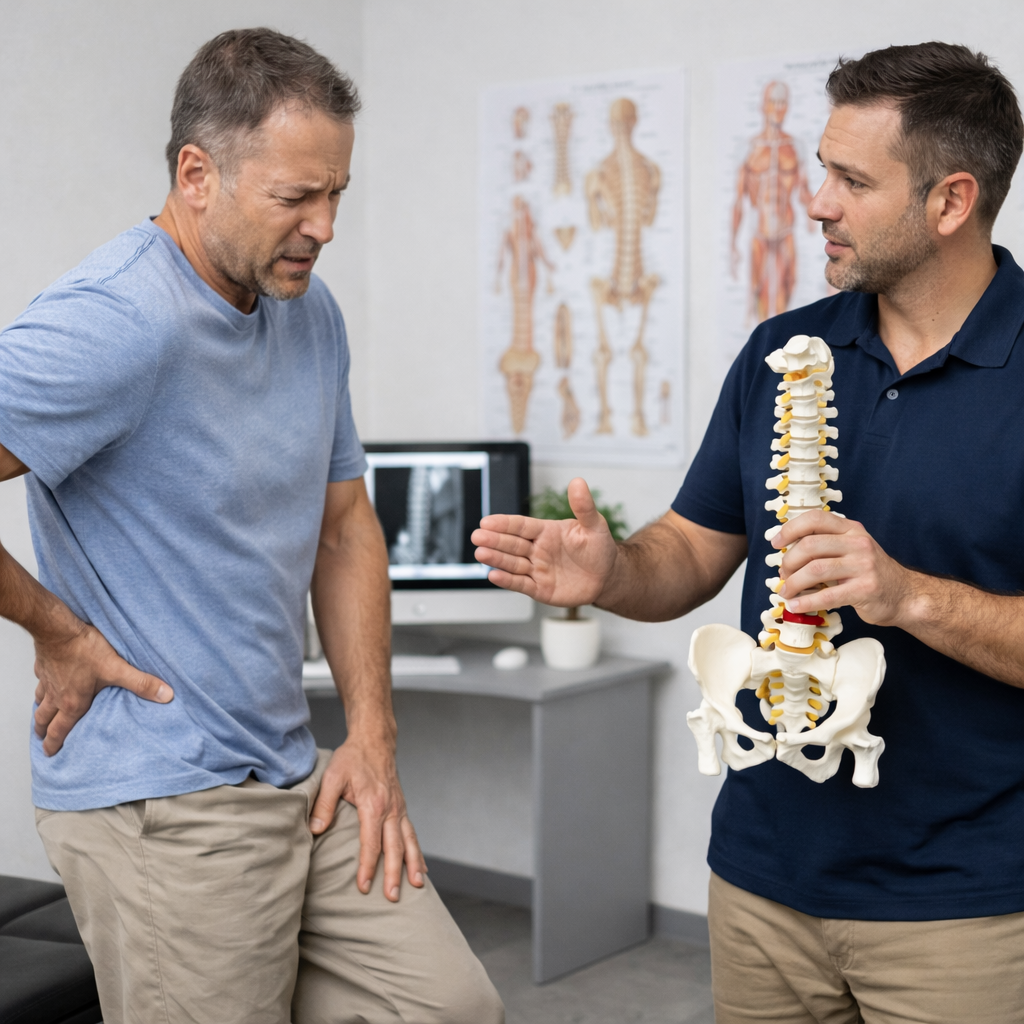 What is the fastest way to heal a slipped disc?
The fastest way to heal a slipped disc is usually not an aggressive shortcut. It is a calm, consistent plan that reduces irritation and helps the body recover.
For many people, that means:
- Briefly reducing the movements that clearly flare symptoms
- Avoiding prolonged bed rest
- Using short, pain-limited walks
- Reintroducing simple exercises based on tolerance
- Getting evaluated if symptoms are severe, persistent, or progressive
AAOS notes that most patients with a herniated lumbar disc improve over days to weeks, and many are free of symptoms by about 3 to 4 months. Mayo Clinic also notes that if conservative care does not improve symptoms after about six weeks, more evaluation or other treatment options may be considered.
So the real answer is this: the fastest path is usually the one that prevents repeated flare-ups. That often means the right exercise progression, avoiding the wrong loads at the wrong time, and not waiting too long when symptoms are not settling.
Two helpful resources for many patients are good exercises for slipped disc and is walking good for slipped disc. The key is doing the right amount, not the maximum amount.
Can a disc heal without surgery?
Many slipped disc cases do improve without surgery. Conservative care is often enough, especially when severe neurological symptoms are not present. Treatment typically focuses on reducing pain, staying active within reason, and gradually restoring function.
That said, not every case follows the same timeline. Recovery often depends on the severity of the disc problem, how irritated the nerve is, the type of work or daily activity involved, and how early the person starts a recovery plan that actually fits their symptoms.
When massage for slipped disc is not the right next step
There are times when massage should not be your first move.
A slipped disc needs prompt medical evaluation if you develop worsening numbness, progressive weakness, trouble standing or walking, new bowel or bladder changes, or saddle anesthesia. Severe back pain after trauma or severe pain that does not settle also deserves prompt attention.
Even outside of emergencies, it is worth getting checked when:
- your leg symptoms keep worsening
- your back pain is not improving after a reasonable trial of self-care
- you are not sure whether the problem is actually disc related
- massage, stretching, or exercise keeps flaring symptoms
- daily tasks like sitting, sleeping, driving, or working are becoming harder
For people in Fishers, IN, Noblesville, Carmel, Geist, McCordsville, or nearby Hamilton County communities, a proper exam can help determine whether massage is a helpful support tool, whether movement needs to be adjusted, or whether the pattern points to something that needs a different approach.
Massage for slipped disc in Fishers, IN: what patients should know
Massage for slipped disc is not automatically good or bad. It is simply one tool, and the value of that tool depends on timing, technique, and the kind of symptoms you have.
If your pain is mostly tightness and guarding around the back and hips, gentle soft tissue work may help. If your symptoms are sharp, electrical, numb, weak, or progressively radiating down the leg, massage alone may not be enough and in some cases may aggravate the problem if done too aggressively.
The better approach is a plan that starts with a proper evaluation, keeps you moving safely, and matches care to your actual symptom pattern. If you are dealing with slipped disc pain in Fishers and want a clearer next step, you can schedule appointment with Vital Connection Chiropractic for a personalized evaluation.
FAQ
Does a massage help with a slipped disc?
It can help some people, especially when the slipped disc is also causing muscle guarding in the low back, glutes, or hips. Massage may reduce tension and improve short-term comfort, but it does not correct the disc itself. It is best viewed as a supportive part of care, not a stand-alone fix. If massage makes pain shoot farther down the leg or increases numbness or tingling, it is a sign that a proper evaluation is important. Evidence for massage in low back pain suggests possible short-term benefit, but the quality of evidence is limited.
What should you not do with a slipped disc?
Try not to force painful bending, twisting, lifting, or aggressive stretching during an active flare. Avoid staying in bed for long periods, because too much rest can increase stiffness and weakness. It is also wise to avoid any massage or exercise that causes symptoms to spread farther down the leg. In general, the goal is to stay gently active while respecting movements that clearly aggravate the area.
What is the fastest way to heal a slipped disc?
The fastest route is usually a steady, symptom-guided recovery plan, not an aggressive shortcut. Many people do best with short walks, gentle movement, activity modification, and a progressive return to normal activity. A proper exam can help you avoid the common mistake of doing too much too soon or resting too long. If symptoms are not improving after several weeks, or if numbness or weakness is increasing, follow-up evaluation is important.
What worsens a slipped disc?
A slipped disc may worsen with repeated painful bending, twisting, heavy lifting, prolonged sitting, or any activity that increases nerve irritation. Symptoms that spread farther down the leg, become more intense, or begin to include weakness are especially important to pay attention to. The pattern matters. Some people tolerate walking well, while others need shorter bouts at first. The safest rule is to reduce activities that clearly increase symptoms rather than pushing through them.
Can L4-L5 disc bulge heal on its own?
Many L4-L5 disc bulge or herniation cases improve with conservative care over time, especially when severe neurological symptoms are not present. Recovery may take days to weeks, and many patients improve substantially over the following few months. “Heal on its own” does not always mean symptoms disappear immediately, but it does mean surgery is not required in every case. A proper evaluation is still important if pain is severe, persistent, or associated with weakness, bowel or bladder changes, or worsening numbness.