Why Is Sciatica Worse at Night? A Practical Fishers, IN Guide
Sciatica can feel worse at night because lying still, an irritating sleep position, and fewer distractions make pain, tingling, or burning more noticeable. Mattress support and irritation accumulated during the day may also contribute. The best strategy depends on the cause, so persistent or worsening pain deserves evaluation in Fishers, IN.
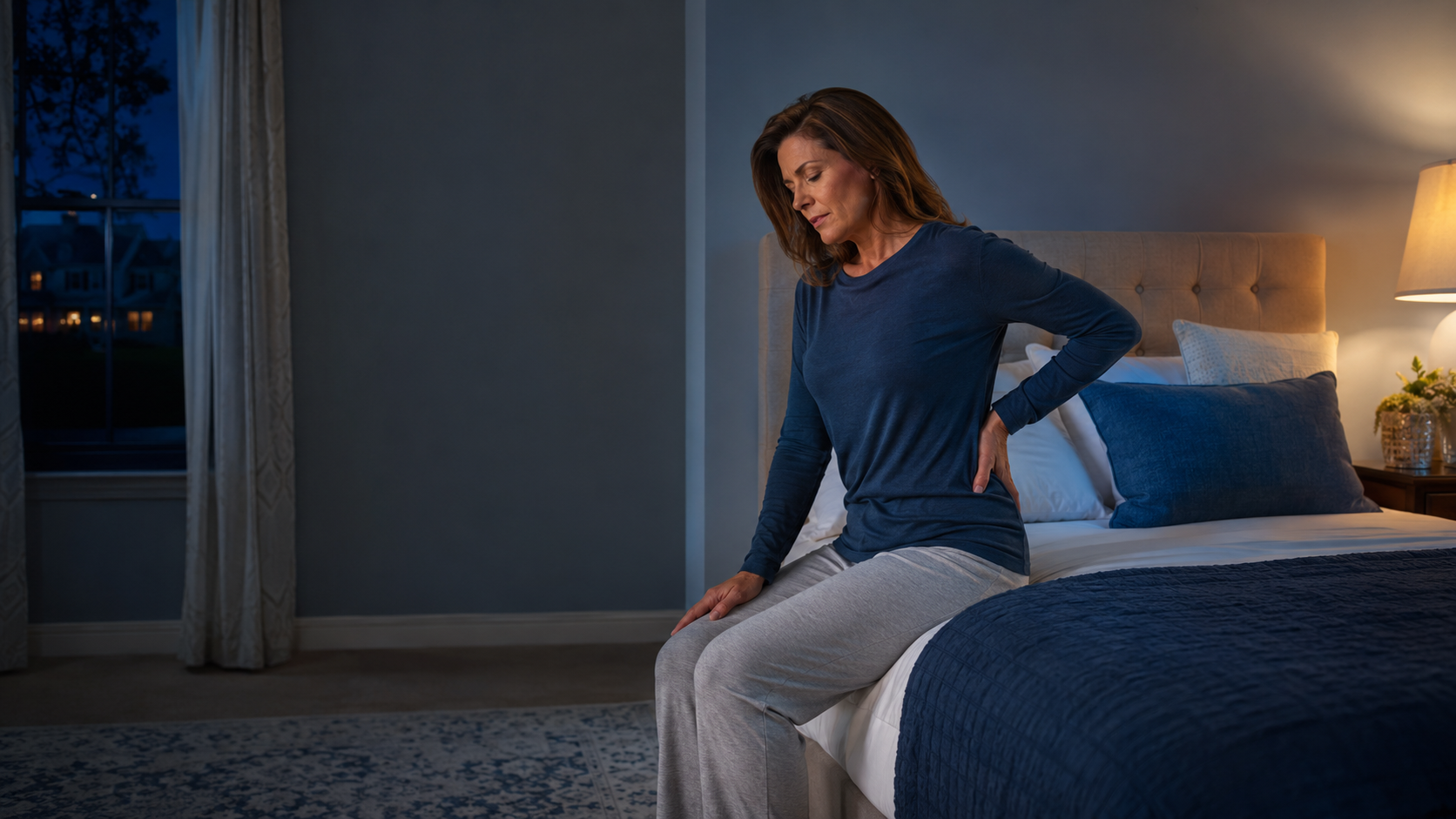
Quick Answer: Why Sciatica May Feel Worse at Night
Sciatica describes symptoms linked to irritation or compression involving the sciatic nerve or its nerve roots. Discomfort may begin in the lower back or buttock and travel down one leg as sharp pain, burning, tingling, numbness, or weakness.
Nighttime does not automatically make the problem more severe. Your position, time spent still, daytime load, and pain sensitivity can change how strongly you notice symptoms.
For example, a Fishers office worker may sit for long periods, commute home, and then recline before bed. Another person may feel better when walking but worse when the spine remains in one position. These patterns provide clues, but they do not diagnose the cause.
What Sciatica at Night Can Feel Like
Nighttime sciatica is not identical for everyone. You may notice:
- Aching in one buttock
- Burning or electric pain down one leg
- Tingling or numbness in the calf, foot, or toes
- Pain when rolling over or getting out of bed
- Symptoms that ease briefly after changing position or walking
Sciatica usually affects one side, although symptoms can occur on both. Leg pain may also come from the hip, muscles, circulation, or other conditions, so new, severe, or unclear symptoms need evaluation. The Sciatica page explains the clinic’s approach.
Seven Reasons Sciatic Pain May Increase at Night
Several factors can overlap. The following explanations are common possibilities, not a diagnosis of your individual symptoms.
1. Your Sleep Position May Increase Nerve Irritation
A position that rotates the pelvis, arches the lower back, or allows the top leg to fall forward may increase tension around already-sensitive tissues. Stomach sleeping often requires the lower back to remain arched and the neck to turn, which some people find aggravating. Others feel worse lying flat because their particular condition responds better to a slightly flexed posture.
Look for a supported position that does not cause symptoms to spread farther down the leg. Discuss repeated changes in the location of pain with a qualified clinician.
2. Staying Still Can Allow Stiffness to Build
Movement changes pressure across the spine and helps muscles alternate between working and relaxing. During sleep, you may remain in one posture long enough for the lower back, hips, or surrounding muscles to become stiff. When you roll over or stand, the first movement can feel especially sharp.
You do not need to interrupt sleep to exercise. A supported position and comfortable movement before bed may help, while prolonged daytime bed rest can contribute to deconditioning.
3. The Day’s Activities May Catch Up With You
Long drives, desk work, repeated lifting, yardwork, running, or prolonged standing can irritate symptoms gradually. You may not notice the full effect while focused on work, family, or errands. Once you settle down at night, the accumulated irritation becomes harder to ignore.
Track sitting, lifting, exercise, travel, and whether pain moved farther down the leg before a difficult night. This gives your provider more useful information than pain intensity alone.
| Nighttime Factor | Why It May Affect Sciatica | Practical Adjustment to Try |
|---|---|---|
| Pelvis rotates during side sleeping | Rotation may increase strain around sensitive tissues | Place a firm pillow between the knees and ankles |
| Lower back arches while lying down | Extension may aggravate some symptom patterns | Try a pillow under the knees when lying on your back |
| Long periods without movement | Joints and muscles may stiffen | Use comfortable movement before bed and change position as needed |
| Heavy sitting or lifting during the day | Irritation may build before bedtime | Break up sitting and use a sensible lifting strategy |
| Mattress allows excessive sinking | Hips and trunk may lose neutral support | Test temporary support changes before buying a new mattress |
4. Fewer Distractions Can Make Pain More Noticeable
Daytime tasks, conversations, and movement compete for your attention. A quiet bedroom removes those distractions, so pain may feel stronger even if irritation has not suddenly increased.
This is a real nervous-system response, not imagined pain. Calm breathing and a predictable wind-down routine may help, but worsening neurological symptoms still need evaluation.
5. Your Mattress or Pillow Setup May Not Support You Well
A mattress that is very soft may let the pelvis sink and twist. A surface that feels too firm may create pressure points and make it hard to relax. Mattress age, body size, usual sleep position, and the cause of symptoms all influence what feels supportive, so there is no single perfect mattress for sciatica.
Before buying a new mattress, test a pillow between the knees, under the knees, or behind the back. Change one variable at a time. Stop any setup that consistently sends pain farther down your leg.
6. Different Causes Respond Differently to Flexion and Extension
Sciatic symptoms can be associated with a disc problem, age-related narrowing around spinal nerves, or irritation near the hip. One person may prefer lying flat, while another feels better reclined, so copying someone else’s exact routine may backfire.
A clinician can assess pain patterns, strength, reflexes, sensation, movement tolerance, health history, and red flags. The broader Conditions resource explains why similar symptoms may require different plans.
7. Poor Sleep and Stress Can Amplify Pain Sensitivity
Pain interrupts sleep, and poor sleep can make pain harder to tolerate the following day. Stress may also increase muscle guarding and make it difficult to find a relaxed position. This can create a cycle in which you expect a painful night, sleep lightly, and become more alert to every sensation.
Address the physical trigger and sleep environment together. Keep the room cool and dark, use a consistent bedtime, and discuss continuing sleep disruption with your healthcare provider.
 Sleeping Positions That May Reduce Irritation
 Sleeping Positions That May Reduce Irritation
There is no guaranteed sleep position for every cause of sciatica. Use the setup that feels comfortable, keeps the spine and pelvis supported, and does not cause symptoms to spread farther down the leg.
| Position | How to Set It Up | When It May Feel Helpful | When to Reconsider It |
|---|---|---|---|
| On your back | Support the head normally and place a pillow under both knees | May reduce excessive arching and keep the pelvis more neutral | Stop if leg pain intensifies or spreads |
| On your side | Lie on the more comfortable side with a pillow between knees and ankles | May limit pelvic rotation and reduce pressure on the painful side | Reposition if the top hip rolls forward or numbness increases |
| Slightly reclined | Support the upper body and knees so the spine is gently flexed | Some people with narrowing around the nerves prefer this posture | Avoid assuming it fits your diagnosis without evaluation |
| On your stomach | If this is the only comfortable option, use minimal head rotation and consider support under the pelvis | A small group of people may tolerate it | It commonly increases back arching, so change position if symptoms worsen |
When turning, move the shoulders and hips together rather than twisting sharply. To get up, roll onto your side, bring your legs off the bed, and press to sitting with your arms.
A Practical Bedtime Routine for Sciatica
Try this simple sequence for several nights, provided it does not increase your symptoms and your clinician has not given different instructions:
- Break up evening sitting. Take a short, comfortable walk rather than moving directly from a long commute to the couch and bed.
- Use gentle movement. Choose motions that feel comfortable. Avoid forceful hamstring stretching or pulling the painful leg aggressively toward your chest.
- Prepare pillow support. Set up your knee or side-sleeping pillow before lying down so you are not twisting to find it later.
- Try heat or cold carefully. Protect the skin, use short sessions, and never sleep on a heating pad or ice pack.
- Reduce stimulation. Dim bright screens, practice slow breathing, and keep bedtime consistent. This may help your nervous system settle even when some discomfort remains.
- Record the response. Note your position, awakenings, and whether pain traveled down the leg.
Over-the-counter medication is not safe for everyone. Health conditions, pregnancy, allergies, and drug interactions may change what is suitable, so ask a physician or pharmacist before starting or combining pain medicines.
What Can Make Nighttime Sciatica Worse
 What Can Make Nighttime Sciatica Worse
Common aggravators include prolonged sitting, repeated bending and twisting, lifting with the load far from the body, sudden increases in exercise, and remaining in bed for extended periods. Aggressive stretching can also irritate a sensitive nerve, especially when it reproduces electric pain, tingling, or numbness below the knee.
Avoid using pain alone as a challenge to push through. A movement that creates mild muscular effort is different from one that sends symptoms farther down the leg. Also avoid repeatedly checking painful ranges, since frequent testing can keep the area irritated.
At the same time, complete inactivity is rarely the answer for uncomplicated sciatica. Comfortable walking and ordinary activity within tolerance may be more helpful than prolonged bed rest. The right balance depends on the cause, severity, and presence of neurological findings.
When Nighttime Sciatica Needs Prompt Medical Evaluation
Contact a healthcare professional promptly when night pain is constant, severe, rapidly worsening, unaffected by position, or accompanied by new weakness or difficulty walking.
Seek urgent or emergency medical attention if sciatica occurs with:
- New loss of bladder or bowel control
- Numbness around the groin, inner thighs, or saddle area
- Sudden or progressive weakness in a leg or foot
- Severe symptoms after a fall, crash, or other significant injury
- Fever, chills, unexplained weight loss, or a history that raises concern for infection or cancer
- Symptoms affecting both legs, especially with weakness or numbness
These warning signs require timely medical assessment, not only home care or a routine appointment.
How Individualized Chiropractic Care May Support Recovery
For non-emergency sciatica, a chiropractic evaluation may identify movement patterns, daily activities, and sleep positions linked to symptoms. Care should begin with a health history and examination.
Depending on the findings, a plan may include education, comfortable mobility work, activity changes, home exercises, and appropriate hands-on care. Chiropractic care does not replace emergency evaluation, medication management, or surgery when medically necessary.
Vital Connection Chiropractic serves adults in Fishers and surrounding Hamilton County communities. You can review the clinic’s approach to Chiropractic Care before deciding whether an evaluation fits your needs.
Frequently Asked Questions
 Frequently Asked Questions
Why does sciatica hurt so bad at night?
Sciatica may hurt more at night because certain positions, prolonged stillness, and reduced distraction can make nerve-related symptoms more noticeable. Irritation accumulated from sitting, lifting, driving, or exercise during the day may also become apparent when you lie down. A mattress or pillow arrangement that rotates the pelvis or arches the back can contribute. Severe, constant, or worsening night pain should be evaluated because not every case of leg pain is uncomplicated sciatica.
How do you fix sciatica pain at night?
Start by finding a supported position that does not send pain farther down your leg. Try lying on your back with a pillow under both knees or on your side with a pillow between the knees and ankles. Break up evening sitting, use only comfortable movement, and avoid sleeping directly on heat or ice. Because the right approach depends on the cause, persistent symptoms, numbness, or weakness should be assessed by a qualified healthcare professional.
What’s the worst thing you can do for sciatica?
The most concerning mistake is ignoring emergency warning signs such as new bladder or bowel changes, saddle-area numbness, or progressive leg weakness. For routine cases, prolonged bed rest, forceful stretching, repeated bending and twisting, or pushing through spreading nerve pain may aggravate symptoms. There is no single forbidden movement for everyone, so use your symptom response as a guide and seek an evaluation when the pattern is severe, unfamiliar, or worsening.
What are the signs that sciatica is getting worse?
Worsening sciatica may involve pain traveling farther down the leg, increasing numbness, new weakness, reduced balance, or greater difficulty walking and completing daily activities. More frequent sleep interruption and symptoms that no longer change with position also deserve attention. New bladder or bowel dysfunction, numbness in the saddle area, or rapidly progressive weakness requires urgent medical care. Do not wait for a routine appointment if any of those red flags appear.
What fixes sciatica quickly?
There is no universal instant fix because sciatica is a symptom pattern with several possible causes. The fastest safe path is usually to reduce the activity or position that clearly aggravates the nerve, stay comfortably active, use appropriate support, and obtain an evaluation when pain is severe or persistent. Medication may help some people but should be reviewed for safety. A targeted care plan is more reliable than aggressive stretching, online “one-move cures,” or repeated self-manipulation.
What aggravates sciatica the most?
Prolonged sitting, repeated bending or twisting, heavy lifting, and positions that send pain farther down the leg commonly aggravate sciatica, but the strongest trigger varies by person. Some people struggle with standing or walking, while others feel worse when sitting or lying flat. Track the activity, position, and direction of symptoms rather than assuming one rule applies to everyone. Sudden weakness, severe progression, or symptoms after trauma need medical assessment.
Take the Next Step Toward Better Nights
If sciatica at night keeps interrupting your sleep, the goal is not simply to find a temporary position that masks the pain. Understanding why your symptoms respond to sitting, movement, and sleep posture can guide a safer, more useful plan.
For a non-emergency evaluation in Fishers, use Schedule Appointment or Contact Us. If you have bladder or bowel changes, saddle numbness, progressive weakness, or other urgent warning signs, seek immediate medical care instead.
Medical fact-check references, not part of the publishable article: sleep-position guidance was reviewed against Cleveland Clinic, while urgent warning signs were checked against Mayo Clinic and MedlinePlus.