How to Sleep With Sciatica in Fishers, IN: Better Positions, Pillow Tips, and Nighttime Relief
How to sleep with sciatica starts with keeping pressure off the low back, hips, and sciatic nerve. For many people, the best options are sleeping on the side with a pillow between the knees or sleeping on the back with the knees slightly elevated. The goal is to keep the spine, pelvis, and legs supported so the nerve is less irritated while you rest. If sleeping with sciatic pain keeps waking you up, a proper evaluation can help identify why the pain is happening and what position is safest for your body.
What Sciatica Feels Like at Night
Sciatica is commonly used to describe pain that travels along the sciatic nerve pathway. This nerve begins in the lower back, moves through the hips and buttocks, and continues down the leg. Symptoms can feel different from person to person, but many people describe sharp pain, burning, tingling, numbness, or an electric sensation down one side of the body.
At night, sciatic pain may feel worse because your body is finally still. During the day, walking, working, driving around Fishers, or taking care of family can distract you from discomfort. Once you lie down, the pain becomes harder to ignore.
Some people notice symptoms most when they roll over, lie flat, bend the knee, or sleep on the painful side. Others feel a deep ache in the buttock, hip, calf, or foot that makes it hard to stay asleep.
If you are dealing with ongoing Sciatica, the right sleep setup can make a meaningful difference. However, sleep position alone may not solve the underlying cause. Sciatica can be related to disc irritation, joint restriction, muscle tension, spinal stenosis, pregnancy-related changes, prolonged sitting, or other issues. That is why individualized care matters.
Best Sleeping Position for Sciatica
The best sleeping position for sciatica is usually the one that keeps your spine neutral and reduces tension through the low back, pelvis, and legs. For many patients, that means either side sleeping with pillow support or back sleeping with the knees elevated.
There is no single perfect position for every person. A position that helps one person may aggravate another, depending on the cause of the nerve irritation. Use comfort, symptom response, and professional guidance as your guide.
Side Sleeping With a Pillow Between the Knees
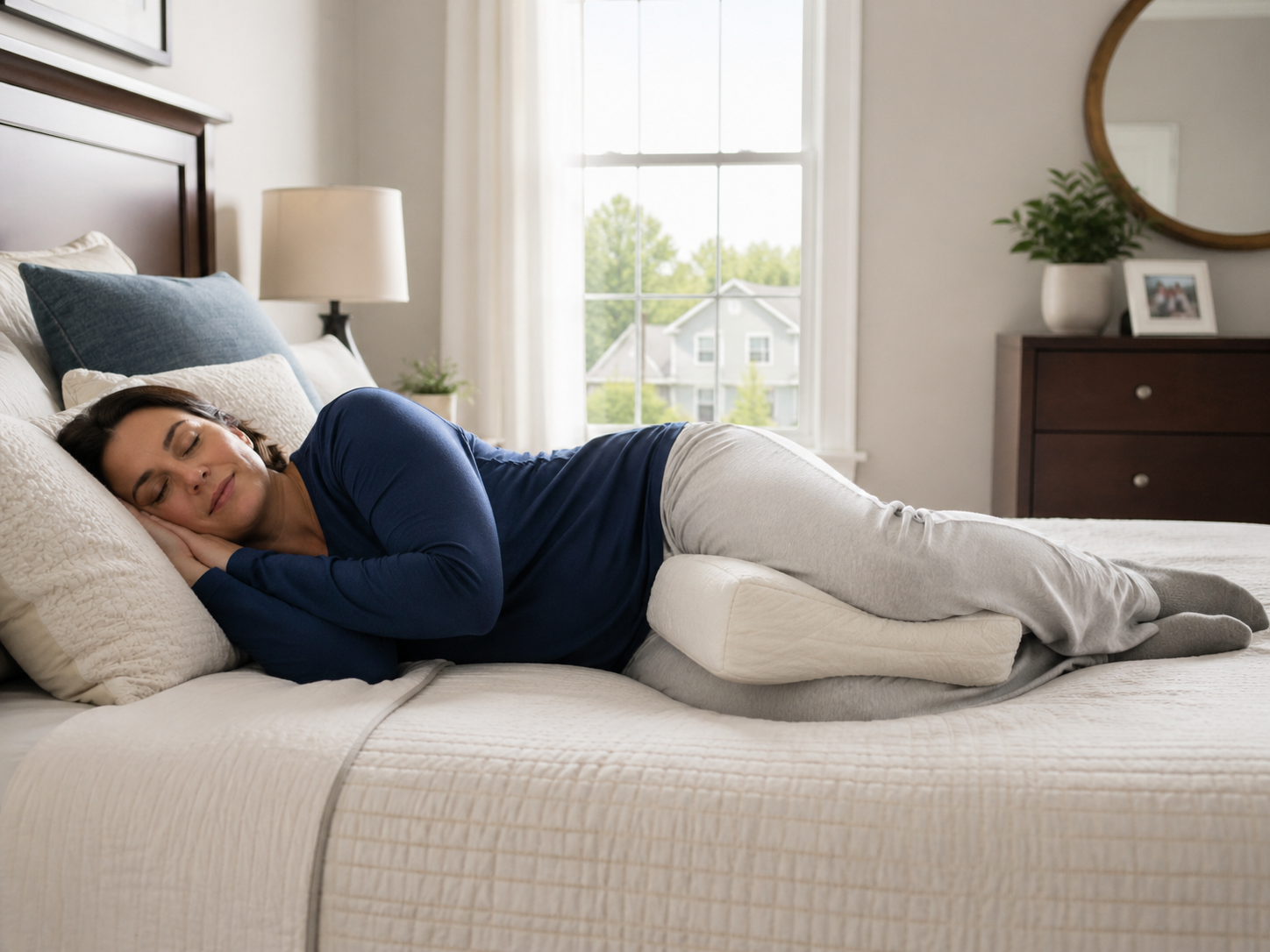
Side sleeping is often helpful for sleeping with sciatic pain because it can reduce direct pressure on the low back. To make this position more supportive, place a firm pillow between your knees.
This helps keep your hips stacked and prevents the top leg from pulling the pelvis forward. When the pelvis rotates during sleep, the low back may twist and increase nerve irritation. A pillow between the knees can help keep the spine more aligned.
Try this setup:
- Lie on the side that feels most comfortable.
- Bend your knees slightly.
- Place a firm pillow between both knees.
- Keep your hips stacked instead of letting the top leg fall forward.
- Use a pillow under your head that keeps your neck level with your spine.
Some people prefer lying on the non-painful side. Others feel better on the painful side if the pillow support is correct. If one side increases leg pain, switch sides or try back sleeping.
Back Sleeping With Knees Elevated
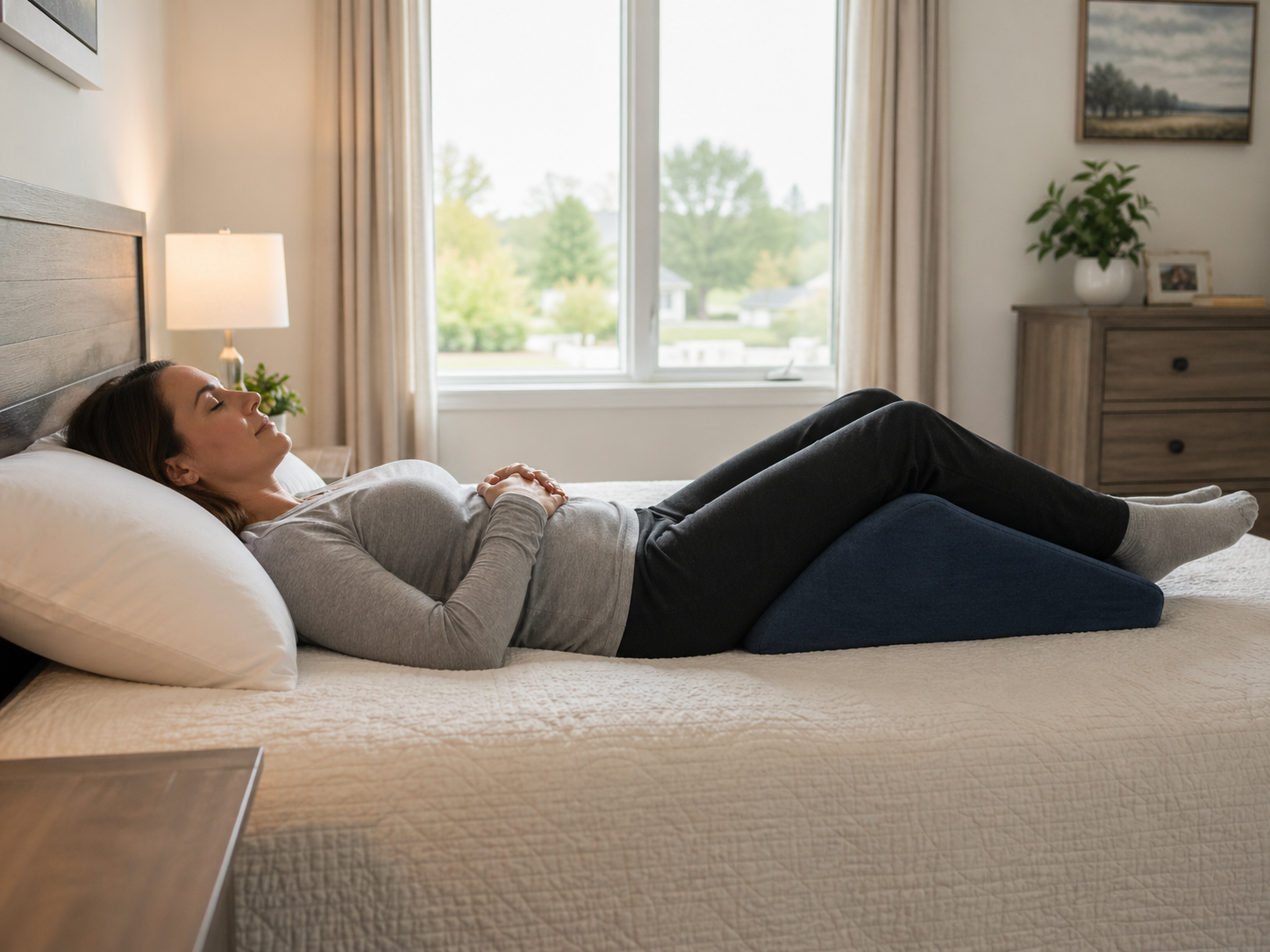
Back sleeping can also be one of the best sleeping positions for sciatica when done with proper support. The key is to place a pillow, wedge, or folded blanket under the knees.
Raising the knees slightly can reduce tension on the lower back and help the pelvis settle into a more relaxed position. This may reduce pressure through the sciatic nerve pathway.
Try this setup:
- Lie flat on your back.
- Place a firm pillow or wedge under both knees.
- Keep your legs relaxed instead of locked straight.
- Use a supportive pillow under your head and neck.
- Avoid using too many pillows under your head, since that can strain the neck and upper back.
If lying flat increases symptoms, you can try a reclined position. Some people sleep better in a recliner for a short period during a flare-up. This is not always a long-term solution, but it may help during intense nights when getting comfortable in bed is difficult.
Slight Fetal Position
A mild fetal position may help some people because it gently opens the spaces in the lower back. This may feel better if extension or lying flat makes symptoms worse.
The key word is mild. Curling too tightly can round the back too much and may irritate symptoms for some people.
To try it:
- Lie on your side.
- Bring your knees slightly toward your chest.
- Place a pillow between your knees.
- Keep your shoulders relaxed.
- Avoid tucking your chin tightly toward your chest.
If this position reduces leg symptoms, it may be a helpful temporary option. If it increases numbness, tingling, or pain down the leg, stop and try another position.
 Pillow and Mattress Tips for Sleeping With Sciatic Pain
A supportive sleep setup can make your position more effective. Even a good position can fail if your mattress sags, your pillow is too flat, or your hips are unsupported.
Choose a Supportive Mattress
A mattress that is too soft may let your hips sink too deeply. This can twist the lower back and irritate sciatic symptoms. A mattress that is too firm may create pressure points at the hips, shoulders, and low back.
Many people with low back and sciatic pain do better with a medium-firm mattress. This type of mattress can support spinal alignment while still providing enough cushioning.
If replacing a mattress is not realistic right now, a firm mattress topper or temporary support board may help. However, if your bed is deeply sagging, temporary fixes may only help so much.
Use Pillows Strategically
Pillows are not just for your head. With sciatica, pillows can help support the knees, hips, waist, and lower back.
Here are common options:
| Sleep Setup | Best For | Why It May Help |
|---|---|---|
| Pillow between knees | Side sleepers | Helps keep hips stacked and reduces low back rotation |
| Pillow under knees | Back sleepers | Helps relax the low back and reduce nerve tension |
| Small pillow under waist | Side sleepers with a waist gap | Helps keep the spine level instead of sagging |
| Wedge pillow under legs | Back sleepers with stronger symptoms | May reduce pressure through the lower back and pelvis |
| Body pillow | People who move during sleep | Helps support knees, hips, and arms at the same time |
When choosing pillows, firmness matters. A pillow that collapses too easily may not keep your body supported through the night.
Keep the Spine Neutral
A neutral spine means the natural curves of the body are supported without excessive twisting, bending, or arching. When the spine is neutral, the low back, pelvis, and hips are less likely to pull on irritated tissue.
A simple way to check your position is to ask:
Do my hips feel level?
Is my low back relaxed?
Is one leg pulling across my body?
Is my pain moving farther down the leg?
Can I breathe and relax in this position?
If a position feels comfortable at first but causes more leg pain after 10 to 20 minutes, it may not be the right position for your current flare-up.
What to Do Before Bed for Sciatica Relief
The way you prepare for bed can affect how well you sleep. If your day includes long sitting, driving, lifting, or desk work, your low back and hips may already be irritated before you lie down.
A simple bedtime routine can help calm the body and make sleeping with sciatic pain easier.
Try Gentle Movement Before Bed
Gentle movement may help reduce stiffness and improve comfort. This does not mean intense exercise before sleep. Heavy lifting, running, aggressive stretching, or intense cycling may make symptoms worse for some people.
Instead, try easy movements such as:
Slow walking around the house
Gentle pelvic tilts
Relaxed breathing while lying on your back
Light hip mobility
A short, easy walk after dinner
If any movement sends pain sharply down the leg, stop. Sciatica responds best to movements that calm symptoms, not movements that force the body through pain.
Use Heat or Cold Carefully
Heat can help relax tight muscles in the low back, hips, and buttocks. A warm shower, warm bath, or heating pad may help some people unwind before bed.
Cold may help if symptoms feel inflamed or irritated. An ice pack wrapped in a towel can be used for short periods. Never place ice directly on the skin.
Use caution if you have numbness, reduced sensation, diabetes-related nerve issues, circulation concerns, or any condition that changes how you feel temperature. When in doubt, ask a healthcare provider what is safest.
Avoid Long Sitting Before Bed
Long sitting can aggravate sciatic symptoms for many people, especially if the low back is rounded or the wallet is in the back pocket. If you work at a desk, drive around Hamilton County, or spend evenings on the couch, try changing positions more often.
A simple evening rule is to stand up every 30 to 45 minutes. Walk for a minute, reset your posture, and avoid slouching deeply into the couch right before bed.
 What Sleeping Positions Can Make Sciatica Worse?
 What Sleeping Positions Can Make Sciatica Worse?
Some sleep positions increase stress through the low back, pelvis, and hips. These positions do not bother everyone, but they are common triggers during a sciatica flare-up.
Stomach Sleeping
Stomach sleeping is often the hardest position for sciatica. It can increase low back extension, rotate the neck, and make it harder to keep the spine neutral. If you sleep with one hip hiked up or one knee bent to the side, the low back and pelvis may twist even more.
If you cannot avoid stomach sleeping, try placing a thin pillow under the lower abdomen or pelvis. This may reduce the arch in the low back. Use a very thin pillow under the head or no pillow if that feels better. Still, if stomach sleeping increases leg symptoms, it is best to transition toward side or back sleeping.
Twisted Side Sleeping
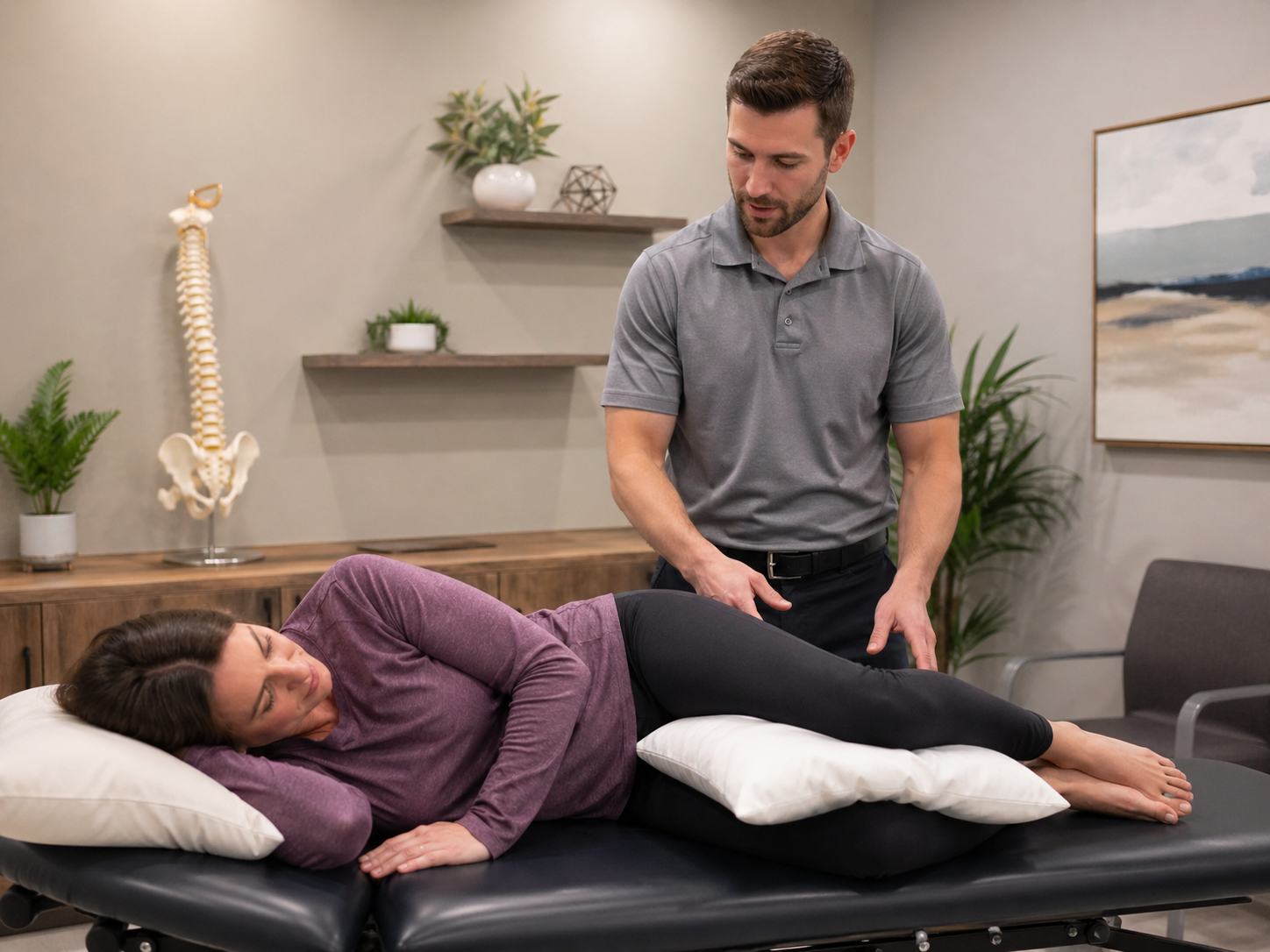
Side sleeping can help, but only if the body is supported. Problems happen when the upper leg drops forward across the body. This twists the pelvis and can increase pressure through the low back.
A pillow between the knees often solves this problem. A body pillow can be even better for people who roll forward during sleep.
Sleeping With Legs Flat and Tight
Some back sleepers feel worse when the legs are fully straight. This may increase tension through the low back and legs. If this happens, place a pillow under the knees or calves. The goal is to let the lower back relax rather than pull tight all night.
| Position or Habit | Why It May Irritate Sciatica | Better Option |
|---|---|---|
| Stomach sleeping | May increase low back arch and neck rotation | Side sleeping with knee pillow |
| Side sleeping with top leg falling forward | Twists the pelvis and lower back | Pillow between knees or body pillow |
| Back sleeping with legs locked straight | May increase low back tension | Pillow or wedge under knees |
| Sleeping on a sagging mattress | Can pull the spine out of alignment | Medium-firm support |
| Curling tightly into a ball | May over-round the low back for some people | Gentle side position with support |
When Sciatica Pain at Night Needs Professional Help
Nighttime sciatica can sometimes improve with better sleep positioning, supportive pillows, movement changes, and proper care. However, some symptoms should not be ignored.
You should seek prompt medical attention if you have:
Loss of bladder or bowel control
Numbness in the groin or saddle area
Progressive weakness in the leg or foot
Pain going down both legs
Severe pain after a fall, accident, or injury
Fever, unexplained weight loss, or history of cancer with new back pain
Pain that is rapidly worsening
These symptoms may point to something more serious and need urgent evaluation.
You should also consider a professional evaluation if your symptoms last more than a few days, keep returning, interfere with sleep, or affect walking, work, or daily life. In Fishers, many people wait until symptoms become severe before getting help. It is often better to address the problem early, especially when nerve symptoms are involved.
For local support, you can use Contact Us to ask questions or find the next step for your situation.
How Chiropractic Care May Support Sciatica Relief in Fishers, IN
Chiropractic care may help people with sciatica by evaluating how the spine, pelvis, hips, and surrounding muscles are moving. The goal is not just to chase pain, but to understand what may be contributing to nerve irritation.
At Vital Connection Chiropractic in Fishers, IN, care recommendations are based on the individual. A proper evaluation may include posture, movement, spinal function, orthopedic testing, and a discussion of symptoms. If your symptoms suggest that imaging or medical referral is needed, that should be handled appropriately.
Chiropractic care for sciatica may include:
Gentle spinal adjustments when appropriate
Pelvic and hip mobility work
Soft tissue support
Posture and movement coaching
Home care recommendations
Sleep position guidance
Lifestyle changes to reduce flare-ups
The right approach depends on the cause and severity of your symptoms. Chiropractic care does not replace emergency care, medical evaluation, or specialist treatment when those are needed. It may, however, support better movement, reduce mechanical stress, and help you understand how to manage daily triggers.
If you are tired of guessing how to sleep, sit, stand, and move with Sciatica, a focused evaluation can help you make safer decisions.
Daily Habits That Can Help You Sleep Better With Sciatica
Better sleep often starts earlier in the day. If your low back and hips are irritated all day, bedtime may become harder.
Take Movement Breaks
Many sciatica flare-ups are aggravated by long periods of sitting. If you work at a desk, commute, or spend time driving around Fishers, Carmel, Noblesville, or nearby areas, try taking regular standing breaks.
You do not need a complicated routine. Stand up, walk briefly, gently extend your hips, and reset your posture.
Avoid Sitting on a Wallet or Phone
A wallet or phone in the back pocket can create uneven pressure when sitting. This may irritate the hip and buttock area, especially if symptoms already travel through that region. Keep pockets empty when sitting.
Use Lumbar Support
A small lumbar pillow or rolled towel may help support the lower back while sitting. This can reduce slouching and help prevent symptoms from building before bedtime.
Watch Your Lifting Mechanics
Bending and twisting while lifting can aggravate low back and sciatic symptoms. Keep objects close to your body, avoid sudden twisting, and ask for help with heavier items when symptoms are active.
Do Not Push Through Nerve Pain
Muscle soreness and nerve pain are not the same. If an activity causes sharp, burning, tingling, or shooting pain down the leg, it may be irritating the nerve. Modify the movement and seek guidance if it keeps happening.
A Simple Nighttime Routine for Sleeping With Sciatic Pain
A predictable routine can help your body settle before bed. This routine does not replace care, but it may help reduce irritation and make sleep more comfortable.
Try this sequence:
- Take a short, easy walk after dinner.
- Avoid long sitting on a soft couch.
- Use gentle heat or cold if it has helped before.
- Do two or three gentle movements that do not increase leg pain.
- Set up your pillows before lying down.
- Start in your most comfortable supported position.
- If pain increases, change positions slowly instead of twisting quickly.
When getting into bed, move with control. Sit on the edge of the bed, lower yourself onto your side, then bring your legs up together. When getting out of bed, roll onto your side first, push up with your arms, then let your legs come down as you sit up. This helps reduce sudden twisting through the lower back.
If your pain keeps disrupting your sleep, you can request an evaluation through Schedule Appointment.
How to Choose the Best Sleeping Position for Your Symptoms
 How to Choose the Best Sleeping Position for Your Symptoms
The best sleeping position for sciatica is the one that reduces symptoms, supports your spine, and allows you to rest without increasing pain down the leg.
Use this simple test:
Try a supported position for 10 to 15 minutes.
Notice whether pain centralizes or spreads.
Centralizing means pain moves out of the leg and closer to the back. That is often a better sign.
Spreading means pain travels farther down the leg, becomes sharper, or causes more numbness or tingling. That position may not be right for you.
If symptoms feel calmer on your side, use the side sleeping setup. If symptoms feel better on your back, use knee elevation. If no position helps, or symptoms are worsening, get evaluated.
People in Fishers and nearby communities like Geist, McCordsville, Carmel, and Noblesville often manage busy schedules, desk work, sports, and family life. Sleep problems from sciatica can affect mood, energy, productivity, and recovery. Taking nighttime pain seriously is not overreacting. It is part of protecting your health and daily function.
When to Schedule a Sciatica Evaluation
You should consider scheduling a sciatica evaluation if:
You cannot sleep comfortably for several nights
Pain travels below the knee
Numbness or tingling keeps returning
Symptoms are worse after sitting
You are changing your walk because of pain
Home care is not helping
Pain keeps coming back after temporary relief
A chiropractor can help evaluate mechanical contributors, explain safer sleep and movement strategies, and recommend a care plan based on your needs. If your case requires medical imaging, medication review, or specialist referral, that should be discussed.
For next steps in Fishers, use Schedule Appointment or reach out through Contact Us.
FAQ
How do you relieve sciatica pain at night?
The best way to relieve sciatica pain at night is to reduce pressure on the low back, hips, and sciatic nerve before and during sleep. Try side sleeping with a pillow between your knees or back sleeping with your knees elevated. Gentle movement, heat or cold, and avoiding long sitting before bed may also help. If pain keeps waking you up or travels farther down the leg, it is wise to schedule an evaluation.
What is the fastest way to heal sciatica?
The fastest way to heal sciatica depends on the cause of the nerve irritation. Some cases improve with time, movement changes, and conservative care, while others need more focused treatment. Avoid forcing stretches, pushing through nerve pain, or staying in positions that worsen symptoms. A proper evaluation can help identify whether the issue may involve a disc, joint restriction, muscle tension, or another factor. Severe or progressive symptoms need medical attention.
Why is sciatica worse at night in bed?
Sciatica can feel worse at night because certain lying positions increase pressure on the low back, pelvis, or irritated nerve. Pain may also seem stronger when the body is still and there are fewer distractions. A sagging mattress, stomach sleeping, or twisting the hips while side sleeping can add stress. Better pillow support and position changes may help, but persistent nighttime pain should be evaluated.
What position takes pressure off the sciatic nerve?
Side sleeping with a pillow between the knees or back sleeping with the knees elevated often helps take pressure off the sciatic nerve. These positions can support the pelvis and reduce strain on the lower back. The best choice depends on your symptoms. If a position increases pain, numbness, or tingling down the leg, change positions and avoid forcing it. A provider can help you find safer options for your specific condition.
What’s the worst thing you can do for sciatica?
One of the worst things you can do for sciatica is ignore worsening nerve symptoms or repeatedly push through movements that send pain down the leg. Aggressive stretching, heavy lifting, prolonged sitting, poor sleep posture, and twisting under load may aggravate symptoms. Also, do not ignore red flags like bladder or bowel changes, saddle numbness, or progressive weakness. Those symptoms require urgent medical attention.
What triggers sciatica to flare up?
Common sciatica triggers include prolonged sitting, poor lifting mechanics, twisting, sleeping in unsupported positions, and sudden increases in activity. Some people flare up after long drives, desk work, heavy chores, or sleeping on a sagging mattress. Triggers vary based on the cause of the irritation. Tracking what worsens or improves your symptoms can help guide care and make your sleep routine more effective.