Laser Therapy for Back Pain: What Patients Should Know
Laser therapy for back pain is a noninvasive treatment that directs specific wavelengths of light toward painful or irritated tissues. It may help reduce pain and support function for some people with musculoskeletal back problems, but it is not a cure for every cause of back pain. Results depend on the diagnosis, treatment settings, duration of symptoms, and whether care also addresses movement, strength, sleep, work habits, and other contributing factors.
For people in Fishers and nearby Hamilton County communities, the practical question is whether laser therapy fits the reason the back hurts. Vital Connection Chiropractic offers MLS laser therapy in Fishers, IN as one potential part of an individualized plan after evaluation.
What Is Laser Therapy for Back Pain?
Therapeutic laser treatment, also called photobiomodulation, uses light rather than heat, medication, an injection, or an incision. A clinical device delivers a measured dose over a selected area of the back. The light interacts with tissue at a cellular level and may influence processes involved in pain, inflammation, circulation, and repair.
This is different from a surgical laser, which cuts or removes tissue. It is also different from an at-home red-light panel. Clinical lasers vary in wavelength, power, pulse pattern, delivery method, and treatment protocol. Those differences matter, which is why two devices marketed as “laser therapy” should not automatically be treated as equivalent.
You may also hear terms such as cold laser, low-level laser therapy, Class III laser, Class IV laser, or MLS laser therapy. “Cold laser” is sometimes used loosely for treatment intended to create a photochemical response without damaging tissue. Greater power by itself does not guarantee a better outcome. Dose, target, safety procedures, and clinical reasoning all matter.
 How May Laser Therapy Help Back Pain?
The goal is to influence the local tissue environment, not to force the spine into a new position or numb every pain signal. Photobiomodulation may affect cellular energy activity and chemical signaling associated with inflammation and pain. In practical terms, some patients report less soreness or easier movement after a course of care, while others notice little change.
That range of responses is important. Back pain is a symptom, not a single disease. A person with a recent muscle strain, someone with irritated spinal joints, and someone with pain caused by a kidney problem can all say, “My back hurts,” even though they need very different care.
When laser therapy is appropriate, its role may include:
- Supporting short-term pain reduction
- Calming irritated muscles, tendons, ligaments, or joints
- Making gentle movement or rehabilitation more comfortable
- Complementing work on strength, mobility, posture, and activity habits
Laser therapy cannot remove a fracture, reverse severe spinal narrowing, repair every disc injury, or replace urgent care. It should have a clear purpose and review point.
Which Types of Back Pain May Be Considered?
Laser therapy is most often discussed for musculoskeletal pain. That means pain related to muscles, connective tissues, or joints rather than pain referred from an internal organ or caused by a medical emergency. An examination helps narrow the possibilities before treatment begins.
| Back pain situation | Why an evaluation matters | Possible role of laser therapy |
|---|---|---|
| Muscle strain or overuse | The clinician checks for weakness, bruising, restricted movement, or a more serious injury | May be considered to support pain relief while activity is gradually restored |
| Persistent mechanical lower back pain | Several factors may be involved, including mobility, endurance, loading, sleep, and work habits | May serve as an adjunct to exercise, education, and hands-on care |
| Irritated spinal or sacroiliac joints | Joint-related pain can overlap with muscle or nerve symptoms | May be considered for local pain and tissue irritation after assessment |
| Degenerative joint changes | Imaging findings do not always match the amount of pain a person feels | May be one part of symptom management, but it does not rebuild worn cartilage |
| Pain traveling into the leg | Radiating symptoms may involve a nerve and require neurological screening | May or may not be appropriate, depending on the cause and severity |
| Pain after a fall, crash, or lifting injury | Fracture, significant disc injury, or other trauma may need imaging or medical care | Treatment should wait until serious injury is reasonably excluded |
The phrases “cold laser therapy for arthritis,” “MLS laser for joint pain,” and “laser therapy for osteoarthritis” are related but not identical to back-pain care. Osteoarthritis may affect spinal joints, but an X-ray showing degeneration does not prove it is the pain source. Muscles, discs, nerves, sleep, and activity can also matter.
What Does the Research Suggest?
Research on laser therapy for lower back pain is encouraging in some areas but not uniform. Some trials report short-term improvements in pain or disability, particularly when treatment is combined with exercise. Other studies find smaller effects or uncertainty about the best protocol.
The evidence is difficult to summarize with a simple yes or no because:
- Studies use different devices, settings, and treatment schedules.
- “Low back pain” includes people with different underlying problems.
- Studies use different comparison treatments.
- Short-term pain change may not predict lasting improvement.
A balanced interpretation is that laser therapy may help selected patients, particularly as an adjunct, but it should not be presented as a guaranteed stand-alone solution. A sensible plan includes a baseline measure, such as pain during a meaningful activity, walking tolerance, sleep disruption, or range of motion. Progress can then be judged by what the patient can actually do, not only by a number on a pain scale.
 What Should You Expect During Treatment?
 What Should You Expect During Treatment?
A first visit should begin with questions, not with the laser. The clinician needs to understand where the pain is located, when it started, what makes it better or worse, and whether symptoms extend into the hip or leg. Previous injuries, surgeries, medications, health conditions, and recent imaging may also affect the decision.
An examination may include movement, range-of-motion, strength, reflex, or sensation testing. Imaging is not automatically necessary, but it may be appropriate after significant trauma, with certain red flags, or when the findings could change treatment.
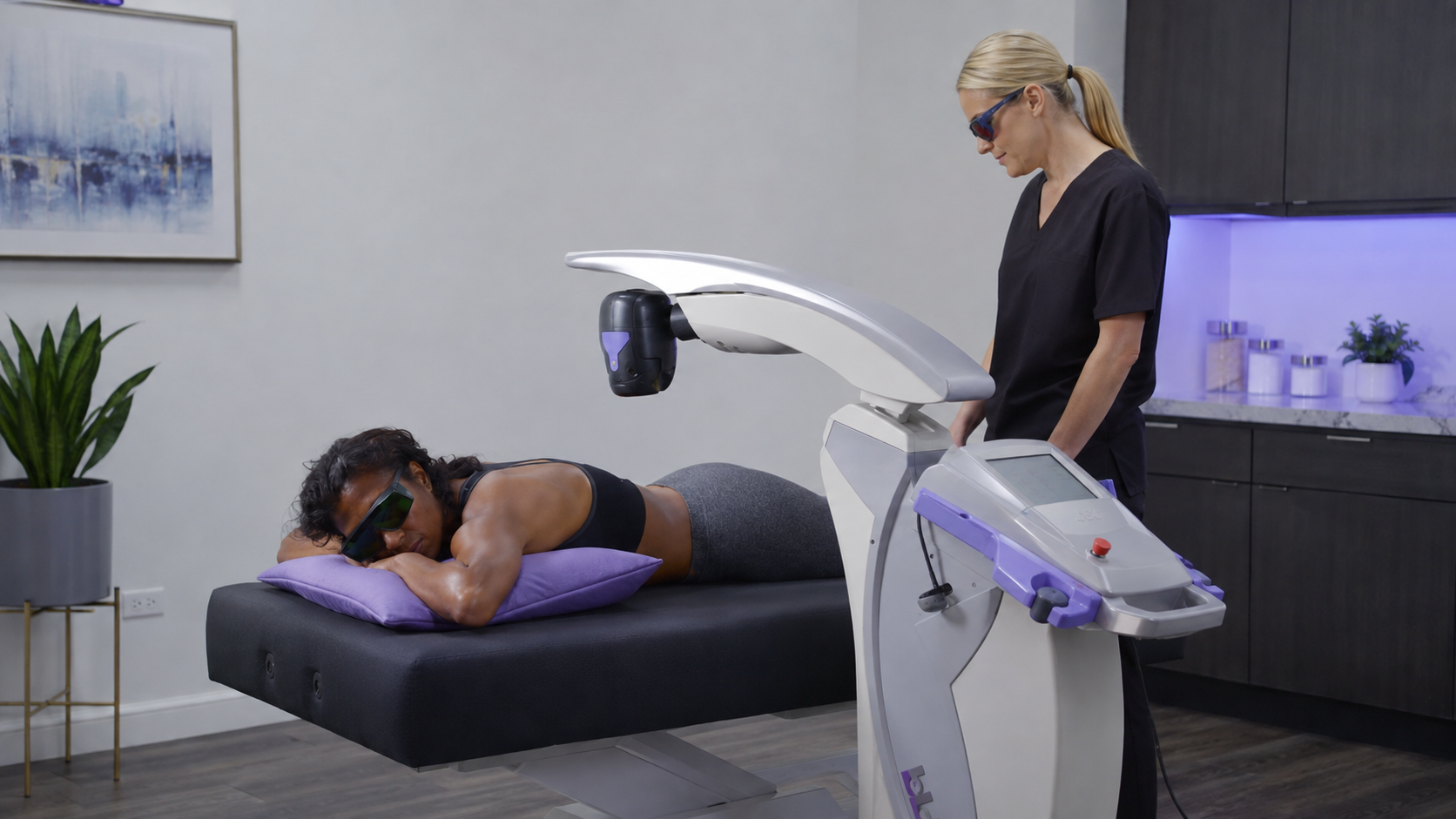
If MLS laser therapy is appropriate, the area is positioned for safe, consistent delivery and protective eyewear is used. A robotic head may scan a broader area, or a handpiece may provide focused application. There is no incision or injection, and many people feel little during the session.
Vital Connection Chiropractic’s M7 MLS laser therapy service may be considered within a broader plan, not as an automatic response to back pain. Visit frequency should reflect the condition and response. Ask what improvement is expected and when the plan will be reviewed.
What Are the Possible Benefits and Drawbacks?
The main appeal of laser therapy is that it is noninvasive and usually does not require recovery time from an incision or injection. It can also be directed toward a defined treatment area and may make movement more comfortable for some patients. That can be useful when pain has made a person hesitant to walk, exercise, work, or sleep normally.
The limitations deserve equal attention. Several visits may be recommended, and cost can add up without insurance coverage. A person may notice little benefit. Treatment can also miss the bigger picture if it focuses on one painful spot while overlooking strength, activity, work habits, sleep, or an undiagnosed problem.
Temporary soreness or symptom changes can occur. Eye protection and proper device operation are essential. Report unexpected pain, skin changes, dizziness, or worsening neurological symptoms.
Agree on a review point before beginning a long plan and track a real-life goal. Sitting through a commute, sleeping better, or walking farther often matters more than a vague promise of “healing.”
How Does Laser Therapy Compare With Other Back Pain Treatments?
There is no single best treatment for all chronic back pain. Most people benefit from a plan matched to the likely pain source, health history, preferences, and functional goals. Laser therapy is one option among several, and it often makes the most sense when used to support active recovery.
| Approach | What it may contribute | Important limitation or caution |
| Education and activity modification | Helps patients understand triggers, pacing, and safe return to normal activity | Too much rest can contribute to stiffness and deconditioning |
| Exercise or rehabilitation | Builds strength, endurance, confidence, and movement tolerance | The program needs to be realistic and progressed over time |
| Chiropractic or manual care | May provide short-term relief and improve movement for some musculoskeletal conditions | It should be based on examination findings and adjusted to patient risk |
| Laser therapy | May reduce pain and tissue irritation enough to support movement and rehabilitation | Results vary, protocols differ, and coverage may be limited |
| Medication | Can help manage symptoms when medically appropriate | Side effects, interactions, and long-term risks depend on the drug and patient |
| Injections or surgery | May be appropriate for specific diagnoses or serious structural problems | They are not first-line solutions for every case of uncomplicated back pain |
For many people, the strongest plan is the right combination at the right time. Symptom-relief strategies may support gradual progress through walking, mobility work, or strengthening. When findings suggest a condition outside a chiropractor’s scope, coordination with a primary care clinician, physical therapist, specialist, or emergency department may be safer.
Who Should Avoid or Postpone Laser Therapy?
Noninvasive does not mean appropriate for everyone. Tell the clinician about pregnancy, cancer in the proposed treatment area, bleeding concerns, photosensitivity, recent surgery, implanted devices, infections, light-sensitizing medication, and significant health conditions. These may change the plan or prompt medical clearance.
Laser therapy should not delay evaluation when back pain comes with warning signs. Seek urgent medical attention for new loss of bladder or bowel control, numbness around the groin or saddle area, rapidly worsening leg weakness, severe pain after substantial trauma, fever with back pain, unexplained weight loss, or pain accompanied by serious illness. Chest pain, abdominal pain, shortness of breath, or fainting with back discomfort also requires prompt medical assessment.
New back pain with osteoporosis, immune suppression, a cancer history, or long-term steroid use deserves added caution so short-term relief does not hide a serious cause.
How Can Fishers Patients Decide If It Is Worth Considering?
Describe whether pain began suddenly or gradually, which movements affect it, whether it travels into a leg, and how it changes sleep or daily tasks. Bring a medication list and relevant reports from previous care.
During the consultation, consider asking:
- What findings suggest that laser therapy fits my type of back pain?
- What result would count as meaningful progress for me?
- How many visits should occur before we reassess?
- What active steps should I take between sessions?
- What are the alternatives if I do not improve?
- What will this plan cost, and is any part billable to insurance?
A trustworthy answer should leave room for uncertainty. Be cautious with guaranteed results, claims that one device is best for everyone, or large prepaid plans without a defined reassessment point. If you want an individualized evaluation in Fishers, you can schedule an appointment to discuss your symptoms, goals, and appropriate next steps.
Frequently Asked Questions
Does laser treatment for back pain work?
It may help some people, but it does not work equally well for every cause of back pain. Research suggests that certain photobiomodulation protocols may improve short-term pain or function, especially when combined with exercise or other appropriate care. The likely diagnosis, device settings, treatment schedule, and patient’s overall plan all influence results. If there is no meaningful change after a reasonable trial, the diagnosis and treatment approach should be reassessed.
What are two drawbacks of laser therapy?
Two common drawbacks are variable results and out-of-pocket cost. Some patients improve, while others notice little benefit even after several sessions. Insurance coverage is also inconsistent, which may make a multi-visit plan expensive. A responsible clinician should explain the expected goal, total estimated cost, and a specific review point before recommending an extended course.
What is the best treatment for chronic back pain?
There is no single best treatment for every person with chronic back pain. A strong plan often includes education, continued activity, and progressive exercise, with manual care, medication, laser therapy, behavioral support, or specialist treatment added when appropriate. The best combination depends on the pain source, neurological findings, general health, previous treatment response, and the activities the patient wants to regain.
How much does laser treatment for back pain typically cost?
There is no standard national price because clinics may charge per session or offer a multi-visit plan. Cost varies with location, device, treatment area, appointment length, and the number of recommended sessions. Ask for the current per-visit price, package terms, refund policy, and estimated total before starting. For clinic-specific pricing, contact Vital Connection Chiropractic directly rather than relying on a general online estimate.
Does insurance cover laser therapy for pain?
Coverage is often limited, but it depends on the insurer and plan. Some policies consider therapeutic laser treatment investigational or exclude it, while others may handle related evaluation or services differently. Ask the clinic which charges are self-pay, then call the number on your insurance card and request a written explanation of benefits. Do not assume that a referral automatically guarantees coverage.
What is the best laser for a 60 year old woman?
Age and sex alone do not determine the best laser. The safer choice depends on the diagnosis, treatment depth and area, skin condition, medications, medical history, implanted devices, and clinician’s training. A woman in her 60s may also need screening for osteoporosis, fracture risk, neurological symptoms, or other causes of back pain before treatment. The best device is the one used appropriately for a confirmed clinical need, not simply the highest-powered model.
A Thoughtful Next Step for Back Pain
Laser therapy for back pain may be worth considering when the symptoms appear musculoskeletal, the treatment has a clear purpose, and progress will be measured. It should not be sold as a cure, used to postpone needed medical evaluation, or separated from the habits and active care that help people move with more confidence.
If back pain is limiting work, sleep, exercise, or family time, Vital Connection Chiropractic can help you explore whether MLS laser therapy belongs in your plan. Fishers and Hamilton County patients can request a visit for an individualized assessment and a clear discussion of options.