Laser Therapy for Pain: Uses, Evidence, and What to Expect
Laser therapy for pain is a non-invasive treatment that directs specific wavelengths of light toward a painful or injured area to influence cellular activity, circulation, inflammation, and tissue-repair processes. It may help some people manage musculoskeletal pain and support recovery, but results depend on the condition, the treatment protocol, and the individual. It should be considered one part of a thoughtful care plan, not a guaranteed cure or a substitute for an accurate diagnosis.
For people in Fishers who are comparing drug-free care options, MLS laser therapy in Fishers, IN can be worth discussing when pain is limiting work, exercise, sleep, or everyday movement. A proper evaluation matters because the same symptom can have several possible causes, and not every cause responds to laser therapy in the same way.
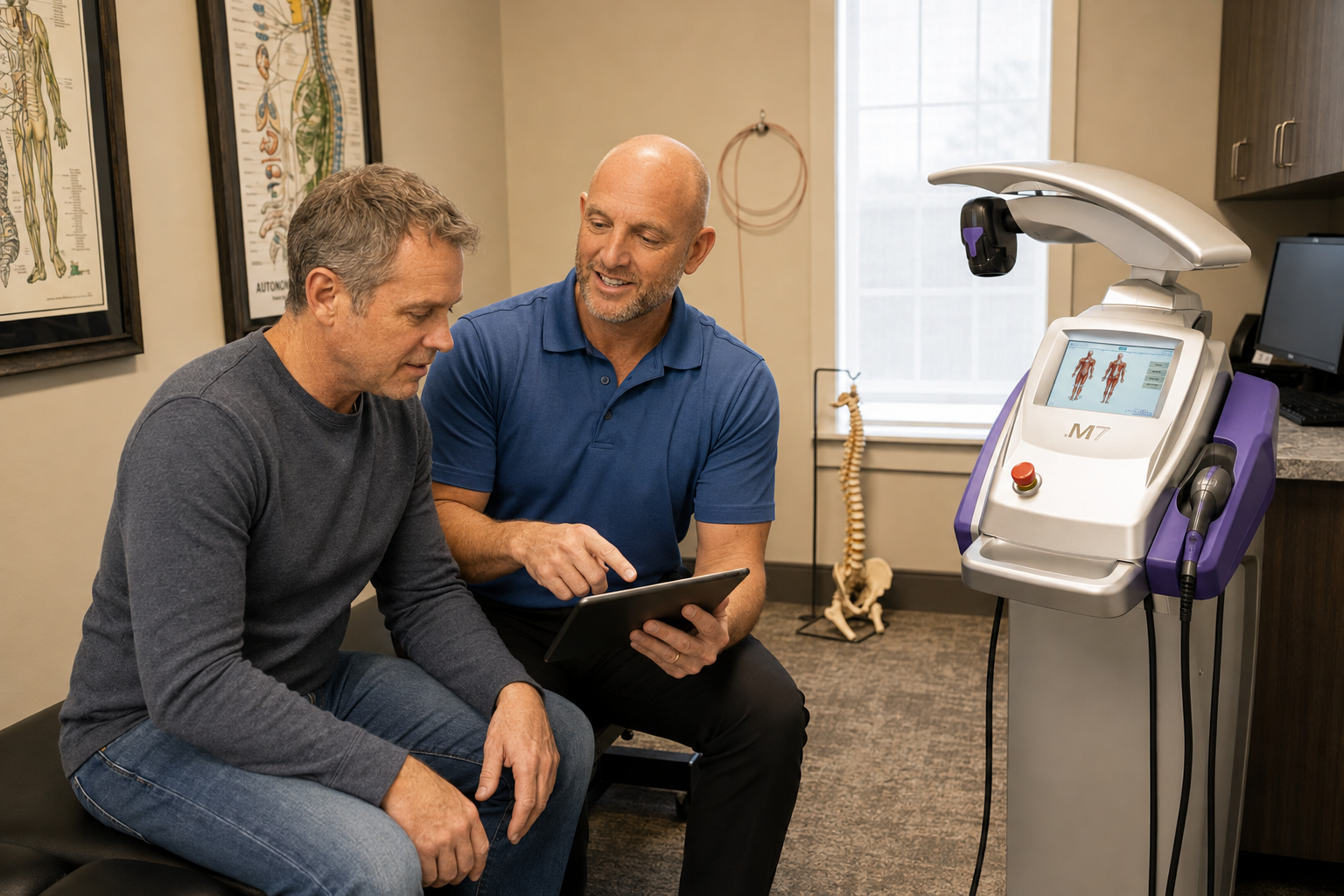 What Is Laser Therapy for Pain?
Laser therapy for pain uses concentrated light energy as a therapeutic tool rather than as a cutting or surgical laser. The treatment is commonly described as photobiomodulation, or PBM. In simple terms, light reaches tissue and interacts with light-sensitive components inside cells. This interaction may affect the way cells produce and use energy and may influence biological processes related to inflammation, circulation, and repair.
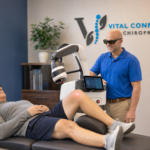
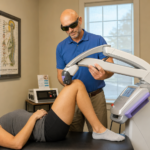
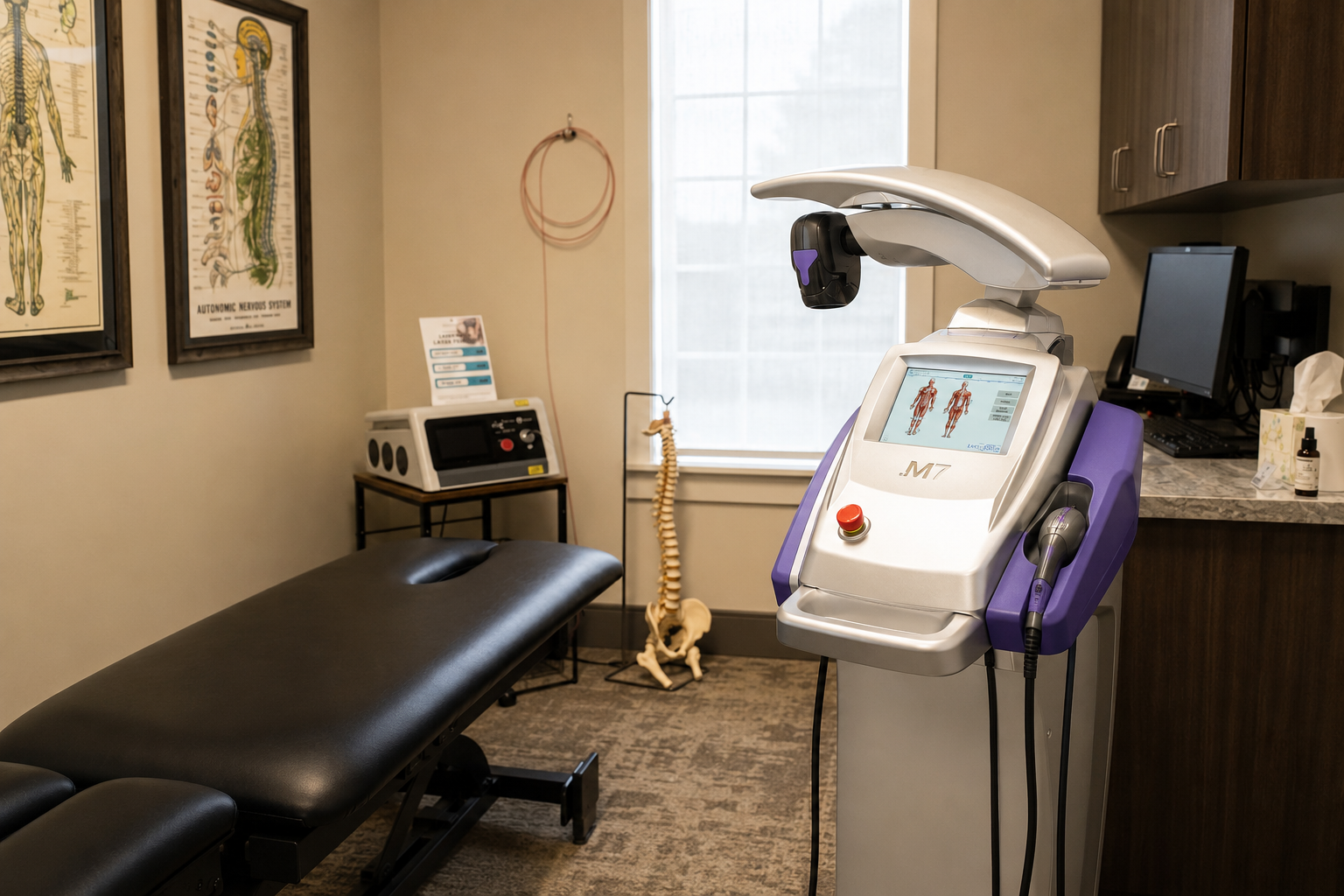
MLS stands for Multiwave Locked System. This technology coordinates more than one light emission pattern so that the treatment can address pain and inflammation in a controlled way. Vital Connection Chiropractic has a Robotic M7 MLS Therapy Laser, which can position the treatment head over a defined area without an incision or injection.
Therapeutic laser care is different from a surgical laser. It is applied from outside the body and is not intended to cut or remove tissue.
 How Does Laser Therapy Work?
 How Does Laser Therapy Work?
Therapeutic laser light is delivered at selected wavelengths, power settings, pulse patterns, and treatment times. These variables matter. Laser therapy is not simply “more light equals better results.” The dose and method should match the tissue, treatment area, and clinical goal.
One proposed mechanism involves the mitochondria, the structures inside cells that help produce adenosine triphosphate, or ATP. ATP is an energy source used in normal cellular processes. When tissue absorbs an appropriate light dose, that interaction may support cellular metabolism and signaling involved in recovery.
Laser therapy may also influence local blood flow, swelling, and inflammatory activity. These changes can matter because irritated or swollen tissue may increase pressure and sensitivity around nerves and joints. Reducing irritation does not automatically correct the reason the pain began, but it may make movement or rehabilitation more manageable for an appropriate patient.
This is why laser therapy for pain management is often considered alongside other care. A person with a strained tendon may need progressive loading. Someone with recurring back pain may need mobility, strength, or work-station changes. Light therapy may support the process, while the broader plan addresses the factors that keep provoking symptoms.
What Types of Pain May Be Considered for Laser Therapy?
Laser treatments for pain are most often discussed for musculoskeletal complaints, soft-tissue injuries, and some joint-related symptoms. The presence of pain alone does not confirm that laser therapy is appropriate. The likely source of the pain, how long it has been present, and any accompanying symptoms should guide the decision.
| Pain or recovery concern | How laser therapy may fit | Important question before treatment |
|---|---|---|
| Neck or lower back pain | May be considered to help manage localized pain and irritation | Is the pain muscular, joint-related, disc-related, or caused by something requiring medical care? |
| Knee, shoulder, elbow, wrist, or ankle pain | May support a plan for selected joint and surrounding soft-tissue complaints | Was there a fall, fracture, major swelling, locking, or loss of function? |
| Sprains, strains, tendinopathy, or sports injuries | May be used as an adjunct while tissue load and activity are managed | What movement or training factor contributed to the injury? |
| Arthritis-related pain and stiffness | May provide symptom support for some people | What type of arthritis is present, and is the condition medically managed? |
| Plantar fascia or repetitive-stress complaints | May complement changes in footwear, activity, mechanics, and rehabilitation | What continues to overload or irritate the area? |
| Post-surgical pain or swelling | May be considered only with appropriate clearance and timing | Has the surgeon approved treatment near the surgical area? |
Pain accompanied by numbness, progressive weakness, or a change in balance deserves closer evaluation. Laser therapy may be discussed for certain nerve-related symptoms, but it should not delay investigation of nerve compression, neuropathy, or another underlying condition.
What Does the Evidence Say About Laser Pain Relief?
Research on therapeutic laser and photobiomodulation includes laboratory work, clinical trials, and reviews involving several pain conditions. The fairest summary is that laser pain relief can be helpful for selected problems, but the evidence is not equally strong for every diagnosis, device, or protocol.
Three details make the research easy to misunderstand.
First, “laser therapy” describes a broad category. Studies may use different wavelengths, power levels, pulse patterns, session lengths, treatment locations, and total numbers of visits. Two trials can appear to study the same therapy while delivering very different doses.
Second, pain has many causes. A protocol that helps some people with knee osteoarthritis cannot automatically be applied to a fresh ankle injury, nerve pain, or unexplained back pain. Condition-specific evidence is more meaningful than a sweeping claim that laser therapy works for pain in general.
Third, improvement should be measured in practical ways. Pain scores matter, but so do sleep, range of motion, walking tolerance, work capacity, and the ability to return to valued activities. A brief change in soreness may not represent lasting progress.
For these reasons, a responsible provider should avoid promising a particular percentage of relief or an exact number of sessions before evaluating the patient. Device clearance and published research can support a clinical conversation, but neither guarantees an individual result.
What Should You Expect During Laser Therapy?
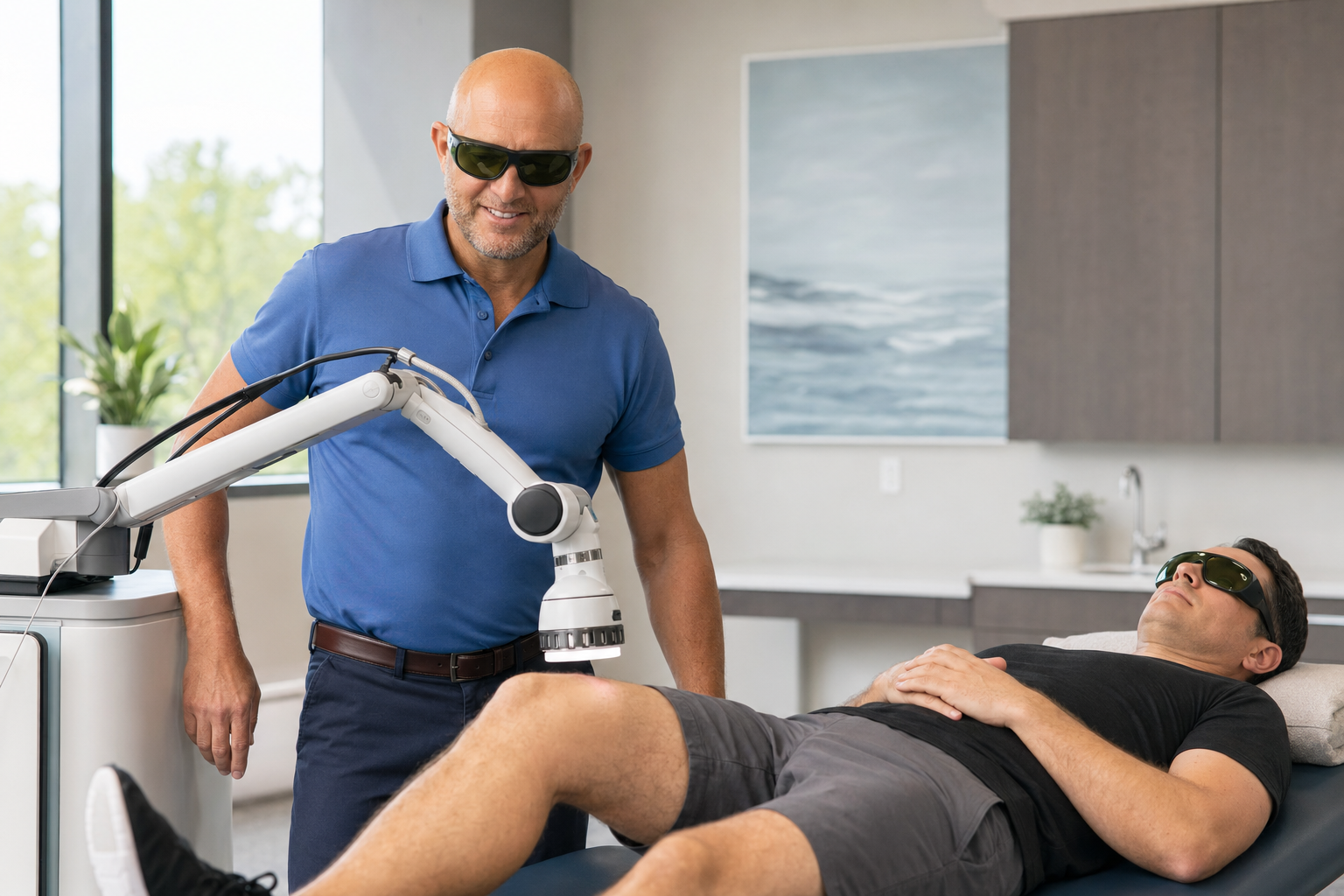
A laser therapy visit is generally straightforward. The treatment area needs to be accessible, and protective eyewear is used because direct laser exposure can harm the eyes. With a robotic system, the treatment head can be positioned above the selected body area while the patient rests on a treatment table.
| Stage | What commonly happens | What the patient may notice |
| Before treatment | The clinician reviews symptoms, health history, treatment area, goals, and relevant precautions | Questions about when pain began, what worsens it, and what care has already been tried |
| Setup | Clothing is adjusted as needed, protective eyewear is provided, and the device is positioned | A comfortable seated or lying position with the painful area supported |
| During treatment | Programmed light is directed toward the selected area for a limited time | Nothing at all, or mild and comfortable warmth or tingling |
| After treatment | The area and response are checked, and activity instructions may be reviewed | Usually no required downtime, although the underlying condition may still limit activity |
| Across the care plan | Symptoms and functional goals are reassessed to decide whether treatment remains useful | Change may be gradual, uneven, or absent, so progress should be tracked rather than assumed |
Session length and visit frequency vary with the treatment area, the condition, and the selected device settings. Some people notice a change early, while others need several sessions before deciding whether the approach is useful. A lack of improvement should prompt reassessment.
Benefits and Limitations to Consider
 Benefits and Limitations to Consider
The appeal of laser therapy is easy to understand. It is non-invasive, does not require an injection, and generally does not require recovery time from the procedure itself. It can also be directed toward a defined treatment area and may be used within a larger conservative-care plan.
Potential benefits may include:
- Reduced pain or tenderness for an appropriate condition
- Less swelling or irritation around selected soft tissues or joints
- Better tolerance for movement, exercise, or rehabilitation
- Support for normal tissue-repair processes
- A drug-free option that may complement other care
There are also important limitations. Laser therapy does not rebuild a severely damaged joint, repair an unstable fracture, eliminate every source of nerve compression, or correct a movement habit by itself. It cannot guarantee that surgery or medication will never be needed. Some people do not respond, and temporary symptom relief is not the same as resolving the condition that caused the pain.
The best question is not simply, “Is laser therapy good?” It is, “Does this treatment make sense for my diagnosis, goals, risks, and overall plan?”
Who Should Be Evaluated Before Treatment?
Every patient should be screened, especially when the diagnosis is uncertain or health history may affect treatment. Tell the clinician about pregnancy, active or previous cancer, recent surgery, implanted devices, bleeding concerns, skin changes, infection, eye conditions, and medications or supplements that increase light sensitivity. These details do not automatically rule treatment in or out. They help the clinician follow device guidance and choose the safest next step.
Seek urgent medical evaluation instead of scheduling routine laser care for severe pain after major trauma, chest pain, shortness of breath, sudden one-sided weakness, new loss of bladder or bowel control, numbness in the saddle area, a hot swollen calf, high fever with pain, or rapidly worsening weakness. Unexplained pain with significant weight loss or persistent night symptoms also deserves medical attention.
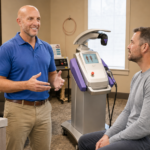
If you are unsure whether a symptom belongs in routine care, contact Vital Connection Chiropractic and describe what is happening. The team can tell you whether an office evaluation is reasonable or whether medical care should come first.
How Laser Therapy Fits Into a Broader Pain Management Plan
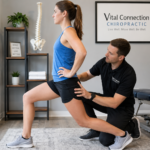
Pain management is usually more effective when it considers the whole person. Depending on the cause, a plan may include appropriate movement, progressive strengthening, mobility work, sleep support, stress management, nutrition, hydration, workplace changes, and medical treatment when needed. Manual care or rehabilitation may also be considered based on the diagnosis and patient preference.
The role of laser therapy is to support specific goals, such as making a painful area calmer enough to move, sleep, or participate in rehabilitation more comfortably. It should not become a reason to ignore the behaviors, loads, health conditions, or movement patterns that contribute to recurring symptoms.
Laser Therapy for Pain in Fishers, IN
 Laser Therapy for Pain in Fishers, IN
Vital Connection Chiropractic serves patients in Fishers and the surrounding Hamilton County area who are looking for conservative options for musculoskeletal pain and recovery. The clinic’s robotic MLS laser therapy service uses the M7 system shown in the original clinic photography above.
A local evaluation gives you a chance to discuss where the pain is located, what may be causing it, how it affects daily life, and whether laser therapy belongs in the plan. If you are ready to explore the option, you can schedule an appointment and bring any relevant imaging, surgical instructions, medication list, or notes about treatments you have already tried.
Frequently Asked Questions
Does laser therapy for pain actually work?
It can help some people with certain musculoskeletal pain conditions, but it does not work equally well for every person or diagnosis. Results depend on the source of pain, the device and dose, treatment consistency, and the rest of the care plan. Look for progress in both symptoms and function, such as sleep, walking, work, or exercise tolerance. Be cautious of anyone who guarantees a cure, a fixed percentage of relief, or the same result for every condition.
Does insurance cover laser therapy for pain?
Coverage varies, and many plans treat therapeutic laser as a non-covered or cash-pay service. FDA clearance does not automatically make a service reimbursable. Before starting, ask the clinic for the expected cost and ask your insurer whether the specific service is covered under your plan. You can also ask whether an HSA or FSA may be used, but eligibility depends on current plan rules and documentation.
What are the side effects of laser therapy for pain?
Many patients report little or no discomfort, but mild warmth, tingling, temporary tenderness, or a short-lived change in symptoms may occur. Proper eye protection is essential, and treatment should follow the device’s safety guidance. Tell the clinician about medications, pregnancy, cancer history, skin changes, and other health concerns before treatment. Report unexpected burning, a skin reaction, marked swelling, or worsening neurological symptoms promptly.
What are some holistic treatments for chronic pain?
Holistic pain care addresses physical, emotional, behavioral, and medical factors rather than relying on one remedy. Depending on the diagnosis, options may include graded exercise, mobility and strength work, sleep improvement, stress management, balanced nutrition, heat or cold, massage, acupuncture, counseling approaches, chiropractic care, physical rehabilitation, and appropriate medical treatment. “Natural” does not always mean safe, so discuss herbs and supplements with a qualified clinician, especially if you take medication.
What does Amish use for pain?
There is no single Amish remedy for pain, and it is inaccurate to treat Amish communities as if everyone follows the same health practices. Individuals may use conventional medical care, community knowledge, home remedies, rest, heat or cold, massage, or herbal preparations depending on family, community, access, and personal beliefs. A traditional remedy should not delay evaluation for serious symptoms, and herbal products can still cause side effects or interact with medication.
What is the most powerful natural painkiller?
There is no single natural painkiller proven to be the most powerful for every type of pain. The body produces endorphins that help regulate pain, and sleep, appropriate exercise, stress reduction, heat, cold, and other non-drug strategies may influence symptoms. Their usefulness depends on the cause. Severe, persistent, or unexplained pain needs assessment rather than repeated self-treatment, and supplements marketed as “natural painkillers” should be checked for safety and interactions.
Is Laser Therapy for Pain Worth Considering?
Laser therapy for pain may be a reasonable, non-invasive option when the suspected pain source fits the treatment, relevant precautions have been reviewed, and progress is measured honestly. It is most useful when it supports a larger plan for movement, recovery, and daily function rather than being presented as a stand-alone cure.
For a personalized discussion in Fishers, you can request an evaluation with Vital Connection Chiropractic. Bring your questions, explain what you want to get back to doing, and ask how the team will decide whether treatment is helping.