MLS Laser Therapy in Fishers, IN: M7 Pain and Recovery Support
MLS laser therapy is a non-invasive form of photobiomodulation that uses controlled red and near-infrared laser energy to provide temporary relief of muscle and joint pain, stiffness, arthritis pain, or muscle spasm while supporting local circulation and muscle relaxation. At Vital Connection Chiropractic in Fishers, IN, the M7 system allows the care team to deliver a measured dose to a specific area without injections, incisions, or recovery downtime. It may be helpful for certain musculoskeletal concerns, but results depend on the condition, treatment plan, and individual response. An evaluation is the best way to decide whether MLS Laser Therapy Fishers, IN belongs in your care plan.
What Is MLS Laser Therapy?
MLS stands for Multiwave Locked System. It is a patented method of delivering two therapeutic laser wavelengths in a synchronized pattern. The M7 uses continuous 808-nanometer energy and pulsed 905-nanometer energy, along with a visible 650-nanometer aiming beam that helps the provider position the device. These wavelengths fall within the red and near-infrared portion of the light spectrum.
The treatment is a form of photobiomodulation. Carefully selected light reaches tissue and may influence cellular signaling and local circulation. The clinical response depends on the wavelength, power, exposure time, treatment area, and concern being treated.
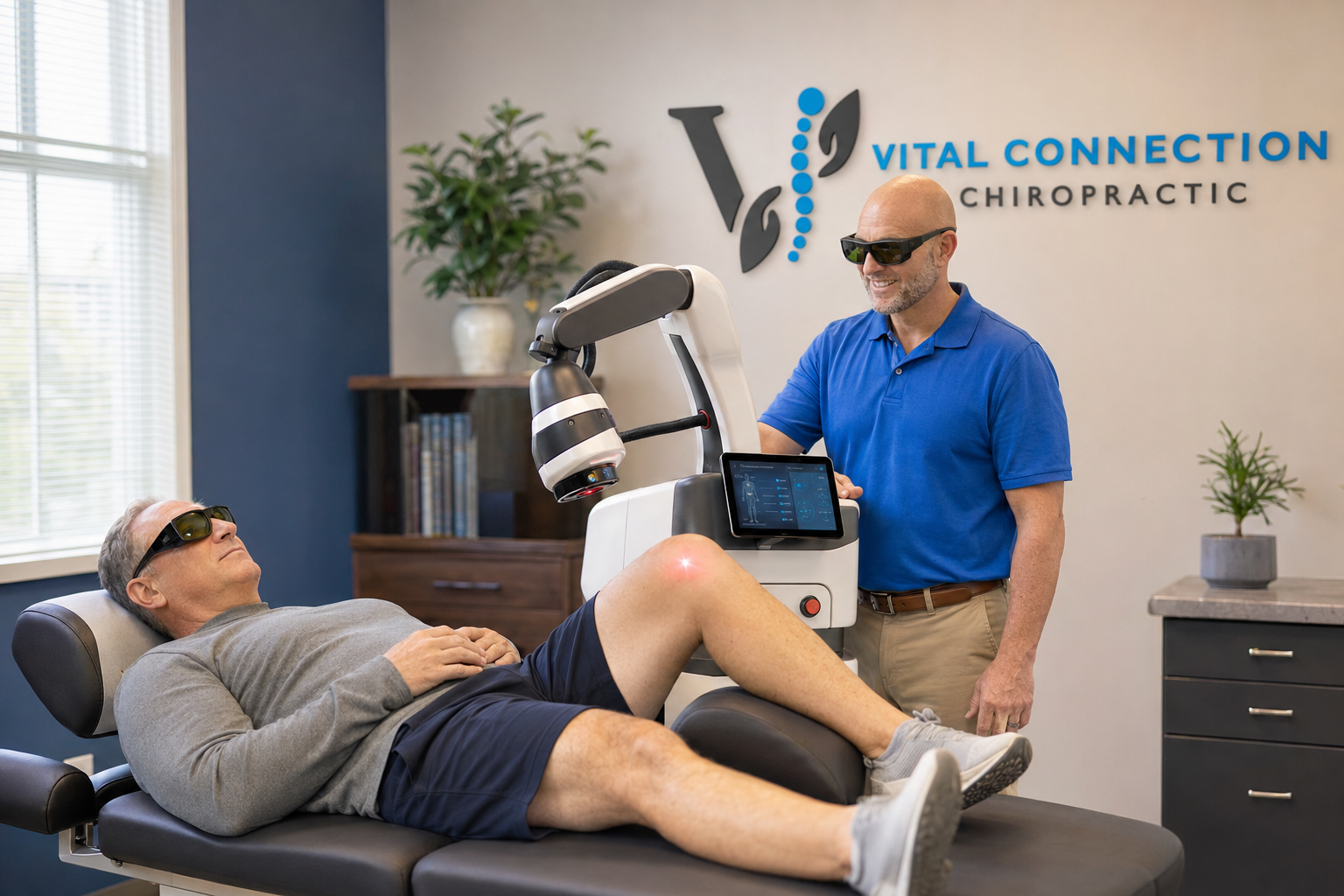
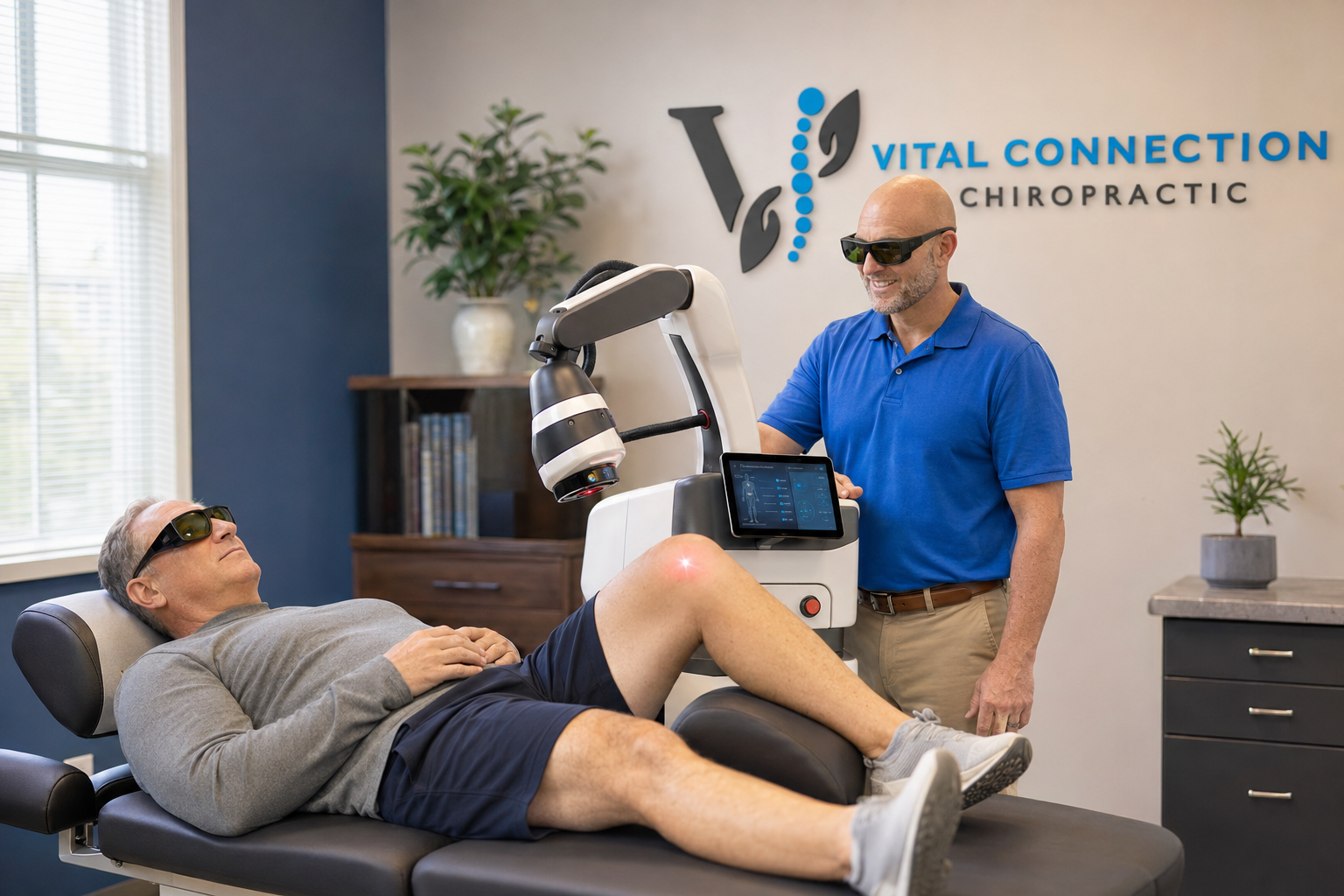
MLS treatment is different from a surgical laser. It does not cut, burn, or remove tissue. The M7 is a powerful Class IV device, however, so it must be operated by trained personnel with proper safety procedures. Everyone in the treatment room wears laser safety eyewear while the system is active.
People often search for “MLS laser therapy near me” because they want a drug-free option with no routine downtime. Care should still begin with an evaluation of the symptoms, likely cause, health history, and treatment goals. The MLS Laser Therapy Fishers, IN service is built around that individual decision.
How Does the M7 MLS Laser Work?
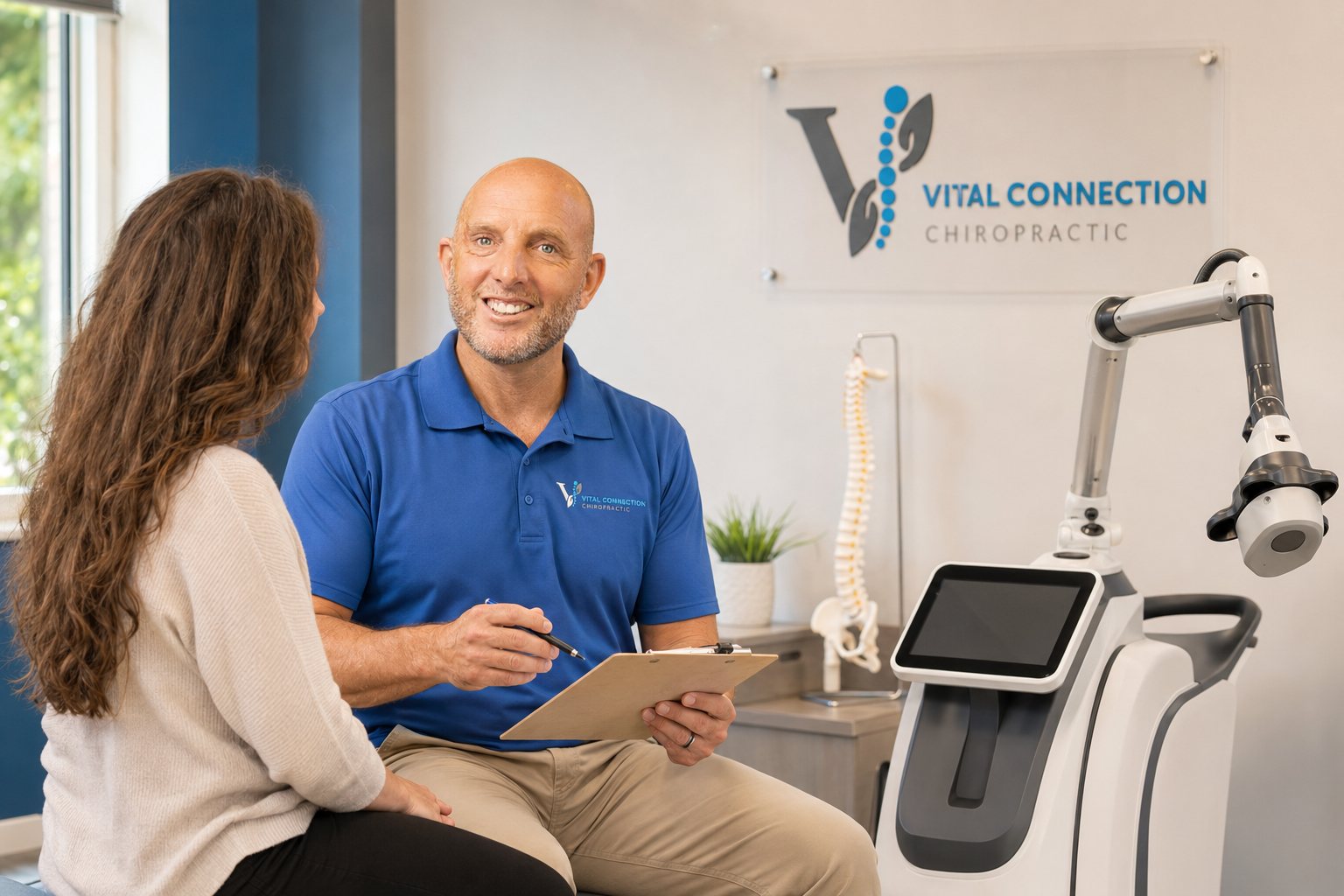
The M7 combines a robotized scanning head with an ergonomic handpiece. The scanning head distributes energy across a defined area, while the handpiece lets the provider focus on a smaller point or approach a joint from another angle.
The system calculates treatment time and energy density from the selected settings. These features support consistency, but the provider still chooses the area, dose, positioning, and overall plan.
Here is a practical look at the main parts of the treatment:
| M7 Feature | What It Does | What It Means for the Patient |
|---|---|---|
| 808 nm continuous wavelength | Delivers one portion of the therapeutic light dose | Supports a planned, controlled treatment to the selected tissue area |
| 905 nm pulsed wavelength | Delivers high-peak-power pulses in a synchronized pattern | Adds a second form of energy delivery within the MLS protocol |
| Robotized scanning head | Moves over a programmed surface area | Helps distribute treatment across a larger region without direct pressure |
| Ergonomic handpiece | Targets smaller points or a different treatment angle | Gives the provider more flexibility around joints and localized areas |
You may hear MLS described as a “cold laser.” That phrase is commonly used to distinguish therapeutic laser care from lasers that cut or ablate tissue. The M7 is more accurately described as a high-power, non-ablative therapeutic laser. Some patients feel little or nothing during a session. Others notice mild, comfortable warmth. Strong heat, burning, or pain is not an expected treatment goal and should be reported immediately.
What Concerns May Be Considered for MLS Laser Therapy?
Therapeutic laser care may be considered for localized muscle or joint discomfort, stiffness, arthritis pain, muscle spasm, a recent strain, repetitive-use discomfort, or a sports-related soft-tissue concern.
Examples of areas people often ask about include:
- Neck and upper-back muscles
- Low-back muscles
- Shoulders and elbows
- Wrists and hands
- Hips and knees
- Ankles and feet
- Tendons and other soft tissues around a joint
Not every painful condition should be treated with a laser. Similar symptoms can have different causes, and some require imaging or medical management. A laser cannot correct a fracture, replace a torn structure, remove severe nerve compression, or treat an emergency.
Tell the care team about your full health history before treatment, including pregnancy, a current or previous cancer diagnosis, recent surgery, implanted medical devices, unusual skin sensitivity, medications that increase light sensitivity, and any unexplained symptoms. The provider can then follow device guidance, choose appropriate precautions, or refer you for medical evaluation.
Seek prompt medical care instead of waiting for a laser appointment if pain follows a major accident, a joint looks deformed, you cannot bear weight, weakness is progressing, numbness affects the groin or bowel and bladder control, or symptoms occur with chest pain, shortness of breath, fever, or other signs of serious illness.
What to Expect During an MLS Laser Therapy Appointment
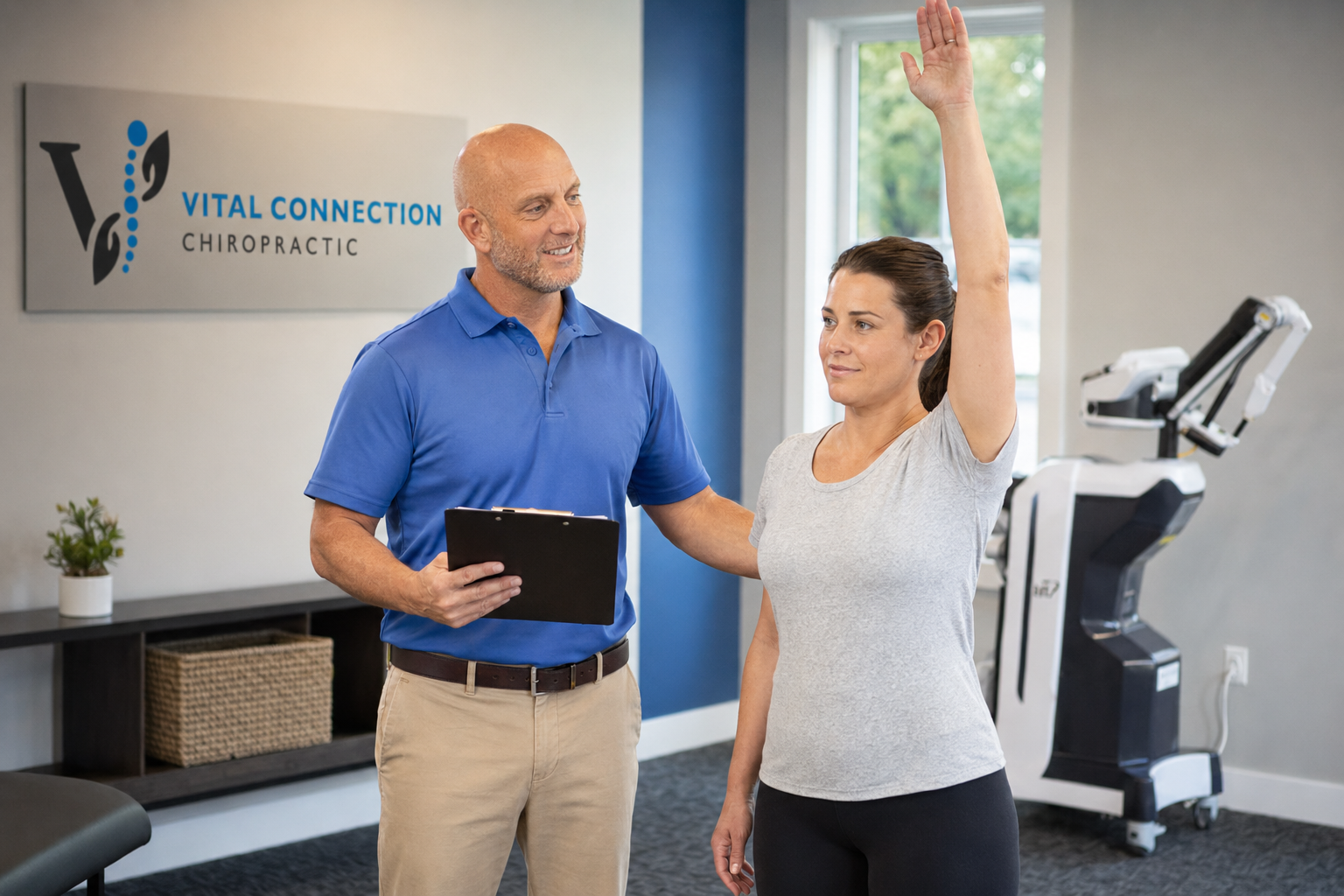
The first visit begins with a conversation and assessment. The provider will ask when the problem began, what aggravates it, what you have tried, and what activities you want to regain. Movement, tenderness, strength, and other relevant findings may be checked.
If MLS treatment is appropriate, the visit usually follows a simple process:
- The treatment area is identified. Clothing, braces, or jewelry may need to be adjusted so the selected area can be reached safely.
- The settings are chosen. The provider selects parameters based on the body area, surface size, and treatment goal.
- Protective eyewear is provided. Everyone in the room must wear the correct laser safety glasses before activation.
- The robotic head or handpiece is positioned. There is no needle, incision, or forceful pressure.
- The session is monitored. You should speak up if anything feels unexpectedly hot or uncomfortable.
- Your response is reviewed. The provider may recheck comfort or movement and explain the next step.
Many sessions last only several minutes for one region, although timing varies. You can normally resume routine activity unless the underlying condition requires restrictions. Some people notice an early change, while others improve gradually or do not respond. One visit is not a guaranteed fix.
Session frequency varies with the condition. The care team may recommend a short trial followed by reassessment instead of promising a fixed result. You can review the clinic’s MLS Laser Therapy Fishers, IN information before your visit.
7 Practical Benefits and Important Limits
MLS laser therapy can be appealing when a person wants a conservative addition to a recovery plan. Its practical benefits may include:
- No incision or injection. Treatment is delivered from outside the body.
- No forceful contact. The robotic head works over the selected area, and the handpiece can be used without painful pressure.
- Short appointments. A localized treatment can often fit into a busy day.
- No routine post-treatment downtime. Most people can leave the office and continue their day, subject to restrictions from the original condition.
- A controlled dose. M7 software helps calculate time and energy density from the provider’s settings.
- Flexible application. The scanning head can cover a broader area, while the handpiece can focus on a smaller point.
- Compatibility with a broader plan. When appropriate, laser care may be paired with activity changes, mobility work, exercise, chiropractic care, or medical treatment.
The limits deserve equal attention. Research is promising for some musculoskeletal conditions, but findings vary by diagnosis, device, dose, and study design. Evidence for one protocol cannot be applied automatically to every laser or condition.
Laser therapy also does not tell you why an area hurts. That is why assessment comes first. If the underlying issue requires imaging, surgery, medication management, or another specialist, adding laser sessions should not delay that care. The most useful question is not simply, “Is laser therapy good?” It is, “Is this treatment suitable for my specific condition and goal?”
Is MLS Laser Therapy the Same as Red Light Therapy?
MLS laser therapy and red light therapy belong to the photobiomodulation family, but they are not identical. Their light sources, wavelengths, power, beam properties, dose controls, and intended uses can differ substantially.
| Comparison Point | M7 MLS Laser Therapy | Common Red Light Therapy |
| Light source | Medical laser sources with synchronized 808 nm and 905 nm therapeutic wavelengths | Often LED panels, masks, or handheld devices using red and sometimes near-infrared light |
| Delivery | Robotized scanning head or focused handpiece with programmed settings | Usually broader surface exposure with device-specific distance and timing |
| Oversight | Delivered in a clinical setting with trained operation and laser safety controls | May be clinic-based or sold for home use, depending on the device |
| Best use | Targeted, professionally planned treatment for a selected musculoskeletal area | Often chosen for broader wellness, skin, or general light-exposure goals |
| Key caution | Class IV eye and skin hazards require strict controls and protective eyewear | Safety and effectiveness still depend on device quality, dose, eye protection, and intended use |
Neither option is automatically better for every goal. A home red light panel may be convenient, but it is not interchangeable with a professionally operated M7 protocol. Likewise, a more powerful laser is not automatically more effective. The appropriate dose and a well-matched clinical purpose matter more than marketing language.
Choosing Laser Therapy in Fishers, IN
If you are comparing options after searching for laser therapy near me, look beyond the equipment name. Ask who evaluates you, who operates the device, what outcome will be tracked, when the plan will be reassessed, and what happens if you do not improve. Those answers reveal more than a list of technical features.
Vital Connection Chiropractic is located at 12242 E 116th St, Suite 100, Fishers, IN 46037. The office also serves people from nearby Hamilton County communities, including Noblesville, Carmel, Geist, and McCordsville. Convenience should still be paired with a plan that fits your condition.
During the evaluation, be specific about the activity you want to regain. “I want less pain” is important, but “I want to walk the neighborhood for 30 minutes,” “I need to lift at work,” or “I want to return to pickleball” gives the care team a clearer way to measure progress. Useful care should connect treatment with daily function.
If you want to find out whether M7 laser therapy may fit your needs, Schedule Appointment for an evaluation. If you have questions about fees, visit length, or what information to bring, Contact Us or call +1 317-773-7820.
Frequently Asked Questions
Does MLS laser therapy actually work?
It may help with certain types of musculoskeletal pain, stiffness, and muscle spasm, but it does not work the same way for everyone. Research on photobiomodulation reports benefits for some conditions and treatment protocols, while results vary across diagnoses, devices, doses, and study quality. MLS devices are cleared for specific temporary-relief indications, not as a cure for every injury. A reasonable approach is to establish a clear goal, complete an appropriate trial, and reassess function and symptoms.
How much does an MLS laser cost?
The cost depends on whether you mean purchasing the device or receiving treatment as a patient. The manufacturer does not publish a standard retail price for the M7, so clinics request a customized equipment quote. Patient fees vary by treatment area, visit length, and the number of sessions recommended. Insurance and health-account eligibility also vary. Ask Vital Connection Chiropractic for current pricing before beginning care so you understand the full expected cost.
What are two drawbacks of laser therapy?
Two common drawbacks are variable results and the potential cost or time commitment of multiple visits. Not every condition responds, and evidence for one laser protocol cannot be assumed to apply to every diagnosis. Coverage also varies, so a recommended series may involve out-of-pocket expense. In addition, a Class IV system requires trained operation and strict eye protection. Laser therapy should not delay imaging, medical treatment, or specialist care when those are needed.
Is MLS laser therapy the same as red light therapy?
No, although both are forms of photobiomodulation. Many red light therapy products use LEDs to expose a broad area to visible red light and sometimes near-infrared light. The M7 uses synchronized medical laser sources at 808 nm and 905 nm, with programmed dose delivery through a robotic head or handpiece. Their power, beam characteristics, controls, and intended applications differ, so a consumer red light device should not be treated as a substitute for an MLS clinical protocol.
How long does MLS laser therapy last?
A single treatment commonly lasts several minutes, while the length of any benefit varies by person and condition. A larger region or more than one treatment area may require additional time. Some people notice a short-term change after an early session, while others need several visits before deciding whether the approach is useful. No responsible provider can promise how long relief will last without considering the diagnosis, activity demands, and the rest of the care plan.
Which is better, red light therapy or laser therapy?
Neither is universally better because the right choice depends on the goal, device, dose, and condition. Red light LED devices can be convenient for broad exposure and certain wellness or skin-focused uses. A medical MLS laser offers more targeted, professionally controlled delivery for a selected musculoskeletal area. Higher power alone does not guarantee a better result. If pain, stiffness, or an injury is the concern, begin with an evaluation instead of choosing solely from product claims.