Pediatric Chiropractic Care in Fishers, IN: A Parent’s Guide
Pediatric chiropractic care is a form of conservative musculoskeletal care adapted to a child’s age, size, development, and specific needs. A pediatric chiropractor may evaluate posture, joint motion, muscle tension, movement patterns, and activity-related discomfort, then use gentle techniques when appropriate. It should not replace a pediatrician, diagnose unrelated medical conditions, or be promoted as a cure for developmental or neurological disorders. A careful evaluation and coordinated care plan are especially important for infants and young children.
What Is Pediatric Chiropractic Care?
Pediatric chiropractic care focuses on the muscles, joints, spine, posture, and movement of infants, children, and teenagers. The approach should look different from adult care because a child’s body is smaller, still developing, and may not be able to describe symptoms clearly.
Parents may seek an evaluation after noticing restricted neck movement, uneven posture, discomfort following sports, a recent fall, changes in mobility, or tension related to schoolwork and screen use. Some families also schedule an assessment because they want a professional opinion about how their child moves or whether a musculoskeletal issue may be contributing to discomfort.
A responsible pediatric chiropractor begins by determining whether the concern is appropriate for chiropractic care. The chiropractor should also identify signs that call for evaluation by a pediatrician, physical therapist, orthopedist, neurologist, emergency department, or another qualified professional.
Families who want to understand the clinic’s child-focused approach can review the Pediatric page before arranging a visit.
 How Does Pediatric Chiropractic Care Work?
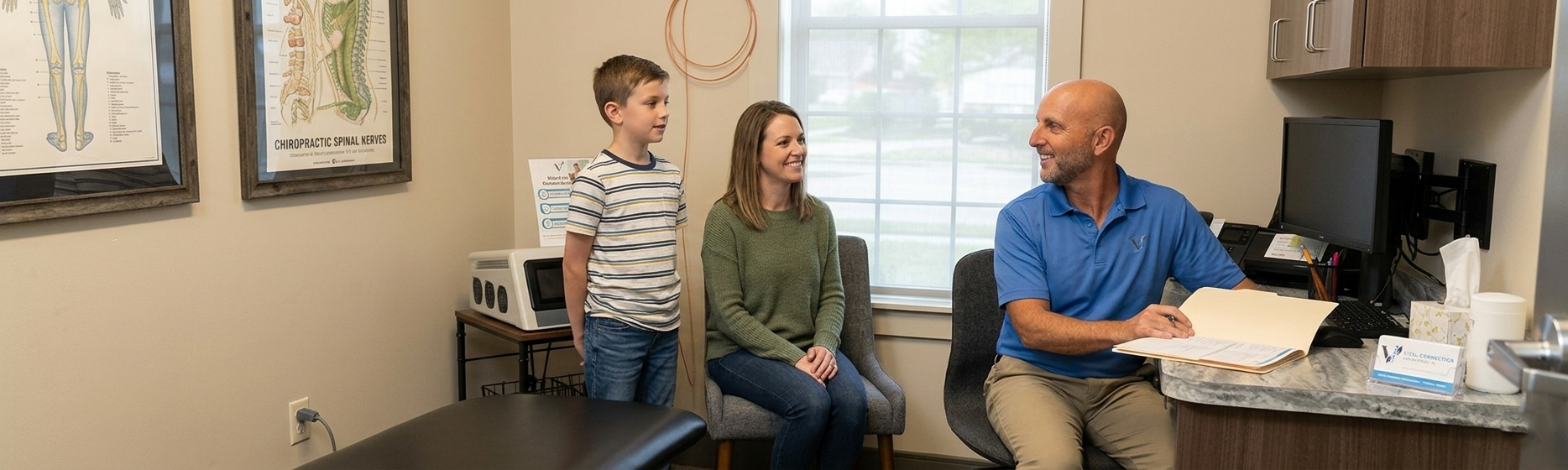
The phrase “how does pediatric chiropractic care work” is best answered by looking at the process rather than assuming every child receives an adjustment. Care starts with history, observation, screening, and a physical assessment. Treatment is recommended only when the findings suggest that conservative musculoskeletal care may be useful.
1. Parent and child history
The chiropractor may ask about the child’s birth history, development, previous injuries, sports, sleep positions, backpack use, screen habits, medical diagnoses, medications, and current symptoms. For an infant, questions may include head-turning preference, feeding position, tummy time, and whether a pediatrician has evaluated the concern.
2. Age-appropriate examination
The assessment may include posture, balance, gait, neck or back movement, joint mobility, muscle tone, tenderness, and how the child performs simple movements. The examination should be adapted to the child’s age and comfort. Imaging is not automatically needed and should be considered only when the clinical situation justifies it.
3. Clinical decision and referral
The chiropractor decides whether care is appropriate, whether another provider should be involved, or whether the child needs medical evaluation before treatment. This screening step is essential because pain, weakness, fever, developmental regression, trauma, and other symptoms can have causes outside the chiropractor’s scope.
4. Gentle, individualized care
When treatment is appropriate, a pediatric chiropractor may use low-force manual techniques, positioning, mobility work, soft-tissue approaches, or movement guidance. The method and pressure should reflect the child’s age, condition, and tolerance. Forceful techniques should not be treated as routine, particularly for infants and young children.
5. Reassessment
The chiropractor should monitor comfort, function, movement, and whether the original concern is improving. A plan should be changed or discontinued when the child is not responding as expected. Parents should also be encouraged to continue regular pediatric care.
Why Parents Consider Chiropractic Care for Children
Children experience physical demands at every stage. Babies develop head control and learn to roll, sit, crawl, and walk. School-age children spend long periods sitting, carry backpacks, use digital devices, and participate in sports. Teenagers may combine training, schoolwork, work, and extended screen time.
These demands do not mean every child needs chiropractic treatment. They do explain why parents sometimes seek help for posture, movement, muscle tension, or musculoskeletal discomfort.
| Parent Concern | What It May Involve | Best Next Step |
|---|---|---|
| Neck or back discomfort | Muscle strain, posture, sports load, injury, or another cause | Start with an appropriate clinical evaluation |
| Uneven posture or movement | Habit, growth, mobility limits, pain avoidance, or structural concerns | Assess movement and refer when needed |
| Sports-related soreness | Training load, technique, reduced mobility, or injury | Rule out significant injury before conservative care |
| Infant head-turning preference | Positioning, muscular torticollis, discomfort, or another condition | Contact the pediatrician and consider pediatric physical therapy |
| Persistent or unusual symptoms | Medical, neurological, orthopedic, or systemic causes | Seek pediatric medical evaluation promptly |
Common musculoskeletal goals may include supporting comfortable movement, improving awareness of posture, addressing joint or muscle restrictions, and helping a child return safely to normal activity. Results depend on the cause of the concern, and no treatment should be presented as guaranteed.
Families preparing for a baby or adjusting to the physical demands of pregnancy may also find the clinic’s Pregnancy information helpful.
 What Happens During a Pediatric Chiropractic Visit?
 What Happens During a Pediatric Chiropractic Visit?
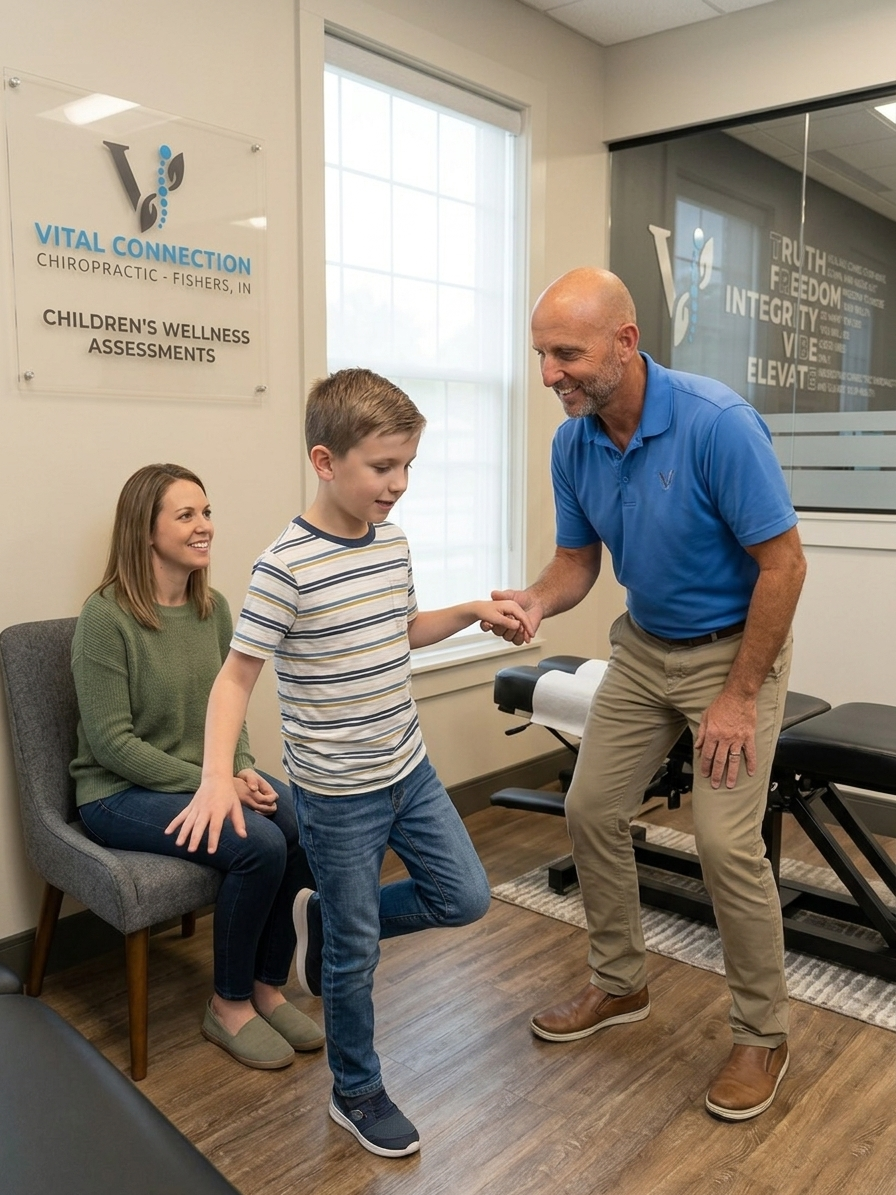
A first visit should feel organized, transparent, and unrushed. Parents should understand what is being assessed, why a technique is suggested, and what alternatives are available.
The visit may include:
- A conversation about the main concern and relevant medical history.
- Observation of posture, walking, balance, or age-appropriate movement.
- Examination of the area causing discomfort or restricted motion.
- Screening for warning signs that need medical referral.
- An explanation of findings in plain language.
- A discussion of expected benefits, limitations, risks, and other care options.
- Treatment only after the parent gives informed consent and the child is comfortable.
Children should not be forced through an examination or procedure when they are frightened or resisting. A good clinician can slow down, demonstrate tools, explain each step, and allow time for the child to become familiar with the environment.
Parents can help by bringing a list of symptoms, previous diagnoses, recent imaging or reports, medications, and questions. For infants with head shape or neck movement concerns, photographs showing the pattern over time may also be useful, but they do not replace a medical examination.
Safety, Evidence, and Appropriate Expectations
Is pediatric chiropractic care safe? The most accurate answer is that safety depends on the child, the reason for care, the technique used, the clinician’s training, and whether important medical conditions have been ruled out.
Research on pediatric spinal manipulation is limited, especially for infants and for non-musculoskeletal conditions. Reviews have found that mild, temporary effects such as soreness, irritability, or increased crying can occur. Serious events appear uncommon in published reports, but their true frequency is difficult to determine. This uncertainty is one reason conservative screening, low-force methods, informed consent, and collaboration with the child’s healthcare team matter.
Pediatric chiropractic care should not be used to claim treatment of autism, infections, immune disorders, asthma, attention disorders, or other medical and developmental conditions. It also should not delay vaccinations, medication, physical therapy, diagnostic testing, or care recommended by a pediatric professional.
| Appropriate Expectation | Expectation to Avoid |
|---|---|
| Evaluation of posture, mobility, joints, muscles, and movement | A promise to cure a medical, behavioral, or developmental disorder |
| Gentle care selected for the child’s age and findings | Routine forceful manipulation for every child |
| Referral when symptoms suggest another cause | Delaying pediatric, emergency, dental, or specialist care |
| Clear goals and regular reassessment | An open-ended plan without measurable reasons for care |
| Coordination with other healthcare providers | Advising families to stop medically necessary treatment |
Parents should feel comfortable asking what technique will be used, what evidence supports it, what side effects are possible, and how progress will be measured. A trustworthy answer should acknowledge both potential benefits and limitations.
Plagiocephaly, Torticollis, and Developmental Concerns
Parents often search for a pediatric chiropractor near me after noticing a flat spot on a baby’s head, a head-turning preference, or a neck tilt. These concerns deserve early pediatric evaluation because several conditions can look similar but require different care.
Plagiocephaly
Positional plagiocephaly is a flattening of part of an infant’s head. It may be associated with repeated positioning, limited neck rotation, prematurity, or torticollis. A chiropractor cannot “adjust” a baby’s skull into a normal shape. The first step is evaluation by the child’s pediatrician to distinguish positional flattening from craniosynostosis or another condition.
The American Academy of Pediatrics explains that management may include supervised tummy time, varying the baby’s head position while awake, physical therapy when torticollis is present, and helmet therapy for selected cases. Parents can review the AAP’s guidance on positional skull deformities and torticollis.
A pediatric chiropractor may assess neck and upper-body movement as part of a coordinated plan, but chiropractic care should not replace pediatric follow-up or physical therapy.
Torticollis
Torticollis means the head is tilted or rotated because of muscle tightness, positioning, injury, or another cause. Congenital muscular torticollis in infants is commonly managed with pediatric assessment, guided stretching, positioning advice, and pediatric physical therapy. Some babies also need imaging or specialist referral.
Chiropractic care should not be described as a guaranteed fix. A chiropractor may identify movement restrictions or provide gentle adjunctive musculoskeletal care when appropriate, but the treatment plan should be coordinated with the child’s pediatrician and physical therapist.
Autism and developmental conditions
Torticollis is not recognized as a cause of autism. Autism spectrum disorder is a developmental disability with multiple genetic and biological risk factors. The CDC’s current overview of autism spectrum disorder does not list torticollis as a cause or established risk factor.
A child can have both torticollis and autism, but coexistence does not prove that one caused the other. Developmental concerns, loss of skills, communication differences, or unusual behavior should be discussed with the child’s pediatrician so appropriate screening and support can begin.
 When a Child Needs Medical Care First
 When a Child Needs Medical Care First
Chiropractic care is not the first destination for every symptom. Seek prompt pediatric or emergency evaluation when a child has:
- A significant fall, collision, or suspected fracture
- Severe or rapidly worsening pain
- Weakness, numbness, loss of coordination, or trouble walking
- Fever with neck stiffness, unusual sleepiness, or a severe headache
- Repeated vomiting, fainting, confusion, or seizure activity
- Loss of developmental skills
- Difficulty breathing or swallowing
- Unexplained weight loss, persistent nighttime pain, or signs of infection
- A new neck tilt after trauma or a sudden inability to turn the head
- An infant head shape concern that has not been assessed by a pediatrician
Parents know their children well. A meaningful change in behavior, movement, appetite, sleep, or energy can be a reason to contact the pediatrician even when a child cannot describe pain.
Choosing a Pediatric Chiropractor Near Me in Fishers, IN
For families in Fishers, Geist, Noblesville, Carmel, McCordsville, Castleton, and surrounding Hamilton County communities, proximity matters, but clinical standards matter more. Look for a chiropractor who welcomes questions and recognizes the limits of chiropractic care.
Consider asking:
- Does the chiropractor have experience working with children of your child’s age?
- What assessment is performed before treatment?
- Which techniques are used for infants, younger children, and teenagers?
- How does the provider screen for medical or neurological warning signs?
- Will the chiropractor coordinate with the pediatrician or physical therapist?
- What are the goals, expected timeline, and reasons to stop or refer?
- Are risks, alternatives, and costs explained before care begins?
Avoid providers who promise cures, connect spinal findings to nearly every childhood illness, discourage pediatric care, or recommend a long plan before completing an appropriate evaluation.
A local consultation can help determine whether the concern falls within conservative musculoskeletal care. Parents ready to discuss their child’s needs may use Schedule Appointment or Contact Us to reach Vital Connection Chiropractic in Fishers.
FAQ
Is it safe for a child to see a chiropractor?
It can be appropriate for some children when care is carefully screened, age-specific, and gentle. Safety depends on the child’s health, the reason for the visit, the technique, and the provider’s training. Parents should expect a medical history, examination, explanation of risks and alternatives, and referral when symptoms fall outside chiropractic care. Forceful manipulation should not be routine for infants or young children, and chiropractic care should never replace needed pediatric or emergency evaluation.
What does a pediatric chiropractor do?
A pediatric chiropractor evaluates a child’s muscles, joints, posture, movement, and related musculoskeletal concerns. Depending on the findings, the chiropractor may recommend low-force manual care, mobility work, posture guidance, activity changes, or referral to another healthcare professional. The role is not to diagnose every childhood illness or treat developmental and neurological conditions. A responsible pediatric chiropractor sets specific goals, monitors progress, and communicates with the child’s pediatrician or therapist when coordinated care is needed.
Can chiropractic help with plagiocephaly?
Chiropractic care should not be considered a primary treatment that reshapes an infant’s skull. Plagiocephaly first needs pediatric evaluation to determine whether the flattening is positional or related to craniosynostosis or another condition. Recommended care may include supervised tummy time, repositioning, pediatric physical therapy for torticollis, and helmet therapy in selected cases. A chiropractor may assess gentle neck and upper-body mobility as an adjunct, but should not replace the pediatrician, physical therapist, or craniofacial specialist.
Can a chiropractor fix torticollis?
A chiropractor cannot promise to fix torticollis, because treatment depends on its cause and severity. Infants with a persistent head tilt or turning preference should be evaluated by a pediatrician, and pediatric physical therapy is commonly recommended for congenital muscular torticollis. A chiropractor may provide an additional musculoskeletal assessment or gentle supportive care when appropriate. Sudden torticollis, trauma, fever, severe pain, weakness, or neurological symptoms require medical evaluation rather than routine chiropractic treatment.
Is torticollis linked to autism?
Torticollis is not established as a cause of autism or a recognized autism risk factor. Torticollis affects neck position and movement, while autism spectrum disorder is a developmental condition associated with a complex combination of genetic and biological factors. A child may have both conditions, but that does not mean one caused the other. Parents who notice communication differences, developmental delays, repetitive behaviors, or loss of skills should speak with a pediatrician and request appropriate developmental screening.
Why do doctors discourage chiropractors?
Some doctors are cautious because evidence is limited for certain pediatric chiropractic claims and techniques. Concerns may include forceful manipulation, missed diagnoses, delays in proven medical care, or claims that chiropractic can treat infections, autism, immune problems, or other non-musculoskeletal conditions. That does not mean every doctor opposes all conservative chiropractic care. Trust improves when the chiropractor uses careful screening, age-appropriate methods, realistic goals, informed consent, and open communication with pediatricians and other healthcare professionals.
Supporting Your Child with an Individualized Plan
Pediatric chiropractic care is most responsible when it begins with a clear question: Is this child’s concern musculoskeletal, and is conservative care appropriate? The answer may be yes, no, or only as part of a coordinated plan.
At Vital Connection Chiropractic, parents should expect an individualized evaluation rather than assumptions based only on age or symptoms. The goal is to understand movement, comfort, posture, and function while recognizing when pediatric, physical therapy, orthopedic, neurological, or emergency care is the better next step.
Families considering Pediatric care in Fishers, IN can prepare by writing down the child’s symptoms, when they began, what makes them better or worse, and which professionals have already evaluated the concern. Clear information helps the chiropractor make a safer and more useful recommendation.