Signs of a Slipped Disc in Fishers, IN
Signs of a slipped disc often include low back or neck pain that travels into an arm or leg, along with tingling, numbness, weakness, or trouble moving normally. Not every slipped disc causes symptoms, and symptoms alone do not confirm the diagnosis, but these are some of the most common patterns people notice when a disc is irritating a nearby nerve.
If you are in Fishers, IN and your pain started after lifting, sitting for long stretches, training hard, or flaring up without a clear reason, it is worth paying attention. Back pain can come from several structures, and work or daily habits such as heavy lifting, pushing, pulling, twisting, or prolonged desk time can all add stress to the spine.
What is a slipped disc?
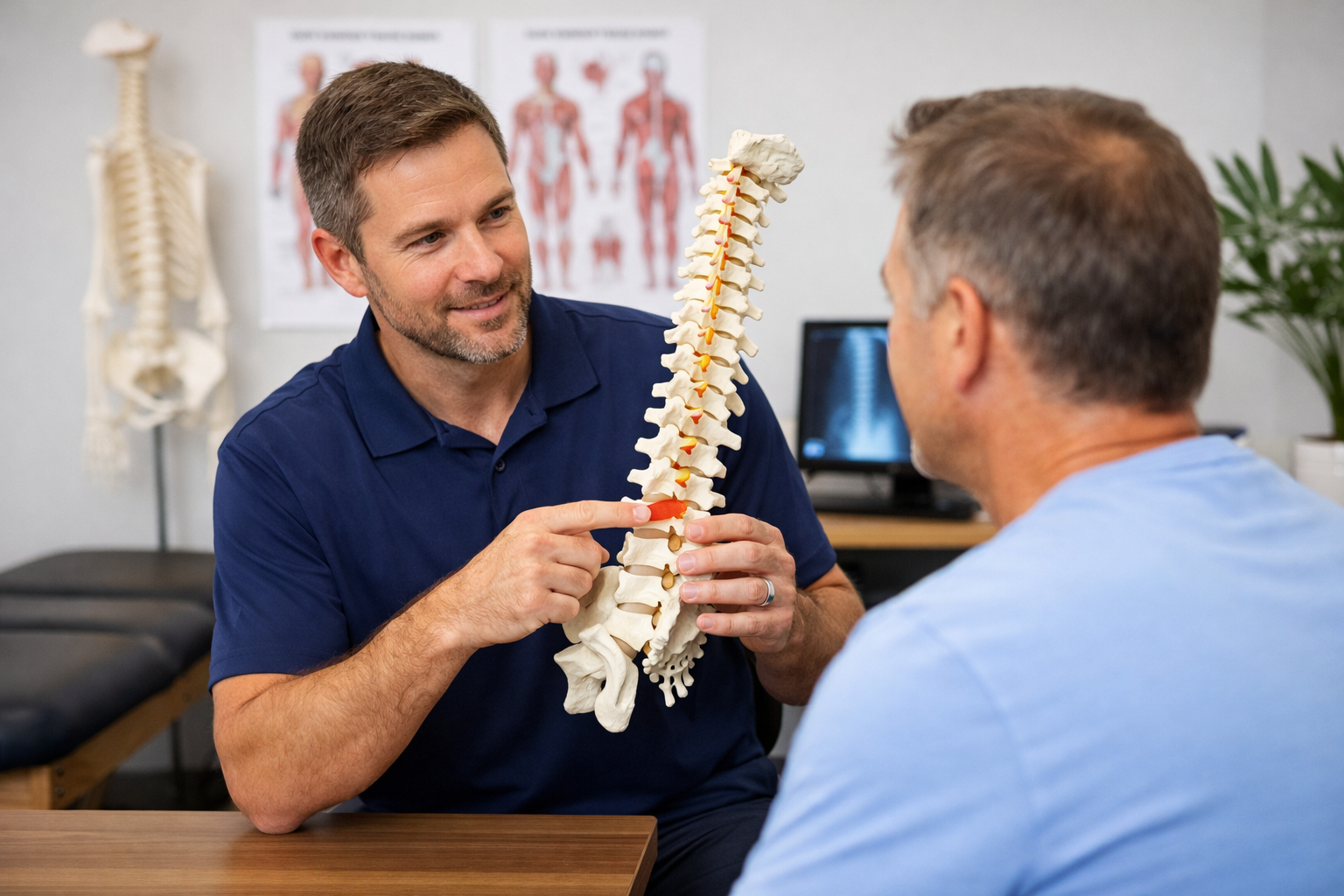
A slipped disc, also called a herniated or prolapsed disc, happens when part of a spinal disc bulges or ruptures and starts irritating a nearby nerve. Discs act like cushions between the bones of the spine, so when one becomes irritated, symptoms can stay local in the back or neck or travel into the arm or leg. Not every slipped disc is painful, but when it presses on a nerve, it can trigger a much more specific symptom pattern.
Many people use the words slipped disc and herniated disc to mean the same general problem. From a patient standpoint, the more important question is whether the disc is truly the source of your symptoms, how much nerve irritation is involved, and what the safest next step looks like. If you want a broader overview of care options, Vital Connection Chiropractic already has a helpful page on slipped disc treatment.
 7 warning signs of a slipped disc
1. Low back or neck pain that feels deeper than a simple strain
A slipped disc may cause pain near the spine itself, especially in the low back or neck. Some people describe it as sharp, stubborn, or difficult to calm down compared with an ordinary sore muscle.
2. Pain that travels into the buttock, leg, shoulder, or arm
When a disc irritates a nerve, pain often follows that nerve’s path. In the lower back, that can mean pain into the buttock, thigh, calf, or foot. In the neck, symptoms may travel into the shoulder, arm, or hand.
3. Numbness or tingling
Pins and needles, altered sensation, or a patch of numbness can happen when the nerve is irritated. This is one of the clearest clues that the issue may be more than a simple muscle flare-up.
4. Muscle weakness
If a disc is compressing a nerve more significantly, you may notice that the leg or arm feels weaker than usual. Trouble lifting the foot, pushing off while walking, gripping firmly, or carrying ordinary items can all matter. Worsening weakness deserves prompt attention.
5. Trouble bending or straightening comfortably
Many people with disc irritation feel limited when trying to bend forward, stand upright, or change positions smoothly. Movements that used to feel normal may suddenly feel guarded, stiff, or painful.
6. Sciatica-style symptoms
A slipped disc in the low back can trigger sciatica, which often includes pain, tingling, or numbness traveling down the leg. In some cases, the leg symptoms feel worse than the back pain itself.
7. Symptoms that do not settle the way a minor strain usually does
Some muscle strains improve steadily with a little time and smart movement. A slipped disc becomes more suspicious when symptoms keep returning, travel farther, or are still not improving after several weeks. If symptoms persist or neurological findings are getting worse, further evaluation may be needed.
| Sign | What it may feel like | Why it matters |
|---|---|---|
| Local back or neck pain | Deep, sharp, stubborn pain near the spine | May be the starting point of disc irritation |
| Pain into the leg or arm | Pain that travels beyond the back or neck | Often suggests nerve involvement |
| Numbness or tingling | Pins and needles or altered sensation | Common when a nerve is irritated |
| Weakness | Trouble lifting, pushing off, gripping, or carrying | May signal more significant nerve compression |
| Movement limits | Pain bending, standing tall, or changing positions | Helps distinguish routine soreness from something more involved |
| Sciatica pattern | Buttock and leg symptoms, sometimes below the knee | Common with lower-back disc irritation |
This symptom guide is useful, but it is still only a pattern check. A proper exam is what helps separate a disc issue from other common causes of back or leg pain.
 What can be mistaken for a slipped disc?
 What can be mistaken for a slipped disc?
A slipped disc is only one possible cause of back or neck pain. Muscle strain, arthritis-related changes, spinal stenosis, and other medical problems can create similar symptoms. Even non-spinal problems can sometimes show up as back pain, which is one reason self-diagnosis can be misleading.
That is why two people can both say, “My back went out,” and still have very different issues. One may have a simple strain, while another has nerve irritation from a disc. If you want to compare your symptoms with a more detailed explanation, this related Vital Connection Chiropractic article on how do I know if I have slipped a disc is a useful next read.
Signs of a slip disc in lower back
When people search for signs of a slip disc in lower back, they are usually describing a pattern that starts in the low back and then spreads into the buttock or leg. Common clues include low back pain, pain traveling below the knee, tingling in the leg or foot, numbness, and weakness. A provider also looks at whether certain movements change the pain and whether reflexes, strength, or sensation are affected.
Lower-back disc problems are also one of the main reasons people confuse sciatica with a diagnosis. Sciatica is really a symptom pattern rather than a single cause. A slipped disc is one common cause, but not the only one, which is why the exam matters as much as the symptom list.
How doctors check whether it is really a slipped disc
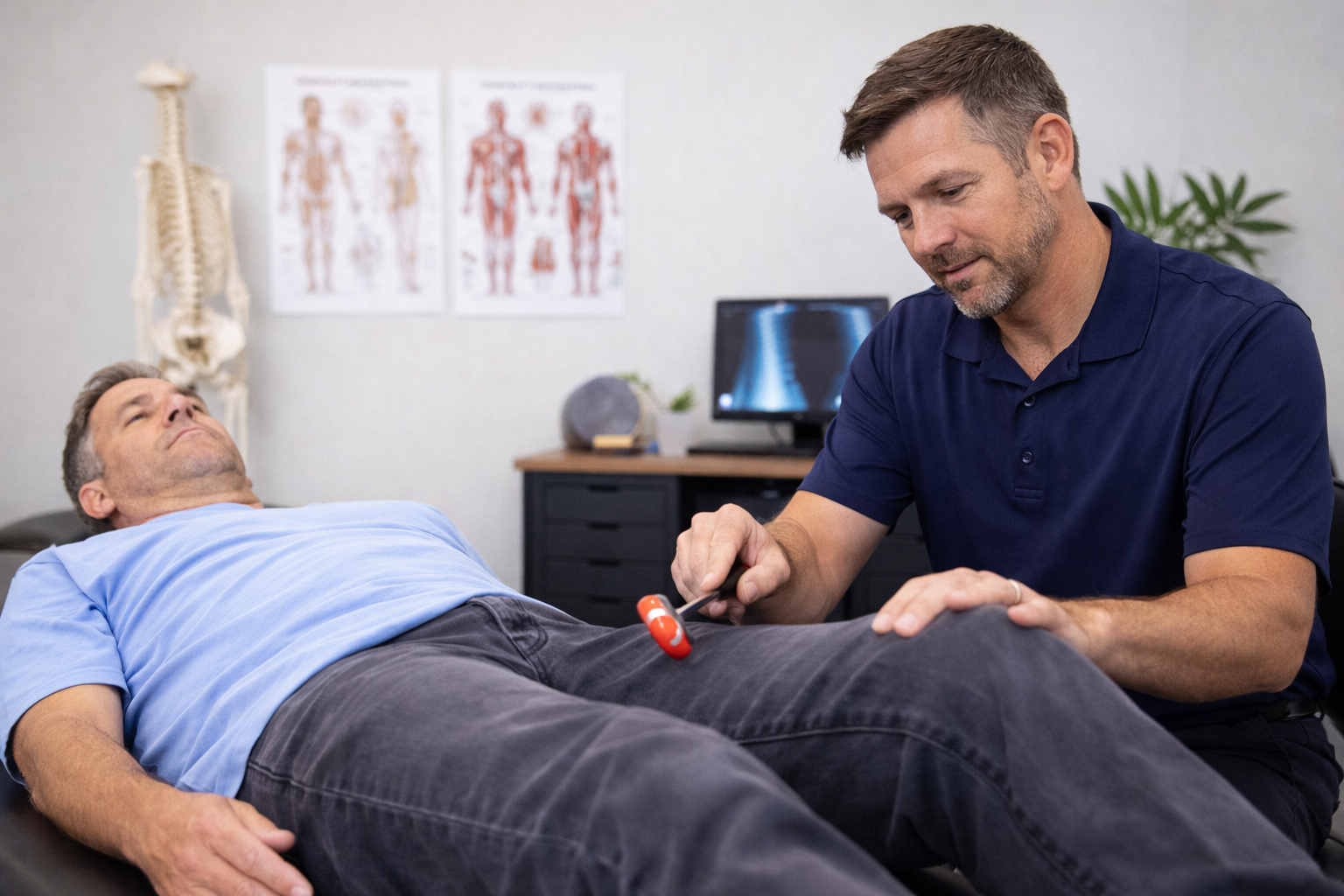
The first step is usually a careful history and physical exam. A provider listens to where the pain goes, whether there is numbness or weakness, what movements aggravate it, and whether there are any red-flag symptoms. From there, the exam may include movement testing, strength testing, sensation, reflexes, and other neurological checks.
Imaging is not always needed right away. Many people do not need an MRI on day one, especially if there are no red flags and the symptoms are improving. If symptoms persist, do not improve after several weeks, or include concerning neurological changes, imaging may be recommended. At Vital Connection Chiropractic, the site describes an exam-led approach that looks at spinal motion, posture, and movement habits instead of assuming every case needs the same plan. Their broader chiropractic care services are built around that kind of evaluation-first model.
How do you fix a slipped disc?
 How do you fix a slipped disc?
Treatment usually starts conservatively. That can include short-term activity modification, gentle movement, walking, pain-relief measures that are appropriate for you, and a plan to calm the irritated area without making the back stiffer and weaker. Long periods of bed rest are usually not the goal. In many cases, gradual movement helps recovery more than complete shutdown.
Physical therapy or guided rehab exercises are often part of the plan. The goal is not just to reduce pain for a day or two, but to improve movement quality, reduce irritation, and build better support through the core, hips, and surrounding tissues. Pain relief strategies may also be part of the conversation, especially early on. For readers exploring that side of care, this article on pain reliever for slipped disc may help.
Some people also need help with posture, lifting strategy, desk setup, workout changes, or return-to-activity planning. Vital Connection Chiropractic’s slipped-disc page describes a conservative approach that includes gentle corrective care, posture review, and movement assessment based on what the exam shows.
Surgery is not the starting point for most people. It is more likely to be considered when symptoms do not improve with appropriate conservative care, when weakness is worsening, or when serious nerve-related red flags appear. Most people improve without surgery, but individualized care matters.
| Situation | What to do next |
|---|---|
| Mild recent flare without red flags | Stay gently active, avoid aggravating movements, and monitor closely |
| Back pain plus tingling or pain into the leg or arm | Schedule an exam soon to check for nerve involvement |
| Symptoms lasting several weeks without improvement | Consider further evaluation and possibly imaging |
| Worsening numbness or weakness | Get prompt medical assessment |
| Bowel or bladder changes, saddle numbness, or major neurological loss | Seek urgent or emergency care |
This table is meant to guide decision-making, not replace an exam. Red-flag symptoms need faster attention than routine back pain.
Can a slipped disk heal itself?
Many slipped discs improve over time with conservative care. Some cases settle within weeks, and many people recover without surgery. That said, “heal itself” does not mean “ignore it.” If symptoms are progressing, if weakness is showing up, or if pain keeps interfering with sleep, work, or walking, a proper evaluation is still important.
In practical terms, a disc may calm down before life feels completely normal again. Pain can improve first, while strength, confidence with movement, and full activity tolerance may take longer to rebuild.
What happens if a slipped disc goes untreated?
Sometimes a slipped disc settles gradually even when treatment is simple. Other times, untreated nerve irritation can lead to longer-lasting pain, recurring flare-ups, or ongoing numbness and weakness. In more serious cases, nerve compression can become urgent, especially if bowel or bladder changes or major neurological deficits are involved.
That does not mean every slipped disc becomes dangerous. It means the better question is not “Can I tough this out?” but “Am I dealing with a routine flare or signs that this nerve needs more attention?”
When to get urgent help
Get urgent medical care if you notice loss of bowel or bladder control, numbness in the saddle area, rapidly worsening weakness, severe symptoms after a fall or major trauma, fever with back pain, swelling or redness over the spine, or pain so severe that you cannot get comfortable. Those symptoms are not routine and should not be watched casually at home.
Local help for slipped disc symptoms in Fishers, IN
Vital Connection Chiropractic is based in Fishers and serves patients from Fishers and nearby areas including Geist, Noblesville, and Carmel. If you are searching online for a slipped disc Chiropractor Near Me, the next best step is usually an exam that looks at the whole picture: where the pain travels, whether a nerve seems involved, what movements aggravate it, and whether you have any red flags.
For some people, the right next step is simple reassurance and a conservative plan. For others, it is identifying that the pattern does not fit a routine strain and needs more medical workup. If your symptoms match several of the signs above and you want a clearer answer, you can schedule appointment with the Fishers team for an evaluation.
FAQ
What can be mistaken for a slipped disc?
A slipped disc can be mistaken for muscle strain, arthritis-related back pain, spinal stenosis, or other causes of back pain. Sometimes even non-spinal issues can feel like back pain at first, which is why an exam is more reliable than guessing from symptoms alone.
How do I know if I slipped my disc?
Common clues include back or neck pain that travels into an arm or leg, tingling, numbness, weakness, or trouble moving comfortably. Still, symptoms alone cannot confirm it. A focused history, physical exam, and sometimes imaging are what help tell the difference between a slipped disc and other causes of pain.
How do you fix a slipped disc?
Most cases start with conservative care such as staying gently active, avoiding movements that clearly aggravate symptoms, using appropriate pain-relief strategies, and following a rehab or exercise plan. Surgery is usually reserved for cases that do not improve or for more serious neurological problems.
Can a slipped disk heal itself?
Yes, many slipped discs improve over time without surgery, especially with conservative care. But if symptoms are worsening, weakness is appearing, or daily function is dropping, it is smart to get evaluated rather than assume it will settle on its own.
What happens if a slipped disc goes untreated?
Some cases improve gradually, but others can leave you with ongoing pain, recurring flare-ups, or persistent numbness and weakness. Red-flag symptoms such as bowel or bladder changes or rapid neurological decline need urgent care.