Sports Injury Chiropractor in Fishers, IN
A sports injury chiropractor helps active people, athletes, weekend runners, gym members, and youth sports participants recover from movement-related pain by evaluating the spine, joints, muscles, posture, mobility, and mechanics that may contribute to the injury. In Fishers, IN, chiropractic care for sports injuries can support better movement, help reduce strain, and guide a safer return to activity when the injury is appropriate for conservative care.
What Does a Sports Injury Chiropractor Do?
A sports injury chiropractor looks at how your body moves, absorbs stress, and recovers after activity. The goal is not just to chase pain. The goal is to understand why certain joints, muscles, or movement patterns may be overloaded.
For example, a runner with knee pain may also have hip stiffness, foot mechanics issues, low back tension, or poor glute activation. A tennis player with shoulder pain may also have limited upper back mobility or neck tension. A soccer player with recurring ankle irritation may have balance, coordination, or compensation issues after an older sprain.
Chiropractic care may include:
- A movement and posture evaluation
- Spine and joint mobility assessment
- Gentle chiropractic adjustments when appropriate
- Soft tissue work
- Stretching and mobility guidance
- Corrective exercise recommendations
- Education on warmups, recovery, and posture
- Referral for imaging or medical care when red flags are present
If you want a broader overview of athletic chiropractic care, the related guide on Sports Chiropractor Fishers IN can support this article naturally.
A sports injury chiropractor does not replace emergency medicine, orthopedic care, imaging, or physical therapy when those are needed. Instead, chiropractic care can be part of a well-rounded recovery plan for many non-emergency sports-related aches, strains, mobility restrictions, and recurring movement issues.
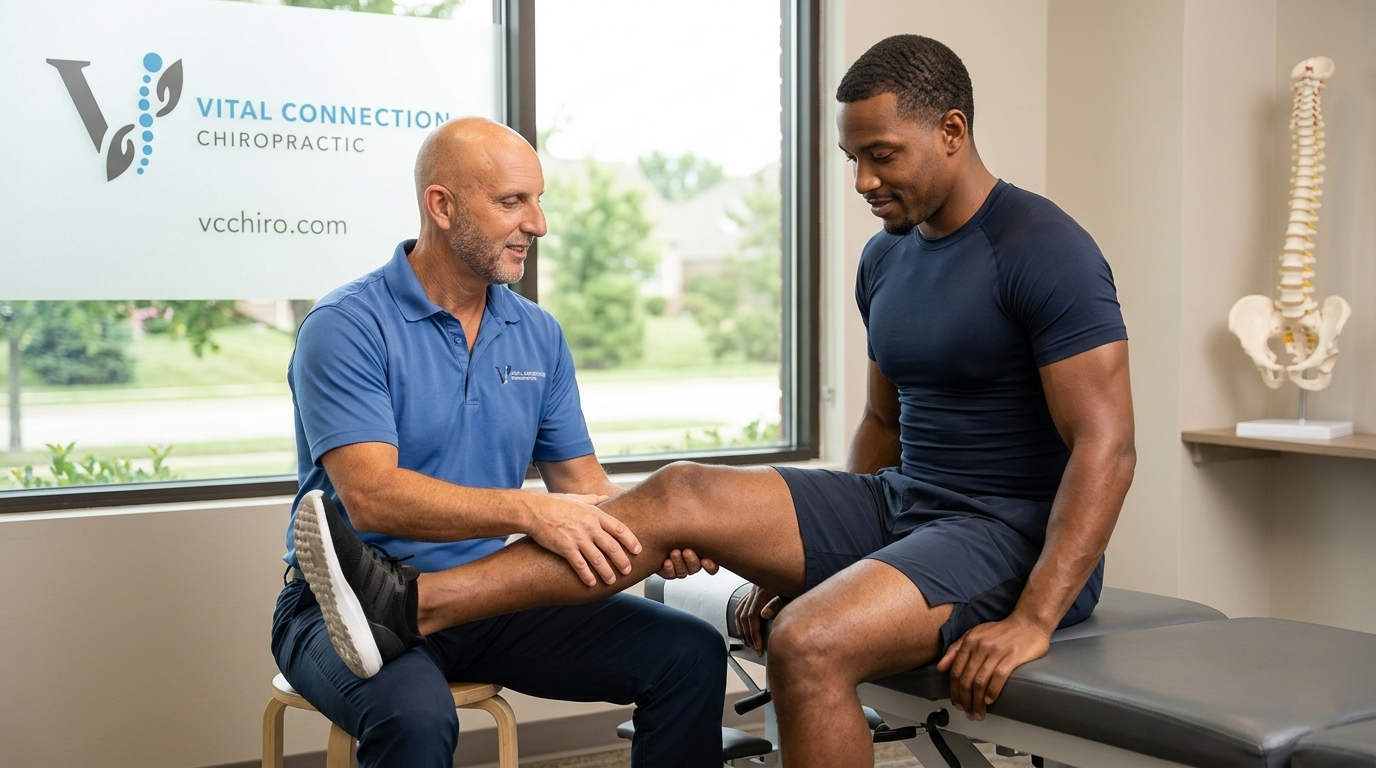 Common Sports Injuries Chiropractic Care May Support
Sports injuries can happen suddenly or build slowly over time. Some begin after a fall, collision, twist, or hard landing. Others develop from repetitive training, poor recovery, overuse, or movement imbalance.
A chiropractor for sports injury care may help with many common concerns when the injury is appropriate for conservative management.
| Sports Injury Concern | What It May Mean | Best Next Step |
|---|---|---|
| Neck or upper back tightness | Strain, posture stress, contact injury, or limited spinal mobility | Get evaluated if pain persists, spreads, or affects movement |
| Low back pain after training | Overload, poor lifting mechanics, hip tightness, or joint irritation | Reduce aggravating activity and schedule a movement assessment |
| Shoulder discomfort | Rotator cuff irritation, upper back stiffness, or repetitive throwing strain | Avoid painful overhead activity and seek a proper exam |
| Knee pain with running or jumping | Tracking issues, hip weakness, foot mechanics, or overuse | Review training load, footwear, and lower body mechanics |
| Ankle sprain recovery issues | Lingering instability, stiffness, or compensation | Rebuild mobility, balance, and control before full return |
| Headache after impact or strain | Neck tension, possible concussion, or other injury | Seek urgent care if dizziness, confusion, vomiting, or vision changes occur |
| Hip tightness or groin strain | Muscle overload, mobility restriction, or sport-specific strain | Avoid pushing through sharp pain and get assessed |
This table is not a diagnosis. It is a guide to help athletes and active adults understand when an issue may need professional evaluation.
Some sports injuries can feel mild at first but become more limiting when ignored. Pain that changes your stride, lifting pattern, sleep, or ability to train should not be brushed off. The earlier you understand what is causing the problem, the easier it may be to avoid repeated flare-ups.
Why Athletes in Fishers, IN Seek Chiropractic Care
Fishers is an active community. Many families are involved in youth sports, school athletics, running, cycling, golf, fitness classes, and recreational leagues throughout Hamilton County. With that active lifestyle comes the need for smart recovery.
Athletes often seek chiropractic care because they want to move better, recover safely, and stay active without guessing what is causing the pain.
A sports injury chiropractor may help by identifying:
- Areas of restricted joint motion
- Muscle tightness or guarding
- Postural stress from desk work or school
- Weakness or poor movement control
- Compensation patterns after older injuries
- Training habits that may be increasing strain
For adults who sit at work and train after hours, stiffness can build throughout the day and show up during workouts. For young athletes, growth spurts, intense sports schedules, and repeated practices can create stress on developing bodies. For weekend athletes, jumping into high-intensity activity after a busy week can increase the chance of irritation.
Chiropractic care can support active people by improving how the body handles movement stress. The goal is not to push harder through pain. The goal is to help the body move with better control, comfort, and awareness.
What to Expect During a Sports Injury Chiropractic Visit
A sports injury visit should start with listening. Your chiropractor should ask what happened, when symptoms started, what movements make it worse, what helps, and whether there are signs that require medical referral.
At Vital Connection Chiropractic in Fishers, care should be individualized to the person, injury type, activity level, and goals. A high school athlete, a parent training for a 5K, a golfer, and a weightlifter may all need different recommendations.
A visit may include:
- History and activity review
Your chiropractor may ask about your sport, training schedule, previous injuries, pain pattern, and recovery habits. - Posture and movement assessment
This may include checking your walking, squatting, bending, shoulder motion, or sport-specific movements. - Spine and joint evaluation
The chiropractor may assess joint motion, tenderness, muscle tension, and mobility limitations. - Neurological or orthopedic screening when needed
This may help determine whether nerve irritation, weakness, or more serious injury signs are present. - Care plan discussion
You should understand what the chiropractor found, what care may include, and when medical referral may be needed. - Gentle care when appropriate
Adjustments, soft tissue support, mobility work, and exercise guidance may be used depending on the case.
For active patients ready to begin care, Schedule Appointment is the best next step.
 Chiropractic Care vs. Rest Alone
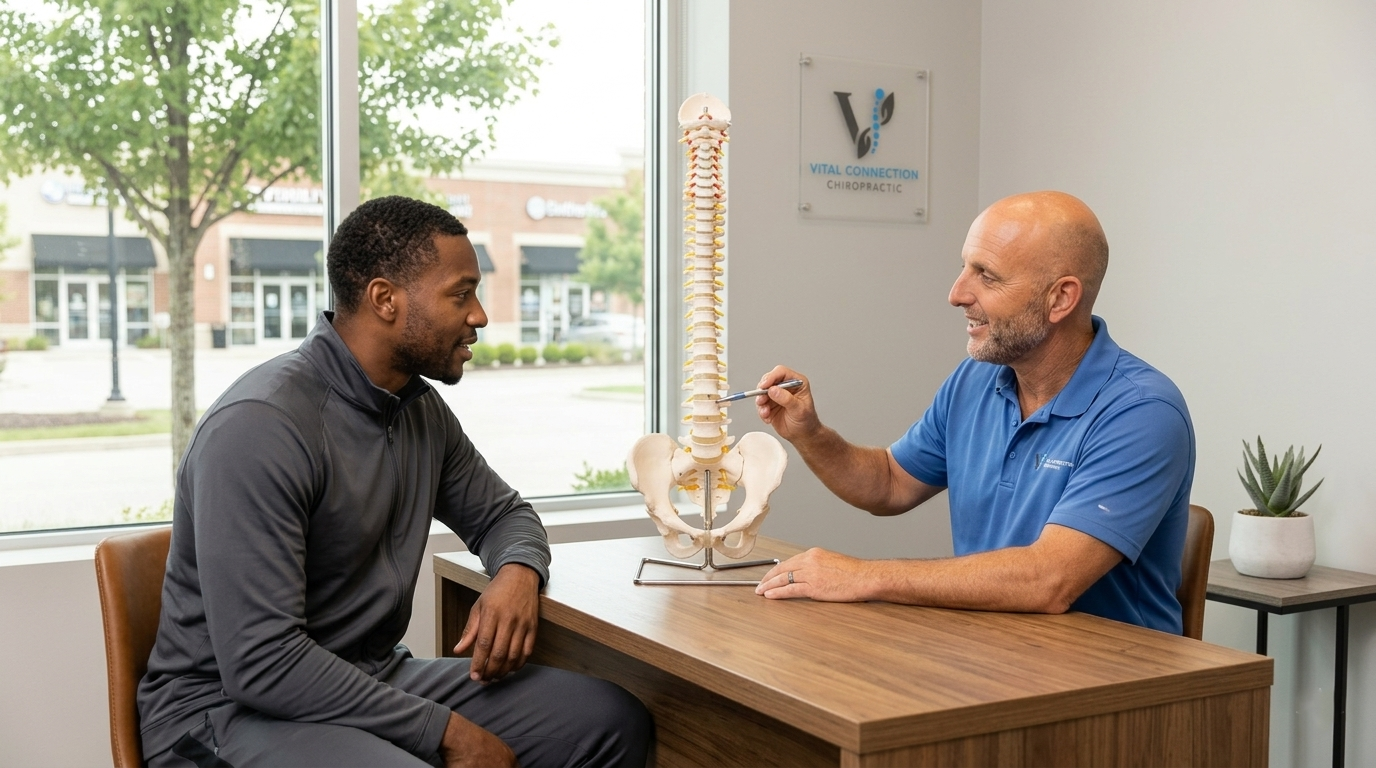 Chiropractic Care vs. Rest Alone
Rest can help many minor injuries, especially in the first few days. But rest alone may not address the reason the injury happened. If you return to the same movement pattern, training load, or mobility limitation, symptoms may come back.
Chiropractic care may help active people understand what needs to change before returning fully to sport.
| Approach | Best For | What to Know |
|---|---|---|
| Short-term rest | Mild soreness, early irritation, or post-activity fatigue | Helpful at first, but too much rest may lead to stiffness |
| Ice or heat | Temporary symptom support | Ice may help early irritation, while heat may relax tight muscles later |
| Chiropractic evaluation | Recurring pain, limited mobility, or movement-related symptoms | Helps identify joint, posture, and mechanics issues |
| Corrective movement | Return-to-activity planning | Builds better control and reduces repeated overload |
| Medical evaluation | Severe pain, swelling, deformity, concussion signs, or neurological symptoms | Needed before conservative care in red flag situations |
The best recovery plan often combines smart rest, safe movement, proper evaluation, and gradual progression. Many athletes make the mistake of resting until pain improves, then going right back to full activity. That can lead to a cycle of pain, rest, return, and flare-up.
A sports injury chiropractor can help you understand whether you need mobility work, stability work, activity modification, or referral for further evaluation.
When a Sports Injury Needs Medical Evaluation First
Not every sports injury should start with chiropractic care. Some symptoms need urgent or medical evaluation first.
Seek immediate medical care if you notice:
- Severe pain after a fall, collision, or impact
- Visible deformity
- Inability to bear weight
- Sudden weakness, numbness, or tingling
- Loss of bowel or bladder control
- Chest pain or trouble breathing
- Head injury with confusion, vomiting, dizziness, vision changes, or fainting
- Severe swelling or bruising
- Pain that wakes you at night and does not change with position
- Fever, unexplained weight loss, or feeling very ill with spine pain
These are not signs to “push through.” They may indicate a fracture, concussion, nerve involvement, infection, or another issue that requires medical care.
A trustworthy chiropractor should recognize red flags and refer when needed. That is part of safe patient care.
For questions about whether your symptoms are appropriate for a chiropractic visit, Contact Us can help you connect with the office.
How Chiropractic Care May Support Sports Injury Recovery
 How Chiropractic Care May Support Sports Injury Recovery
Chiropractic care may support sports injury recovery by helping the body move with less restriction and better coordination. This can be especially helpful when pain is connected to stiffness, poor mechanics, posture strain, or compensation.
Joint Mobility
Restricted joints may cause nearby areas to work harder. For example, limited upper back mobility can increase shoulder or neck strain. Limited hip mobility can affect the low back, knees, and ankles.
Chiropractic adjustments and mobility work may help restore motion when appropriate.
Muscle Tension and Guarding
After an injury, muscles may tighten to protect the area. While this is normal early on, prolonged guarding can limit motion and slow return to activity. Gentle care, soft tissue work, and guided movement may help reduce unnecessary tension.
Posture and Training Stress
Desk posture, school posture, screen use, and long commutes can affect how an athlete moves before practice even begins. Chiropractic care can help connect daily habits to sports performance and recovery.
Return-to-Activity Guidance
A good recovery plan should include progression. This means returning gradually, not jumping straight back into full intensity. Your chiropractor may recommend starting with pain-free mobility, then light strength, then sport-specific movement, then full activity when appropriate.
Injury Prevention Support
No provider can prevent every injury. Sports always include risk. But improving mobility, awareness, warmups, recovery habits, and movement control may reduce unnecessary strain.
For active patients who want individualized care, another helpful next step is Schedule Appointment.
Recovery Tips for Active People in Fishers
Sports injury recovery depends on the injury, the athlete, and how the body responds. Still, several general steps can support a safer process.
1. Do Not Ignore Pain That Changes Movement
If pain causes you to limp, twist differently, avoid certain movements, or compensate, your body is telling you something. Continuing to train through altered movement can create stress in other areas.
2. Warm Up Before Activity
A good warmup should prepare the joints and muscles for the sport. For many athletes, this includes light movement, mobility drills, and sport-specific activation. Static stretching alone is usually not enough before intense activity.
3. Build Recovery Into Your Schedule
Recovery is part of training. Sleep, hydration, nutrition, and rest days matter. Athletes who train hard without recovery may be more likely to develop overuse irritation.
4. Respect Gradual Return
Pain-free walking does not always mean you are ready for sprinting. Pain-free daily movement does not always mean you are ready for heavy lifting. Return in stages.
5. Get Evaluated When Pain Keeps Coming Back
Recurring pain usually has a reason. It may be mobility, strength, technique, posture, old injury compensation, or training overload. A proper evaluation can help you stop guessing.
Patients who are unsure where to begin can use Contact Us to ask about the next step.
Chiropractor for Sports Injury Care in Fishers, IN
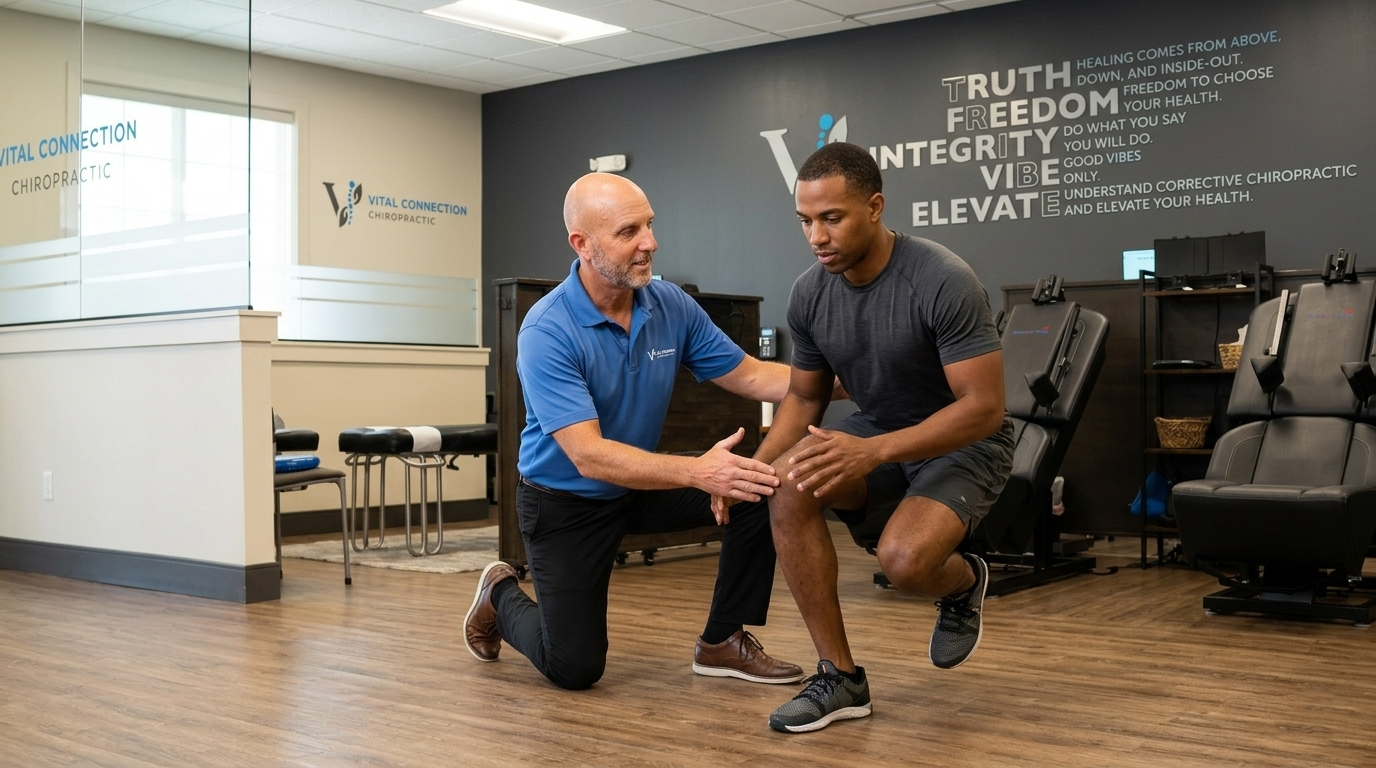 Chiropractor for Sports Injury Care in Fishers, IN
A chiropractor for sports injury care should take time to understand both your symptoms and your goals. The goal for an athlete is not only to feel better at rest. It is to move well during the activity that matters to you.
That may include:
- Running without recurring knee or hip irritation
- Lifting with better spinal control
- Returning to golf with less back stiffness
- Helping a student athlete recover after a strain
- Improving shoulder mechanics for throwing or serving
- Reducing neck and upper back stress from cycling or desk posture
- Supporting better movement confidence after an older injury
Vital Connection Chiropractic serves patients in Fishers and nearby communities such as Noblesville, Carmel, Geist, McCordsville, Castleton, and Hamilton County when natural for their schedule and location.
If your injury is not an emergency but is limiting your activity, a chiropractic evaluation may help you understand what is going on and what steps make sense.
You can also visit Sports Chiropractor Fishers IN if you want to learn more about sports-focused chiropractic care.
How to Know If You Are Ready to Return to Sports
Returning too soon can increase the risk of reinjury. Waiting too long without movement can also create stiffness and loss of confidence. The key is to return gradually and based on function, not just pain.
You may be closer to returning when:
- You can move the area without sharp pain
- Swelling has improved
- You can perform daily activities comfortably
- Strength feels similar from side to side
- Balance and control are improving
- Sport-specific movements do not trigger symptoms
- Your provider has cleared you when needed
You may not be ready if pain returns quickly, you compensate, you feel unstable, or symptoms worsen the next day.
Every case is different. A mild strain may improve quickly. A more complex injury may need more time, medical evaluation, or a coordinated care plan.
Image Suggestion:
Adult athlete reviewing a gradual return-to-sport plan with Doctor Jarred at Vital Connection Chiropractic in Fishers, Indiana
Suggested File Name: athlete-chiropractor-fishers-in-return-to-sport-plan.jpg
ALT Text: athlete chiropractor in Fishers, IN reviewing sports injury recovery plan
FAQs About Sports Injury Chiropractic Care
Can a chiropractor help with sports injuries?
Yes, a chiropractor may help with many sports injuries when the injury is appropriate for conservative care. Chiropractic care can support joint mobility, muscle tension relief, posture awareness, movement mechanics, and gradual return to activity. It may be helpful for issues like back pain, neck tension, shoulder irritation, hip tightness, knee tracking concerns, or recovery after certain sprains and strains. However, severe pain, fractures, concussion symptoms, major swelling, or neurological signs should be medically evaluated first.
Can chiropractic fix a deviated septum?
No, chiropractic care is not a standard treatment to fix a deviated septum. A deviated septum involves the structure inside the nose, and care is usually evaluated by a medical provider or ear, nose, and throat specialist. Chiropractic care may help with neck tension, posture, and musculoskeletal discomfort, but it should not be presented as a way to correct nasal anatomy. If breathing issues, chronic congestion, or sleep problems are present, medical evaluation is the safest next step.
Can a chiropractor fix cervical spondylosis?
A chiropractor cannot “fix” cervical spondylosis, but chiropractic care may help manage related neck stiffness or movement limitations in some cases. Cervical spondylosis refers to age-related wear and changes in the neck. Care depends on severity, symptoms, and whether nerve involvement is present. Gentle chiropractic care, mobility work, posture guidance, and exercise recommendations may support comfort for some patients. Numbness, weakness, balance problems, or worsening nerve symptoms should be evaluated medically.
Why do doctors discourage chiropractors?
Some doctors discourage chiropractic care when they are concerned about safety, diagnosis, or whether the care is appropriate for a specific condition. This does not mean chiropractic care is always unsafe. It means the right provider, proper evaluation, and correct case selection matter. A responsible chiropractor should screen for red flags, avoid exaggerated claims, communicate clearly, and refer to medical providers when needed. Patients should choose a chiropractor who uses patient-centered care and respects collaborative healthcare.
What are the red flags for chiropractors?
Red flags include severe or worsening pain, numbness, weakness, loss of coordination, loss of bowel or bladder control, fever, unexplained weight loss, cancer history with new spine pain, major trauma, or concussion symptoms. These signs may require medical evaluation before chiropractic care. Red flags can also include a provider who promises cures, pressures long care plans without explanation, ignores medical history, or refuses to refer when symptoms are outside their scope. Safe care starts with proper screening.
Final Thoughts
A sports injury chiropractor can be a helpful resource for athletes and active people in Fishers, IN who want to understand pain, improve movement, and return to activity with a smarter plan. Whether you are dealing with a recent strain, recurring tightness, training-related pain, or movement limitations, the best next step is a proper evaluation.
Sports injuries are not all the same. Some improve with conservative care. Others need medical testing, imaging, or specialist referral. A trustworthy chiropractic office should help you know the difference.
Vital Connection Chiropractic provides patient-friendly care for active individuals in Fishers and nearby Hamilton County communities. If your pain is affecting training, work, sleep, or daily movement, Schedule Appointment can help you take the next step.