How Long Does Whiplash Last?
How long does whiplash last? In many mild cases, whiplash improves within a few days to a few weeks, while moderate cases may last several weeks and more severe cases can take a few months or longer. The exact whiplash recovery timeline often depends on how much irritation happened in the muscles, ligaments, joints, and nerves, how quickly symptoms are addressed, and whether headaches, arm symptoms, or significant motion loss are involved.
Whiplash is common after rear end crashes, sports impacts, and other sudden jolts that force the neck to move too quickly. In Fishers, IN, many people first notice it after a car accident, but some people do not feel the full effect until hours later or even the next day. That delay can make the injury seem minor at first, even when the neck is clearly irritated.
At Vital Connection Chiropractic, patients often want a simple answer: “Will this pass quickly, or am I dealing with something longer?” The honest answer is that recovery varies, but a proper evaluation helps clarify what tissues may be involved and what your next steps should be. If you want to learn more about available whiplash care, early guidance can be helpful.
What Affects the Whiplash Recovery Timeline?
The whiplash recovery timeline is not the same for everyone. Two people can be in similar accidents and recover at different speeds. A few key factors usually matter most.
Severity of the initial injury
A mild neck strain with soreness and stiffness often settles faster than a case involving strong muscle spasm, severe headaches, dizziness, or nerve irritation into the shoulder or arm.
How quickly treatment begins
Early care may help calm inflammation, protect mobility, and reduce the chance of the neck becoming increasingly guarded and stiff. Waiting too long can make it harder to break the pain and tension cycle.
Pre existing neck issues and general health
A person with past neck pain, poor posture, disc irritation, sleep problems, or high daily stress may recover more slowly. Desk workers in Fishers, Carmel, and Noblesville often notice that long hours at a computer can keep symptoms active.
Activity choices after the injury
Too much rest can lead to more stiffness, but too much activity too soon can keep the neck aggravated. Recovery usually goes best with a balanced plan.
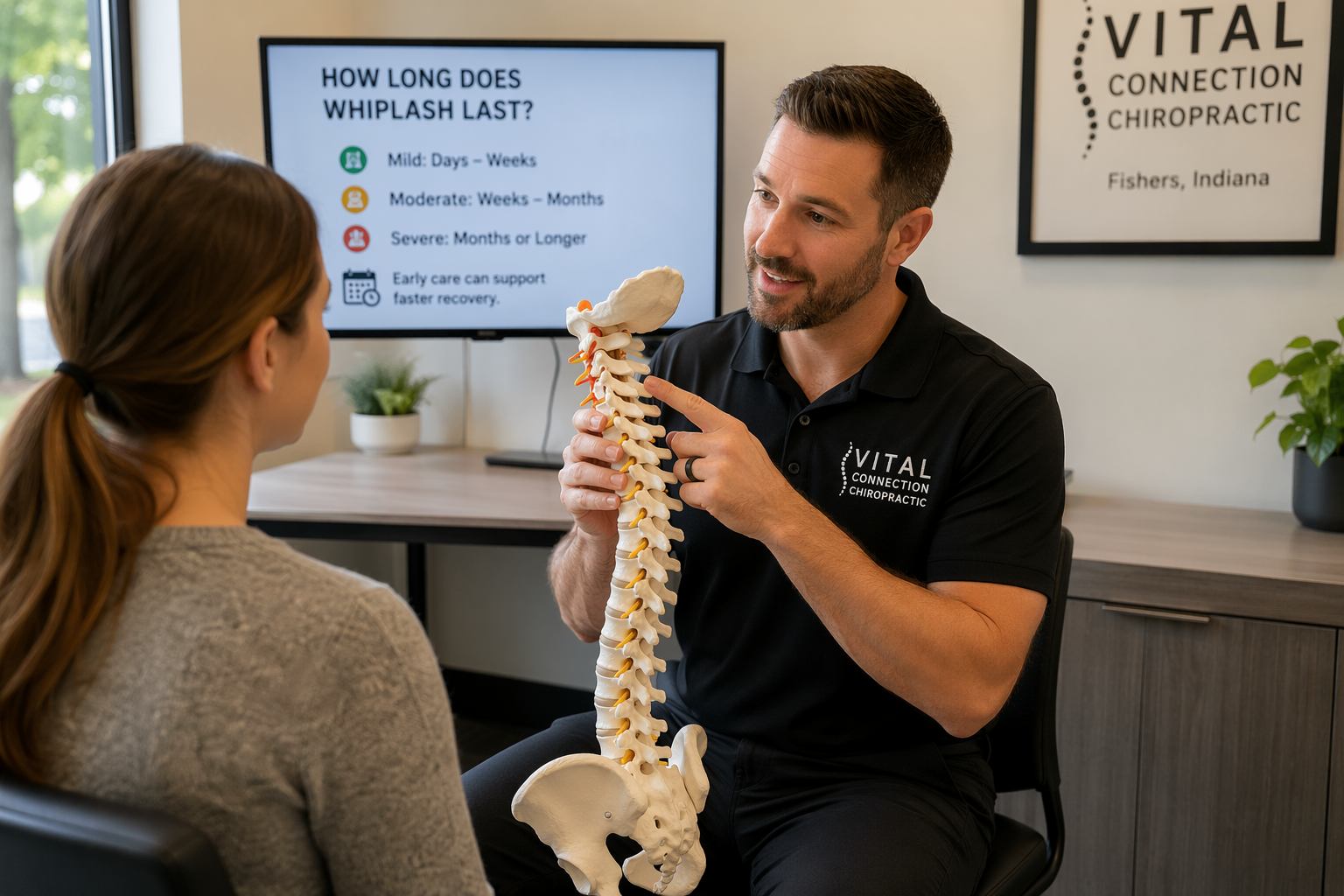 Whiplash Recovery Timeline by Severity
The chart below gives a practical overview. It is not a diagnosis, but it can help set expectations.
| Whiplash Pattern | Common Symptoms | Typical Recovery Range | What It Often Means |
|---|---|---|---|
| Mild | Neck soreness, stiffness, limited turning, mild headache | A few days to 2 to 4 weeks | Often improves well with early care, activity modification, and gentle movement |
| Moderate | Ongoing pain, muscle spasm, stronger headaches, sleep disruption, pain into upper back or shoulder | 4 to 12 weeks | Usually needs a more structured recovery plan and closer monitoring |
| More Involved | Persistent pain, dizziness, arm tingling, numbness, weakness, marked motion loss | Several months or longer | A proper evaluation is important to rule out more serious irritation or associated injury |
| Persistent or Chronic | Symptoms lasting beyond 3 months | 3 months and up | May reflect ongoing joint, muscle, disc, or nerve sensitivity that needs focused care |
A shorter timeline is more common when the injury is mild, symptoms are managed early, and the patient gradually returns to normal movement. A longer timeline is more likely when symptoms are severe from the beginning, radiate into the arm, or significantly interfere with sleep, work, or driving.
Why Whiplash Sometimes Feels Worse the Next Day
One confusing part of whiplash is that it may not fully show up right away. Right after an accident or sudden jolt, adrenaline can mask pain. Then, over the next 12 to 48 hours, inflammation and muscle guarding can build.
This is why many patients in Fishers say things like:
- “I felt okay at first, then I woke up stiff.”
- “The headache started later.”
- “Turning my head became harder the next morning.”
That delayed pattern is one reason not to ignore neck pain after a collision, even if the first few hours seem manageable.
What Are the 4 Phases of Whiplash?
When people ask about the 4 phases of whiplash, they are usually asking how recovery tends to progress over time. While every case is different, many patients move through these broad stages.
| Phase | Approximate Timing | What You May Notice | What Often Helps |
|---|---|---|---|
| Acute inflammatory phase | 0 to 72 hours | Pain, stiffness, protective muscle spasm, reduced motion | Relative rest, ice, posture support, avoiding strain |
| Early recovery phase | 3 days to 2 weeks | Pain may still be present, but daily movement starts becoming easier | Guided movement, light activity, sleep support, follow up care |
| Rehabilitation phase | 2 to 12 weeks | Improving range of motion, less guarding, steadier symptom control | Mobility work, strengthening, ergonomic changes, gradual return to activity |
| Persistent phase | Beyond 3 months | Recurrent pain, headaches, motion loss, fear of movement, work limitations | More focused assessment, individualized rehab, treatment adjustments |
These phases are useful because they remind patients that recovery is not always perfectly linear. It is common to feel better, then have a temporary flare after a long drive, a bad night of sleep, or a stressful week at work.
 How Do I Know if My Whiplash Is Serious?
 How Do I Know if My Whiplash Is Serious?
Whiplash is more serious when symptoms suggest more than a simple muscle strain. You should pay closer attention if you have:
- Pain that is severe or rapidly worsening
- Numbness, tingling, or weakness into the arm or hand
- Significant dizziness or vision changes
- Trouble speaking or swallowing
- Severe headaches that do not ease
- Pain that shoots into the shoulder blade or arm
- Marked restriction in neck movement
- Symptoms after a high speed collision or major impact
A same day evaluation is often wise if those symptoms are present. Emergency care may be needed when neurological symptoms are strong, when there was loss of consciousness, or when a fracture or concussion is a concern. If you are unsure what level of care makes sense, you can contact us for guidance on next steps.
What Is the Fastest Way to Heal Whiplash?
There is no instant fix for whiplash, but the fastest way to heal whiplash usually involves doing the right things early and avoiding the common mistakes that keep the neck irritated.
1. Get evaluated early
A proper evaluation helps determine whether you are dealing with a simpler strain pattern or something that may need more careful monitoring.
2. Control inflammation early
During the early stage, icing the area and reducing unnecessary strain may help calm symptoms.
3. Avoid complete inactivity
Too much bed rest can make the neck stiffer. Gentle movement, as tolerated, often supports a better recovery pattern.
4. Restore motion gradually
The goal is not to force the neck, but to reintroduce comfortable movement so the body does not stay locked into guarding.
5. Improve posture and daily mechanics
Phone use, laptop posture, poor sleep position, and long commutes can all slow progress. Many patients around Fishers and Hamilton County need simple workstation and driving adjustments.
6. Follow an individualized plan
Whiplash treatment may include chiropractic care, soft tissue work, mobility exercises, strengthening, and recommendations for activity modification. You can also review our whiplash treatment options to understand what supportive care may look like.
Will Whiplash Go Away by Itself?
Sometimes, yes. Mild whiplash may improve on its own with time, especially if symptoms are limited to mild soreness and stiffness. But that does not mean every case should be ignored.
Whiplash is more likely to linger when:
- Pain is strong from the beginning
- Headaches are frequent
- Motion is very restricted
- Symptoms radiate into the arm
- Work demands keep re irritating the neck
- Sleep is affected
- The injury is never properly assessed
So while whiplash can go away by itself in mild cases, it does not always do so. A proper evaluation is important when symptoms are moderate, worsening, or not improving after a few days.
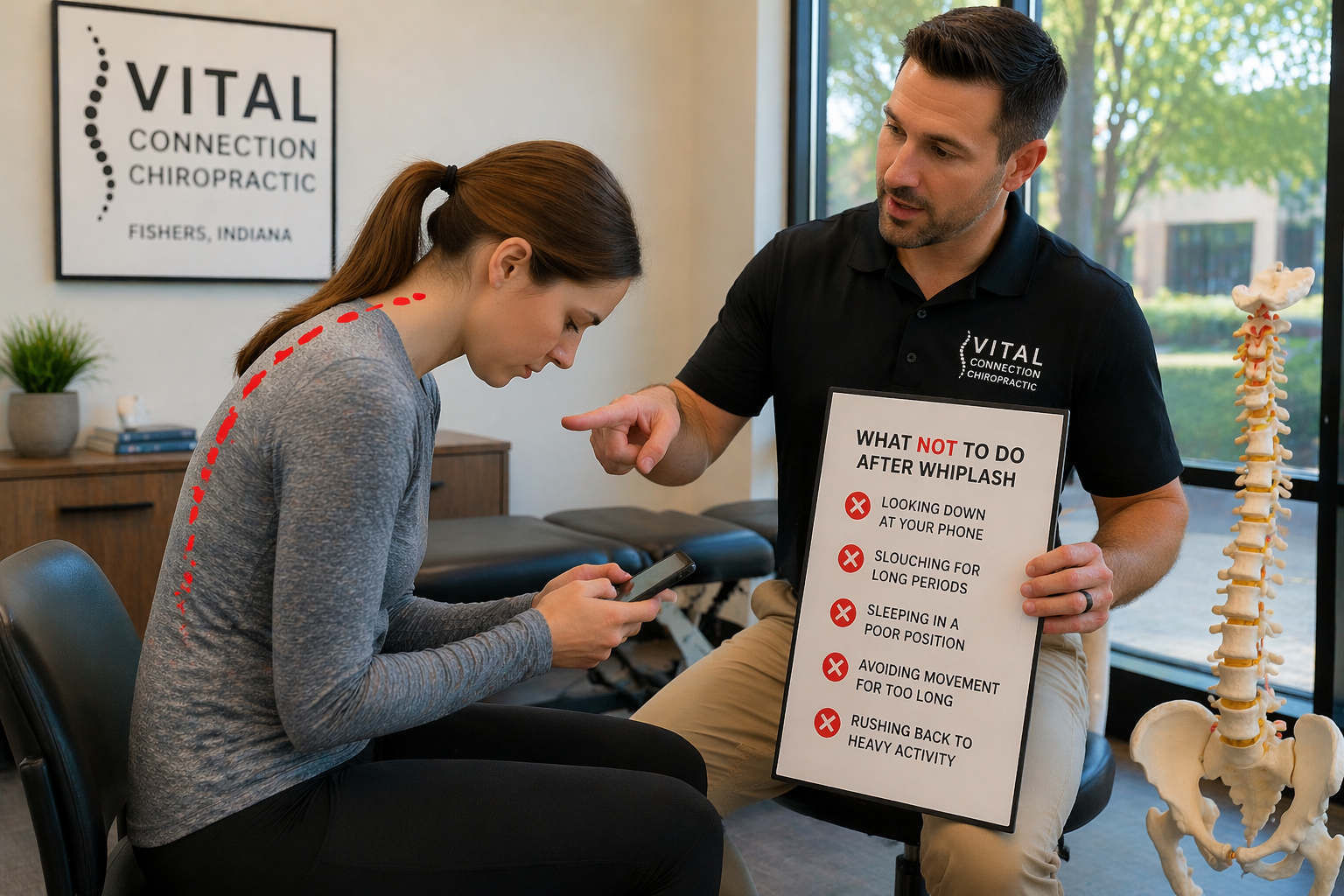
What Not to Do After Whiplash
Many people unintentionally slow their own recovery. Here are the main things not to do after whiplash.
Do not ignore worsening symptoms
If pain spreads, headaches intensify, or neurological symptoms appear, get checked.
Do not stay in bed too long
Short rest can help early on, but extended inactivity often leads to more stiffness and less confidence in movement.
Do not force aggressive stretching
The neck usually responds better to controlled, gentle movement than to hard stretching during the early phase.
Do not jump back into heavy lifting or intense workouts too fast
Even if you are motivated to “push through,” the tissues may not be ready.
Do not spend hours looking down at your phone
Tech posture can keep the neck flexed and irritated, which may prolong symptoms.
Do not assume no bruising means no injury
Whiplash is often a soft tissue problem. You may have real pain and functional loss even without visible external injury.
A Realistic Whiplash Timeline for Daily Life
 A Realistic Whiplash Timeline for Daily Life
Patients often want to know what recovery looks like in real life, not just in a chart.
First few days
This is often the stiffest stage. Turning your head while driving may be difficult. Sleep may be uncomfortable. Headaches can begin at the base of the skull.
First two weeks
Many mild cases start settling during this period. Pain may still come and go, especially after work, errands, or longer periods of sitting.
Weeks three to six
This is often where moderate cases begin to show clearer progress if treatment and home care are consistent. Range of motion usually improves, headaches become less frequent, and daily activities feel easier.
Two to three months and beyond
If symptoms are still significant at this point, the case deserves closer attention. That does not mean recovery is impossible. It does mean the plan may need to be more targeted and individualized.
For commuters, office workers, parents, and athletes in Fishers, McCordsville, Geist, and nearby communities, recovery often depends on whether daily habits are supporting healing or constantly provoking symptoms.
When Should You See a Chiropractor for Whiplash?
You should consider an evaluation when:
- Neck pain lasts more than a few days
- Headaches keep returning
- You cannot turn your head comfortably
- Work, driving, or sleep is affected
- Pain spreads into the shoulder or arm
- Symptoms keep flaring with normal activity
An early visit can help determine whether your symptoms fit a mild pattern or whether more involved care is needed. If your pain is not easing the way you expected, you can schedule appointment to get checked.
Can Chiropractic Care Help During Whiplash Recovery?
Chiropractic care may help support whiplash recovery by improving joint motion, reducing muscular tension, and guiding patients back toward normal movement patterns. It can also help identify when symptoms suggest something more serious that needs a different level of care.
A good whiplash plan is rarely just one thing. It often includes:
- Careful exam findings
- Mobility guidance
- Soft tissue support
- Strength and posture recommendations
- Home activity advice
- Ongoing reassessment as symptoms change
The goal is not simply to mask pain. The goal is to support better function, better motion, and a steadier recovery timeline.
The Bottom Line on How Long Whiplash Can Last
How long can whiplash symptoms last? For many people, the answer is days to a few weeks. For others, especially when symptoms are stronger or more complex, the whiplash recovery timeline may extend into several weeks or months. The biggest mistake is assuming every case follows the same path.
If you were recently in an accident in Fishers, IN and your neck pain, headaches, or stiffness are not improving, an individualized evaluation may help you recover more confidently and avoid unnecessary setbacks. When you are ready to take the next step, you can schedule appointment with Vital Connection Chiropractic.
FAQ
How do I know if my whiplash is serious?
Whiplash may be more serious if you have severe pain, worsening headaches, dizziness, numbness, tingling, weakness, vision changes, or pain that shoots into the arm. A proper evaluation is important when symptoms interfere with driving, sleeping, or normal daily activity.
What are the 4 phases of whiplash?
The 4 phases of whiplash are commonly described as the acute inflammatory phase, early recovery phase, rehabilitation phase, and persistent phase. These stages help explain why some patients improve quickly while others need more time and support.
What is the fastest way to heal whiplash?
The fastest way to heal whiplash usually involves early evaluation, calming inflammation, avoiding complete inactivity, restoring motion gradually, and following a structured care plan. Recovery often goes better when patients do not wait too long to address symptoms.
Will whiplash go away by itself?
Mild whiplash may go away by itself, but not every case does. Symptoms that are moderate, worsening, or lasting longer than expected should be evaluated so the injury does not continue to affect your work, sleep, or mobility.
What not to do after whiplash?
After whiplash, do not ignore worsening symptoms, stay in bed too long, force aggressive stretching, return to heavy activity too soon, or spend hours in poor phone and desk posture. These habits can make recovery slower and more frustrating.