Tech Neck Treatment in Fishers, IN: A Practical Guide for Better Relief
Tech neck treatment focuses on reducing neck strain, improving posture, restoring healthy movement, and helping the muscles and joints of the neck handle daily screen use better. For many people in Fishers, IN, tech neck develops from looking down at phones, laptops, tablets, or work screens for long periods. The right treatment for tech neck often includes posture changes, gentle mobility work, ergonomic adjustments, soft tissue support, and an individualized chiropractic evaluation when pain, stiffness, headaches, or posture changes keep coming back.
What Is Tech Neck?
Tech neck is a common way to describe neck pain, stiffness, and posture strain caused by frequent device use. It often happens when the head moves forward, the shoulders round, and the upper back works harder to support the weight of the head.
This does not mean every person with neck pain has the same problem. Some people feel mild tightness after work. Others notice headaches, shoulder tension, upper back pain, or a visible rounding near the base of the neck. The cause can involve muscle fatigue, joint restriction, poor desk setup, stress, sleep position, or a combination of daily habits.
In a busy community like Fishers, many people spend hours on computers for work, school, or business. Add phone scrolling, driving, and evening screen time, and the neck may not get enough movement variety during the day. Over time, this can make the muscles around the neck, shoulders, and upper back feel overworked.
The good news is that tech neck can often improve with the right plan. The best approach usually starts with understanding what is causing the strain, then building a routine that supports better alignment, movement, and daily function.
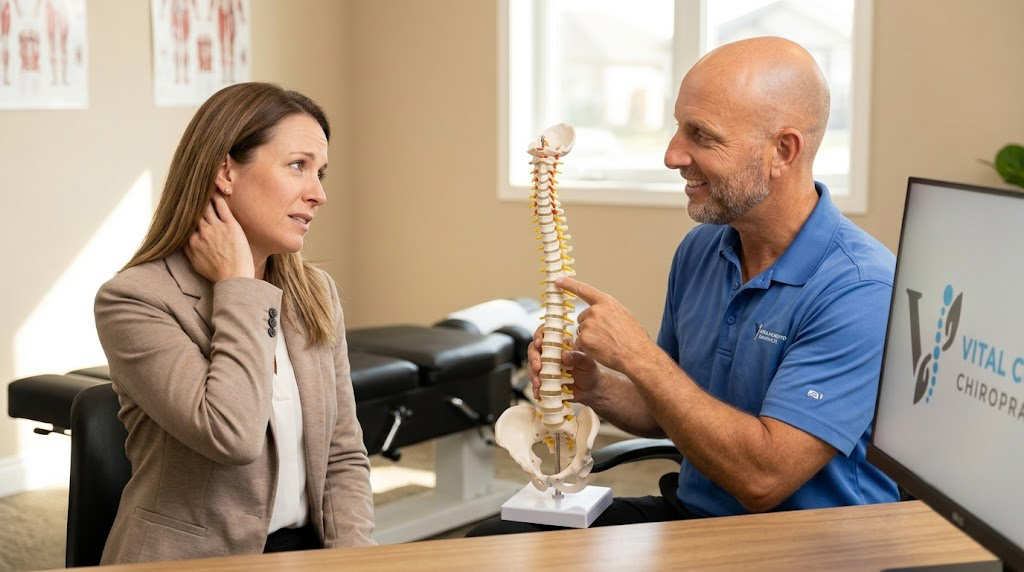 Common Signs You May Need Tech Neck Treatment
Tech neck can feel different from person to person. Some symptoms show up during screen use, while others appear later in the day or the next morning.
Common signs may include:
- Neck stiffness after using a phone or computer
- Soreness at the base of the skull
- Aching across the shoulders
- Upper back tightness
- Headaches that start around the neck or back of the head
- Reduced ability to turn the head comfortably
- A heavy or tired feeling in the neck
- Tingling or discomfort that travels into the arm
- Rounded shoulders or forward head posture
- Tension that worsens with stress or long workdays
If headaches are part of your pattern, it may help to learn more about Headaches and how neck tension can sometimes play a role. Headaches can have many causes, so a proper evaluation matters, especially when symptoms are new, severe, or changing.
Not every case of tech neck is serious. Many people feel better with movement breaks, improved workspace setup, and consistent stretching. However, recurring pain is a signal that the body may need more support.
Tech Neck Symptoms and What They May Mean
| Concern | What It May Mean | Best Next Step |
|---|---|---|
| Neck stiffness after screen use | Muscle fatigue or joint restriction from prolonged posture | Take screen breaks and consider an evaluation if it keeps returning |
| Headaches near the base of the skull | Neck tension may be contributing to headache patterns | Track triggers and seek care if headaches are frequent |
| Shoulder and upper back tightness | Rounded posture may be overloading supporting muscles | Adjust workstation and begin gentle mobility work |
| Tingling, numbness, or arm symptoms | Possible nerve irritation or another condition needing evaluation | Contact a healthcare professional promptly |
| Visible neck hump or rounded upper back | Postural changes, tissue buildup, or spinal changes may be involved | Get assessed before assuming it can be corrected with one method |
Why Tech Neck Happens
Tech neck often develops because the neck is not designed to stay in one position for hours at a time. Looking down at a device or reaching forward toward a keyboard can increase the workload on the muscles that support the head.
The issue is not only the phone or computer. It is the combination of position, time, repetition, stress, and lack of movement.
Common contributors include:
- Looking down at a phone for long periods
- Working from a laptop without a raised screen
- Sitting with rounded shoulders
- Holding the head forward while driving
- Using a couch or bed as a workstation
- Weak upper back and deep neck muscles
- Tight chest and shoulder muscles
- Stress-related jaw or shoulder tension
- Poor pillow support during sleep
- Not taking movement breaks throughout the day
The body adapts to what it does most often. If your daily routine keeps your head forward and shoulders rounded, those positions can begin to feel normal. Over time, standing tall may feel uncomfortable because the muscles are no longer used to supporting that posture.
This is why tech neck relief should not focus only on one stretch or one quick adjustment. A helpful plan should look at posture habits, mobility, muscle balance, desk setup, and the way your neck moves.
For general neck discomfort, you may also want to review the Neck Pain resource from Vital Connection Chiropractic.
 Tech Neck Treatment Options in Fishers, IN
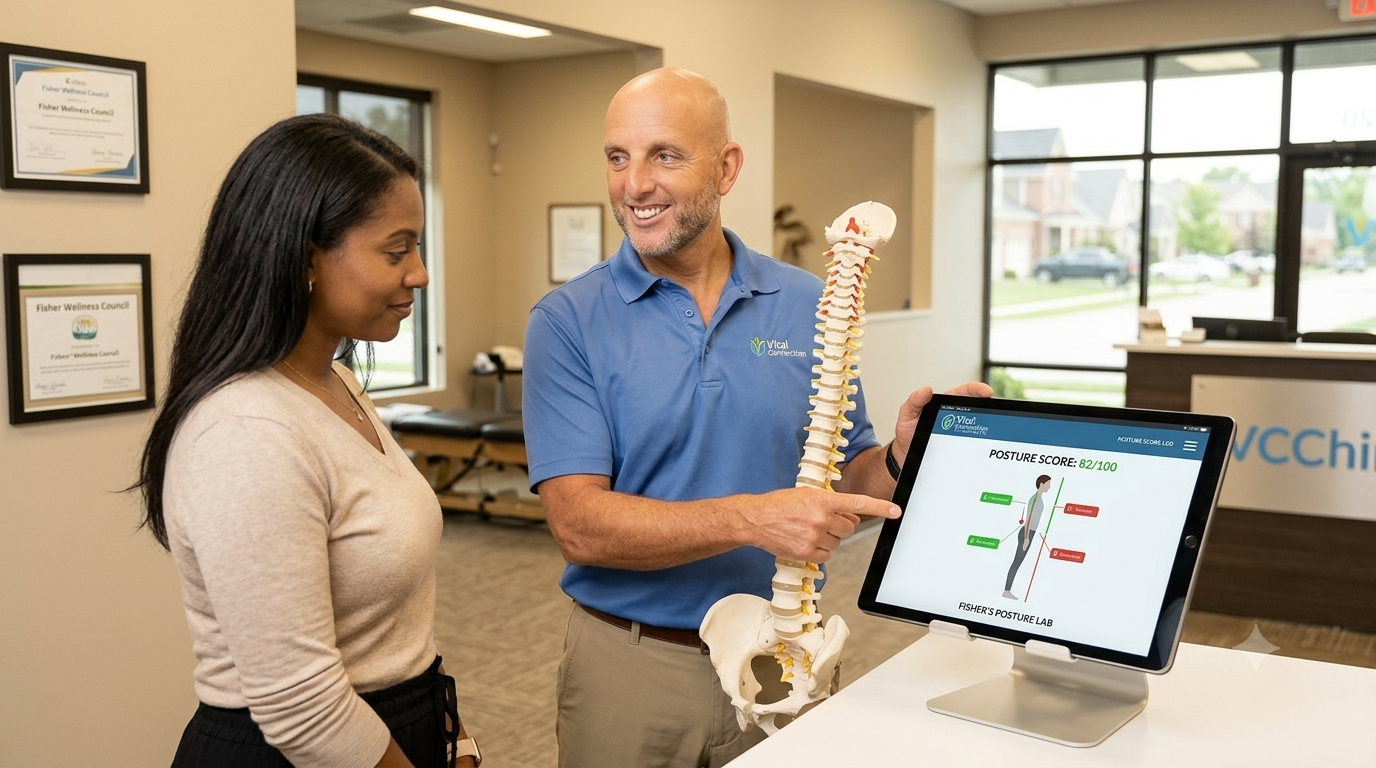 Tech Neck Treatment Options in Fishers, IN
Tech neck treatment should be based on the person, not just the posture. Two people can both have forward head posture, but one may have mostly muscle tightness while another may have joint restriction, headaches, past injury, or nerve irritation.
A thorough evaluation helps identify the likely source of discomfort. This may include discussion of symptoms, posture, range of motion, daily work habits, sleep position, and any red flags that may need medical referral.
Chiropractic Care
Chiropractic care may help support tech neck relief by improving movement in the neck and upper back, reducing joint restriction, and helping the body move with less strain. At Vital Connection Chiropractic, care is individualized because neck pain can come from different causes.
A chiropractor may use gentle adjustments, mobility work, soft tissue support, posture education, and home care recommendations. The goal is not simply to “straighten” the neck in one visit. The goal is to help the neck function better and support healthier movement over time.
To learn more about this service, visit Chiropractic Care.
Posture and Ergonomic Coaching
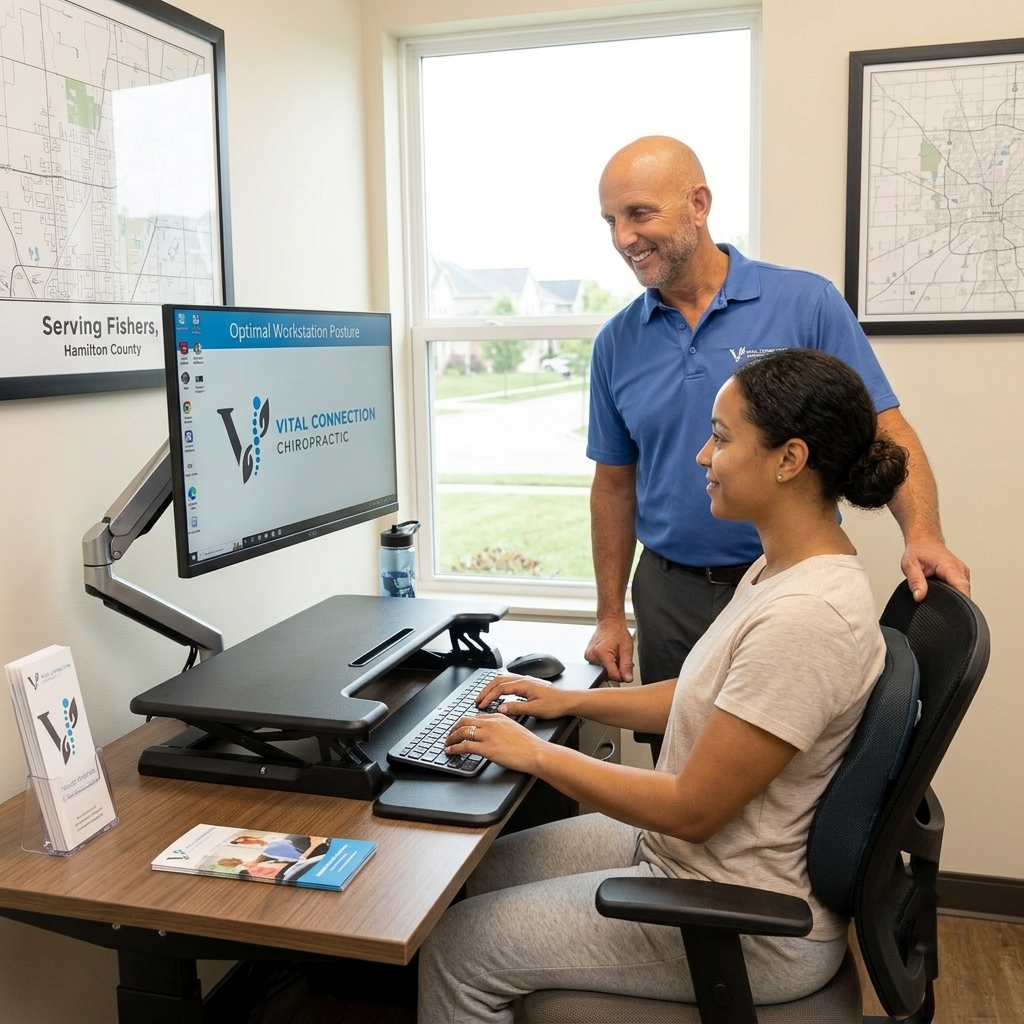
Ergonomics can make a major difference for people who work at a desk, use multiple screens, or spend long hours on a laptop. Helpful changes may include raising the monitor, keeping the keyboard closer, supporting the low back, and keeping the phone closer to eye level.
For a trusted patient education resource, MedlinePlus ergonomics explains how tools, workspaces, and body position can help reduce strain during daily activities.
Mobility and Strength Exercises
Gentle exercises may help restore better motion and endurance. This often includes chin tucks, upper back mobility, chest opening stretches, shoulder blade strengthening, and controlled neck range of motion.
Exercises should not cause sharp pain, dizziness, numbness, or worsening symptoms. When symptoms are more than mild, it is best to have a professional guide your plan.
Soft Tissue Support
Muscles around the neck, shoulders, chest, and upper back can become tight from screen posture. Soft tissue work may help reduce tension and improve comfort, especially when combined with posture changes and movement.
Massage alone may feel good, but lasting tech neck treatment usually requires changing the daily habits that created the tension in the first place.
Lifestyle and Recovery Habits
Sleep, hydration, stress, movement, and regular breaks all matter. A person who receives care but returns to 10 hours of uninterrupted screen posture each day may have slower progress.
For general neck pain self-care, the Mayo Clinic neck pain guide provides helpful patient education on conservative care options, including heat, cold, and gentle movement when appropriate.
Simple At-Home Steps for Tech Neck Relief
At-home care can be helpful when symptoms are mild and there are no warning signs. These steps are not a substitute for an evaluation, but they may reduce daily strain.
1. Raise Your Screen
Your screen should be close to eye level when possible. If you use a laptop, consider a laptop stand with an external keyboard and mouse. This helps reduce the need to look down for long periods.
2. Bring the Phone Up
Instead of bending your head down to the phone, bring the phone closer to eye level. Keep shoulders relaxed. Switch hands often and avoid holding the same position for too long.
3. Take Micro Breaks
A short break every 20 to 30 minutes can help. Stand up, roll your shoulders, gently turn your head, and breathe deeply. Small breaks done consistently are often more helpful than one long stretch at the end of the day.
4. Try Gentle Chin Tucks
A chin tuck can help train the neck away from forward head posture. Keep your eyes level, gently glide your head backward, and avoid forcing the movement. Hold for a few seconds, then relax.
Stop if the movement causes dizziness, sharp pain, or symptoms into the arm.
5. Open the Chest
Rounded shoulders often come with tight chest muscles. A doorway stretch or gentle chest opener may help, especially for people who work at a desk.
6. Strengthen the Upper Back
Posture is not just about sitting straight. Your upper back and shoulder blade muscles need endurance. Gentle rows, wall angels, or band exercises may help when done correctly.
7. Improve Your Sleep Setup
A pillow should support your head and neck without pushing your head forward. Stomach sleeping can place the neck in a rotated position for hours, which may worsen stiffness for some people.
At-Home Tech Neck Relief Guide
| Home Step | Best For | What to Know |
| Raise your monitor | Desk workers and laptop users | Keep the screen near eye level to reduce looking down |
| Micro breaks | People with stiffness after long work sessions | Move every 20 to 30 minutes when possible |
| Chin tucks | Forward head posture awareness | Keep it gentle and stop if symptoms worsen |
| Chest opening stretches | Rounded shoulders and upper body tightness | Avoid aggressive stretching or bouncing |
| Upper back strengthening | Long-term posture support | Build gradually and focus on control |
| Pillow adjustment | Morning neck stiffness | The neck should feel supported, not pushed forward |
 When to See a Chiropractor for Tech Neck
 When to See a Chiropractor for Tech Neck
You should consider scheduling an evaluation if tech neck symptoms keep returning, interfere with work, affect sleep, or limit normal movement. Pain that becomes part of your routine should not be ignored.
A chiropractor may be especially helpful when symptoms involve:
- Neck pain that lasts more than a few days
- Stiffness that returns after every workday
- Headaches that seem connected to neck tension
- Shoulder or upper back tightness that does not improve
- Limited neck rotation while driving
- Posture changes that are becoming more noticeable
- Discomfort after an old injury
- Pain that affects exercise, work, or family time
Seek medical care promptly if you have severe pain, weakness, numbness, tingling down the arm, loss of balance, fever, unexplained weight loss, pain after trauma, or symptoms that are rapidly worsening. Chiropractic care does not replace emergency care or medical evaluation when warning signs are present.
For people in Fishers, Noblesville, Carmel, Geist, McCordsville, Castleton, and Hamilton County, tech neck can be especially common among office workers, students, drivers, healthcare workers, and anyone who spends long hours on devices.
If your symptoms fit a broader pattern of musculoskeletal pain, the Conditions page may help you understand related concerns.
How Vital Connection Chiropractic Can Help
Vital Connection Chiropractic helps patients in Fishers, IN by looking at the full picture, not just the spot that hurts. Tech neck can involve the neck, shoulders, upper back, posture habits, headaches, jaw tension, and daily routines. A focused evaluation helps determine what may be contributing to your symptoms.
Care may include:
- Chiropractic adjustments when appropriate
- Neck and upper back mobility support
- Posture and workstation guidance
- Gentle soft tissue strategies
- Home exercise recommendations
- Lifestyle tips to reduce daily strain
- Progress checks based on your response to care
The goal is to help you move better, feel more supported, and understand how to reduce repeated strain from screens. Results vary depending on the cause, severity, consistency with home care, and overall health.
If you are looking for tech neck treatment in Fishers, IN, you can start by booking a visit through Schedule Appointment.
Practical Daily Habits to Prevent Tech Neck From Coming Back
Tech neck treatment works best when daily habits support your progress. Even helpful care can be limited if your neck returns to the same strained position for hours every day.
Start with the habits that are easiest to repeat:
- Keep your phone at chest or eye level more often
- Avoid working from bed or the couch for long periods
- Use a chair that supports your back
- Keep your elbows close to your body while typing
- Relax your jaw and shoulders during focused work
- Take walking breaks during long work blocks
- Stretch lightly after driving
- Strengthen your upper back two to three times per week
- Keep your monitor straight ahead, not off to one side
- Build a bedtime routine that reduces screen time before sleep
The best habit is the one you can repeat. A perfect ergonomic setup used once will not help as much as a simple setup you use every day.
A Note About Tech Neck Hump
Many people search for treatment because they notice a “hump” near the base of the neck. This area can look more rounded for different reasons. It may involve posture, muscle tension, fatty tissue, spinal curvature, or other health factors.
A neck hump cannot always be massaged away. Massage may help soft tissue tightness, but if the shape is related to posture, spinal changes, or another medical issue, it needs a more complete plan. In some cases, medical evaluation may be needed to rule out underlying causes.
The most helpful first step is an assessment. Once the cause is clearer, the care plan can be more specific.
FAQ
What is the fastest way to get rid of a tech neck?
The fastest safe approach is to reduce the strain immediately and start consistent posture-friendly habits. Raise your screen, bring your phone closer to eye level, take short movement breaks, and use gentle neck and upper back mobility exercises. For many people, quick relief comes from changing the position that keeps causing the irritation. If pain is moderate, recurring, or linked with headaches or arm symptoms, an evaluation is important so you are not guessing at the cause.
Can a tech neck actually be fixed?
Tech neck can often improve, but the right plan depends on what is causing it. If the issue is mostly posture strain, muscle tightness, and poor screen habits, many people can make meaningful progress with chiropractic care, ergonomic changes, strengthening, and better daily routines. If there are structural changes, nerve symptoms, or other medical factors, improvement may take longer and may require additional care. The goal is better function, less strain, and healthier movement.
How long does it take for a tech neck to go away?
The timeline can range from a few days to several weeks or longer, depending on severity and consistency. Mild stiffness from a long workday may improve quickly with rest, movement, and better ergonomics. Ongoing tech neck that has built up over months may require a more structured plan. Your age, posture habits, job demands, exercise routine, sleep setup, and any previous neck injuries can all affect recovery time.
Is it possible to get rid of tech neck hump?
It may be possible to improve the appearance of a tech neck hump if posture and soft tissue strain are major contributors. However, not every neck hump has the same cause. Some are related to posture and muscle imbalance, while others may involve spinal curvature, fatty tissue, or medical conditions. A proper evaluation is the safest place to start. Massage, exercises, and chiropractic care may support improvement when they match the actual cause.
Can a neck hump be massaged out?
A neck hump usually cannot be fully massaged out if the cause is more than muscle tightness. Massage may reduce tension and improve comfort in the muscles around the neck and shoulders, but it may not change posture habits, joint movement, or other structural factors by itself. A better plan often includes posture correction, strengthening, mobility work, ergonomic changes, and professional evaluation. If the hump is sudden, painful, or changing, seek medical guidance.
At what age does hump back typically develop?
A hunched upper back or rounded posture can develop at many ages, but it becomes more common with aging and long-term posture habits. Teens and adults can develop rounded shoulders from heavy screen use, schoolwork, gaming, or desk jobs. Older adults may also develop more noticeable upper back rounding due to age-related spinal changes or bone health issues. Since causes vary, it is important not to assume the reason based on age alone.
Final Thoughts: Tech Neck Relief Starts With Better Daily Support
Tech neck is not just a phone problem. It is often a daily pattern problem. The way you sit, work, scroll, sleep, drive, and manage stress can all influence how your neck feels.
The encouraging part is that small changes can make a real difference over time. Better screen height, regular movement breaks, gentle strengthening, and individualized care can support healthier posture and less strain.
If tech neck is affecting your work, sleep, headaches, or daily comfort, Vital Connection Chiropractic in Fishers, IN can help you understand what may be contributing to your symptoms and what steps may support your recovery.