How Do You Know If You Slipped a Disc?
How do you know if you slipped a disc? You may have a slipped disc if you develop back or neck pain along with pain, tingling, numbness, or weakness that travels into an arm or leg, especially after lifting, bending, twisting, coughing, or sitting too long. The term slipped disc is commonly used for a disc bulge or herniation that irritates a nearby nerve, but a proper evaluation is important because muscle strain, joint irritation, sciatica, and other spine problems can feel similar.
If you are in Fishers, IN and wondering how do you know if you have a slipped disc, the pattern of your symptoms often gives the first clue. Many people notice the pain is not only in the back. It may move into the glute, thigh, calf, shoulder, or arm. Some feel a sharp pull when standing up from a chair. Others notice numbness in the foot or hand, or that coughing and sneezing make symptoms worse. Those details matter because they can point more toward nerve irritation than a simple muscle pull.
At Vital Connection Chiropractic, we look at how the pain started, where it travels, what positions trigger it, and whether there are any neurological changes. Conservative chiropractic care may help support recovery when the problem involves joint restriction, movement dysfunction, muscle guarding, and irritated nerves, but the right plan always depends on the cause and severity.
Common signs that may point to a slipped disc
A slipped disc does not always feel the same from person to person. Some people have intense pain right away. Others have a gradual build over several days. In many cases, symptoms begin after a movement that increases pressure through the spine, such as lifting something awkwardly, repeated bending, sports activity, yard work, or even a long drive.
The most common signs include:
- Low back or neck pain that started suddenly or worsened after activity
- Pain that travels into the buttock, leg, foot, shoulder, or arm
- Tingling or pins and needles
- Numbness in part of the leg, foot, arm, or hand
- Pain that is worse when sitting, bending, coughing, or sneezing
- A feeling that standing or walking in a certain position gives temporary relief
- Weakness, heaviness, or poor control in the affected limb
One of the biggest clues is radiating pain. A simple muscle strain usually stays more local. A disc related problem often follows the path of a nerve. That is one reason many people searching for signs of a slipped disc notice symptoms in the leg or arm before they realize the spine may be involved.
Table: Symptom patterns that may raise suspicion for a slipped disc
| Symptom pattern | What it may suggest |
|---|---|
| Back pain with pain shooting into one leg | Possible lumbar disc irritation affecting a nerve root |
| Neck pain with numbness or tingling into one arm | Possible cervical disc irritation |
| Pain worse with sitting or bending forward | Increased pressure on a sensitive disc or nerve |
| Pain with coughing or sneezing | Disc and nerve sensitivity may be present |
| Numbness in the foot or hand | Nerve irritation may be involved |
| Leg or arm weakness | More significant nerve involvement that needs prompt evaluation |
 How does a slipped disc feel like?
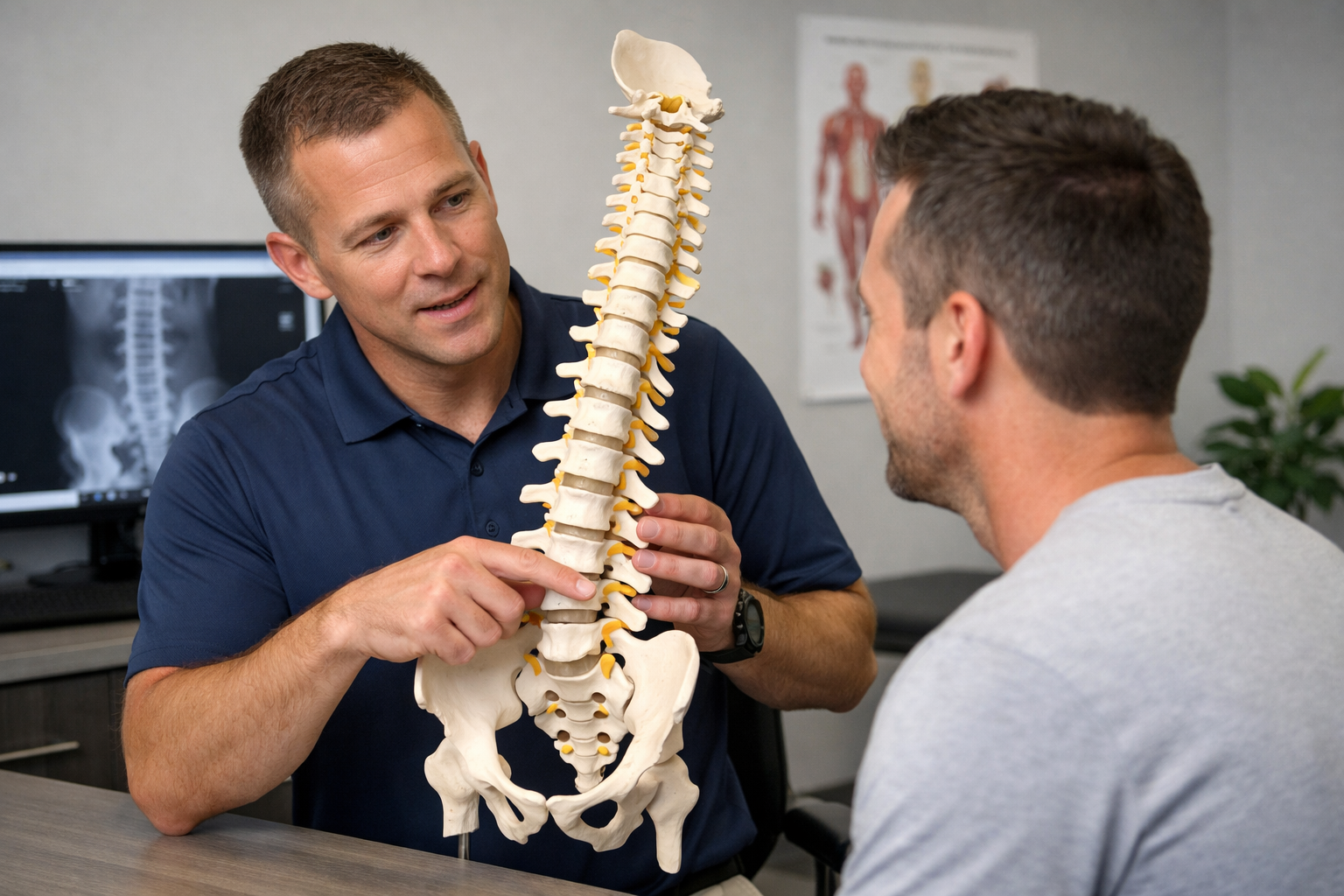
People often describe a slipped disc as more than ordinary soreness. The pain may feel sharp, electric, burning, stabbing, or deeply aching. Some say the back catches when they move. Others describe a constant ache in the low back with sudden lightning-like pain down the leg.
A lumbar disc problem may cause pain across the low back with symptoms into the glute, thigh, calf, or foot. A cervical disc problem may cause neck pain with shoulder blade pain, tingling into the arm, or discomfort when looking down at a phone or computer. In some cases the main complaint is not pain at all. It is numbness, weakness, or repeated flare ups that never seem fully resolved.
Not everyone with a disc issue has severe pain. That is why the full pattern matters more than any one symptom. If the pain travels, changes with spinal position, and comes with numbness or tingling, a disc becomes more suspicious.
How do you know if you have a slipped disc and not a muscle strain?
Several conditions can mimic a slipped disc. Pain in the back and leg does not automatically mean you injured a disc, and self diagnosis can be misleading.
Problems that can feel similar include:
- Muscle strain
- Facet joint irritation
- Sacroiliac joint dysfunction
- Piriformis syndrome
- Hip problems
- Spinal stenosis
- Degenerative disc changes without an acute herniation
- Peripheral nerve entrapment
A muscle strain may hurt with movement but often does not cause true numbness. Piriformis syndrome may create leg pain that resembles sciatica, but the source is different. Facet joint irritation may cause sharp back pain with twisting or standing backward. Hip irritation can also refer pain into the thigh and make the low back feel guilty even when it is not the main problem.
If you have already been reading about slipped disc pain medication or home relief strategies, remember that symptom relief alone does not confirm the diagnosis. The goal is to understand why the symptoms are happening and which positions or activities keep the area irritated.
How do you confirm if you have a slipped disc?
A slipped disc is usually suspected from the history and physical examination first. A provider will ask when the pain began, whether there was a lift, twist, fall, workout, or long drive before it started, and whether the pain stays local or travels into the limb.
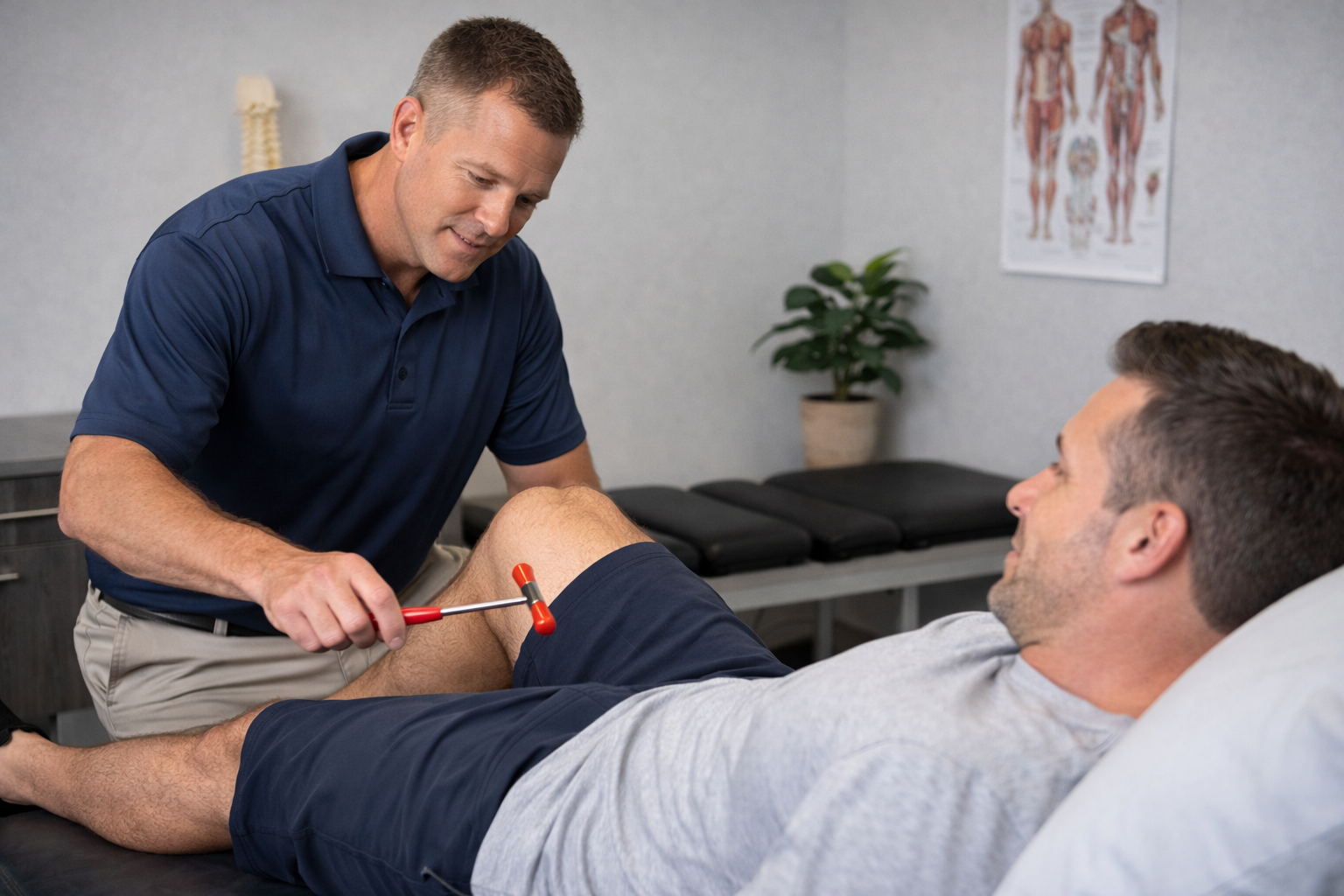
The examination may include posture assessment, range of motion testing, orthopedic testing, reflexes, muscle strength, sensation, and movement patterns. In many cases, this gives a strong clinical impression about whether a disc may be involved and which nerve may be irritated.
Imaging is not always the first step for every episode of back pain. An MRI may be considered when symptoms are severe, persistent, progressive, or when more significant neurological findings are present. Imaging can be useful, but it still needs to match the symptoms because many people have disc bulges on imaging without pain.
 When does a slipped disc need urgent attention?
 When does a slipped disc need urgent attention?
Most disc injuries are not emergencies, but some symptoms deserve urgent medical evaluation. These include:
- Loss of bowel or bladder control
- Numbness in the groin or saddle area
- Rapidly worsening leg or arm weakness
- Severe trauma followed by spine pain
- Fever, unexplained weight loss, or other concerning systemic symptoms
- Pain so severe that you cannot stand, walk, or sleep at all
These red flags do not mean every serious cause is likely, but they should not be ignored. If those symptoms are present, prompt medical assessment is important.
How do you fix a slipped disc?
Treatment depends on the severity of symptoms, the location of the disc problem, the amount of nerve irritation, and how your body responds over time. Many people improve with conservative care. The early focus is usually reducing irritation, restoring more comfortable movement, and helping the spine tolerate daily activity again.
A conservative plan may include:
- Activity modification instead of complete bed rest
- Posture and movement coaching
- Gentle mobility work when appropriate
- Core stability exercises
- Walking within tolerance
- Soft tissue work or supportive therapies
- Position modified chiropractic treatment when clinically appropriate
- Guidance on sitting, sleeping, lifting, and returning to activity
Some patients also ask about options like pain reliever for slipped disc, heat, ice, braces, or stretching. These may help symptoms temporarily, but they work best when paired with a plan that addresses movement quality and load tolerance.
The goal is not only to calm the flare up. It is also to reduce the chance of repeated aggravation. That often means improving how you sit at work, how you lift, how you exercise, and how you recover after long periods of driving or desk time.
Table: Self care versus signs you should seek evaluation
| At home support may be reasonable when | Schedule an evaluation sooner when |
|---|---|
| Pain is mild to moderate and improving | Pain is severe or worsening |
| Symptoms stay mostly in the back | Pain travels into the arm or leg |
| You can still walk carefully | Walking is limited by pain, weakness, or numbness |
| There is no numbness or weakness | Numbness, tingling, or weakness is present |
| Symptoms improve with simple position changes | Symptoms keep returning or do not improve after several days |
| Daily activities are uncomfortable but manageable | Work, sleep, driving, or normal activity is significantly affected |
Can you walk if you slip a disc in your back?
 Can you walk if you slip a disc in your back?
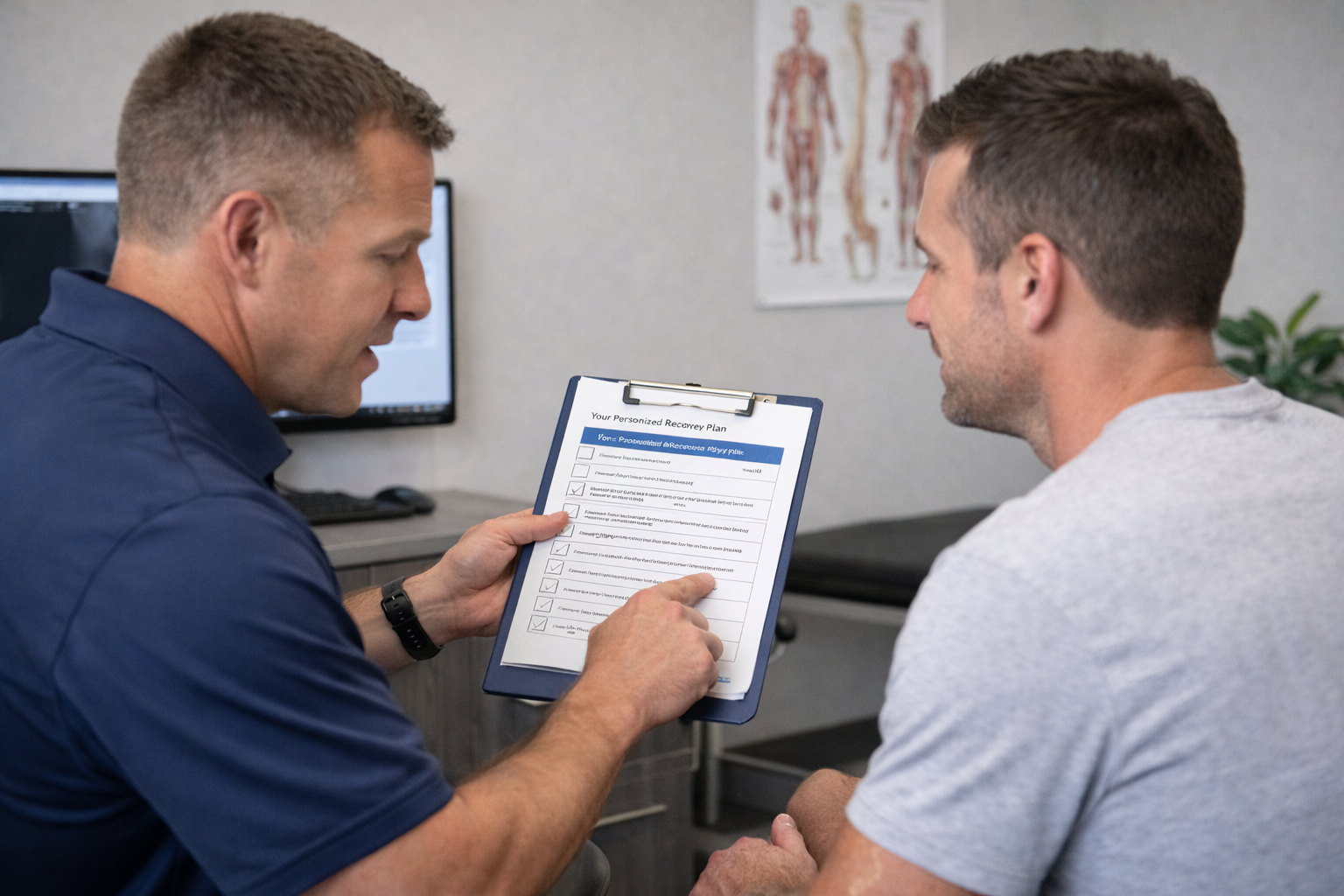
In many cases, yes. Walking is often one of the better tolerated activities for a slipped disc, especially compared with prolonged sitting. Gentle walking can help keep the body moving, reduce stiffness, and support circulation. The key is dosage. Short, frequent walks are often better than one long walk that triggers more pain.
Still, walking is not right for every person in every phase. If walking sharply increases leg pain, causes the foot to feel weaker, or leads to more numbness afterward, your body may need a different starting point. That is where an individualized exam matters.
A common mistake is doing too much too soon because walking feels good in the moment. Another common mistake is complete rest for too long. Many people do best in the middle. They keep moving, but they respect symptom limits and gradually build tolerance.
Why posture and movement can change the symptoms
A disc issue is often sensitive to pressure and position. That is why the same person may feel worse in one posture and better in another. Sitting slouched for a long time can increase symptoms for some people. Standing, walking, or using lumbar support may ease them. For others, extension based movements may help, while for some that position may aggravate the pain.
This is one reason generic advice online can be frustrating. Two people with the same MRI finding may respond very differently to the same exercise. The best exercise is the one that matches your current presentation and does not keep increasing nerve irritation.
If you are searching online for a slipped disc Chiropractor Near Me in Fishers, the most useful next step is an exam that helps you learn which movements calm the problem and which ones keep provoking it. Exercise selection matters, and it is worth matching the plan to the way your symptoms actually behave.
What happens during a chiropractic evaluation for a suspected slipped disc?
At Vital Connection Chiropractic, the visit begins with listening carefully to your symptoms and goals. We want to know not only where it hurts, but how it behaves through the day. Does it worsen in the morning, while driving, after workouts, or after sitting at a desk? Does it travel below the knee? Do you feel numbness, weakness, or a change in your stride?
From there, the exam helps determine:
- Whether the source appears more disc related, joint related, muscular, or mixed
- Whether nerve irritation is present
- Which positions seem to centralize or worsen symptoms
- Whether conservative care is appropriate
- Whether imaging or referral may be needed
Not every patient with disc symptoms is adjusted the same way. Care should be individualized. In some cases, treatment is modified for comfort and tolerance. In others, the first step may be education, home strategies, and gradual movement before more hands-on care is introduced.
Recovery expectations and what to watch for
Many slipped disc episodes improve over time, but timelines vary. Some people feel noticeably better within a few weeks. Others need a longer course, especially if symptoms have been present for months or if nerve irritation is more pronounced.
Recovery is often not perfectly linear. You may have a better day, then a flare after sitting too long or lifting poorly. That does not always mean you are back at the beginning. It often means the irritated area still needs better load management and a clearer progression.
Good signs during recovery may include:
- Less pain traveling into the leg or arm
- Symptoms becoming more centralized toward the spine
- Improved walking tolerance
- Easier sleep and sitting tolerance
- Reduced numbness or tingling over time
- Better confidence with daily movement
Concerning signs include worsening weakness, expanding numbness, or symptoms that continue to intensify instead of gradually settling. Those situations deserve re-evaluation.
When to schedule an evaluation in Fishers, IN
If your symptoms keep coming back, travel into an arm or leg, or make work, driving, exercise, or sleep difficult, it is a good time to have the problem assessed. Even when the pain is not severe, repeated flare ups can be a sign that the area is not moving or loading well.
Many patients in Fishers, Noblesville, Carmel, and nearby Hamilton County areas wait because they hope the symptoms will simply fade. Sometimes they do improve, but sometimes the same pattern keeps returning because the underlying triggers were never addressed. A focused exam can help clarify what is most likely going on and what your next step should be.
If your symptoms sound familiar and you want a clearer answer, you can schedule appointment with Vital Connection Chiropractic in Fishers, IN. A personalized evaluation can help identify whether a slipped disc is likely, what may be aggravating it, and which next steps make the most sense for your body.
FAQ
How do you confirm if you have a slipped disc?
A slipped disc is usually suspected through your history and physical examination first. Your provider looks at where the pain travels, whether numbness or weakness is present, and what movements trigger symptoms. Imaging such as MRI may be considered when symptoms are severe, persistent, or progressing, or when there are important neurological findings.
How do you fix a slipped disc?
Many slipped disc cases improve with conservative care. Treatment may include activity modification, guided exercises, posture changes, walking, and position modified chiropractic care when appropriate. The best approach depends on the cause, the severity of nerve irritation, and how your symptoms respond over time.
Can you walk if you slip a disc in your back?
Often, yes. Gentle walking is commonly better tolerated than prolonged sitting and may help reduce stiffness. It should stay within your tolerance, though. If walking sharply worsens pain, weakness, or numbness, you should be evaluated.
How does a slipped disc feel like?
It may feel like sharp back or neck pain, burning pain down an arm or leg, tingling, numbness, or weakness. Many people notice that bending, sitting, coughing, or sneezing makes symptoms worse. Others mainly feel radiating pain rather than local soreness.
What can be mistaken for a slipped disc?
Muscle strain, facet joint irritation, sacroiliac joint dysfunction, piriformis syndrome, hip problems, spinal stenosis, and peripheral nerve irritation can all mimic a slipped disc. That is why a proper exam is important before assuming the disc is the source.
If you are dealing with pain that travels, keeps coming back, or limits normal activity, do not guess for too long. A proper evaluation can help you understand whether a slipped disc is likely and what steps may help you move forward more safely and confidently in Fishers, IN.