Good Exercises for Slipped Disc in Fishers, IN
Good exercises for slipped disc usually include gentle walking, light core activation, and controlled low strain movements that do not increase leg pain, numbness, or weakness. For many people, the goal is not to force the back to loosen up quickly. The goal is to keep moving in a safe way, reduce irritation, and support healing while avoiding movements that make symptoms worse. In many cases, a slipped disc is the everyday term people use for a herniated disc.
If you are in Fishers, IN and dealing with back pain that travels into the buttock or leg, exercise can help, but the right exercise matters. Some movements may calm symptoms down. Others may aggravate the irritated disc or nerve. That is why a proper evaluation is important, especially if your symptoms are new, severe, or changing. Most herniated lumbar discs improve over time with conservative care, and surgery is not needed for most people.
A good starting point is learning the difference between soreness and warning signs. Mild muscular effort during exercise can be acceptable. Sharp back pain, worsening sciatica, increasing numbness, new weakness, or pain that keeps spreading farther down the leg are signs to stop and get checked. Loss of bladder or bowel control, saddle numbness, or rapidly worsening weakness need urgent medical attention.
Why the right movement matters with a slipped disc
When people hear the words slipped disc, many assume complete rest is the safest choice. In reality, too much bed rest can make recovery harder by increasing stiffness and weakening supportive muscles. Authoritative guidance generally recommends staying active within tolerance, using short walks and symptom guided movement instead of prolonged bed rest.
That does not mean every workout is a good idea. With a disc problem, the best exercises are usually simple, controlled, and easy to stop if symptoms increase. They help you maintain mobility and rebuild support around the spine without a lot of twisting, jarring, or heavy loading. For many patients in Fishers, especially those with desk jobs, long commutes, or physically demanding routines, this gradual approach is often more realistic and safer than jumping back into intense training too soon.
If you have not yet had your symptoms evaluated, our page on slipped disc can help you understand the condition in more detail.
 7 good exercises for slipped disc
Below are seven low strain exercises that are often reasonable starting points when symptoms allow. The key is to move slowly, breathe normally, and stop any exercise that increases radiating leg pain.
1. Short walks
Walking is often one of the best first choices because it keeps the body moving without putting you into deep bending or twisting. A simple walking program is commonly recommended for lumbar disc recovery, and even short walks can be better than lying down for long periods. Start with five to ten minutes on level ground and build up gradually if symptoms stay stable.
2. Abdominal bracing
Abdominal bracing is a gentle way to wake up the deep core without aggressive spinal motion. Lie on your back with knees bent, tighten your stomach as if preparing for a light poke, hold briefly, then relax. This can help improve support around the low back without forcing the spine into a stressful position.
3. Heel slides
Heel slides are a controlled mobility exercise that lets you move the legs while keeping the low back relatively supported. Lie on your back with knees bent, slowly slide one heel away, then return. Keep the movement small and controlled, and avoid arching or twisting as you move.
4. Bent knee marching or bent leg raises
With knees bent and the core gently engaged, lift one foot or leg slightly, then lower it with control. This introduces light hip movement while asking the trunk to stay steady. If this increases back pain or radiating symptoms, reduce the range or stop and try an easier exercise first.
5. Glute bridges, only if tolerated
A gentle bridge can support hip and glute strength, which may reduce stress on the low back over time. Lie on your back with knees bent, tighten the stomach and glutes, then lift the pelvis only as far as comfortable. This should feel controlled, not strained. If bridging increases leg pain, it may not be the right exercise for you right now.
6. Supported heel raises
Standing heel raises while holding a counter or sturdy surface can keep the lower body active with minimal spinal motion. They are especially useful when you want something upright and simple that does not involve bending or twisting. Move slowly and keep your trunk relaxed.
7. Seated hamstring stretch, only if it feels relieving
A very gentle seated hamstring stretch may help some people, especially when done with good posture and without forcing the knee fully straight. The key word is gentle. If stretching the back of the thigh pulls on the nerve and makes sciatica worse, stop. Not every slipped disc tolerates stretching early on.
Table: Good starter exercises for slipped disc
| Exercise | Why it may help | Stop or modify if |
|---|---|---|
| Short walks | Keeps you moving without prolonged rest | Leg pain increases the longer you walk |
| Abdominal bracing | Builds light core support with minimal motion | You hold your breath or feel sharp back pain |
| Heel slides | Adds controlled leg movement while back stays supported | Your pelvis twists or pain spreads |
| Bent knee marching | Challenges trunk stability gently | It causes pulling, tingling, or loss of control |
| Glute bridge | Supports hips and glutes, which may reduce strain on low back | It increases sciatica or back pressure |
| Supported heel raises | Keeps lower body active in standing | Balance is poor or symptoms worsen |
| Seated hamstring stretch | May reduce tightness for some people | Stretching increases nerve pain down the leg |
These exercises are general starting points, not one size fits all prescriptions. Walking, basic core activation, heel slides, bridging, and similar low strain movements appear in orthopedic exercise guidance, while bed rest is generally discouraged in favor of tolerated movement.
 What exercises should L4-L5 avoid?
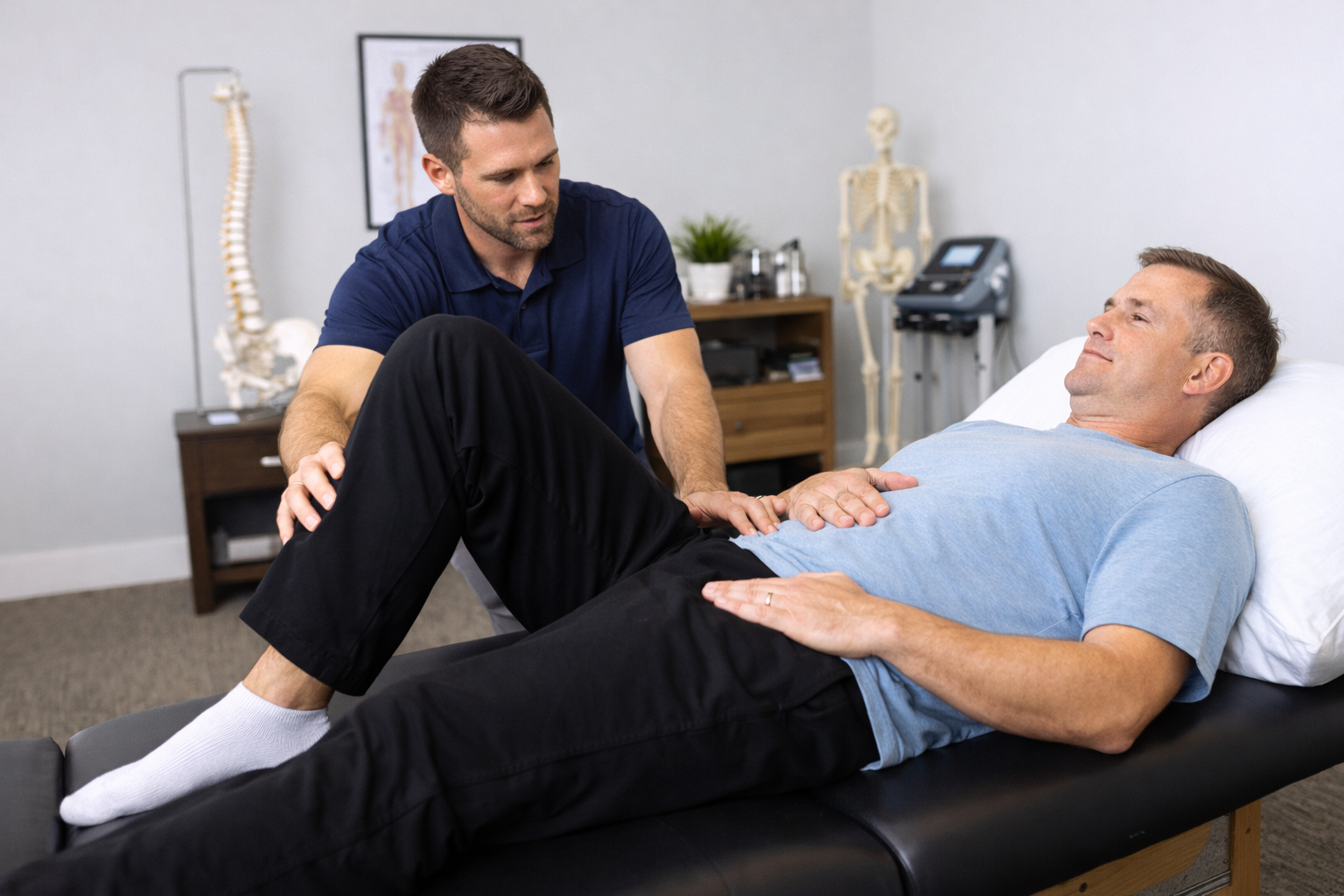 What exercises should L4-L5 avoid?
If you have an L4-L5 disc bulge or a suspected disc irritation in that area, avoid the mindset that more movement is always better. In general, the highest risk activities are the ones that repeatedly load the spine in ways that already aggravate symptoms. That often includes deep forward bending, repeated twisting, heavy lifting, fast rotational drills, and high impact activity before the back has calmed down. Movements should be slow and controlled, especially bending and lifting, and you should avoid activities that clearly worsen your pain.
Common examples that may need caution include:
- Repeated toe touching
- Fast sit ups or crunch heavy workouts
- Heavy deadlifts or barbell squats during a flare up
- Twisting while carrying weight
- Jumping, sprinting, or contact activity if symptoms are active
That does not mean you will never return to these activities. It means the timing matters. During an irritated phase, calmer movements are usually a better first step.
Table: Movement choices during a slipped disc flare up
| Usually better tolerated | Often needs more caution |
|---|---|
| Short level walks | Heavy lifting from the floor |
| Gentle core bracing | Repeated bending forward |
| Controlled heel slides | Aggressive twisting exercises |
| Supported standing exercises | High impact jumping or running |
| Slow posture changes | Fast loaded gym movements |
If your symptoms include leg pain, numbness, or tingling and you are wondering whether it is really a disc issue, this article on how do I know if I have slipped a disc may help you compare common patterns.
Can exercise fix a slipped disc?
Exercise does not “push the disc back in” in a simple mechanical way, and it should not be presented as a guaranteed fix. What exercise can do is support recovery by helping you stay active, maintain mobility, improve muscular support, and reduce the cycle of guarding and deconditioning that often comes with back pain. Most herniated discs improve over time, and conservative care is usually the first step.
The most helpful exercise plan is usually individualized. Some people respond better to walking and light core work. Others need a more guided progression because certain motions still irritate the nerve. At Vital Connection Chiropractic in Fishers, a careful exam can help decide whether chiropractic care and a personalized movement plan may be appropriate for your situation.
What is the fastest way to heal a slipped disc?
The fastest safe path is usually not complete rest and not an intense exercise program. It is a balanced plan that reduces aggravating activities, keeps you moving within tolerance, supports pain control, and adjusts based on your symptoms. For many people, that includes short walks, gentle exercise, smart activity modification, and evaluation if symptoms are severe or not improving. Prolonged bed rest is generally discouraged.
You may also need short term strategies such as ice, heat, or carefully chosen over the counter options when appropriate. If you want to read more about conservative pain support, our article on slipped disc pain medication covers that topic in more detail.
Is walking good for L4-L5 disc bulge?
In many cases, yes. Walking is commonly encouraged as tolerated because it keeps you active without the downsides of prolonged bed rest. The important part is dose. A ten minute walk that leaves you feeling a little looser may be helpful. A long walk that steadily drives symptoms down the leg may be too much for right now.
A simple way to think about it is this:
If walking makes your symptoms more central and manageable, that is often a good sign.
If walking makes pain travel farther down the leg, causes limping, or increases numbness, shorten the walk or get evaluated.
For many people in Fishers who spend long hours sitting at work or in the car, frequent shorter walks are often easier to tolerate than one long session.
What sleeping position helps L4-L5?
 What sleeping position helps L4-L5?
There is not one perfect sleeping position for every person with L4-L5 pain, but there are a few commonly helpful setups. Sleeping on your back with a pillow under your knees can reduce stress on the lower back. Side sleeping with a pillow between your legs can also help keep the hips and spine aligned. Stomach sleeping is often less helpful because it can place more stress on the low back and neck.
If one position consistently wakes you up with more pain, do not force it just because someone online said it is the best. Comfort matters. Neutral alignment matters. Sometimes a small pillow change can make a surprisingly big difference.
Image Suggestion: Side sleeping and back sleeping pillow setup for L4-L5 discomfort shown in a clean educational graphic
Suggested File Name: best-sleeping-position-l4-l5-slipped-disc-fishers-in.jpg
ALT Text: best sleeping position for L4-L5 slipped disc in Fishers IN
When to stop exercising and get checked
Exercise should help you move better, not make your symptoms more dramatic. Stop and seek evaluation if you notice:
- Pain that becomes steadily more intense during or after exercise
- Symptoms traveling farther down the leg
- New numbness or increasing weakness
- Trouble standing or walking normally
- New bowel or bladder changes
- Numbness in the groin or saddle area
Those more serious nerve related changes need prompt medical attention.
A practical slipped disc exercise routine to start with
If your symptoms are mild to moderate and you have already been told movement is appropriate, a simple starting routine may look like this:
- Walk for 5 to 10 minutes
- Do abdominal bracing for 5 gentle reps
- Do heel slides for 8 to 10 reps per side
- Try bent knee marching for 5 to 8 reps per side
- Finish with another short walk
Keep the whole routine easy. The next day should feel the same or slightly better, not significantly worse. That is a better guide than trying to chase a hard workout.
Slipped disc exercise guidance for patients in Fishers, IN
People around Fishers, Noblesville, Carmel, Geist, and nearby Hamilton County areas often ask whether they should stretch more, rest more, or keep pushing through pain. The honest answer is that the best plan depends on the symptom pattern. A stiff sore back behaves differently than a disc irritation with leg symptoms. That is why individualized care matters.
At Vital Connection Chiropractic, the goal is not to promise a quick cure. It is to understand what is aggravating the problem, identify what movement seems helpful, and guide you toward a safer progression. If your symptoms are limiting work, exercise, sleep, or daily movement, it may be time to schedule appointment for a more specific evaluation.
FAQ
Can exercise fix a slipped disc?
Exercise may help support recovery, improve mobility, and rebuild support around the spine, but it is not a guaranteed fix. Most slipped discs improve with time and conservative care, and the best exercise plan depends on which movements your symptoms tolerate.
What exercises should L4-L5 avoid?
L4-L5 symptoms often need caution with repeated forward bending, twisting, heavy lifting, and any movement that clearly increases leg pain, numbness, or weakness. Early exercises are usually better when they are slow, controlled, and low impact.
What is the fastest way to heal a slipped disc?
The fastest safe approach is usually a balanced plan with activity modification, short tolerated walks, gentle exercise, and evaluation if symptoms are severe or not improving. Too much bed rest can slow recovery.
Is walking good for L4-L5 disc bulge?
Walking is often a good option because it keeps you active without prolonged rest. Start with a short duration and adjust based on symptoms. If pain spreads farther down the leg, shorten the walk or get checked.
What sleeping position helps L4 L5?
Back sleeping with a pillow under the knees and side sleeping with a pillow between the legs are both commonly helpful. Stomach sleeping is often less comfortable for low back pain because it can increase strain on the spine.