Slipped Disc and Sciatica Pain
Slipped disc and sciatica pain often happen together when a disc in the lower back irritates or compresses a nearby nerve root, leading to low back pain that may travel into the buttock, thigh, calf, or foot. In many cases, symptoms can include burning, tingling, numbness, or weakness, and a proper evaluation is important to determine whether the problem is coming from a disc, another spinal structure, or a different cause entirely.
A “slipped disc” is a common everyday term, but the disc usually does not literally slip out of place. More often, the issue involves a bulging, protruding, or herniated disc that affects a nearby nerve. That is why sciatica can feel sharp, electric, or radiating rather than staying only in the lower back. If you have been wondering whether your symptoms fit this pattern, learning the connection between a disc problem and sciatic nerve irritation is the first step toward getting the right care.
What slipped disc and sciatica pain usually mean
The sciatic nerve is the largest nerve in the body. It is formed by several nerve roots in the low back and pelvis, then travels down each leg. When one of those lower spinal nerve roots becomes irritated, the result may be called sciatica. A slipped disc is one possible cause, especially in the lower lumbar spine.
People often use “slipped disc” and “herniated disc” interchangeably. If you want a clearer explanation of the terminology, our article on slipped disc vs herniated disc breaks down the difference in patient friendly language.
Not every case of leg pain is sciatica, and not every case of sciatica is caused by a disc. Sometimes the source may involve joint irritation, muscle tightness, spinal stenosis, or another condition. That is why individualized care matters.
Common symptoms people notice
Slipped disc and sciatica pain can look different from person to person, but common symptoms include:
- Pain in the low back that travels into one leg
- Burning or shooting pain down the buttock or thigh
- Tingling or pins and needles in the leg or foot
- Numbness in part of the leg
- Symptoms that worsen when sitting, bending, coughing, or sneezing
- Weakness when lifting the foot or pushing off while walking
- Difficulty getting comfortable at night
Sometimes the leg symptoms are more noticeable than the back pain itself. That can be confusing, especially when people assume the problem must be in the hip or knee.
| Symptom pattern | What it may suggest | Why it matters |
|---|---|---|
| Low back pain with pain into one leg | Possible nerve irritation from the low back | A disc issue may be involved |
| Tingling or numbness in the calf or foot | Nerve root irritation | A neurological exam is important |
| Pain worse with prolonged sitting | Disc pressure may be increasing | Activity modification may help |
| Weakness in the leg or foot | More significant nerve involvement | Prompt evaluation is recommended |
| Pain only in the back without leg symptoms | May be a different type of low back issue | Treatment approach may differ |
 Why a slipped disc can trigger sciatica
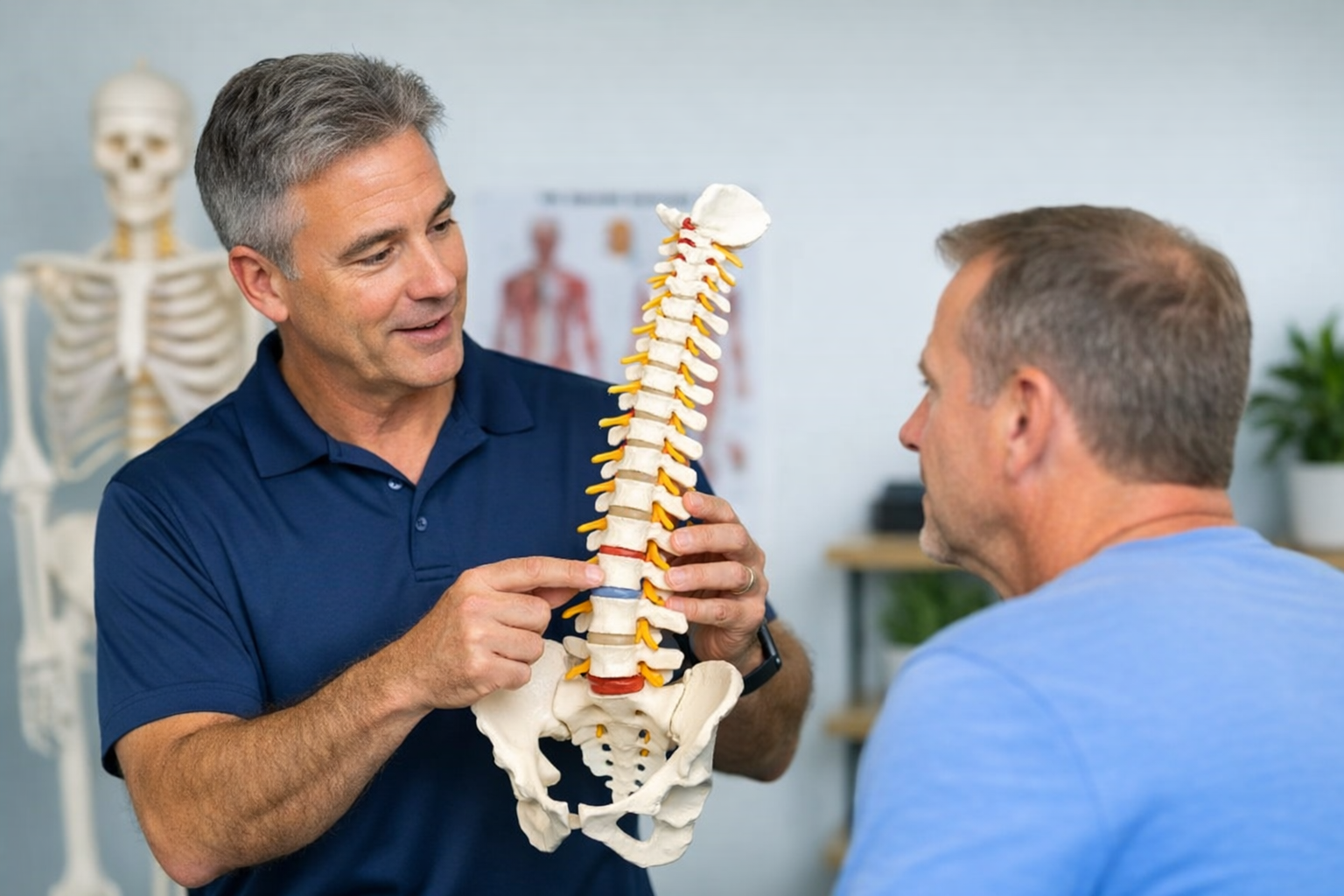
Your spinal discs act like cushions between the vertebrae. When the outer layer of a disc weakens or tears, disc material may push outward and inflame a nearby nerve root. That nerve irritation can create the classic sciatica pattern.
This is one reason many people describe pain that starts in the low back and shoots down the leg. The disc may be in the back, but the irritated nerve can create symptoms farther away.
Common situations that may aggravate symptoms include:
- Repeated bending and lifting
- Long periods of sitting, especially driving
- Poor lifting mechanics
- Sudden twisting movements
- Deconditioning or reduced core support
- A prior history of back strain or disc issues
The severity of symptoms does not always tell you exactly how serious the structural issue is. Some people have small disc changes with intense symptoms, while others have more significant imaging findings and surprisingly mild pain. That is another reason why treatment should be based on both symptoms and examination findings, not just a label.
Signs that slipped disc and sciatica pain need prompt attention
Many cases improve with conservative care, but some symptoms are red flags and should not be ignored. A red flag for sciatica pain may include:
- Progressive leg weakness
- Loss of bowel or bladder control
- Numbness in the groin or saddle area
- Severe pain after trauma
- Fever, unexplained weight loss, or feeling systemically unwell along with back pain
- Symptoms that are rapidly worsening
These signs can point to a more urgent problem and should be evaluated right away.
For less urgent but still concerning cases, it helps to watch for a pattern. If the pain keeps traveling farther down the leg, numbness is increasing, or daily activities are becoming harder, it is wise to schedule an exam sooner rather than later. You can also read more about common signs of a slipped disc if you are comparing your symptoms to typical disc related patterns.
Why sciatica is sometimes worse at night
Many patients in Fishers ask why sciatica feels more intense at bedtime. There are a few possible reasons.
First, when the day gets quieter, you notice pain more. Second, certain sleeping positions may place more tension on irritated tissues. Third, inflammation can feel more pronounced when you are still for long periods. Some people also find that sitting all day leads to increased symptoms later in the evening.
A few practical strategies may help:
- Avoid staying in one position too long before bed
- Use a pillow between the knees when side sleeping
- Try a pillow under the knees when lying on your back
- Limit slouched sitting in the evening
- Change positions carefully rather than twisting quickly
- Follow a clinician’s instructions for movement and exercise
Night pain alone does not always mean something severe is happening, but persistent night pain combined with red flag symptoms should be evaluated promptly.
Image Suggestion: Adult patient pointing to low back and leg pain during a consultation in a bright Fishers, Indiana chiropractic office
Suggested File Name: sciatica-leg-pain-consultation-fishers-in.jpg
ALT Text: Patient describing slipped disc and sciatica pain symptoms in Fishers IN chiropractic clinic
How a chiropractor evaluates slipped disc and sciatica pain
A thorough exam is important because several conditions can mimic each other. At Vital Connection Chiropractic, an evaluation for slipped disc and sciatica pain may include a health history, movement testing, orthopedic testing, and a neurological exam to look at reflexes, sensation, and muscle strength.
The goal is not just to confirm pain is present. The goal is to understand the pattern, severity, and likely source of the irritation.
An exam may help answer questions such as:
- Does the pain follow a nerve related pattern?
- Is movement increasing or decreasing symptoms?
- Are there signs of motor weakness?
- Is the issue more likely disc related, joint related, or muscular?
- Are there signs that imaging or referral may be necessary?
For patients looking for conservative options, our chiropractic care page explains how an individualized plan may support mobility, function, and symptom relief.
When imaging may be considered
Not everyone needs immediate imaging. In many uncomplicated cases of back pain with sciatica, a clinical exam guides early conservative care. However, imaging may be appropriate when:
- Red flags are present
- Weakness is progressing
- Symptoms are severe and not improving
- Symptoms persist despite appropriate conservative care
- A more complex diagnosis is suspected
This balanced approach helps avoid unnecessary imaging while still taking concerning symptoms seriously.
| Situation | Self care may be reasonable | Evaluation is recommended sooner |
|---|---|---|
| Mild pain with no weakness | Yes, with monitoring | If it lingers or worsens |
| Pain into the leg with tingling | Possibly, briefly | Yes, especially if recurring |
| Trouble sitting, walking, or sleeping | Limited | Yes |
| Numbness that is spreading | No | Yes, promptly |
| New leg weakness | No | Yes, promptly |
| Bowel, bladder, or saddle numbness changes | No | Urgent evaluation |
Conservative care options for slipped disc and sciatica pain
Treatment depends on the cause, severity, and exam findings. Many patients do well with conservative care, especially when the symptoms are identified early and managed appropriately.
1. Activity modification
Complete bed rest is usually not the answer. Gentle movement is often more helpful than staying still all day. That said, the right amount of activity matters. Too much bending, lifting, or sitting may aggravate symptoms.
Short walks, posture changes, and guided movement strategies may help keep the area from becoming even stiffer and more sensitive.
2. Symptom management
Many people ask about the best pain medication for sciatica pain. The answer depends on medical history, severity, other medications, and whether a true nerve compression pattern is present. Over the counter options may be considered by some patients when used as directed, but it is best to review medication choices with your physician or pharmacist, especially if you have other health conditions or take prescription medications.
Medication may help reduce symptoms, but it does not always address the underlying mechanical issue.
3. Chiropractic care and movement based support
For some patients, conservative care may include gentle, individualized chiropractic management, mobility work, soft tissue approaches, and home recommendations aimed at reducing irritation and improving function. The exact approach depends on the person. A proper evaluation is important because some disc cases require modified positioning and a more careful progression.
4. Recovery planning
One of the most important parts of care is helping patients understand what to avoid, what to keep doing, and what progression to expect. Recovery is often not perfectly linear. Some days feel better, then symptoms flare again after a long drive, yard work, or poor sleep. That does not always mean something is seriously wrong, but it does mean the plan may need adjustment.
 How long does it take for sciatica to go away
 How long does it take for sciatica to go away
This depends on the cause and how irritated the nerve is. Some cases improve over a few weeks. Others may take longer, especially if symptoms have been present for months, weakness is involved, or daily habits keep aggravating the area.
In general, factors that can influence recovery include:
- How long symptoms have been present
- Whether there is numbness or weakness
- Work demands and sitting time
- Activity tolerance
- Sleep position and recovery habits
- Whether the diagnosis is accurate
Improvement is often gradual. Pain may centralize first, meaning it moves out of the leg and becomes more localized in the back. In many cases, that is a positive sign.
What to do if sciatica does not go away
If sciatica does not go away, the next step is not to keep guessing. Persistent symptoms deserve a proper evaluation. The pain may still be coming from a disc, but it may also involve another issue that needs a different strategy.
You should consider a re evaluation if:
- Symptoms are lasting longer than expected
- Pain is interfering with sleep or work
- Numbness is sticking around
- You feel unstable or weak in the leg
- Home remedies are no longer helping
- The pain keeps returning in cycles
At that point, a more tailored plan may be needed. That could involve further examination, updated imaging, referral when appropriate, or a more specific conservative approach.
Local help for slipped disc and sciatica pain in Fishers, IN
If you are dealing with low back pain that shoots into the leg, it helps to get checked before the problem disrupts more of your routine. For people in Fishers, IN and nearby areas in Hamilton County, early evaluation may help clarify whether symptoms fit a slipped disc and sciatica pattern and whether conservative care is a good fit.
At Vital Connection Chiropractic, the focus is on understanding the cause of the problem, looking for red flags, and building an individualized care plan based on your symptoms and exam findings. That patient centered approach matters because no two cases feel exactly the same.
If your symptoms are getting in the way of work, sleep, exercise, or family time, you can schedule appointment to get evaluated. If you have questions before booking, you can also contact us to learn more about the next steps.
Final thoughts
 Final thoughts
Slipped disc and sciatica pain can make everyday tasks feel harder than they should, especially when symptoms start traveling into the leg or foot. The good news is that many cases respond well to conservative care, especially when the condition is evaluated early and managed appropriately. The key is knowing when symptoms are typical, when they need closer attention, and when they may signal a more urgent problem.
If you are in Fishers, IN and want answers about low back pain, radiating leg pain, tingling, numbness, or weakness, a proper evaluation can help you understand what is driving your symptoms and what kind of care may help.
FAQ
How long does it take for sciatica to go away?
It depends on the cause and severity. Some cases improve within a few weeks, while others take longer. Recovery often depends on how irritated the nerve is, whether weakness is present, and whether daily activities keep aggravating the condition.
What is the best pain medication for sciatica pain?
There is no one best option for everyone. The right choice depends on your health history, current medications, and the cause of the symptoms. Over the counter pain relievers may help some people when used as directed, but it is wise to check with your physician or pharmacist before taking medication.
What to do if sciatica doesn’t go away?
If sciatica does not improve, or keeps coming back, get evaluated. Persistent symptoms may mean the nerve is still being irritated, the diagnosis needs to be clarified, or the treatment plan needs to change.
Why is sciatica worse at night?
Sciatica may feel worse at night because of reduced movement, certain sleeping positions, lingering inflammation after a long day, or prolonged sitting before bed. Adjusting your sleep position and getting evaluated can help identify what is contributing to the pattern.
What is a red flag for sciatica pain?
Red flags include worsening leg weakness, loss of bowel or bladder control, numbness in the saddle area, severe pain after trauma, or rapidly progressing neurological symptoms. These require urgent medical attention.