Can a Chiropractor Help With Knee Pain in Fishers, IN?
Yes, a chiropractor may help with knee pain when the problem is related to joint stiffness, movement limitations, muscle imbalance, overuse, or the way the hip, ankle, and lower back affect knee mechanics. Chiropractic care does not repair every knee injury or replace medical treatment. A proper evaluation is important because knee pain can also come from arthritis, ligament or meniscus injuries, fractures, infection, or other conditions that need different care.
Can a Chiropractor Help With Knee Pain?
Chiropractic care may help some people with knee pain by improving joint movement, reducing surrounding muscle tension, addressing movement patterns, and building strength around the knee. The most appropriate approach depends on what is causing the symptoms.
The knee does not work by itself. It relies on the feet, ankles, hips, pelvis, and lower back to help control how force moves through the leg. Limited ankle motion, weak hip muscles, poor balance, or changes in walking mechanics can increase stress around the knee. A chiropractor may evaluate these connected areas instead of focusing only on the painful spot.
This whole-body approach may be useful for certain mechanical problems, including mild overuse discomfort, stiffness, reduced mobility, muscle imbalance, and some activity-related pain. It may also complement care from a primary care provider, physical therapist, sports medicine clinician, or orthopedic specialist when coordinated appropriately.
However, chiropractic for knee pain is not a cure-all. A chiropractor cannot manually repair a torn ligament, reverse advanced joint damage, treat an infection, or set a fracture without appropriate medical care. The first goal should be identifying whether conservative care is suitable and whether another healthcare professional should be involved.
Readers who want an overview of the concerns treated at Vital Connection Chiropractic can visit Conditions.
Why the Cause of Knee Pain Matters
Knee pain is a symptom, not a diagnosis. It can develop gradually from repeated stress or appear suddenly after a fall, collision, awkward twist, or sports injury.
Common possibilities include:
- Irritation from repetitive running, jumping, squatting, or kneeling
- Patellofemoral pain around or behind the kneecap
- Tendon irritation
- Joint stiffness and age-related wear
- Muscle weakness or poor control at the hip
- Reduced ankle mobility
- Meniscus or ligament injury
- Arthritis, gout, or inflammatory conditions
- Referred discomfort from the hip, lower back, or nerves
- Fracture, infection, or another condition requiring medical treatment
The location and behavior of the pain provide useful clues. Pain at the front of the knee may behave differently from pain along the joint line or behind the knee. Swelling after a twist, locking, giving way, or a sudden pop may suggest a structural injury that should be evaluated.
| Concern | What It May Mean | Best Next Step |
|---|---|---|
| Mild ache after increased activity | Overuse, muscle fatigue, or temporary irritation | Reduce aggravating activity and arrange an evaluation if it persists |
| Pain with stairs, squats, or rising from a chair | Possible kneecap tracking or load-management issue | Assess hip, knee, ankle, and movement control |
| Locking, catching, or repeated giving way | Possible meniscus, ligament, or joint problem | Seek medical or orthopedic evaluation |
| Red, hot, badly swollen knee with fever | Possible infection or significant inflammation | Seek urgent medical care |
| Inability to bear weight after trauma | Possible fracture or serious injury | Obtain prompt medical assessment |
An individualized examination helps determine whether symptoms are likely to respond to conservative care. It also reduces the risk of treating the wrong problem or delaying necessary imaging, medication, rehabilitation, or surgical consultation.
Seven Ways Chiropractic Care May Support Knee Pain
1. Evaluating the Knee and the Entire Movement Chain
A knee pain visit may include more than checking where it hurts. The chiropractor may observe walking, standing balance, squatting, hip control, foot position, and how the knee tracks during movement.
This broader evaluation can identify factors that place extra load on the knee. A stiff ankle or weak hip, for example, may change knee control during squats, stairs, or running.
2. Improving Joint Mobility
Gentle mobilization or selected adjustment techniques may be used around the knee, ankle, hip, pelvis, or lower back when restricted motion appears relevant. The goal is comfortable movement, not forcing a joint into place. Technique choice should reflect the patient’s health history, comfort, and examination findings.
3. Reducing Muscle and Soft-Tissue Tension
Tight or irritated muscles around the thighs, calves, hips, and lower back can influence knee mechanics. Soft-tissue techniques may be included to reduce tenderness, improve flexibility, and make exercise more comfortable.
Manual therapy or stretching may help temporarily, but longer-term progress often requires strength and activity changes.
4. Building Strength and Control
Exercise is often an important part of conservative knee care. Depending on the cause, a chiropractor may recommend gradual strengthening for the quadriceps, hamstrings, gluteal muscles, calves, and core.
Exercises should match current tolerance. Increasing load too quickly can aggravate symptoms, while avoiding movement for too long may contribute to weakness and stiffness.
5. Adjusting Activities Without Stopping Everything
A common mistake is continuing the exact activity that causes pain at the same intensity. Another mistake is stopping all movement for an extended period without guidance.
A care plan may modify distance, speed, weight, depth, or frequency while the knee settles. The goal is tolerable activity followed by gradual progression.
6. Supporting Posture, Gait, and Daily Mechanics
Small changes in walking, lifting, squatting, stairs, warmups, footwear, or return-to-activity habits may reduce repeated strain. Recommendations should match the patient’s routine.
7. Coordinating Care When Another Provider Is Needed
Good conservative care includes knowing when not to continue with chiropractic treatment alone. Imaging or referral may be appropriate when symptoms suggest a fracture, significant ligament injury, meniscus damage, infection, inflammatory disease, blood clot, or advanced joint condition.
Collaboration is especially important after major trauma, repeated giving way, substantial swelling, or poor progress.
 What a Knee Pain Evaluation May Include
A first visit should begin with questions, not treatment. The chiropractor may ask when the pain began, whether there was an injury, which movements aggravate it, whether swelling is present, and how the problem affects walking, work, sleep, exercise, or stairs.
The examination may include:
- Observation of swelling, bruising, redness, and posture
- Gentle assessment of knee range of motion
- Palpation for tenderness
- Strength testing
- Basic ligament or meniscus screening when appropriate
- Evaluation of hip and ankle mobility
- Balance, gait, squat, or step testing
- Neurological screening when symptoms may be referred
- Review of previous imaging, diagnoses, medications, and health history
Not every person needs an X-ray or MRI. Imaging depends on the injury, examination findings, symptom duration, and warning signs. The chiropractor should explain what may be contributing to the pain, the role of care, and when referral is needed.
 When Chiropractic Care May Be Appropriate
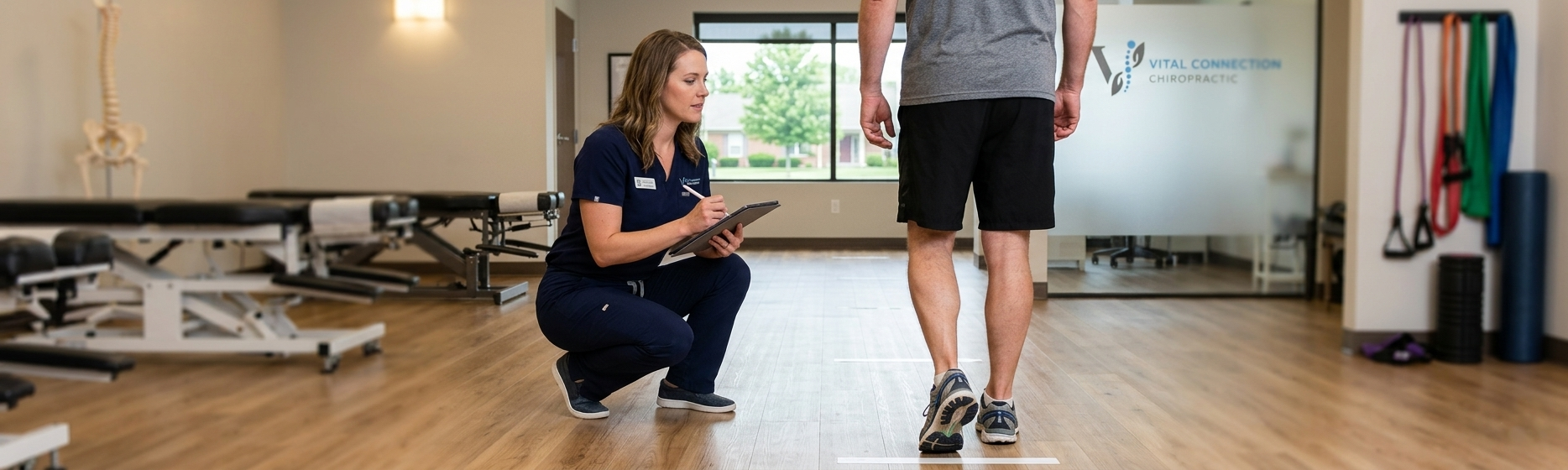 When Chiropractic Care May Be Appropriate
Chiropractic care may be considered when knee pain appears mechanical and the patient can safely participate in conservative treatment. Examples may include mild stiffness, overuse-related discomfort, reduced movement, muscle imbalance, or pain associated with certain daily activities.
| Care Option | Best For | Why It May Help |
| Joint mobilization or selected adjustments | Restricted motion in the knee or connected joints | May improve comfortable movement and reduce compensation |
| Soft-tissue care | Muscle tightness or tenderness around the leg and hip | May reduce tension and support mobility |
| Guided strengthening | Weakness or poor movement control | Helps the knee tolerate daily and recreational demands |
| Activity modification | Pain triggered by repeated loading | Reduces irritation while maintaining appropriate movement |
| Referral or coordinated care | Trauma, instability, persistent swelling, or unclear diagnosis | Helps the patient receive imaging or specialized treatment when needed |
For more information about the clinic’s approach to this condition, visit Knee Pain.
Progress should be measured by function, not only by a temporary change in pain. Helpful signs may include easier walking, improved stair tolerance, less stiffness, better squat control, greater confidence, or a gradual return to normal activity.
Knee Pain Warning Signs That Need Medical Attention
Some knee symptoms should not be managed with routine home care or chiropractic treatment alone. Seek prompt medical evaluation when:
- The knee looks deformed after an injury
- You cannot bear weight or take several steps
- Swelling develops rapidly after trauma
- The joint locks and cannot fully bend or straighten
- The knee repeatedly gives way
- There is marked redness, heat, or fever
- Calf swelling, warmth, or shortness of breath develops
- Pain is severe, worsening, or interrupts sleep
- Numbness or significant weakness is present
- Symptoms continue despite appropriate conservative care
A direct impact, twisting injury, or sudden pop followed by swelling may involve a ligament or meniscus. Medical assessment may be necessary even when a person can still walk.
The Mayo Clinic knee pain guidance explains that knee pain can result from injuries, arthritis, gout, infections, and other causes. This is why diagnosis matters before selecting treatment.
What to Do at Home for Mild Knee Pain
For mild pain without major trauma or warning signs, a few short-term steps may help while you monitor symptoms.
Reduce the Aggravating Load
Temporarily reduce the activity that repeatedly increases pain. This may mean shortening walks, avoiding deep squats, pausing running or jumping, or using fewer stairs for a few days. Complete bed rest is usually unnecessary for minor mechanical pain.
Use Cold or Heat Carefully
Cold may help a recent flare or swelling. Wrap the pack in cloth and do not place ice directly on skin. Heat may help stiffness but should not be used over a hot, red, markedly swollen joint.
Choose Comfortable Movement
Gentle range-of-motion work and low-impact activity may help prevent stiffness. Stop if movement causes sharp pain, catching, instability, or increasing swelling.
Avoid Testing the Knee Repeatedly
Repeatedly performing the painful squat, jump, or stair movement to see whether the knee is better can keep irritating it. Give the tissue time to settle, then return gradually.
Ask Before Using Medication
Over-the-counter medicines are not safe for everyone. Ask a pharmacist or medical provider when health conditions, pregnancy, allergies, or other medications may affect your options.
 Choosing a Knee Pain Chiropractor Near You
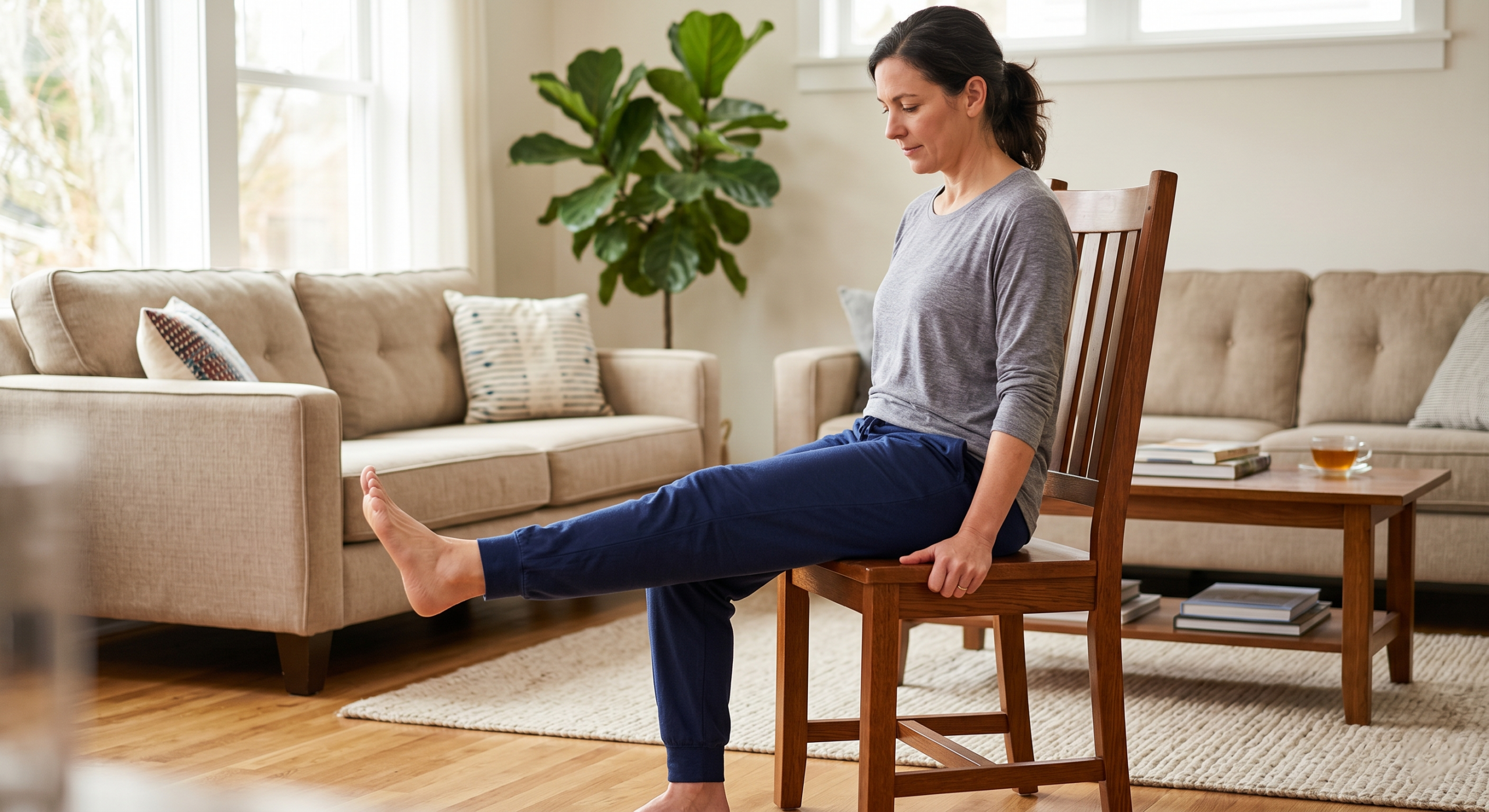 Choosing a Knee Pain Chiropractor Near You
When searching for a “knee pain chiropractor near me,” look beyond location. The provider should use a clear evaluation process, discuss realistic expectations, and refer when the problem is outside the scope of chiropractic care.
Helpful questions include:
- Will you assess the knee, hip, ankle, gait, and relevant spinal areas?
- How will you determine whether chiropractic care is appropriate?
- What exercises or home recommendations may be included?
- How will progress be measured?
- When would you recommend imaging or referral?
- Are treatment choices adjusted to comfort and health history?
- Can you coordinate with my physician, therapist, or orthopedic provider?
Be cautious with providers who guarantee a cure, blame every knee problem on spinal alignment, recommend long prepaid plans before evaluation, or discourage appropriate medical care. Patients should understand the benefits, limits, and choices involved.
Chiropractic Care for Knee Pain in Fishers, IN
Knee pain can affect daily life in many ways. It may make walking through a Fishers neighborhood, exercising, gardening, working, shopping, or climbing stairs more difficult. Athletes may notice pain during training, while adults with gradual stiffness may struggle after sitting or first thing in the morning.
Vital Connection Chiropractic serves patients in Fishers and nearby Hamilton County communities, including Noblesville, Carmel, Geist, McCordsville, and Castleton. Care is based on the patient’s history, examination findings, goals, and tolerance.
The first step is determining whether chiropractic care may be suitable or whether medical evaluation should come first. When conservative care is appropriate, the plan may include movement-focused treatment, exercise, activity guidance, and reassessment.
To request an evaluation, use Schedule Appointment. Patients with questions about the clinic, location, or services can also visit Contact Us.
Image Suggestion:
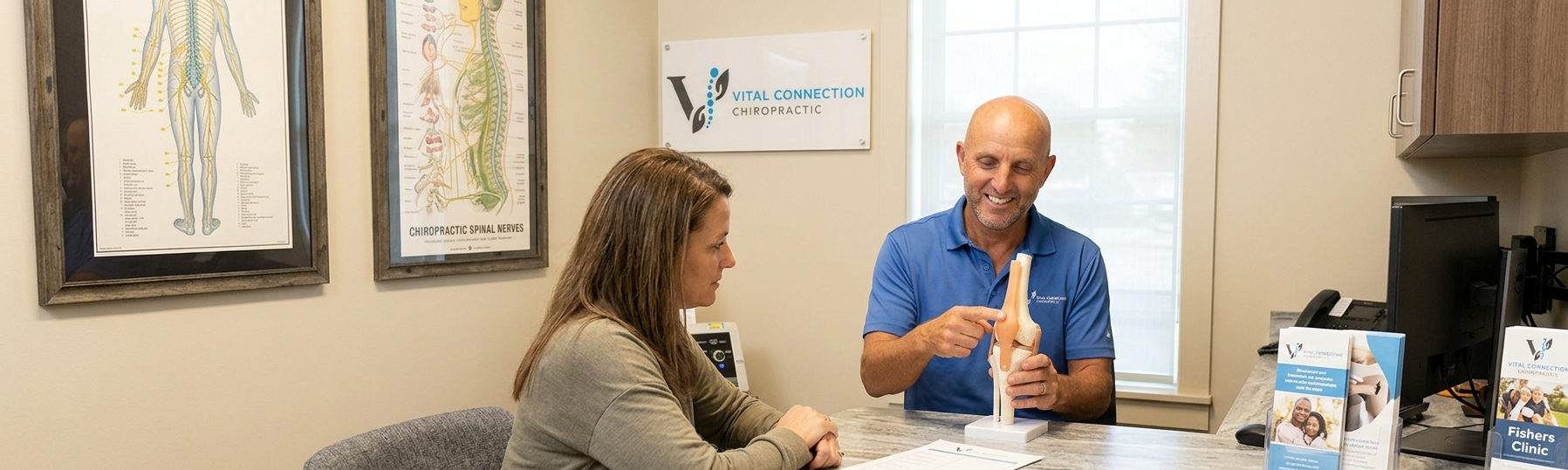
Warm, professional consultation between a chiropractor and an active adult with knee discomfort in a calm Fishers chiropractic clinic.
Suggested File Name:
can-chiropractor-help-with-knee-pain-fishers-clinic.webp
ALT Text:
Can a chiropractor help with knee pain at a Fishers, IN clinic
FAQ
What can a chiropractor do for knee pain?
A chiropractor can evaluate movement, joint mobility, muscle balance, and the way the hip, ankle, and lower back may affect the knee. When conservative care is appropriate, treatment may include gentle joint techniques, soft-tissue care, guided exercises, and activity recommendations. The goal is to support comfortable movement and function, not to promise a cure. Significant trauma, locking, instability, fever, or major swelling may require medical imaging or specialist care.
What is the #1 mistake that makes bad knees worse?
One of the most common mistakes is repeatedly pushing through an activity that clearly increases pain, swelling, or instability. Continuing the same load without adjusting intensity, form, recovery, or frequency can keep the knee irritated. Complete inactivity for too long can also contribute to weakness. A better approach is to reduce aggravating load, keep tolerable movement, and obtain an evaluation when symptoms persist or limit normal activities.
What is the fastest way to relieve knee pain at home?
The fastest safe approach for mild knee pain is usually to reduce the aggravating activity, use cold for a recent flare or swelling, and choose gentle movement that does not worsen symptoms. There is no single home remedy that works for every cause. Avoid forcing stretches or repeatedly testing painful movements. Seek care promptly if the knee is badly swollen, red, hot, unstable, locked, or difficult to bear weight on.
What are the side effects of a chiropractic adjustment?
Temporary soreness, stiffness, fatigue, headache, or increased discomfort can occur after spinal manipulation or joint treatment. These effects are often mild and short-lived, but every procedure has potential risks. The chiropractor should review health history, explain the proposed technique, and adjust care to the patient’s condition and preferences. The NCCIH spinal manipulation safety overview provides additional information about possible side effects and safety considerations.
Why do doctors discourage chiropractors?
Not all doctors discourage chiropractic care, and many support coordinated conservative treatment when it is appropriate and evidence-informed. Concerns usually arise when a provider makes claims beyond the evidence, fails to screen for serious conditions, delays medical treatment, or presents chiropractic care as a replacement for all other healthcare. Patients benefit when chiropractors communicate clearly, stay within scope, refer appropriately, and work with medical providers when the condition requires shared care.
What should you not do after seeing a chiropractor?
Do not immediately perform unusually intense exercise, force painful movements, ignore worsening symptoms, or disregard the specific instructions given after your visit. Normal light activity may be appropriate, but recommendations depend on what was treated and why. Contact the clinic if you develop severe or unusual pain, new weakness, numbness, significant swelling, or another concerning symptom. Hydration, gentle movement, and following the individualized care plan are usually more helpful than testing the area aggressively.
Take the Next Step Toward Better Knee Function
A chiropractor may help with certain types of knee pain, especially when stiffness, movement limitations, muscle imbalance, or connected hip and ankle mechanics contribute to the problem. Results depend on the cause, severity, health history, and consistency with the care plan.
The safest starting point is a thorough evaluation. At Vital Connection Chiropractic, care is individualized, and referral may be recommended when symptoms suggest a condition needing medical or orthopedic treatment.
Learn more about Knee Pain or request a visit through the clinic’s scheduling page.