Can a Chiropractor Help With Whiplash? Fishers, IN Guide
Yes, a chiropractor may help with whiplash when a serious injury has been ruled out. For an uncomplicated whiplash injury, individualized care may reduce neck pain and stiffness, improve comfortable movement, and guide a safe return to normal activity. Because whiplash follows trauma, patients in Fishers, IN should first be screened for fracture, concussion, nerve injury, or other warning signs before hands-on treatment begins.
 Can a Chiropractor Help With Whiplash?
A chiropractor can sometimes help manage the musculoskeletal effects of whiplash, particularly pain, tightness, reduced range of motion, and difficulty returning to everyday movement. The best plan depends on how the injury happened, how recently it occurred, the symptoms present, and whether more serious trauma has been excluded.
Whiplash is an acceleration and deceleration injury. It often happens in a rear-end collision, but it can also follow a fall, sports impact, or another event that moves the head and neck suddenly. Muscles, ligaments, joints, and other tissues may become irritated. Symptoms can begin immediately or appear hours to days later.
For appropriate patients, care may combine gentle manual techniques, mobility work, soft-tissue care, exercise, and practical activity advice. The goal is not to force the neck back into place. It is to help the patient move more comfortably, manage symptoms, rebuild capacity, and monitor recovery.
The clinic’s Whiplash resource explains the condition and the individualized approach used at Vital Connection Chiropractic.
Chiropractic care is not the first step for every injury
Whiplash is usually a soft-tissue injury, but symptoms after trauma can overlap with a fracture, dislocation, concussion, disc injury, or nerve involvement. A chiropractor should take the mechanism of injury seriously, screen for warning signs, and refer for urgent medical care or imaging when indicated.
That safety step matters even after a low-speed collision. The amount of vehicle damage does not reliably tell a clinician how a person’s body responded. Age, previous neck problems, head position, impact direction, and individual health can all influence symptoms and recovery.
What Whiplash Can Do to the Neck
Whiplash may affect more than the spot that feels sore. Some people notice pain at the base of the skull, across the shoulders, between the shoulder blades, or into an arm. Headaches, muscle guarding, fatigue, sleep disruption, dizziness, and trouble concentrating can also occur. These symptoms do not all come from the same tissue, which is one reason an examination matters.
Common musculoskeletal findings may include tenderness, reduced neck movement, shoulder tension, and discomfort that increases with driving, computer work, or looking over one shoulder. For readers comparing whiplash symptoms with other causes of cervical discomfort, the Neck Pain page provides additional context.
| Concern | What It May Mean | Best Next Step |
|---|---|---|
| Mild stiffness and soreness | A common soft-tissue response after sudden movement | Arrange an evaluation and follow appropriate activity guidance |
| Headache beginning near the base of the skull | Neck irritation may contribute, but concussion must be considered | Tell the provider when it started and report all head-injury symptoms |
| Tingling, numbness, or arm weakness | Possible nerve involvement or another significant injury | Seek prompt medical assessment |
| Severe midline neck pain after trauma | A fracture or structural injury must be ruled out | Avoid self-treatment and obtain urgent medical care |
| Symptoms that worsen instead of settling | The diagnosis or care plan may need reassessment | Contact a qualified healthcare professional promptly |
When Medical Care Should Come First
Seek emergency or urgent medical help after a collision or fall if there is severe or rapidly worsening pain, loss of consciousness, confusion, repeated vomiting, new weakness, numbness, trouble walking, loss of bladder or bowel control, difficulty speaking or swallowing, or a severe unusual headache. Do not drive yourself if you feel faint, confused, visually impaired, or unable to turn safely.
A same-day medical evaluation may also be appropriate when the accident was high impact, the patient is an older adult, the patient takes blood-thinning medication, there is known osteoporosis, or pain is directly over the spine. Children and pregnant patients should receive advice suited to their needs.
Even without emergency signs, do not assume delayed pain means nothing happened. Stress hormones and the intensity of an accident can make symptoms less noticeable at first. A timely evaluation creates a baseline and helps determine whether conservative care is reasonable.
What Whiplash Chiropractic Care May Include
Whiplash chiropractic care should begin with questions, not an adjustment. The chiropractor may ask about the impact direction, head position, seat belt use, airbag deployment, head contact, emergency care, imaging, medications, and changes in symptoms since the event. Previous concussions, neck injuries, headaches, and neurological conditions are also relevant.
1. A focused physical and neurological assessment
When it is safe, the examination may include posture, comfortable active range of motion, tenderness, strength, sensation, reflexes, balance, and shoulder function. The clinician should avoid repeatedly provoking severe symptoms simply to measure them. Findings help establish whether the problem appears musculoskeletal or needs another level of evaluation.
 2. Gentle manual care when appropriate
 2. Gentle manual care when appropriate
Depending on the examination and stage of recovery, a chiropractor may use low-force mobilization, soft-tissue techniques, or carefully selected manual therapy. Not every patient needs cervical manipulation, and high-velocity treatment is not automatically appropriate after recent trauma. Technique, timing, intensity, and patient preference should all be individualized.
3. Movement and exercise guidance
Prolonged complete rest can contribute to stiffness and reduced confidence with movement. Once dangerous injury is excluded, a clinician may recommend gentle motion within a comfortable range, followed by progressive exercises for neck control, shoulder-blade function, endurance, and posture.
Exercises should be adjusted if they cause sharp pain, spreading symptoms, dizziness, or neurological changes.
4. Advice for daily activities
Driving, desk work, lifting, childcare, and sleep positions can aggravate symptoms during recovery. A care plan may include shorter work periods, movement breaks, temporary changes to lifting, and a gradual return to normal activity. The aim is useful pacing, not fear-based avoidance.
5. Progress checks and referral when needed
Symptoms should be monitored over time. If pain is not improving as expected, neurological symptoms appear, or the clinical picture changes, the chiropractor may recommend medical evaluation, diagnostic imaging, physical therapy, or another specialist.
Patients can review Vital Connection’s broader Chiropractic Care approach before deciding whether an evaluation fits their situation.
Potential Benefits and Important Limits
Does chiropractic help whiplash? It may help some people with short-term pain, stiffness, mobility, and confidence in movement, particularly when manual care is paired with exercise and education. Responses vary, and improvement cannot be guaranteed. Evidence for neck pain generally supports a multimodal approach more than relying on one passive technique alone.
Chiropractic care does not repair a fracture, reverse a spinal cord injury, or replace emergency care. It also cannot promise the fastest recovery. Whiplash involves different tissues and levels of severity, so two patients from the same collision may need different care.
A trustworthy plan should have clear goals. Examples include turning the head more comfortably, tolerating desk work for longer periods, sleeping with fewer interruptions, or resuming normal driving once it is safe. Progress can be reviewed against function as well as a pain score.
It is also reasonable to ask the chiropractor what technique is being recommended, why it fits the examination findings, what alternatives are available, and what symptoms should prompt a pause or referral. Informed consent and patient comfort remain important throughout care.
How Soon to See a Chiropractor After Whiplash
There is no universal waiting period. The right timing depends on the accident and symptoms. After a significant collision, emergency or medical evaluation may need to happen first. If serious injury has been ruled out and symptoms are stable, a chiropractic assessment can often be considered early rather than waiting for stiffness and activity limitations to become established.
Early care does not mean aggressive treatment. A first visit may focus on screening, education, gentle movement, and a conservative plan. Some patients may not receive hands-on care that day if further evaluation is appropriate.
If days or weeks have already passed, an evaluation may still be useful. Persistent pain does not automatically mean permanent damage, but ongoing symptoms deserve reassessment. Bring any hospital discharge instructions, imaging reports, medication list, and accident details. This helps the chiropractor understand what has already been evaluated and avoid unnecessary repetition.
Practical Recovery Steps at Home
The fastest safe recovery is usually not a single treatment. It is a coordinated plan that protects the neck from further harm while preventing unnecessary inactivity. Follow the instructions given by the clinician who evaluated the injury.
Helpful habits may include:
- Keep normal daily movement within a tolerable range unless a clinician has instructed otherwise.
- Use cold or heat only as advised and protect the skin with a cloth barrier.
- Take medication only as directed by a medical professional or according to the label, considering personal health conditions and interactions.
- Change position regularly during computer work, reading, and phone use.
- Support sleep with a comfortable pillow position rather than stacking several pillows and sharply bending the neck.
- Track worsening symptoms, arm sensations, headaches, sleep, and activities that are becoming easier or harder.
 Avoid forcefully stretching or twisting the neck to make it pop. Do not copy advanced exercises from a video before knowing whether they fit the injury. If an activity triggers dizziness, weakness, numbness, visual changes, or severe increasing pain, stop and seek advice.
What to Expect at Vital Connection Chiropractic
Patients visiting Vital Connection Chiropractic in Fishers can expect an individualized process rather than a fixed whiplash protocol. The first priority is understanding the injury, current symptoms, medical history, and functional limits. Appropriate care is then matched to the findings and adjusted as recovery changes.
| Stage | What May Happen | Why It Matters |
|---|---|---|
| Initial conversation | Review the incident, symptom timing, previous care, and personal goals | Establishes context and identifies reasons for referral |
| Examination | Assess comfortable movement, tenderness, posture, and neurological signs when safe | Helps determine whether conservative care is appropriate |
| Care planning | Discuss options such as gentle manual care, exercise, and activity changes | Gives the patient choices and clear expectations |
| Progress review | Recheck function, symptoms, and response to care | Supports timely changes, referral, or discharge when appropriate |
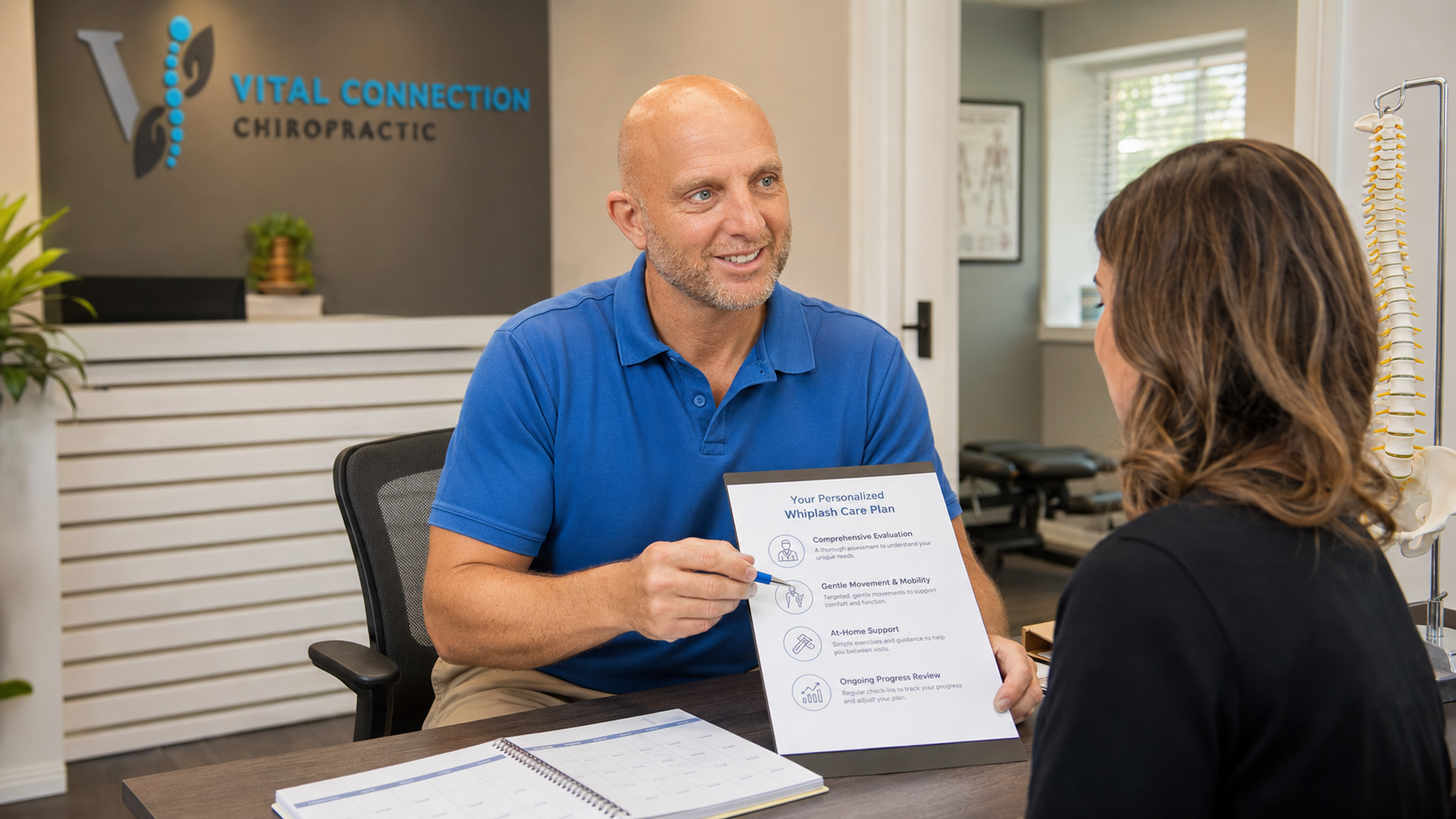 The number and frequency of visits should be based on clinical need and measurable progress. A patient who improves quickly may need less care, while someone with persistent symptoms may need co-management with another provider. There should be room to ask questions and reconsider the plan.
When to Schedule a Whiplash Evaluation in Fishers, IN
Consider an evaluation if neck pain, stiffness, headaches, shoulder tension, or difficulty turning your head began after a car accident, sports impact, or fall. Fishers residents who commute along I-69, 116th Street, or nearby Hamilton County routes may be tempted to work through a minor collision, but symptoms that affect driving, sleep, or concentration deserve attention.
Vital Connection Chiropractic is located at 12242 E 116th St, Suite 100, Fishers, IN 46037. If urgent conditions have been ruled out and you want to discuss conservative care, use Schedule Appointment to request a visit.
If you are unsure whether the office is appropriate for your symptoms, Contact Us or call +1 317-773-7820 before scheduling.
Frequently Asked Questions
Should I go to the chiropractor if I have whiplash?
Yes, a chiropractic evaluation may be appropriate after urgent injuries have been ruled out. A chiropractor may help address neck pain, stiffness, reduced movement, and related musculoskeletal problems after whiplash. However, recent trauma must be screened carefully. Seek urgent medical attention first for severe pain, weakness, numbness, confusion, loss of consciousness, trouble walking, or other warning signs. If conservative care is appropriate, the plan should be gentle, individualized, and adjusted according to your response.
What is the fastest way to heal whiplash?
There is no single fastest treatment for every whiplash injury. Recovery is usually supported by an accurate evaluation, appropriate pain management, gentle return to movement, progressive exercise, good sleep, and avoiding another injury. Too much bed rest can increase stiffness, while forceful stretching or premature intense exercise can aggravate symptoms. Follow guidance based on your specific injury. Improvement may take days to weeks in mild cases, but more significant or persistent symptoms can require longer and multidisciplinary care.
What are the 4 phases of whiplash?
Whiplash is not universally diagnosed using four healing phases. People sometimes mean the four symptomatic levels in the Quebec whiplash-associated disorder classification, although the complete system runs from Grade 0 through Grade 4. Grade 1 involves pain or stiffness without physical signs. Grade 2 adds musculoskeletal findings such as reduced motion or tenderness. Grade 3 includes neurological signs such as weakness or sensory changes. Grade 4 involves fracture or dislocation and requires urgent medical management.
What kind of doctor treats whiplash?
Whiplash may be treated by several healthcare professionals, depending on severity. An emergency physician or primary care clinician may evaluate the injury first, especially after a significant crash. A physiatrist, orthopedic specialist, neurologist, or pain specialist may be involved when symptoms are severe or complex. Chiropractors and physical therapists may provide conservative musculoskeletal care once serious injury is excluded. The best provider is one who screens carefully, communicates with other clinicians, and refers when symptoms fall outside their scope.
How long does it take for your neck to heal from whiplash?
Many uncomplicated neck sprains improve within several weeks, but recovery varies. Some people feel substantially better sooner, while others have pain, headaches, dizziness, sleep problems, or activity limits for months. Severity, previous neck pain, age, neurological symptoms, stress, sleep, and early functional limitations can influence recovery. A fixed deadline cannot be promised. If symptoms are worsening, remain severe, or are not progressing as expected, the injury and care plan should be reassessed.
Will whiplash show on MRI?
Sometimes, but an MRI does not confirm every case of whiplash. MRI can show certain soft-tissue, disc, ligament, spinal cord, or nerve-related problems, but uncomplicated whiplash may not produce a specific visible finding. Imaging is chosen according to the injury, examination, neurological symptoms, and clinical decision rules. CT is often preferred when an acute fracture is suspected. A clinician should decide whether MRI, CT, X-ray, or no imaging is appropriate rather than ordering a scan automatically.