Whiplash Chiropractor in Fishers, IN: When Care May Help
A whiplash chiropractor may help if you have neck pain, stiffness, headaches, reduced range of motion, or upper back tension after a car accident, sports impact, fall, or sudden jolt. Whiplash can affect muscles, ligaments, joints, nerves, and movement patterns in the neck, so the best first step is a careful evaluation. At Vital Connection Chiropractic in Fishers, IN, care is focused on understanding what happened, checking how your neck is moving, and creating an individualized plan that may support comfort, mobility, and better function.
What Is Whiplash?
Whiplash is a neck injury that can happen when the head and neck move suddenly forward and backward, side to side, or in another forceful direction. It is often linked to rear-end car accidents, but it can also happen from sports contact, slips, falls, or other sudden impacts.
This type of injury can strain the soft tissues of the neck, including muscles, ligaments, tendons, and joint structures. Some people feel pain right away. Others feel “fine” at first and notice symptoms hours or days later. Cleveland Clinic notes that whiplash can range from short-lived discomfort to chronic symptoms in some cases.
For patients in Fishers, Noblesville, Carmel, Geist, McCordsville, Castleton, and nearby Hamilton County areas, getting checked after a sudden neck injury may be important, especially if symptoms are getting worse or affecting work, sleep, driving, or daily movement.
If you are looking for more condition-specific information, Vital Connection Chiropractic also has a dedicated page for Whiplash.
Common Signs You May Need a Whiplash Chiropractor
A whiplash chiropractor may be helpful when your symptoms suggest the neck is not moving or functioning the way it should after an injury. This does not mean every case is the same. Some people need emergency medical care first, while others may be appropriate for conservative chiropractic evaluation.
Common whiplash symptoms can include:
- Neck pain or soreness
- Neck stiffness
- Headaches that start near the base of the skull
- Shoulder or upper back tension
- Reduced ability to turn the head
- Pain that feels worse after sitting, driving, or working at a desk
- Muscle tightness or spasms
- Tenderness around the neck or shoulders
- Dizziness, fatigue, or trouble concentrating in some cases
If you were recently in a crash and are searching for a chiropractor for whiplash, it is important to be evaluated instead of guessing whether the pain will go away on its own.
 Why Symptoms Can Show Up Later
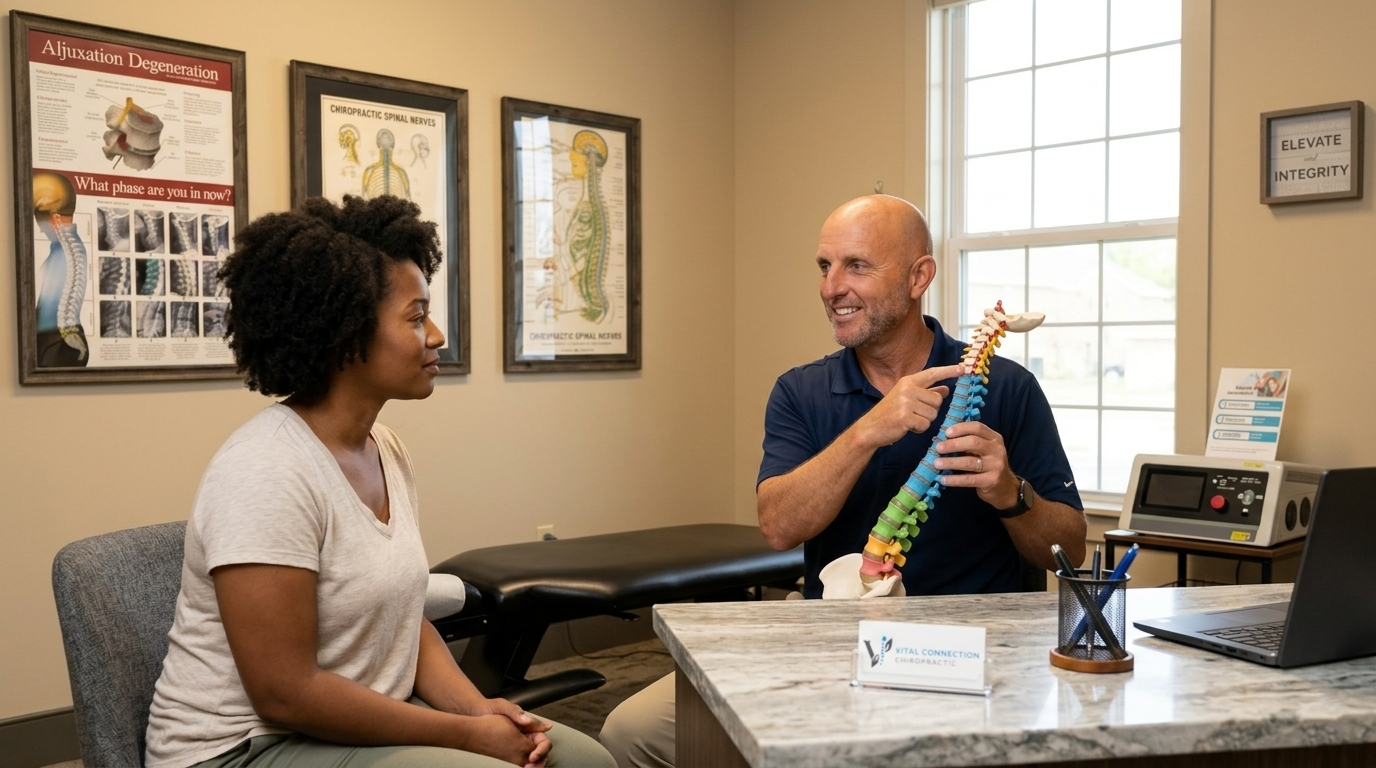
Whiplash symptoms may not always appear immediately. After an accident, adrenaline, stress, and shock can make it harder to notice pain. As inflammation, stiffness, and protective muscle guarding develop, symptoms may become more obvious.
This is one reason people sometimes wake up the next morning with more pain than they felt at the accident scene. Mayo Clinic notes that most people with whiplash improve within a few weeks with a treatment plan, but some develop longer-lasting neck pain and complications.
Delayed symptoms do not automatically mean something severe is happening, but they should not be ignored. A proper evaluation can help determine whether your symptoms seem mild, moderate, or concerning enough to need referral for medical imaging or another provider.
| Concern | What It May Mean | Best Next Step |
|---|---|---|
| Mild neck stiffness | Soft tissue irritation or guarded movement | Schedule an evaluation if it lasts more than a few days |
| Headache after impact | Neck-related tension or possible injury response | Get checked, especially if it worsens |
| Pain into shoulder or upper back | Muscle strain, joint irritation, or referred pain | Avoid heavy strain and seek professional guidance |
| Numbness, tingling, or weakness | Possible nerve involvement | Seek medical evaluation promptly |
| Severe pain after a crash | Possible more serious injury | Get urgent medical care before hands-on treatment |
When Chiropractic Care May Help
Chiropractic care may help with whiplash when the main concerns involve neck stiffness, joint restriction, muscle tension, posture changes, and movement sensitivity. The goal is not to “force” the neck to heal faster. The goal is to support the body’s recovery while helping reduce avoidable stress on irritated tissues.
A whiplash chiropractor may focus on:
- Checking neck range of motion
- Evaluating posture and movement patterns
- Identifying areas of joint restriction
- Assessing muscle tension and tenderness
- Recommending gentle mobility work
- Helping reduce strain from daily habits
- Building a care plan based on symptom severity
For patients who were injured in an auto accident, a page like Car Accident Chiropractor Fishers IN may also be a helpful resource.
Chiropractic care is not a replacement for emergency care, medical imaging, or specialist treatment when those are needed. If your symptoms suggest possible fracture, concussion, spinal cord involvement, or a serious neurological issue, medical evaluation should come first.
What to Expect at a Whiplash Chiropractic Visit
A whiplash visit should begin with listening. Your chiropractor should ask what happened, when symptoms started, what movements make symptoms worse, and whether you have signs that need referral.
At Vital Connection Chiropractic, the first visit may include a discussion of your accident or injury history, a movement assessment, posture check, and an explanation of what may be contributing to your discomfort. The care plan should match your condition, not a one-size-fits-all template.
Possible care recommendations may include gentle chiropractic adjustments, soft tissue work, mobility exercises, posture guidance, ergonomic advice, and home care steps. The specific approach depends on how irritated the neck is and whether symptoms are improving, worsening, or spreading.
 Safe Steps to Take After Whiplash
 Safe Steps to Take After Whiplash
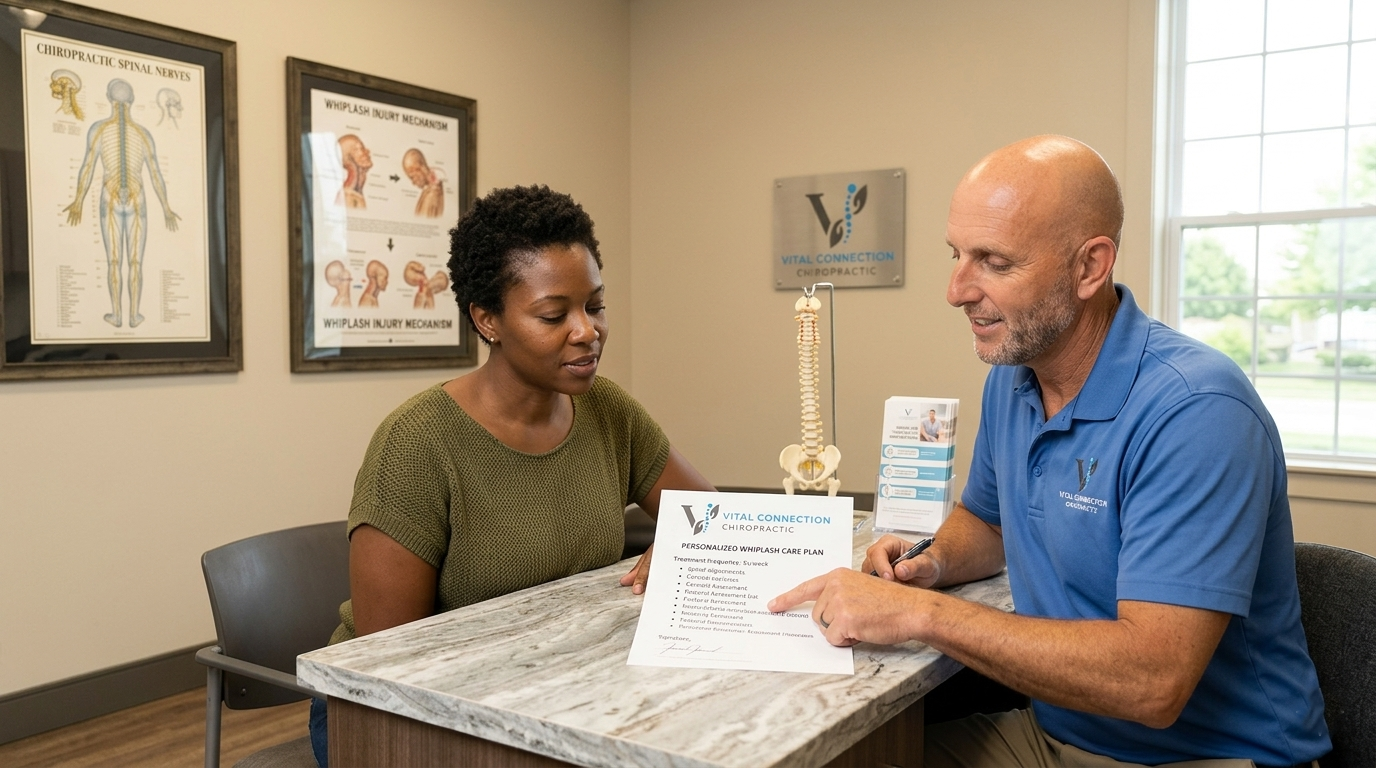
The safest steps after whiplash often depend on the severity of your symptoms. For mild symptoms, gentle movement and short-term self-care may support recovery. For more serious symptoms, professional evaluation is important.
Mayo Clinic explains that rest may help for a day or two after whiplash, but too much bed rest may slow healing. It also notes that heat or cold and nonprescription pain medicines may help some people manage symptoms.
Helpful early steps may include:
- Use ice or cold therapy if your neck feels inflamed or sore
- Avoid sudden twisting or aggressive stretching
- Keep the neck moving gently within a comfortable range
- Support your neck while sleeping
- Take breaks from screens and desk work
- Avoid heavy lifting until you are evaluated
- Track symptoms like headache, dizziness, numbness, or weakness
| Care Option | Best For | Why It May Help |
|---|---|---|
| Gentle movement | Mild stiffness | Helps reduce guarding without overloading the neck |
| Posture support | Desk work or driving discomfort | Reduces repeated stress on irritated tissues |
| Chiropractic evaluation | Neck pain after sudden impact | Helps identify movement limits and care needs |
| Soft tissue support | Muscle tightness or spasms | May calm tension around the injured area |
| Referral when needed | Severe or nerve-related symptoms | Helps rule out more serious injury |
If symptoms are affecting your ability to drive, sleep, work, or move comfortably, you can use Schedule Appointment to request a visit.
What Not to Do If You Have Whiplash
After whiplash, it is easy to accidentally make the irritation worse. Many people try to stretch hard, crack their own neck, push through pain, or return to exercise too quickly. These choices may increase soreness and delay improvement.
Avoid these common mistakes:
- Do not force your neck through painful motion
- Do not aggressively stretch in the first few days
- Do not ignore symptoms that are spreading into the arms
- Do not use heavy lifting to “test” if you are better
- Do not sit for hours without changing position
- Do not assume mild pain means no injury happened
- Do not delay care if symptoms are worsening
You should seek urgent medical care if you have severe headache, weakness, numbness, tingling below the neck, vision changes, trouble speaking, trouble swallowing, fainting, confusion, or symptoms after a major crash. Cleveland Clinic lists nerve-related symptoms as a reason to seek emergency care for whiplash.
How Long Whiplash Recovery May Take
 How Long Whiplash Recovery May Take
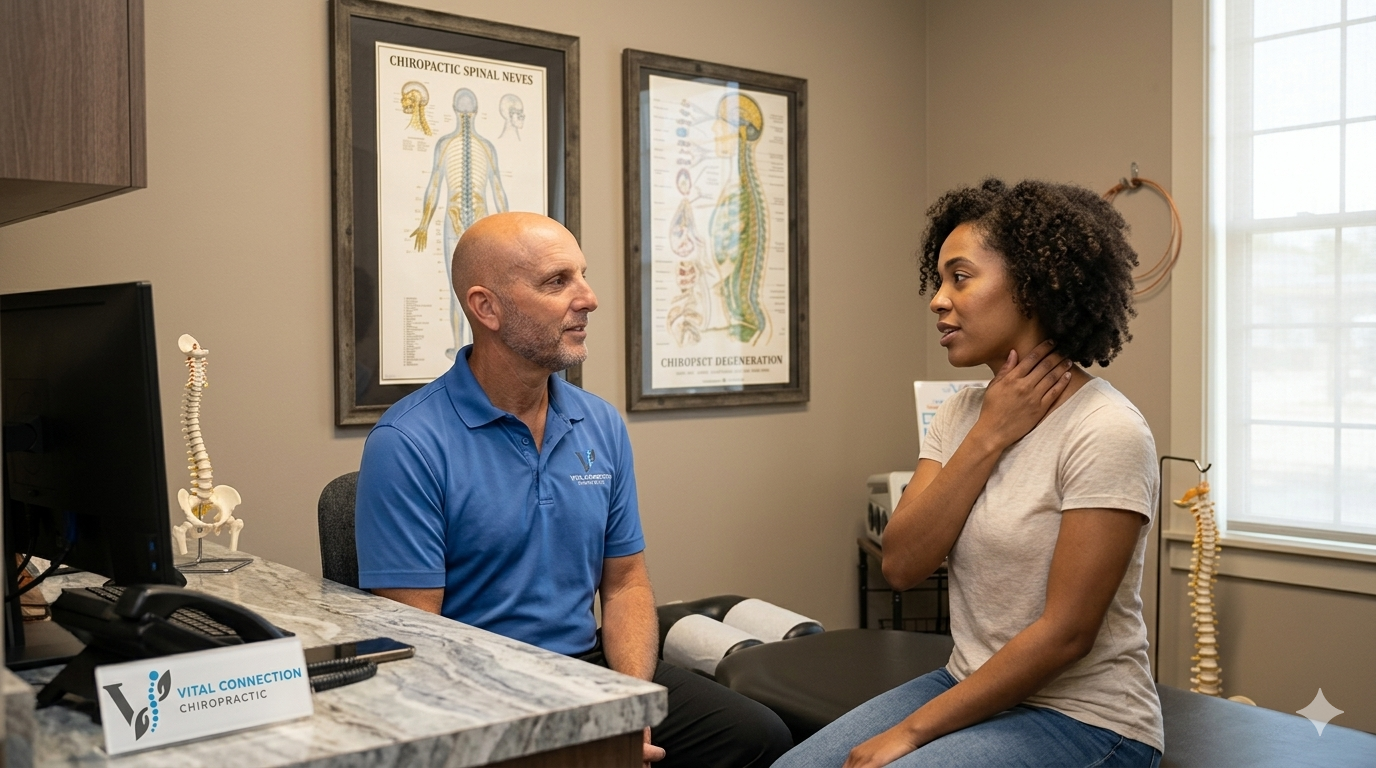
Whiplash recovery varies. Mild cases may improve within days or weeks, while more irritated or complex cases may take longer. Recovery can depend on the force of the injury, prior neck problems, inflammation, work demands, stress, sleep quality, and whether symptoms include nerve irritation.
Most people do improve, but some continue to have pain for months. Mayo Clinic notes that many whiplash-associated disorder symptoms resolve within three months, yet a portion of patients report pain that lasts longer.
A good care plan should focus on progress markers, not just time. These markers may include:
- Turning your head more comfortably
- Sleeping with fewer interruptions
- Having fewer headaches
- Returning to normal driving and work tasks
- Reducing dependence on guarding or bracing
- Feeling more confident with daily movement
The goal is not to promise instant recovery. The goal is to help your neck recover as well as possible with appropriate care, safe movement, and smart daily habits.
Whiplash Chiropractor Near Me in Fishers, IN
If you searched for “whiplash chiropractor near me” in Fishers, IN, you may be trying to decide whether your neck pain is something to watch or something to get checked. When pain starts after a car accident or sudden impact, a professional evaluation can give you more clarity.
Vital Connection Chiropractic serves patients in Fishers and nearby communities such as Noblesville, Carmel, Geist, McCordsville, Castleton, and Hamilton County. Care is designed to be patient friendly, practical, and individualized.
A local visit may be especially helpful if:
- Your neck feels stiff more than a few days after the accident
- You have headaches that began after the impact
- You feel pain while driving or turning your head
- You are avoiding movement because of soreness
- You want guidance before returning to workouts or sports
- You are unsure whether your symptoms are normal after a crash
A Patient-Friendly Approach to Whiplash Care
Whiplash can feel frustrating because the injury may not look obvious from the outside. You may be able to walk, talk, and work, but still feel pain when turning your head, sleeping, or sitting at a computer. That does not mean you are overreacting. It means your neck may need a careful evaluation and a plan that respects the healing process.
A chiropractor for whiplash should help you understand what is happening, what to avoid, what movements may be safe, and when additional medical care may be needed. Clear communication matters because patients often feel more confident when they know what the next step is.
For questions about availability, you can reach the office through Contact Us. To request a visit directly, use Schedule Appointment.
FAQs
Would a chiropractor help with whiplash?
A chiropractor may help with whiplash when symptoms involve neck stiffness, muscle tension, reduced range of motion, headaches, or movement-related discomfort. The right care depends on the severity of the injury and whether any red flags are present. A chiropractor can evaluate how your neck is moving, check for signs that need medical referral, and create a plan that may include gentle adjustments, soft tissue support, posture guidance, and home care. Severe pain, numbness, weakness, dizziness, or symptoms after a major crash should be medically evaluated.
What is the fastest way to heal whiplash?
The fastest safe path is usually early evaluation, appropriate rest, gentle movement, and a care plan based on your symptoms. There is no guaranteed overnight fix for whiplash because healing depends on the tissues involved, the force of the injury, your health history, and how your neck responds over time. Avoid forcing stretches, heavy lifting, or aggressive self-adjusting. Mild cases may improve in weeks, but more involved cases can take longer. The goal is steady recovery without irritating the neck further.
What are the 4 phases of whiplash?
The 4 phases of whiplash are often described as the initial injury phase, acute inflammatory phase, recovery and repair phase, and remodeling or chronic phase. In the first phase, the neck experiences sudden force. In the acute phase, pain, stiffness, and inflammation may increase. During recovery, mobility and comfort may gradually improve with proper care. In the remodeling or chronic phase, lingering symptoms may need more structured support. Not everyone moves through these phases the same way.
What not to do if you have whiplash?
Do not force painful motion, crack your own neck, ignore worsening symptoms, or rush back into heavy activity too soon. Whiplash can involve irritated soft tissue and sensitive joints, so aggressive stretching or testing your limits may make symptoms worse. You should also avoid long periods of poor posture, especially while driving or using a computer. If you have numbness, weakness, severe headache, dizziness, vision changes, or symptoms after a significant crash, seek medical care promptly.
Do you ever fully recover from whiplash?
Many people recover well from whiplash, especially with appropriate care and time, but recovery is different for each person. Mild cases may settle within days or weeks, while more complex cases can take months and may require a more structured plan. Some people experience lingering pain or stiffness, especially if symptoms are severe early on or if there are nerve-related signs. A proper evaluation can help clarify your situation and guide the safest next steps for your recovery.