What Is Deep Tissue Laser Therapy and Does It Work? A Complete Evidence-Based Guide
Deep tissue laser therapy (DTLT) is a non-invasive, nonpharmacological treatment that delivers focused laser energy at wavelengths typically between 600 and 1,100 nm to stimulate cellular repair, reduce inflammation, and relieve pain through a process called photobiomodulation. Clinical research, including a 2019 NIH-published randomized controlled trial, confirms that DTLT significantly reduced pain and improved quality of life in older adults with painful diabetic peripheral neuropathy. A 2023 systematic review and meta-analysis of 48 randomized controlled trials further found meaningful reductions in pain scores and functional improvements in musculoskeletal disorders.
Key Takeaways
- Deep tissue laser therapy is a photobiomodulation treatment that uses non-ionizing laser energy to promote cellular repair and reduce pain at tissue depths unreachable by lower-power devices.
- Class IV lasers deliver output exceeding 500 mW, enabling deeper tissue penetration and shorter treatment sessions, typically two to ten minutes each.
- A 2023 meta-analysis of 44 randomized controlled trials found that high-intensity laser therapy (HILT) reduced pain scores by a mean difference of 1.3 cm on the visual analog scale compared to control conditions.
- Evidence is strongest for musculoskeletal conditions of the knee and shoulder, with less convincing data for acute deep tissue injuries compared to conventional modalities.
- Several DTLT devices have received FDA clearance, including the AVI HP-7.5, AVI HPLL-12, and Diowave Laser System, making regulatory status an important consideration when choosing a provider.
- No established national practice guidelines currently exist for HILT in chronic pain management, meaning clinical protocols vary across providers.
 What Is Deep Tissue Laser Therapy and How Does It Work?
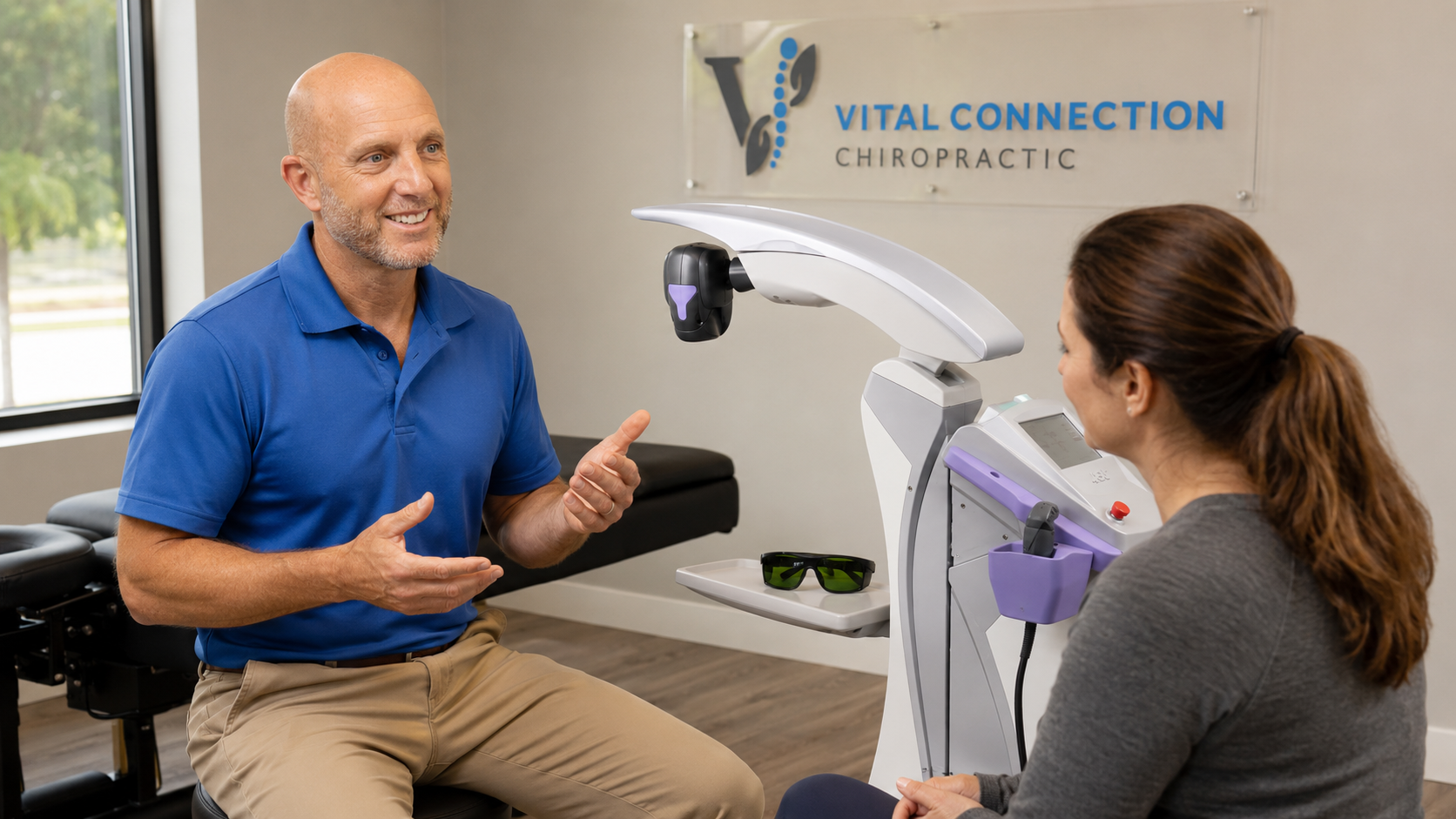
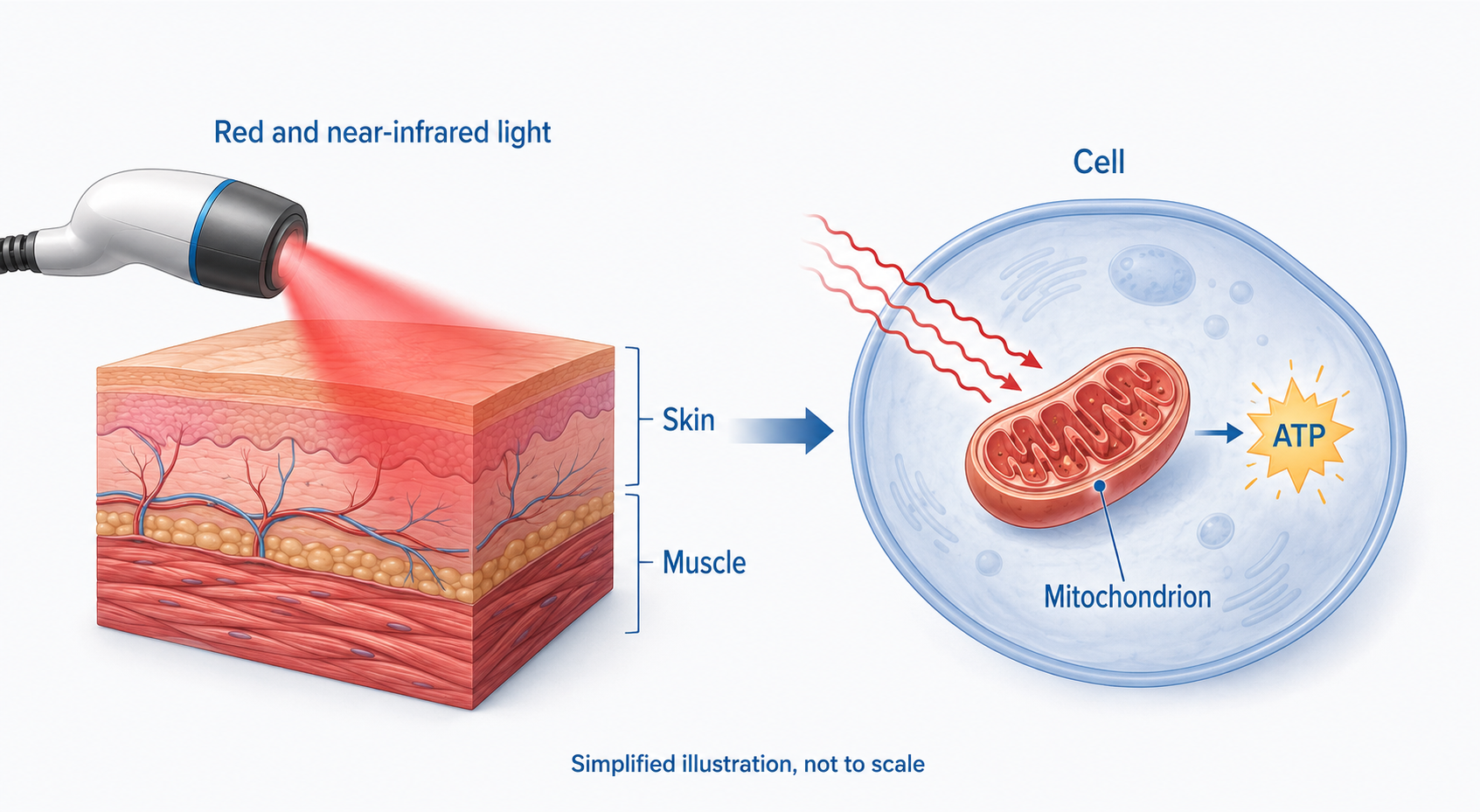
Deep tissue laser therapy is a photobiomodulation modality that delivers non-ionizing laser wavelengths, typically 600 to 1,100 nm, directly into damaged or inflamed tissue to trigger biochemical changes at the cellular level. The laser energy is absorbed by chromophores within mitochondria, stimulating adenosine triphosphate (ATP) production, reducing oxidative stress, and activating tissue repair pathways. Unlike surgical or ablative lasers, DTLT does not cut or destroy tissue.
Class IV lasers, which power most DTLT devices, operate above 500 mW of continuous output. This higher power output differentiates them from Class III (low-level) laser devices, which penetrate tissue less effectively and require longer exposure times. The increased power allows a trained clinician to deliver a therapeutic dose to structures such as tendons, ligaments, joint capsules, and spinal musculature within two to ten minutes per session.
A 2025 NIH/PMC study published by Chaki et al. from Swinburne University of Technology and Enovis noted that treatment parameters, including energy level and pulse duration, must be carefully calibrated to balance efficacy with thermal safety at the skin surface. The study identified a significant research gap in optimizing protocols for devices exceeding 30 W while minimizing elevated skin temperatures. The bottom line is that the mechanism is scientifically grounded, but parameter selection is technically demanding and requires clinical expertise.
What Conditions Can Deep Tissue Laser Therapy Treat?
Deep tissue laser therapy is used clinically to address a range of musculoskeletal and neurological pain conditions, with the strongest evidence concentrated in specific anatomical regions. According to a 2023 systematic review and meta-analysis published in PMC reviewing 48 randomized controlled trials, HILT produced statistically significant improvements in both pain and function for musculoskeletal disorders (MSDs). Differences in effectiveness were noted by location, with the greatest functional gains observed in disorders of the knee and shoulder.
Conditions commonly addressed with DTLT include:
- Chronic low back pain
- Neck pain and cervical disc disorders
- Knee osteoarthritis
- Shoulder impingement and rotator cuff injuries
- Plantar fasciitis
- Diabetic peripheral neuropathy
- Tendinopathy and soft tissue injuries
- Temporomandibular joint (TMJ) disorders
A 2019 pilot randomized clinical trial published in PubMed and PMC found that deep tissue laser therapy significantly reduced pain and improved quality of life specifically in older adults with type 2 diabetes experiencing peripheral neuropathic pain. This represents one of the more rigorous study designs supporting DTLT for a neurological pain application. The bottom line is that DTLT has its broadest evidence base in musculoskeletal disorders and emerging support for neuropathic pain.
How Does Deep Tissue Laser Therapy Differ From Low-Level Laser Therapy?
Deep tissue laser therapy and low-level laser therapy (LLLT) are both photobiomodulation modalities, but they differ substantially in output power, tissue penetration depth, and treatment time. LLLT uses Class III devices typically operating below 500 mW, while DTLT uses Class IV devices that exceed 500 mW and can reach several watts or more. This power difference directly determines how deeply the therapeutic dose penetrates beneath the skin surface.
| Feature | Low-Level Laser Therapy (LLLT) | Deep Tissue Laser Therapy (DTLT/HILT) |
|---|---|---|
| Laser class | Class III | Class IV |
| Power output | Less than 500 mW | Greater than 500 mW, up to 30 W or more |
| Tissue penetration | Superficial to moderate | Deep musculoskeletal structures |
| Session duration | Longer (15–30+ minutes) | Shorter (2–10 minutes typically) |
| Heat sensation | Minimal | Mild warming sensation common |
| Primary applications | Surface wounds, superficial pain | Tendons, joints, spinal structures, neuropathy |
| Evidence quality | Moderate, established body of literature | Emerging, growing RCT base |
A 2024 NIH/PMC review on photobiomodulation found that LLLT demonstrates beneficial effects on exertion recovery, muscle strength, and endurance in sport performance contexts, but that evidence is less convincing for acute, deep tissue injury models compared to conventional therapeutic modalities. The bottom line is that DTLT provides deeper reach than LLLT, making it more appropriate for structural musculoskeletal conditions, though both modalities share the same photobiomodulation foundation.
 What Does the Clinical Evidence Actually Show?
 What Does the Clinical Evidence Actually Show?
The clinical evidence for deep tissue laser therapy is best characterized as emerging and condition-dependent, with moderate quality support for musculoskeletal pain and early but promising data for neuropathic conditions. The most comprehensive quantitative assessment comes from a February 2023 systematic review and meta-analysis in PMC, which synthesized 44 randomized controlled trials and found a mean pain reduction of 1.3 cm on the visual analog scale (95% CI: -1.6 to -1.0) and a standardized mean difference of -1.0 (95% CI: -1.4 to -0.7) for functional improvement. The authors graded the pain evidence as low quality and the functional evidence as moderate quality, indicating that further high-quality trials are needed.
For neuropathic pain specifically, a 2019 pilot randomized clinical trial at NIH/PubMed enrolled older adults with painful diabetic peripheral neuropathy and found significant pain reduction and quality-of-life improvements in the DTLT group compared to controls. This was a pilot trial, meaning sample sizes were limited, but the findings support larger-scale investigation. Importantly, a 2024 NIH/PMC photobiomodulation review noted that evidence is less convincing for acute deep tissue injury models, where most studies do not report significant benefits for functional outcomes over conventional modalities.
Blue Cross Blue Shield’s 2026 medical policy on laser therapy states that no established practice guidelines currently exist for HILT in chronic pain disorders and that it is unclear where the technology fits in the clinical pathway. This does not negate the research, but it reflects the current state of payer and guideline body consensus. The bottom line is that DTLT is supported by an expanding clinical literature, but the evidence quality is moderate and the research is still maturing.
Is Deep Tissue Laser Therapy FDA-Approved?
Several deep tissue laser therapy devices have received FDA clearance in the United States, though the regulatory landscape includes important distinctions. According to documentation referenced in a 2026 Blue Cross Blue Shield medical policy, the FDA has cleared specific HILT devices, including the AVI HP-7.5, AVI HPLL-12, and Diowave Laser System. Additionally, a 2021 NIH/PMC study noted that a 1,275 nm laser has received FDA approval for physical therapy applications and produces long-lasting beneficial effects for the treatment of chronic pain and fibromyalgia.
It is important to distinguish between FDA clearance (510(k) pathway, meaning the device is substantially equivalent to a predicate device) and full FDA approval (requiring clinical trial evidence of safety and efficacy). Most cleared laser devices have gone through the clearance pathway rather than the approval pathway. Providers using FDA-cleared devices are operating within a regulated framework, but the clearance itself does not constitute an endorsement of clinical efficacy for all conditions marketed.
When evaluating a provider, you should ask whether the specific device being used has FDA clearance, what the cleared indication is, and whether the clinician is trained in protocol calibration. The bottom line is that FDA-cleared DTLT devices exist and are legally used in clinical settings, but clearance status varies by device and should be verified.
What Is the Treatment Protocol and What Should You Expect?
A standard deep tissue laser therapy protocol involves multiple sessions delivered over several weeks, with individual session times ranging from two to ten minutes depending on the target tissue, depth, and energy dose required. The treating clinician positions the laser handpiece directly over or near the treatment area and moves it in a slow, methodical pattern to distribute energy evenly across the target tissue. Most patients report a mild, pleasant warming sensation during treatment.
A typical clinical protocol follows this structure:
- Initial evaluation: The clinician assesses the condition, determines target tissue depth, and selects appropriate wavelength and power settings.
- Baseline pain and function scoring: Standardized outcome measures, such as the visual analog scale, are recorded before treatment begins.
- Session frequency: Most protocols involve six to twelve sessions, often two to three times per week in the initial phase.
- Parameter calibration: Energy level, pulse mode (pulsed vs. continuous wave), and duration are adjusted based on tissue response and patient feedback.
- Mid-treatment reassessment: Progress is evaluated at sessions four to six, with protocol adjustments made as needed.
- Maintenance phase: Some patients transition to monthly or as-needed sessions after completing the primary treatment series.
A 2025 NIH/PMC comparative analysis found that pulsed wave irradiation achieved a lower skin surface temperature (42.5°C) and a higher fluence (approximately 4.2 J/cm²) compared to continuous wave delivery after 300 seconds, suggesting that pulsed modes may offer a safer thermal profile during extended sessions. The bottom line is that the treatment itself is brief and non-invasive, but effective outcomes depend heavily on accurate protocol selection and clinician expertise.
 What Are the Risks and Drawbacks of Deep Tissue Laser Therapy?
 What Are the Risks and Drawbacks of Deep Tissue Laser Therapy?
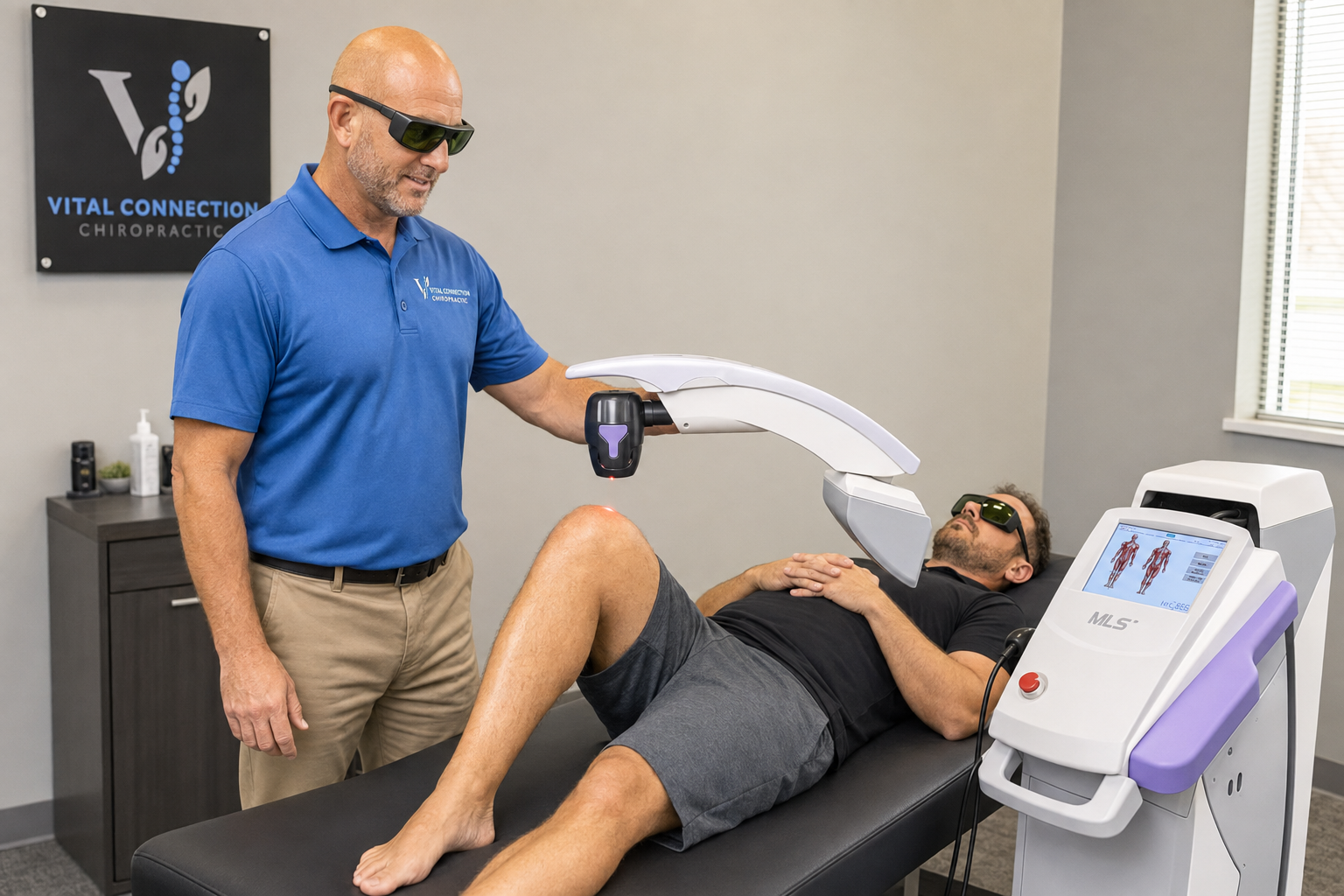
Deep tissue laser therapy carries a limited but real set of risks that you should understand before beginning treatment. The most clinically significant concern is thermal injury to superficial skin tissue if power settings are miscalibrated or if the handpiece is held stationary over a single area for too long. Both the clinician and patient must wear wavelength-specific protective eyewear throughout every session to prevent ocular damage, as Class IV laser energy poses a direct retinal hazard.
The primary drawbacks of DTLT include:
- Cost and insurance coverage: Most private insurers, including Blue Cross Blue Shield, classify HILT as investigational or experimental for most indications, meaning out-of-pocket payment is common.
- Evidence gaps: No established national practice guidelines exist for HILT in chronic pain, and evidence quality for several conditions remains low to moderate.
- Thermal risk: Inadequate protocol calibration can result in skin surface temperatures exceeding safe thresholds, particularly with continuous wave delivery at high power.
- Contraindications: DTLT is contraindicated over active malignancy sites, during pregnancy over the uterus or pelvis, over the eyes, directly over growth plates in pediatric patients, and over areas with impaired sensation where the patient cannot report heat discomfort.
- Inconsistent protocols: The 2025 NIH/PMC study identified a notable research gap in standardized treatment protocols, meaning the dose you receive can vary significantly between providers.
The bottom line is that DTLT is generally safe when delivered by a trained clinician using a calibrated, FDA-cleared device, but the lack of standardized protocols and limited insurance coverage are meaningful practical limitations.
How Does Deep Tissue Laser Therapy Fit Into Chiropractic Care?
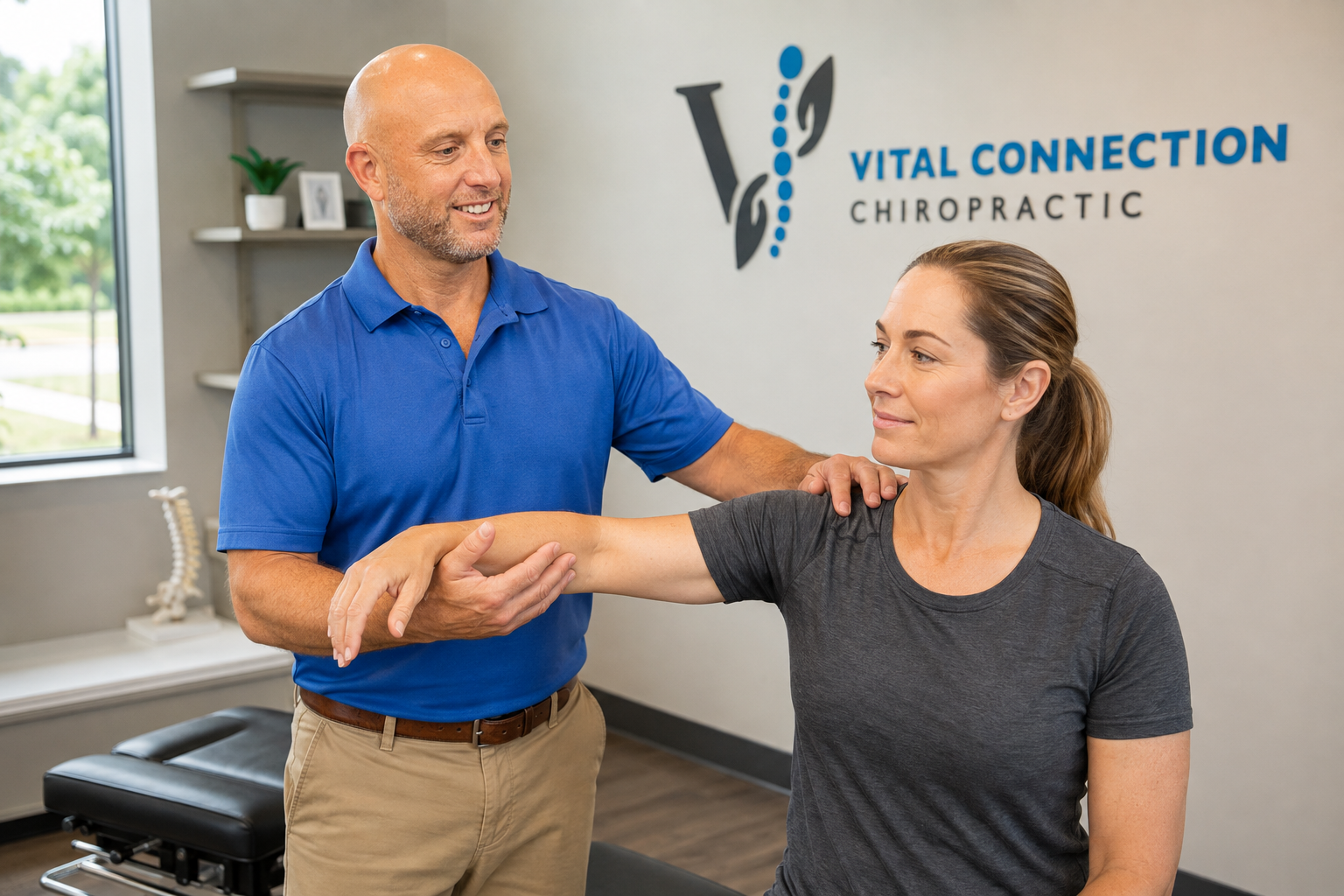
Deep tissue laser therapy is used as an adjunctive modality within chiropractic clinical settings, where it complements spinal manipulation, soft tissue work, and rehabilitative exercise. As Dr. Jared Himsel explains: “I’d been seeing a chiropractor on and off for pain relief. In chiropractic college, I learned why chiropractic is a lifestyle and not just for when you have discomfort.” This perspective reflects the broader integration of therapeutic modalities like DTLT into a proactive, ongoing wellness model rather than exclusively reactive pain management.
In a chiropractic context, DTLT is typically applied to reduce inflammation and pain in soft tissues before or after a spinal adjustment, allowing the adjustment to be performed with less patient guarding and greater joint mobility. The modality is particularly relevant for patients presenting with chronic musculoskeletal pain, peripheral neuropathy, or post-injury recovery who require a non-pharmacological option. Integrating DTLT with chiropractic adjustments, corrective exercise, and lifestyle modification allows for a more comprehensive approach to musculoskeletal health.
If you are considering deep tissue laser therapy as part of your care plan, you can learn more about MLS Laser Therapy services in Fishers, IN at Vital Connection Chiropractor. To take the next step, you can contact the team directly or schedule an appointment online to discuss whether DTLT is appropriate for your condition. The bottom line is that DTLT is most effective when embedded within a coordinated care plan rather than used as a standalone, episodic treatment.
Is Deep Tissue Laser Therapy Right for You? What to Consider
Determining whether deep tissue laser therapy is appropriate for your situation requires an evaluation that accounts for your diagnosis, treatment history, pain chronicity, and any contraindications. DTLT is most likely to benefit patients with chronic musculoskeletal conditions, particularly of the knee or shoulder, and those with peripheral neuropathic pain who have not achieved adequate relief through conventional physical therapy or medication alone.
Before beginning treatment, you should confirm that the provider is using an FDA-cleared device, that the clinician is trained in Class IV laser protocols, and that baseline outcome measures will be recorded to track your progress objectively. You should also discuss realistic expectations: DTLT is not curative for structural degenerative conditions, but it can meaningfully reduce pain and improve function when used within an evidence-informed protocol. The bottom line is that DTLT is a clinically supported adjunctive option for select musculoskeletal and neuropathic pain conditions, best accessed through a trained provider who can calibrate treatment to your specific clinical presentation.
Conclusion: What You Need to Know About Deep Tissue Laser Therapy
 Conclusion: What You Need to Know About Deep Tissue Laser Therapy
Deep tissue laser therapy represents a scientifically grounded, non-invasive approach to pain management and tissue repair that has accumulated a meaningful evidence base over the past decade. The strongest clinical data supports its use in musculoskeletal disorders of the knee and shoulder and in peripheral neuropathic pain, with a 2023 meta-analysis of 44 randomized controlled trials confirming statistically significant improvements in both pain and function. Research quality is still developing, no universal treatment guidelines have been established, and insurance coverage remains limited in most cases.
For patients seeking a nonpharmacological, drug-free alternative within a chiropractic or multidisciplinary care model, DTLT offers a viable and low-risk adjunctive option when delivered by a clinician using a properly calibrated, FDA-cleared device. You are best served by approaching DTLT as one component of a comprehensive care strategy rather than a standalone solution.
The bottom line: Deep tissue laser therapy is a photobiomodulation treatment with growing clinical evidence for musculoskeletal and neuropathic pain, and it is most effective when integrated into a coordinated, individualized care plan delivered by a trained provider using an FDA-cleared Class IV laser device.
Frequently Asked Questions
Does deep tissue laser therapy really work?
Deep tissue laser therapy does produce clinically meaningful results for specific conditions, based on current peer-reviewed evidence. A 2023 systematic review and meta-analysis of 44 randomized controlled trials found significant pain reductions and functional improvements in musculoskeletal disorders, and a 2019 NIH-published randomized trial confirmed significant pain relief in diabetic peripheral neuropathy. Evidence quality is moderate, and results vary by condition, patient, and protocol precision.
What are two drawbacks of laser therapy?
The two most significant drawbacks of laser therapy are limited insurance coverage and a lack of standardized treatment protocols. Most major insurers, including Blue Cross Blue Shield, classify high-intensity laser therapy as investigational for most indications, making out-of-pocket costs common. Simultaneously, no established national practice guidelines exist for HILT in chronic pain management, meaning dosing and session frequency vary considerably across providers.
How much does it cost for laser therapy?
The cost of laser therapy varies by provider, geographic location, and session length, and it is not confirmed at a single national rate in the published clinical literature reviewed here. Because most major insurers classify HILT as investigational or experimental for the majority of indications, patients typically pay out of pocket. You should contact your specific provider directly to obtain accurate pricing, and ask whether package rates are available for multi-session protocols.
Can laser fix receding gums?
Laser therapy is used in periodontal dentistry for gum tissue procedures, but deep tissue musculoskeletal laser therapy as described in this article is not the modality applied to receding gums. Dental laser treatments for receding gums involve different devices, clinical settings, and procedural protocols. You should consult a periodontist or dental specialist to discuss appropriate laser-based options for gum recession specifically.
What is the new treatment for receding gums?
The treatment of receding gums continues to evolve, with minimally invasive periodontal procedures gaining attention in dental practice. One approach that has gained recognition is the Pinhole Surgical Technique, which repositions existing gum tissue without grafting. Laser-assisted periodontal procedures are also used in this context, but these are distinct from musculoskeletal deep tissue laser therapy and should be evaluated with a qualified periodontist.
About the Author
Dr. Jared Himsel is a licensed chiropractor and founder of Vital Connection Chiropractor in Fishers, Indiana. He holds a Doctor of Chiropractic degree and focuses on integrating evidence-informed modalities, including laser therapy, with chiropractic care to support long-term musculoskeletal health and patient wellness.
Medically Reviewed By: Dr. John Rempel, Chiropractor