Shin Splints Treatment in Fishers, IN: What Active Patients Should Know
Shin splints treatment usually starts with reducing the activity that triggers pain, using ice, improving footwear, stretching tight muscles, and correcting movement issues that overload the lower leg. For many runners, athletes, and active adults in Fishers, IN, chiropractic care may also help by evaluating how the feet, ankles, knees, hips, pelvis, and spine work together during movement. The right plan depends on the cause of your shin pain, how long symptoms have been present, and whether another condition, such as a stress fracture or compartment syndrome, needs medical evaluation.
What Are Shin Splints?
Shin splints are a common overuse injury that causes pain along the front or inner edge of the lower leg. The discomfort often shows up during or after running, jumping, walking long distances, or suddenly increasing training.
The medical term often used for shin splints is medial tibial stress syndrome. This means the muscles, tendons, and bone tissue around the tibia may be irritated from repetitive stress.
Shin splints are common in:
- Runners
- Dancers
- Military recruits
- Basketball and soccer players
- Track athletes
- Weekend warriors
- Active adults increasing their walking or fitness routine
In Fishers and Hamilton County, many patients develop shin pain when they start a new gym program, train for a race, return to sports after time off, or increase outdoor running on sidewalks, hills, or uneven surfaces.
The good news is that shin splints often improve with the right conservative care. The important part is identifying what is irritating the area so the pain does not keep returning.
Why Shin Splints Happen
Shin splints usually develop when the lower leg absorbs more stress than it can comfortably handle. This may happen after a sudden change in activity, training volume, running surface, footwear, or mechanics.
Common causes and contributing factors include:
- Increasing mileage too quickly
- Running hills or hard surfaces
- Wearing worn-out or unsupportive shoes
- Skipping warmups
- Tight calves or limited ankle mobility
- Weak hip, glute, or foot muscles
- Flat feet or overpronation
- High arches that do not absorb shock well
- Poor running form
- Returning to sports too quickly after rest
- Muscle imbalance between the front and back of the lower leg
Shin splints are not always just a “shin problem.” The lower leg is part of a chain that includes the foot, ankle, knee, hip, pelvis, and low back. When one area is stiff, weak, or moving poorly, another area may compensate.
For example, if the foot rolls inward too much during running, the muscles along the shin may work harder to control that motion. If the hips are weak, the knee and lower leg may absorb more strain. If the ankle lacks mobility, the shin may take repeated stress with every step.
That is why a thorough evaluation matters. A good plan does not only ask, “Where does it hurt?” It also asks, “Why is that area being overloaded?”
 Common Symptoms of Shin Splints
Shin splints often begin as a dull ache in the lower leg. At first, the pain may only appear during activity and improve with rest. If the irritation continues, symptoms may become more noticeable and last longer after exercise.
Common symptoms include:
- Pain along the inner edge of the shinbone
- Tenderness when pressing along the shin
- Aching, tightness, or soreness in the lower leg
- Pain that worsens during running or jumping
- Pain that improves with rest in early stages
- Mild swelling or irritation in the lower leg
- Discomfort that returns when activity resumes
The pain can affect one leg or both legs. Some patients describe it as a tight pulling sensation. Others feel sharp pain during impact activity.
Pain patterns can vary. That is why it is important not to assume every lower leg pain is shin splints. Some conditions need different care and may require medical imaging or referral.
When Shin Pain May Be Something Else
Shin splints are common, but they are not the only cause of lower leg pain. In some cases, pain in the shin may come from a stress fracture, tendon irritation, nerve issue, circulation problem, or chronic exertional compartment syndrome.
You should be more cautious if pain is sharp, located in one small spot, getting worse, present at rest, or associated with numbness, weakness, swelling, or difficulty walking.
| Concern | What It May Mean | Best Next Step |
|---|---|---|
| Pain in one small, specific spot on the tibia | Possible stress reaction or stress fracture | Stop impact activity and seek medical evaluation |
| Tightness, burning, numbness, or weakness during exercise | Possible compartment syndrome or nerve involvement | Get evaluated, especially if symptoms repeat with activity |
| Pain that continues even after rest | More than simple overuse irritation | Schedule an exam before returning to running |
| Shin pain with swelling, redness, warmth, or calf tenderness | Possible vascular or inflammatory concern | Seek prompt medical care |
| Pain that causes limping | Load may be too high for the tissue | Reduce activity and get a professional assessment |
This does not mean every case is serious. It means persistent shin pain deserves attention. The earlier you address it, the easier it may be to correct the contributing factors and return to activity safely.
How Chiropractic Care May Support Shin Splints Treatment
A chiropractor for shin splints does not simply treat the painful area. The goal is to understand how your body is absorbing impact and where extra stress is coming from.
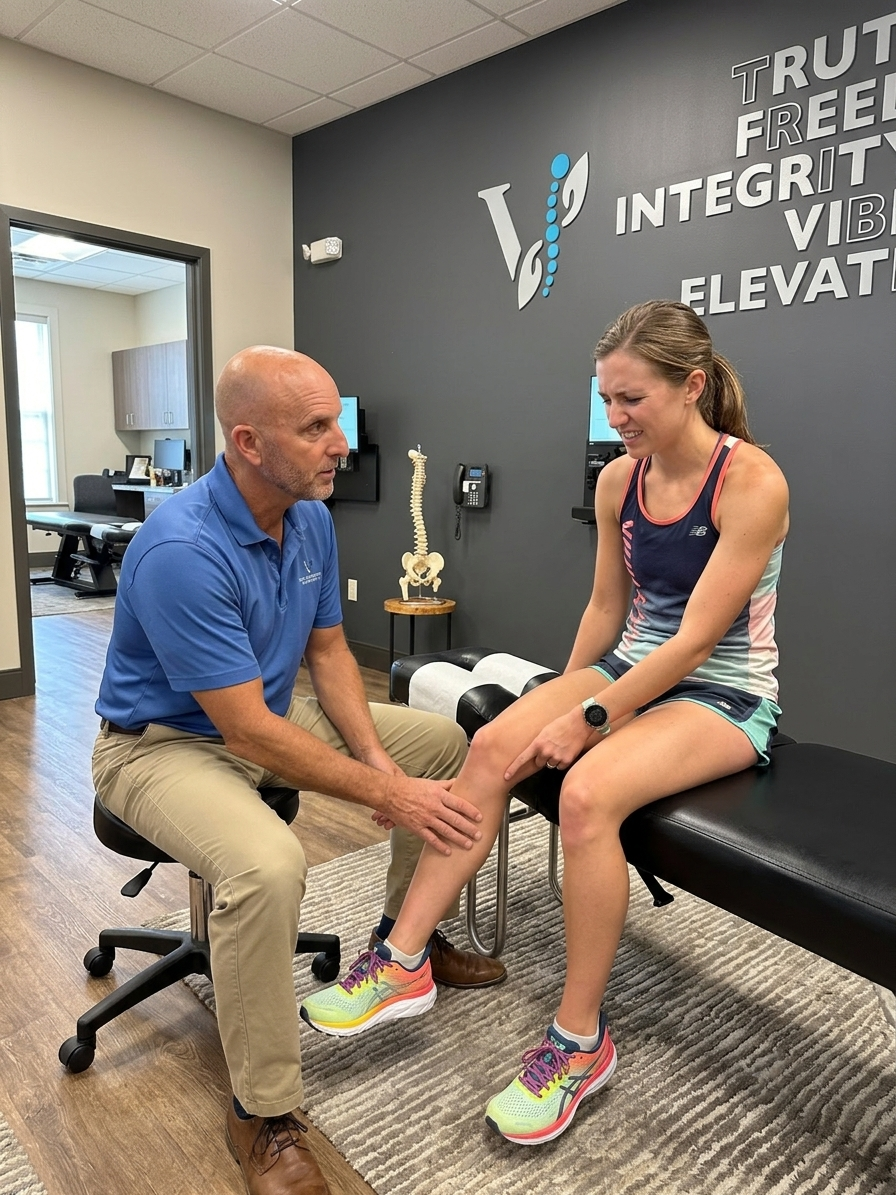
At Vital Connection Chiropractic, care may include an evaluation of the spine, pelvis, hips, knees, ankles, and feet. This helps identify movement patterns that may contribute to repeated lower leg strain.
Chiropractic care may support shin splints treatment by helping with:
- Joint mobility in the foot, ankle, knee, hip, pelvis, or spine
- Muscle tension in the calves, shins, hips, or surrounding areas
- Movement mechanics during walking, running, or athletic activity
- Soft tissue irritation from repetitive stress
- Exercise guidance to support recovery
- Return-to-activity planning
- Prevention strategies for active patients
Some patients benefit from chiropractic adjustments when joint restrictions are affecting movement. Others need soft tissue work, stretching, strengthening, taping, or training modifications. Many need a combination.
Patients looking for a conservative, movement-focused approach can learn more about Chiropractic Care at Vital Connection Chiropractic.
Shin Splints Treatment Options for Fishers, IN Patients
Shin splints treatment should match the stage and severity of the condition. Mild cases may respond well to activity modification and home care. Ongoing cases often need a more complete plan.
A chiropractor may recommend conservative strategies such as:
- Rest from painful impact activity
- Ice after activity
- Calf and shin stretching
- Strengthening for the feet, ankles, hips, and core
- Gait and movement review
- Footwear guidance
- Kinesiology taping
- Soft tissue therapy
- Joint mobility work
- Gradual return to running or sport
- Cross-training while symptoms calm down
Some patients may also benefit from therapies designed to support tissue recovery. For example, radial pulse wave or shockwave-style therapy is sometimes used for musculoskeletal conditions involving irritated soft tissue. Whether it is appropriate depends on the patient, the condition, and the evaluation.
| Care Option | Best For | Why It May Help |
| Activity modification | Pain during running or jumping | Reduces repeated stress while tissues calm down |
| Ice and recovery care | Recent soreness or irritation | Helps manage discomfort after activity |
| Chiropractic evaluation | Repeated shin pain or movement imbalance | Looks at the foot, ankle, knee, hip, pelvis, and spine |
| Soft tissue therapy | Tight calves, shin tension, or adhesions | May improve comfort and mobility |
| Rehab exercises | Weakness, poor control, or recurring symptoms | Builds strength for safer return to activity |
| Footwear or orthotic guidance | Overpronation, poor shoe support, or uneven loading | Helps improve how force travels through the lower leg |
If you are active in running, lifting, team sports, or recreational fitness, Vital Connection Chiropractic also supports patients through the Athletes page, which focuses on active individuals and sports-related concerns.
 What to Do at Home Before Returning to Activity
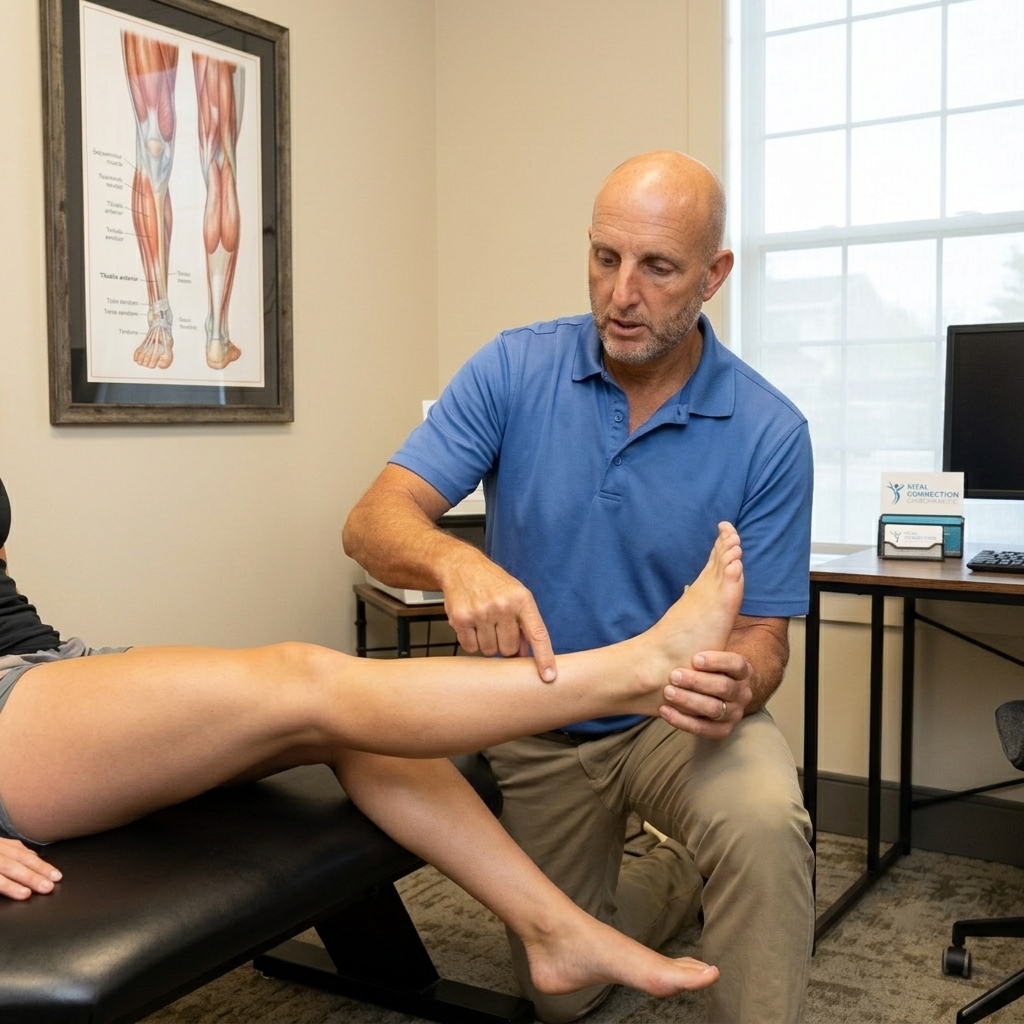 What to Do at Home Before Returning to Activity
For mild shin splints, home care can be helpful when symptoms are caught early. The goal is not to stop moving completely forever. The goal is to reduce painful stress while keeping the body active in safer ways.
Helpful steps may include:
- Reduce impact activity temporarily
Avoid running, jumping, sprinting, and hill work while pain is active. Try low-impact options such as cycling, swimming, or walking if they do not increase symptoms. - Ice after activity
Use an ice pack wrapped in a towel for 15 to 20 minutes after activity or when soreness flares. Do not apply ice directly to the skin. - Stretch the calves gently
Tight calves can increase lower leg strain. Stretch slowly and avoid forcing painful positions. - Strengthen gradually
Foot, ankle, calf, hip, and glute strength all matter. Start light and increase only when symptoms allow. - Check your shoes
Old running shoes may no longer absorb shock properly. Shoes that do not match your foot type can also contribute to recurring symptoms. - Avoid the “push through it” mindset
Pain that changes your stride is a warning sign. Limping can create new stress in the knees, hips, or back.
MedlinePlus notes that shin splints are common in runners, dancers, gymnasts, and military recruits, and that self-care often includes rest, ice, and changes in activity. Mayo Clinic also recommends avoiding activities that cause pain while staying active with lower-impact exercise when appropriate.
How to Return to Running or Sports Safely
Returning too fast is one of the most common reasons shin splints come back. Once symptoms improve, your lower leg still needs time to tolerate impact again.
A safer return may include:
- Starting with short walks
- Progressing to walk-jog intervals
- Avoiding hills at first
- Running on softer, even surfaces
- Increasing mileage slowly
- Taking rest days between runs
- Continuing strength and mobility work
- Stopping if pain changes your stride
A simple rule is to increase gradually and monitor symptoms during activity, after activity, and the next morning. If pain returns quickly or lingers, the tissue may not be ready for that level of load.
For athletes in Fishers, Noblesville, Carmel, Geist, McCordsville, Castleton, and Hamilton County, returning to training should be based on function, not just motivation. A structured plan can help you stay active without repeatedly restarting the injury cycle.
How to Prevent Shin Splints From Coming Back
Prevention starts with better load management and better movement. If the lower leg keeps getting overloaded, symptoms may return every time training increases.
Helpful prevention steps include:
- Warm up before running or sports
- Increase mileage slowly
- Avoid sudden changes in terrain
- Replace worn-out shoes
- Add strength work for calves, feet, hips, and glutes
- Stretch tight calves and ankles
- Improve running form when needed
- Cross-train to reduce repetitive impact
- Take rest days seriously
- Address pain early instead of waiting weeks
It may also help to review your full training routine. Shin splints can happen when someone adds hill sprints, new shoes, speed work, longer runs, or harder surfaces all at once. One change at a time is easier for the body to adapt to.
Patients with recurring lower leg pain may also benefit from a broader exam through the Conditions page, especially when shin pain is part of a larger pattern involving the feet, knees, hips, or low back.
When to Schedule an Evaluation
You should schedule an evaluation if shin pain is recurring, worsening, limiting your activity, or not improving with basic care. You should also get checked if pain is sharp, localized to one small area, present at rest, or causing you to limp.
A chiropractor can evaluate movement and musculoskeletal factors, but medical referral may be needed if symptoms suggest a fracture, vascular issue, neurological concern, or compartment syndrome.
Schedule an appointment sooner if:
- Pain lasts more than a couple of weeks
- Pain returns every time you run
- You feel numbness, tingling, or weakness
- Pain is severe or one-sided
- You recently increased training significantly
- You cannot walk normally
- Home care is not helping
Vital Connection Chiropractic provides patient-centered care for active adults, athletes, and families in Fishers, IN. The goal is to help you understand what may be contributing to your shin pain and build a plan that supports safe movement.
To get started, use Schedule Appointment or reach out through Contact Us.
 FAQ
FAQ
 FAQ
FAQCan a chiropractor do anything for shin splints?
Yes, a chiropractor may help with shin splints by evaluating movement patterns and addressing contributing stress in the lower body. Shin splints often involve more than the painful spot on the shin. Foot mechanics, ankle mobility, knee tracking, hip strength, pelvic alignment, and spinal movement can all affect how force travels through the legs. Chiropractic care may include joint adjustments, soft tissue work, stretching, strengthening guidance, taping, footwear discussion, and return-to-activity planning. If symptoms suggest a stress fracture or another medical concern, referral may be recommended.
What is the quickest way to get rid of shin splints?
The quickest safe approach is to reduce painful impact activity, use ice, correct training mistakes, and address the cause of overload. Many people try to push through shin splints, but that can prolong irritation. Start by backing off running, jumping, hills, or speed work that increases pain. Use low-impact activity if it does not worsen symptoms. Check shoes, stretch calves, and begin gentle strengthening when tolerated. If pain keeps returning, a professional evaluation can help identify whether foot mechanics, ankle stiffness, hip weakness, or another issue is slowing recovery.
How to break up fascia in shins?
Gentle soft tissue work may help reduce tightness, but aggressive scraping or deep pressure over painful shins is not always the best choice. Fascia and soft tissue can become irritated with repetitive stress, but the area may also be inflamed or overloaded. Light massage, gentle mobility work, calf stretching, and professional soft tissue therapy may be useful when appropriate. Avoid forcing painful pressure directly over the shinbone. If pain is sharp, highly localized, or worsening, get evaluated first to rule out a stress fracture or other condition.
What kind of doctor should I see for shin splints?
You can start with a chiropractor, sports medicine provider, physical therapist, or primary care doctor depending on your symptoms. If your pain is mild and related to running or training, a chiropractor who works with athletes may help assess mechanics and conservative care options. If pain is severe, focused in one small spot, present at rest, or associated with swelling, numbness, weakness, or trouble walking, a medical provider may need to rule out stress fracture, compartment syndrome, or another concern. The right provider depends on severity and warning signs.
What is commonly mistaken for shin splints?
Stress fractures, chronic exertional compartment syndrome, tendon irritation, nerve pain, and circulation problems can be mistaken for shin splints. Shin splints usually create a more spread-out soreness along the shin, often tied to activity. A stress fracture may feel sharper and more focused in one small area. Compartment syndrome may cause tightness, burning, numbness, or weakness during exercise. Because symptoms can overlap, persistent or worsening shin pain should be evaluated rather than self-diagnosed. This is especially important for runners and athletes increasing training volume.
What are 5 symptoms of shin splints?
Five common symptoms of shin splints are lower leg pain, tenderness along the shin, aching during activity, pain after exercise, and tightness in the shin or calf area. Some patients also notice mild swelling or discomfort when pressing along the inner edge of the tibia. Early on, pain may improve with rest. As irritation increases, pain may last longer or return sooner during activity. If symptoms become sharp, one-sided, severe, or present even at rest, it is wise to seek an evaluation.
Final Thoughts: Shin Splints Treatment in Fishers, IN
Shin splints treatment works best when it focuses on both symptom relief and the reason the lower leg is being overloaded. Rest and ice may calm irritation, but recurring shin pain often needs a closer look at training habits, footwear, strength, mobility, and movement mechanics.
For active patients in Fishers, IN, chiropractic care may be a helpful conservative option when shin splints are connected to foot, ankle, knee, hip, pelvis, or spinal movement patterns. A proper evaluation can help you understand what is happening and what steps may support a safer return to activity.