Whiplash Treatment in Fishers, IN: Conservative Relief Options
Whiplash treatment focuses on reducing neck pain, restoring comfortable movement, calming irritated muscles, and supporting the body’s healing process after a sudden neck injury. In Fishers, IN, conservative care may include a proper evaluation, gentle chiropractic care, movement guidance, posture support, home care recommendations, and referral for medical imaging or emergency care when symptoms suggest something more serious.
What Is Whiplash?
Whiplash is a neck injury that can happen when the head and neck move suddenly forward and backward, sideways, or in another forceful direction. It is commonly linked to rear-end car accidents, but it can also happen after sports collisions, falls, amusement rides, or any sudden impact that strains the neck.
The injury often affects the soft tissues of the neck. This may include muscles, ligaments, tendons, joints, and nearby nerves. Because the neck supports the head and helps protect the spinal cord, even a seemingly minor incident can create pain, stiffness, headaches, or limited range of motion.
Some people feel symptoms right away. Others feel fine at first and notice soreness several hours or even a day later. That delay is one reason it is wise to pay attention after a crash or sudden impact, even when there is no immediate pain.
For patients around Fishers, Noblesville, Carmel, Geist, McCordsville, Castleton, and Hamilton County, conservative whiplash care can be a helpful first step when symptoms are mild to moderate and there are no emergency warning signs.
 Why Whiplash Treatment Should Start With an Evaluation
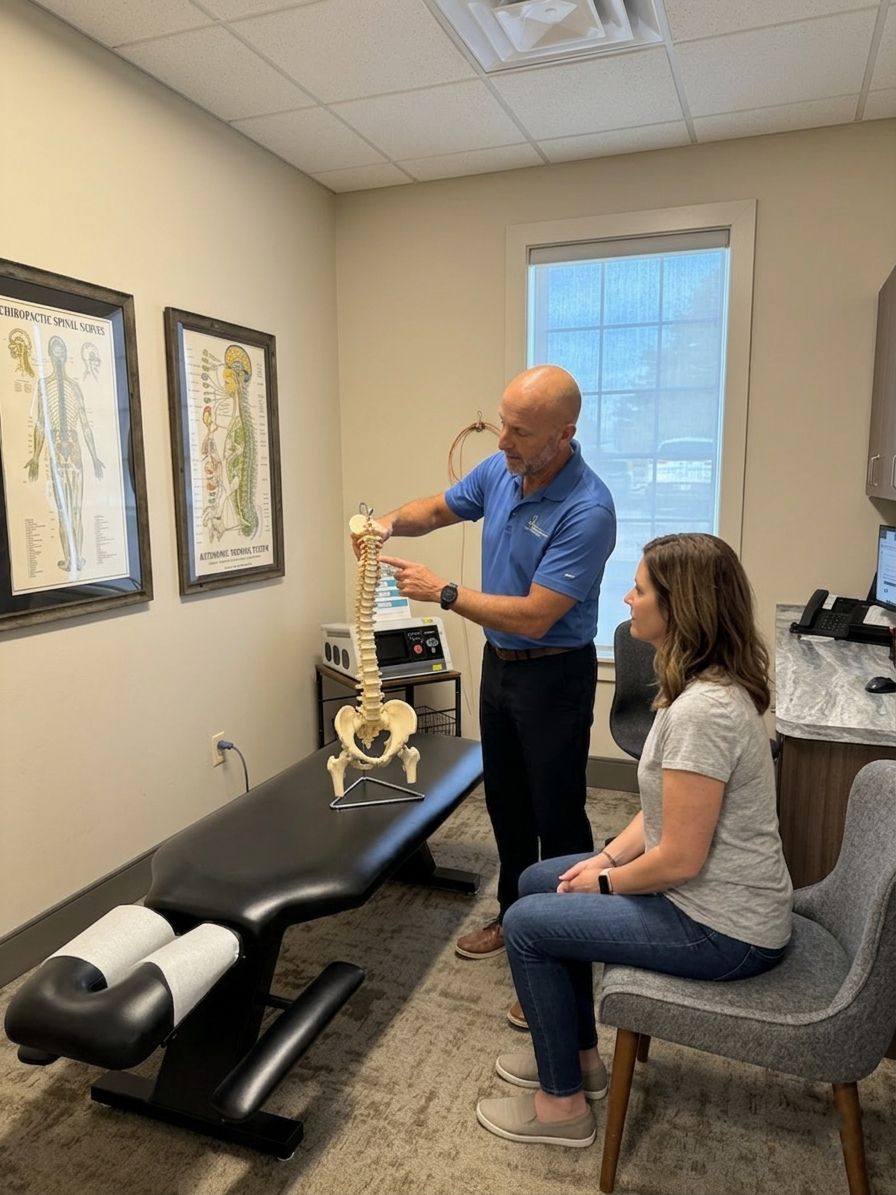
The best whiplash treatment begins with understanding what happened, where the pain is coming from, and whether the injury appears mild, moderate, or more serious. A proper evaluation may include questions about the accident, symptom timing, pain location, neck movement, headaches, arm symptoms, and daily activities that make the pain better or worse.
At Vital Connection Chiropractic, an evaluation may help determine whether conservative chiropractic care is appropriate or whether the patient should seek medical care first. This matters because not every neck injury should be treated the same way.
Some patients mainly need help with muscle tension, stiffness, posture strain, and movement confidence. Others may have symptoms that require medical imaging, urgent evaluation, or co-management with another healthcare provider.
A careful whiplash evaluation may look at:
- Neck range of motion
- Pain with movement
- Tenderness in the neck, upper back, or shoulders
- Headache patterns
- Posture and muscle guarding
- Tingling, numbness, or weakness
- Whether symptoms are improving, worsening, or staying the same
If your pain began after a car accident, sports injury, or sudden fall, you can review the Whiplash condition page for more information about care at Vital Connection Chiropractic.
Common Symptoms That May Need Whiplash Pain Relief
Whiplash symptoms can vary from person to person. One person may feel mostly neck stiffness. Another may have headaches, shoulder tension, or pain that spreads toward the upper back.
Common symptoms may include:
- Neck pain
- Neck stiffness
- Trouble turning the head
- Headaches, often near the base of the skull
- Shoulder or upper back pain
- Muscle spasms
- Tenderness around the neck
- Fatigue
- Dizziness
- Jaw soreness
- Tingling or numbness into the arms
- Difficulty sleeping because of discomfort
Not all of these symptoms mean the injury is severe, but symptoms that are intense, spreading, or not improving deserve attention.
Table 1: Whiplash Symptoms and Best Next Steps
| Symptom | What It May Mean | Best Next Step |
|---|---|---|
| Neck stiffness after an accident | Muscle guarding or soft tissue strain | Schedule an evaluation if it lasts more than a few days |
| Headache near the base of the skull | Neck-related tension or irritation | Get checked, especially if headaches are new or worsening |
| Pain into the shoulder or upper back | Referred pain from irritated neck tissues | Avoid forcing motion and consider conservative care |
| Tingling, numbness, or weakness | Possible nerve involvement | Seek medical evaluation promptly |
| Severe pain after impact | Possible more serious injury | Consider urgent medical care before conservative treatment |
Conservative Whiplash Treatment Options in Fishers, IN
Conservative whiplash treatment is usually focused on helping the body recover without jumping straight to aggressive care. The goal is not to force the neck to “crack” or push through pain. The goal is to reduce irritation, restore better motion, support healthy function, and help the patient return to normal daily activities as safely as possible.
1. Gentle Chiropractic Care
Chiropractic care may help when whiplash causes joint restriction, muscle guarding, neck stiffness, or posture-related stress. A chiropractor may use gentle adjustments, soft tissue work, mobility guidance, and supportive recommendations based on the patient’s exam findings.
Care should be individualized. A patient with mild stiffness after a minor collision may need a different approach than someone with intense pain, dizziness, or arm symptoms.
At Vital Connection Chiropractic, whiplash care is designed to be patient focused and conservative. The care plan may change as symptoms improve and movement becomes more comfortable.
2. Movement and Range of Motion Support
After whiplash, many people are afraid to move their neck. That is understandable, especially when turning the head feels painful. However, complete rest for too long can sometimes increase stiffness.
Gentle movement, when appropriate, may help keep the neck from becoming more guarded. This may include simple range of motion exercises, guided stretches, or gradual activity modifications. These should be based on the severity of the injury and the patient’s comfort level.
A chiropractor can help explain which movements are helpful and which ones may be too much too soon.
3. Soft Tissue and Muscle Tension Relief
Whiplash often causes the muscles around the neck, shoulders, and upper back to tighten as a protective response. This muscle guarding can make the neck feel locked, heavy, or difficult to turn.
Soft tissue techniques may help reduce tension in irritated muscles. This can support better movement and may help with whiplash pain relief when used as part of a broader care plan.
4. Posture and Ergonomic Guidance
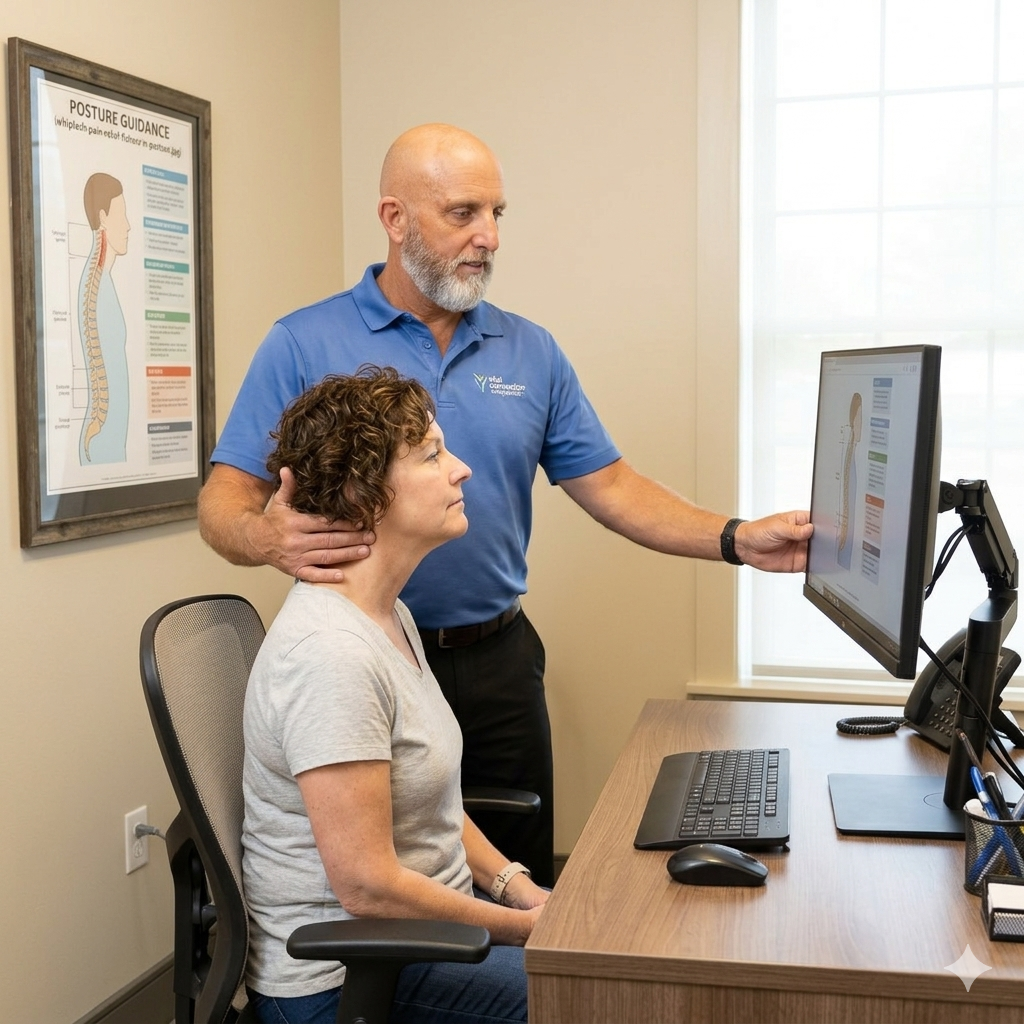
Many Fishers-area patients return to work, driving, childcare, and computer use soon after an injury. These activities can make symptoms worse if posture and positioning are not adjusted.
Helpful changes may include:
- Keeping screens at eye level
- Avoiding long periods of looking down at a phone
- Supporting the low back while sitting
- Taking short movement breaks
- Avoiding awkward sleeping positions
- Adjusting headrest position in the car
These changes are simple, but they can reduce daily strain while the neck heals.
 5. Home Care Guidance
 5. Home Care Guidance
Home care may include short-term rest, careful use of cold or heat, gentle movement, and avoiding activities that increase pain. For some patients, cold may feel better early after injury. For others, gentle warmth may help with muscle tightness later.
Patients should follow recommendations from their healthcare provider, especially after a car accident or if symptoms are more than mild. Over-the-counter medication questions should be discussed with a medical provider or pharmacist, especially for patients with other health conditions or those taking other medications.
6. Activity Modification
Whiplash treatment often includes learning what to pause temporarily. This might include heavy lifting, high-impact exercise, sudden twisting, or long drives without breaks.
The goal is not to stop life completely. The goal is to reduce unnecessary stress while the injured tissues calm down.
7. Referral When Needed
Conservative chiropractic care may help many whiplash cases, but it is not a replacement for emergency or medical care when red flags are present. If symptoms suggest a fracture, concussion, nerve involvement, or another serious issue, referral is important.
The Cleveland Clinic whiplash overview notes that whiplash can range from mild to more serious. The Mayo Clinic whiplash diagnosis and treatment also explains that treatment depends on the injury and may include pain control and restoring movement.
When Whiplash May Need Medical Attention
Some whiplash symptoms should not be ignored. If you have severe pain, weakness, numbness, tingling, vision changes, trouble speaking, trouble swallowing, dizziness, fainting, confusion, or symptoms after a major crash, seek medical care promptly.
You should also seek medical attention if you suspect a concussion, fracture, or serious spinal injury. Chiropractic care can be helpful in the right situation, but a safe plan starts with the right level of care.
Table 2: Whiplash Care Options and When They May Help
| Care Option | Best For | Why It Helps |
| Chiropractic evaluation | Neck stiffness, limited motion, post-accident discomfort | Helps identify whether conservative care is appropriate |
| Gentle movement guidance | Mild to moderate stiffness | May reduce guarding and support normal motion |
| Soft tissue support | Muscle tightness and soreness | May ease tension around the neck and shoulders |
| Posture coaching | Desk work, driving, phone use | Reduces repeated strain during recovery |
| Medical evaluation | Severe pain, nerve symptoms, major trauma | Helps rule out serious injury before conservative care |
How Long Whiplash Recovery May Take
Whiplash recovery depends on the severity of the injury, the patient’s health history, age, symptoms, activity level, and how early the issue is evaluated.
Mild whiplash may improve within days to a few weeks. Moderate cases can take several weeks or longer. More severe cases may take months, especially when symptoms involve nerve irritation, intense headaches, or persistent stiffness.
Recovery can also be affected by:
- The force of the accident
- Previous neck injuries
- Existing posture problems
- Stress and poor sleep
- Delayed evaluation
- Returning too quickly to painful activities
- Neurological symptoms
It is important not to compare your recovery to someone else’s. Two people can be in the same type of accident and recover differently. A proper evaluation helps create a more realistic plan for your situation.
If you are looking for whiplash treatment near me because symptoms are not improving, you can use Schedule Appointment to request a visit with Vital Connection Chiropractic in Fishers.
 What to Avoid After a Whiplash Injury
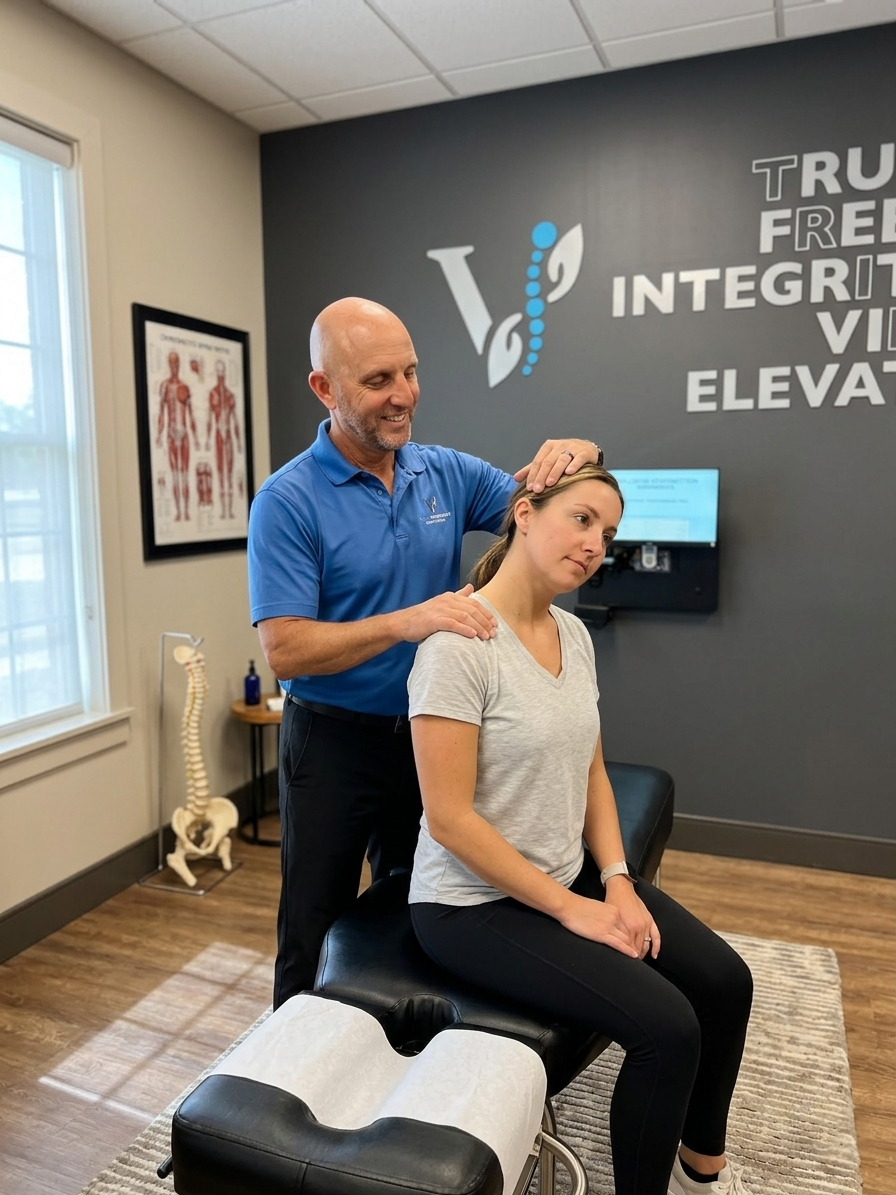 What to Avoid After a Whiplash Injury
After a whiplash injury, one of the biggest mistakes is pretending nothing happened. Another common mistake is doing too much too soon because the pain was delayed or mild at first.
It is also wise to avoid forcing the neck into painful positions. Stretching aggressively, cracking your own neck, lifting heavy items too early, or returning to intense workouts before symptoms calm down can sometimes make irritation worse.
Helpful things to avoid include:
- Ignoring symptoms that are getting worse
- Sleeping in awkward neck positions
- Long phone use with the head bent forward
- Heavy lifting during the early pain stage
- High-impact exercise too soon
- Self-adjusting the neck
- Wearing a collar for too long without guidance
- Delaying care when pain affects work, sleep, or driving
The safest plan is usually a balanced one. Rest briefly when needed, move gently when appropriate, and get evaluated if symptoms persist.
Local Whiplash Treatment Near Me in Fishers, IN
When someone searches for whiplash treatment near me, they are often looking for practical help close to home. Vital Connection Chiropractic is located in Fishers, IN and serves patients from nearby areas like Noblesville, Carmel, Geist, McCordsville, Castleton, and Hamilton County.
Local care can be helpful because whiplash recovery often requires follow-up, progress checks, and care plan adjustments. A patient may start with significant stiffness and then need different support as movement improves.
A local chiropractor can also help with everyday recovery questions, such as:
- Can I drive comfortably?
- What sleeping position is better?
- Should I use heat or cold?
- What movements should I avoid?
- When can I return to exercise?
- Why does my neck feel worse after sitting at work?
If symptoms are disrupting your routine, use Contact Us to ask the office a question or connect with the team.
How Vital Connection Chiropractic Approaches Whiplash Pain Relief
Vital Connection Chiropractic takes a conservative, patient-friendly approach to whiplash pain relief. The goal is to understand your symptoms, identify contributing factors, and recommend care that matches your condition.
Your care may include:
- A focused consultation
- Neck and spine evaluation
- Gentle chiropractic care when appropriate
- Soft tissue support
- Mobility recommendations
- Posture and ergonomic coaching
- Home care guidance
- Referral when medical evaluation is needed
This type of care is designed to support healing, not rush it. Whiplash can be frustrating because symptoms may affect driving, work, sleep, and family life. A clear plan can help you know what to do next and what to watch for.
If you have already been medically cleared after an accident but still feel neck pain, stiffness, or headaches, a chiropractic evaluation may be a reasonable next step.
Practical Home Tips While You Wait for Your Evaluation
These simple steps may help reduce irritation while you wait for your appointment, as long as you do not have severe symptoms or red flags:
- Keep your neck in a comfortable neutral position.
- Avoid long periods looking down at your phone.
- Use a supportive pillow that does not push your head too far forward.
- Take short breaks from sitting or driving.
- Avoid heavy lifting or sudden twisting.
- Use cold or heat based on what your provider recommends.
- Track your symptoms, including pain location and what makes it worse.
These steps are not a substitute for care, but they can help you avoid common aggravating habits.
For patients ready to take the next step, Schedule Appointment is the best page to request a visit.
Patient Friendly Closing
Whiplash can feel confusing because symptoms may appear right away, show up later, or change over time. The good news is that many people improve with the right conservative plan, especially when the injury is evaluated early and managed carefully.
Vital Connection Chiropractic in Fishers, IN helps patients understand their symptoms and explore conservative whiplash pain relief options. If your neck pain, stiffness, headaches, or shoulder tension started after an accident or sudden impact, do not wait for symptoms to become a bigger problem.
You can learn more about Whiplash or reach the office through Contact Us with questions about care.
FAQ
What happens if whiplash goes untreated?
Untreated whiplash may lead to longer-lasting pain, stiffness, and movement problems. Some mild cases improve with time, but ignoring symptoms can allow muscle guarding, poor movement habits, and inflammation to continue. In some cases, symptoms may become chronic or affect sleep, work, driving, and daily routines. If pain is worsening, spreading into the arms, or causing numbness, tingling, weakness, dizziness, or severe headaches, a medical evaluation is important.
What is the best remedy for whiplash?
The best remedy for whiplash depends on the severity of the injury and the symptoms involved. Mild cases may respond to short-term rest, appropriate use of cold or heat, gentle movement, posture changes, and over-the-counter pain relief when approved by a healthcare provider. Conservative chiropractic care may help with stiffness, joint restriction, and muscle tension. Severe pain, neurological symptoms, or symptoms after a major accident should be evaluated medically before starting conservative care.
How long does it take to recover from whiplash?
Whiplash recovery can take a few days, several weeks, or several months depending on the injury. Mild whiplash often improves within days to a few weeks. Moderate cases may take longer, especially when neck movement is limited or headaches are frequent. Severe cases, prior neck problems, delayed care, or nerve-related symptoms can extend recovery. A proper evaluation helps determine what care is appropriate and what timeline may be realistic for your situation.
Where does whiplash hurt the most?
Whiplash usually hurts most in the neck, but pain can spread to nearby areas. Many people feel stiffness, soreness, or sharp pain in the back of the neck. Pain may also move into the shoulders, upper back, base of the skull, arms, or jaw. Headaches are also common. If pain travels with numbness, tingling, weakness, dizziness, vision changes, or trouble speaking or swallowing, it is important to seek medical care promptly.
What is stage 4 whiplash?
Stage 4 whiplash usually refers to the most serious grade of whiplash-associated disorder. It may involve severe pain and signs of serious injury, such as a fracture, dislocation, or dangerous nerve or spinal cord involvement. This level should not be managed with home care alone. If someone has severe neck pain after trauma, weakness, numbness, tingling, coordination issues, or other concerning symptoms, urgent medical evaluation is needed before any conservative treatment.